Whether a Basset Hound Can Be Tricolor
A Basset Hound can absolutely be tricolor. The familiar combination of black, tan, and white is one of the breed’s classic looks, but the exact pattern can vary from dog to dog—and may shift as a puppy grows. This guide explains what tricolor means, how markings change, and why coat color alone says little about a Basset Hound’s health or personality.
What tricolor means on a Basset Hound
The usual black, tan, and white combination
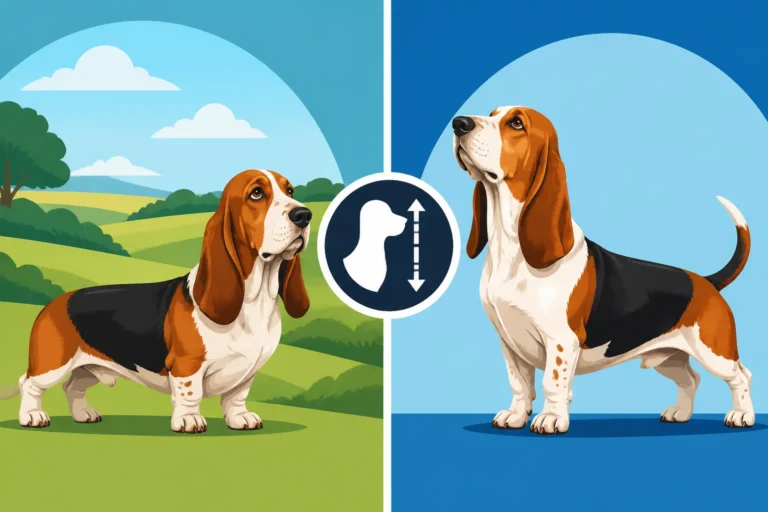
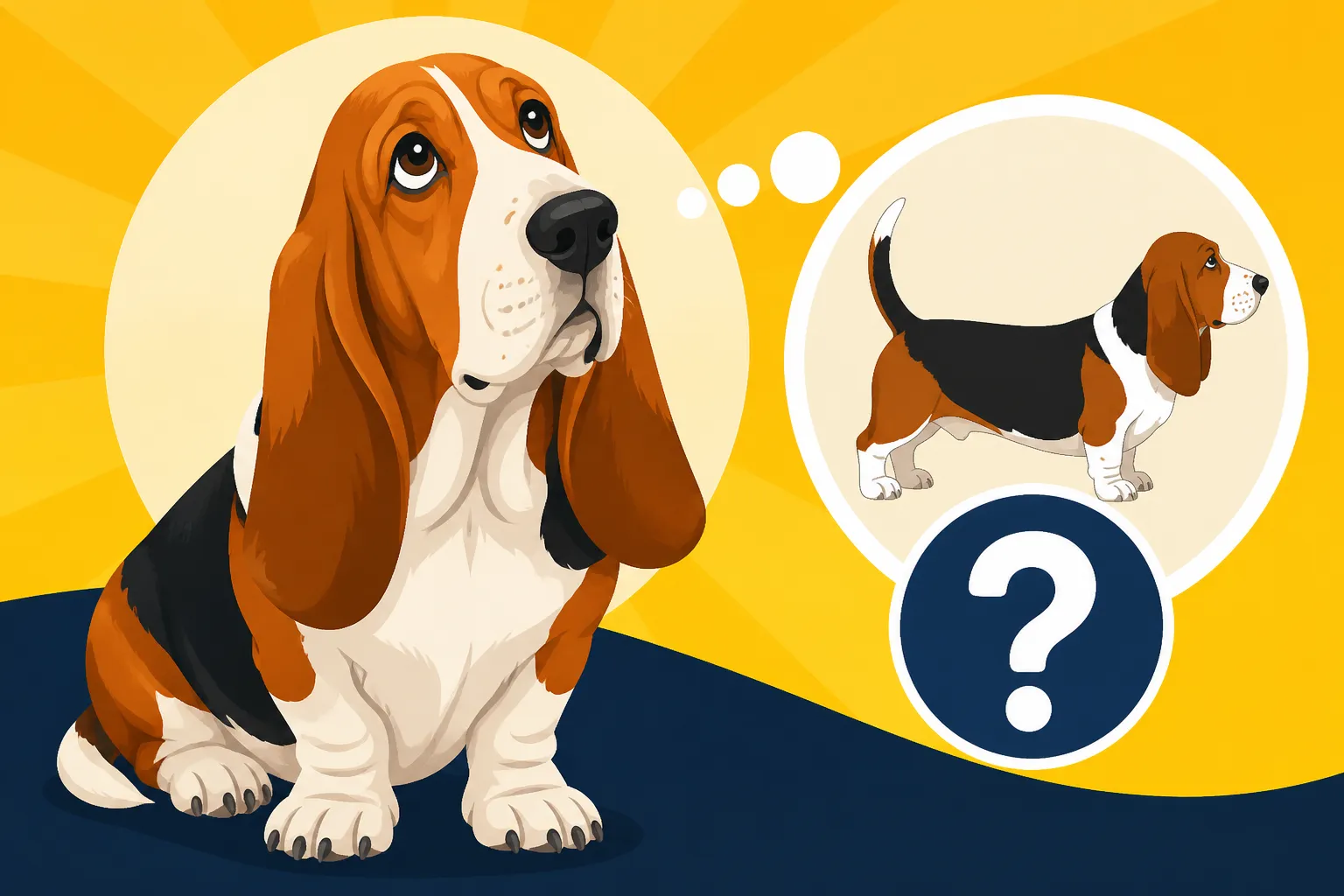
In dog-coat terminology, “tricolor” means a coat showing three colors. On a Basset Hound, the best-known version combines black, tan, and white. Black often forms a broad patch or saddle across the back, tan appears on parts of the face and legs, and white usually shows on the chest, feet, or tail tip.
That description is a handy starting point, not a paint-by-number template. One Basset may have a large black saddle and a mostly white body, while another has more tan on its face or legs. The patches can have irregular edges, and the proportions do not need to match from one side of the dog to the other. A dog can still be tricolor when its markings look quite different from the classic picture in a breed book.
“Tricolor” describes the visible colors, not a particular pattern that every Basset Hound must have. For a closer look at the range of coats, The Colors a Basset Hound Comes In explains the broader color palette, while What the Tricolor Basset Hound Looks Like focuses on the familiar three-color appearance.
How to tell a tricolor from a two-color coat
The easiest way to identify a tricolor Basset is to look for three distinct coat colors rather than counting every small shade variation. A black, tan, and white dog is the familiar example. By contrast, a red-and-white Basset has two main colors, even if its red areas vary in depth or look darker in some lighting.
This can get confusing in puppies. Tan may be pale at first and become more noticeable as the coat matures. Black areas may also appear brownish in bright sunlight or in a photograph, while a cream or pale tan patch can be hard to distinguish from white. If you are trying to identify a young puppy’s pattern, look at several areas of the body and compare them in natural light rather than relying on one photo.
It also helps to separate color from pattern. “Black, tan, and white” names the colors; “saddle” describes a common arrangement of darker color over the back. A Basset Hound can have all three colors without displaying a neat, sharply defined saddle. The overall combination matters more than an exact arrangement.
| Coat description | Main colors | Common source of confusion |
|---|---|---|
| Tricolor | Often black, tan, and white | The patches may be uneven or change in appearance as the dog matures |
| Red and white | Red and white | Red can vary in shade, which may look like another color in some lighting |
| Lemon and white | Pale yellow or tan and white | The lighter color can be subtle, especially in a puppy |
| Mostly dark with tan points | Dark color and tan | White may be absent, making it different from the familiar three-color look |
These are general visual descriptions, not a substitute for a breeder’s written description or a breed expert’s assessment. If you are comparing puppies, ask what colors the breeder sees and whether the markings have changed as the litter has grown.
How a Basset Hound’s tricolor markings can change
Puppy color may not be the finished color
A puppy’s coat can look different over time. As the coat grows and the dog matures, areas that looked very dark may soften in appearance, and lighter markings may become easier to see. The pattern itself is still the puppy’s natural pattern, but the contrast between colors can seem different as the coat develops.
That is one reason a single early photograph can be misleading. A puppy photographed indoors may look darker than the same puppy in daylight. A close-up can also make a small tan patch look like a separate major color when the whole-body pattern tells a clearer story. If appearance matters to you, ask to see current photos from more than one angle and, when possible, photos of the puppy’s parents.
Coat changes are not unique to tricolor dogs. The shade or visibility of markings can shift in other color combinations as well. Whether a Basset Hound's Markings Change With Age goes into that question in more detail, including why a puppy’s early coloring may not look exactly the same later.
Why lighting and grooming can fool the eye
Light can make coat colors appear more or less distinct. Warm indoor bulbs may give white fur a creamy cast; bright sunshine can make dark fur look brown; and a phone camera may adjust the image in a way that changes the apparent contrast. Mud, dust, damp fur, and loose hair can also obscure the boundaries between patches.
A clean, dry coat is usually easier to assess than a recently wet one. If you are preparing to meet a puppy or look at a dog’s photos, focus on the larger color areas rather than small variations caused by lighting. A groomer’s trim is not normally what determines whether a Basset Hound is tricolor, but keeping the coat clean can make the markings easier to see.
The same practical grooming tools work regardless of whether a Basset is tricolor, red and white, or another color combination. If you are assembling basic supplies, retailers such as Chewy may be one place to browse for a brush or dog shampoo; choose products for your dog’s coat and skin needs rather than its color. There is no special shampoo required to preserve a tricolor pattern.
Does tricolor affect a Basset Hound’s breed status or care
Color is not a measure of quality or personality
A tricolor coat does not tell you whether a Basset Hound will be affectionate, independent, vocal, energetic, or easy to train. Those traits are shaped by many things, including inherited temperament, early experiences, health, and the dog’s daily environment. A striking coat may catch your eye, but it cannot tell you what living with that individual dog will be like.
Color alone is not a reliable shortcut for judging overall health either. When choosing a puppy, give more attention to health information, temperament, the breeder’s practices, and how the dogs are raised. Ask about the parents and the health screening relevant to the breed, and look for clear records rather than assuming that a particular coat color signals a healthier or less healthy dog.
Breed standards and show rules can describe accepted colors and markings, but that is a separate question from whether a dog makes a sound companion. For an overview of how color is treated in the breed, see Whether Any Color Is a Fault on a Basset Hound. The broader question of how different lines can vary in appearance is covered in Whether Show and Field Basset Hounds Differ.
Routine care does not depend on coat color
Tricolor Basset Hounds do not need a special diet, grooming schedule, or skin-care routine because they have three colors. Brush as needed to manage loose hair, bathe when appropriate for the dog’s condition and lifestyle, and check the skin and ears as part of regular care. If your dog develops itching, redness, an unusual odor, or another persistent skin concern, ask a veterinarian rather than trying to solve it by changing products based on coat color.
White areas can show dirt more readily, especially around the chest and feet, but that is a housekeeping issue—not a health problem by itself. A damp cloth or a suitable dog-care product may help with ordinary mess, while frequent bathing or strongly scented products can be unnecessary. If you are shopping for basic grooming items, Chewy is one retailer you might compare with local pet stores; look at the product’s intended use and your dog’s skin needs, not just the color of its fur.
People sometimes assume that a dog with a particular nose color, eye color, or patch arrangement must belong to a specific coat category. Those features can contribute to an individual dog’s appearance, but they should not replace the overall coat description. For related questions, Whether a Basset Hound's Nose Is Always Black explores nose color, and Whether a Basset Hound Can Be Red and White discusses a different common two-color combination. If you are uncertain about a dog’s coloring, a breeder or knowledgeable breed professional can help describe what you are seeing.
Choosing or describing a tricolor Basset Hound
Questions to ask when meeting a puppy
If you are looking at a litter, ask the breeder to describe each puppy’s current coat and whether the markings have changed since birth. It is reasonable to request clear photos taken in natural light, especially if you are comparing puppies from a distance. A careful description might say “black, tan, and white with a dark saddle,” rather than simply “classic tricolor,” but breeders may use slightly different wording.
Try not to choose solely by the most striking pattern in a photo. Ask about each puppy’s behavior, daily handling, and the breeder’s health information. Spend time observing how the puppies respond to ordinary sounds and people, and ask which puppy’s temperament and needs may fit your household. A calm-looking pose in a photograph does not reveal how a dog will behave once it settles into a new home.
If color is important to you, be honest about that while keeping it in perspective. A breeder can explain which markings are present and what changes might occur as the puppy matures, but no description should substitute for a thoughtful conversation about health, temperament, and care. The goal is to find a suitable dog, not just the coat pattern that looks best on a screen.
How to describe the coat clearly
When describing a tricolor Basset Hound, name the visible colors and then add a simple note about their distribution. For example: “black, tan, and white, with black over much of the back and tan on the face and legs.” That gives a clearer picture than a label alone, particularly when the pattern is less symmetrical than the familiar example.
If the dog’s coat looks different in different settings, mention that too. You could say that the dark areas look black indoors but brownish in sunlight, or that the tan markings are subtle. That avoids treating ordinary differences in lighting as a change in the dog’s actual coat.
When browsing adoption listings or breeder descriptions, remember that coat labels are practical shorthand. Two people might describe the same dog’s pattern a little differently, especially if one color is faint or the markings are irregular. The most reliable approach is to look at the whole dog, ask questions when a description is unclear, and keep color in its proper place: one visible feature among many that matter when choosing a companion.
Disclaimer
This article is for general informational purposes only and does not constitute professional advice. Laws, prices and regulations vary by location and change over time. Consult a qualified professional for guidance on your specific situation.