Whether a Basset Hound Can Be Lemon and White
A lemon-and-white Basset Hound has a pale yellow or buff coat paired with white markings, but the shade can be subtle and may change as a puppy matures. That can make it hard to tell whether a dog is truly lemon and white or simply a light tan-and-white Basset. This guide explains the coloring, what to ask a breeder, and why coat color alone says little about health or quality.
What lemon and white means on a Basset Hound
Recognizing the lemon coloring
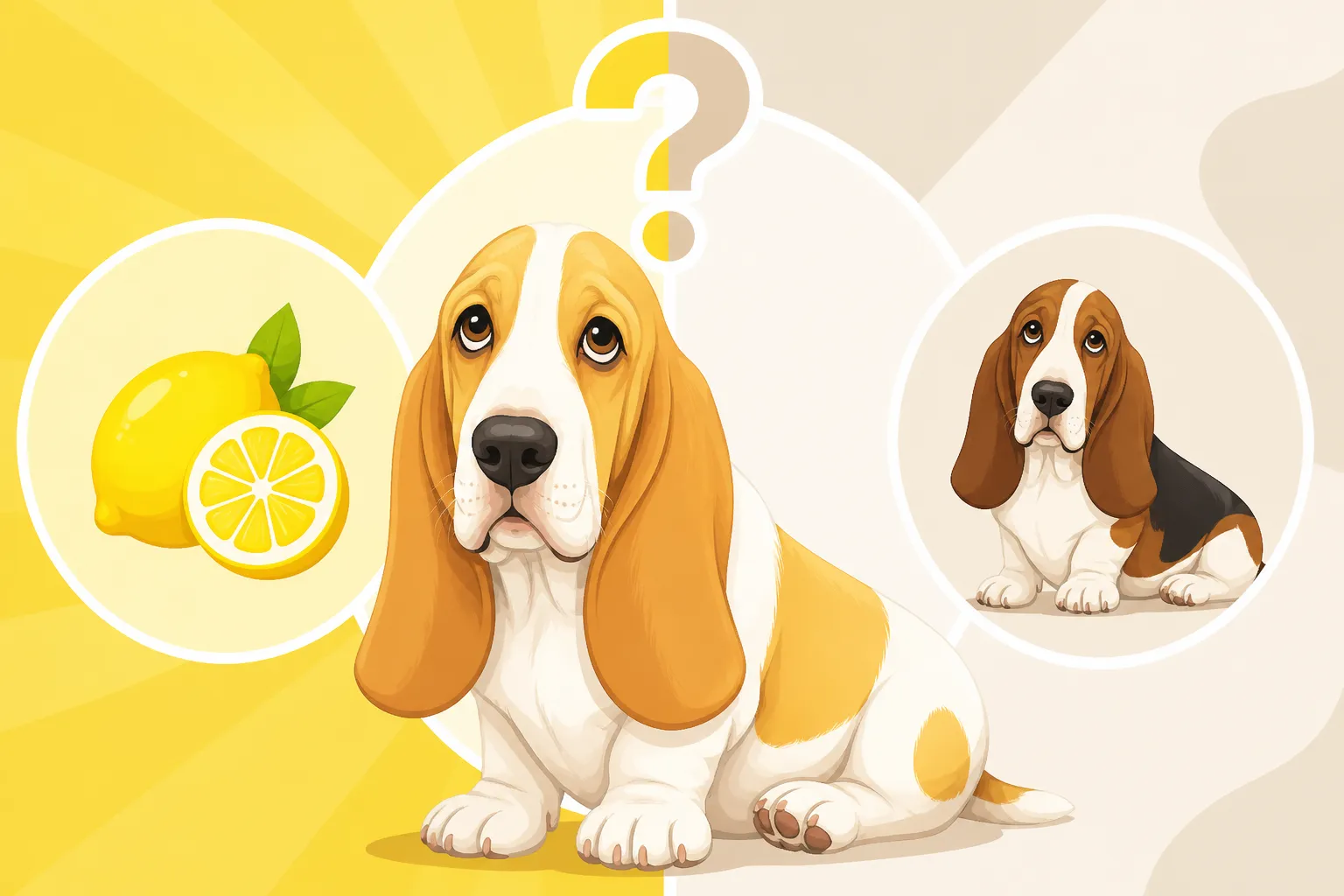
“Lemon” describes a light, creamy yellow or pale buff color. On a lemon-and-white Basset Hound, that color appears alongside white areas, often on the chest, legs, paws, underside, or parts of the face. The exact pattern varies from dog to dog: one may have broad pale patches, while another has just a little color around the ears or across the back.
The word can be confusing because lemon is not always a crisp, unmistakable shade. In some lighting, it may look almost cream; in others, it may seem more golden or tan. A damp coat, indoor lighting, and a puppy’s developing coat can all make the color harder to judge. When comparing photos, look at the dog in natural daylight and consider the full pattern rather than one pale patch.
For a broader overview of coat patterns and colors, see The Colors a Basset Hound Comes In. If you are comparing a particular dog with examples, What the Lemon and White Basset Hound Looks Like offers a closely related topic to explore.
Lemon and white compared with other light coats
A light tan-and-white dog can resemble a lemon-and-white dog, and there is no everyday visual shortcut that makes every borderline coat easy to classify. The words people use to describe shades may vary, too. A breeder might call a coat lemon, pale tan, or buff depending on its appearance and family terminology.
| Coat description | General appearance | What can make identification tricky |
|---|---|---|
| Lemon and white | Pale yellow, cream, or buff areas paired with white | Lemon may be so light it looks nearly cream |
| Tan and white | Brownish or golden-tan areas paired with white | A pale tan coat can be mistaken for lemon |
| Red and white | More pronounced reddish or warm orange areas paired with white | The shade may look lighter in bright sunlight |
| Tricolor | Usually black, white, and tan areas | Puppy markings can change in contrast as the coat develops |
These descriptions are useful for talking about appearance, but they do not tell you whether a dog is a good fit for your home. If you are curious about color variation more generally, Whether a Basset Hound Can Be Any Color discusses the broader question. A coat label should not substitute for checking health records, temperament, and the breeder’s practices.
How a lemon-and-white coat may look as a dog grows
Puppy color can be hard to predict
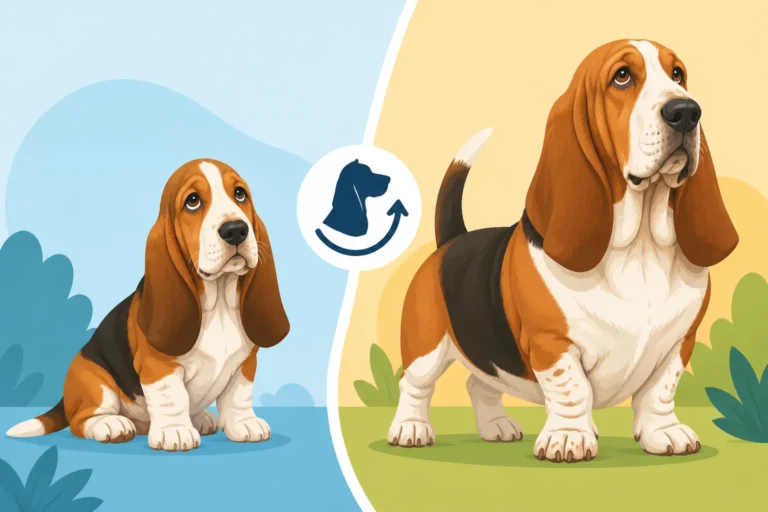
A very young puppy may have pale markings that are difficult to distinguish from white, especially in photographs. As the coat develops, colored areas can become more noticeable or appear different in contrast. That does not mean every lemon-and-white puppy will undergo a dramatic color change; it means the final shade may be easier to judge later than it is in a newborn litter.
If you are choosing a puppy, ask the breeder how they describe the color and whether they can show photos of the puppy’s parents or older relatives. Those pictures may help you understand the range of shades in that family, but they cannot guarantee an exact adult appearance. Even siblings can look different as their coats mature.
Markings and color contrast can shift over time, so Whether a Basset Hound's Markings Change With Age is helpful if you are wondering why an older dog looks different from its puppy photos. A breeder should be comfortable explaining what they know and what they cannot promise.
Color is not a health or temperament test
A lemon-and-white coat is an appearance, not a measure of health, intelligence, energy, or personality. Two Basset Hounds with very different coloring can have similar needs, and two dogs with nearly identical coats may differ widely in temperament. Look at the individual dog and its upbringing rather than expecting the coat to predict behavior.
The same principle applies when assessing a puppy’s future size, activity level, or suitability for a household. Ask about the parents’ temperaments and health history, and pay attention to how the puppies are raised and socialized. A responsible breeder should welcome questions about those subjects instead of steering the conversation back to whichever coat shade is most eye-catching.
Color should not be used to excuse missing health information. The Health Tests a Basset Hound Breeder Should Run can help you prepare questions about health screening, while What a Basset Hound Health Guarantee Covers explains why it is worth reading any agreement carefully rather than relying on a verbal promise.
Choosing a lemon-and-white Basset Hound responsibly
Questions to ask a breeder
If a breeder advertises lemon-and-white puppies, ask how they identify the color and whether the description is their own assessment or part of formal registration or show paperwork. You can also ask whether the puppy’s coat is expected to change as it matures. A straightforward answer is more useful than a promise that the dog will keep an exact shade throughout life.
Ask to meet the puppy’s mother, if possible, and learn about the health and temperament of both parents. Request relevant veterinary and screening records, and ask how the puppies are introduced to everyday sights, sounds, handling, and people. These details matter far more to a future owner than whether a pale patch is called lemon or light tan.
Be cautious if a seller emphasizes a rare or unusual color as the main reason to pay more, pressures you to decide quickly, or avoids questions about health and care. A color description alone does not prove responsible breeding. For a fuller picture of what to look for, read Whether Any Color Is a Fault on a Basset Hound alongside the breeder and health topics above.
Looking after the coat without chasing the color
A lemon-and-white coat does not require a special color-maintenance routine. Like other Basset Hounds, the dog benefits from ordinary grooming suited to its coat: regular brushing to remove loose hair, occasional bathing when needed, and routine checks of the skin and ears. White areas may show dirt more clearly, but frequent bathing or harsh products can irritate skin rather than improve the coat.
If you are putting together basic grooming supplies, choose products intended for dogs and follow the directions on the label. A pet retailer such as Chewy may be one place to compare brushes, towels, or dog shampoos, but the right choice depends on your dog’s skin and coat—not the color name. For brushing advice, see Which Brush Suits a Basset Hound and Whether a Basset Hound's Coat Needs Brushing.
If a light section becomes stained, first consider the cause. Mud or food can usually be handled with gentle cleaning, while persistent discoloration, itching, odor, or redness may point to a skin issue that deserves veterinary attention. Chewy may be useful for finding routine grooming supplies, but it cannot replace a veterinarian’s advice when the skin looks sore or the dog seems uncomfortable. Avoid trying whitening products or home remedies without checking that they are safe for dogs.
Common questions about lemon-and-white Basset Hounds
Is lemon and white a natural Basset Hound color?
Lemon-and-white is a color description used for Basset Hounds with pale yellow or buff areas and white markings. The precise shade can vary, and people may use different words for similar-looking coats. If official registration or showing matters to you, ask the relevant organization or a knowledgeable breeder how the particular dog’s color is recorded.
Will a lemon-and-white puppy stay the same shade?
Not necessarily. The coat can look different as a puppy matures, and the contrast between colored and white areas may become clearer or shift in appearance. Ask the breeder about the puppy’s family and any color changes they have observed in related dogs, but treat predictions as estimates rather than guarantees. Whether a Basset Hound's Markings Change With Age provides more context on this point.
Does a lemon-and-white Basset Hound have a different nose color?
Coat color does not by itself tell you exactly what a dog’s nose pigment should look like. Examine the individual dog and ask the breeder or veterinarian if you have concerns about a sudden change, irritation, or a sore area. For more on nose pigmentation, see Whether a Basset Hound's Nose Is Always Black.
Is a lemon-and-white Basset Hound harder to care for?
No special care routine is needed simply because the coat is lemon and white. The dog still needs the everyday grooming, exercise, companionship, and health care appropriate for a Basset Hound. White areas may make dirt more noticeable, but color does not change the basic responsibilities of ownership.
Chewy can be a convenient place to browse ordinary supplies such as grooming towels or a suitable brush, but compare products carefully and ask your veterinarian about skin sensitivities. For everyday coat upkeep, The Short Basset Hound Coat That Still Sheds Everywhere offers additional breed-specific context.
A lemon-and-white Basset Hound can be a lovely choice if you are drawn to its pale, contrasting coat. Just keep the decision grounded: color may be memorable, but it does not guarantee health, temperament, or a particular adult appearance. Focus on the individual dog, the breeder’s transparency, and the care the dog will need throughout its life.
Disclaimer
This article is for general informational purposes only and does not constitute professional advice. Laws, prices and regulations vary by location and change over time. Consult a qualified professional for guidance on your specific situation.