Whether a Basset Hound Can Have Light Eyes
A pale-eyed Basset Hound can prompt an understandable double take, especially when you expect the breed’s familiar dark, soulful gaze. Eye color can vary with coat color and individual genetics, but a sudden change in color, cloudiness, redness, or squinting is a different matter. This guide explains what light eyes may mean, how to tell normal variation from a health concern, and when to call your veterinarian.
Can a Basset Hound naturally have light eyes
What breed standards say about eye color
Basset Hounds are generally expected to have dark brown eyes. Breed standards may allow lighter brown or hazel eyes in dogs with lighter-colored coats, so a light-eyed Basset is not automatically unhealthy or a sign of mixed ancestry. The exact wording can vary among kennel organizations, and show preferences are not the same thing as a veterinary diagnosis.
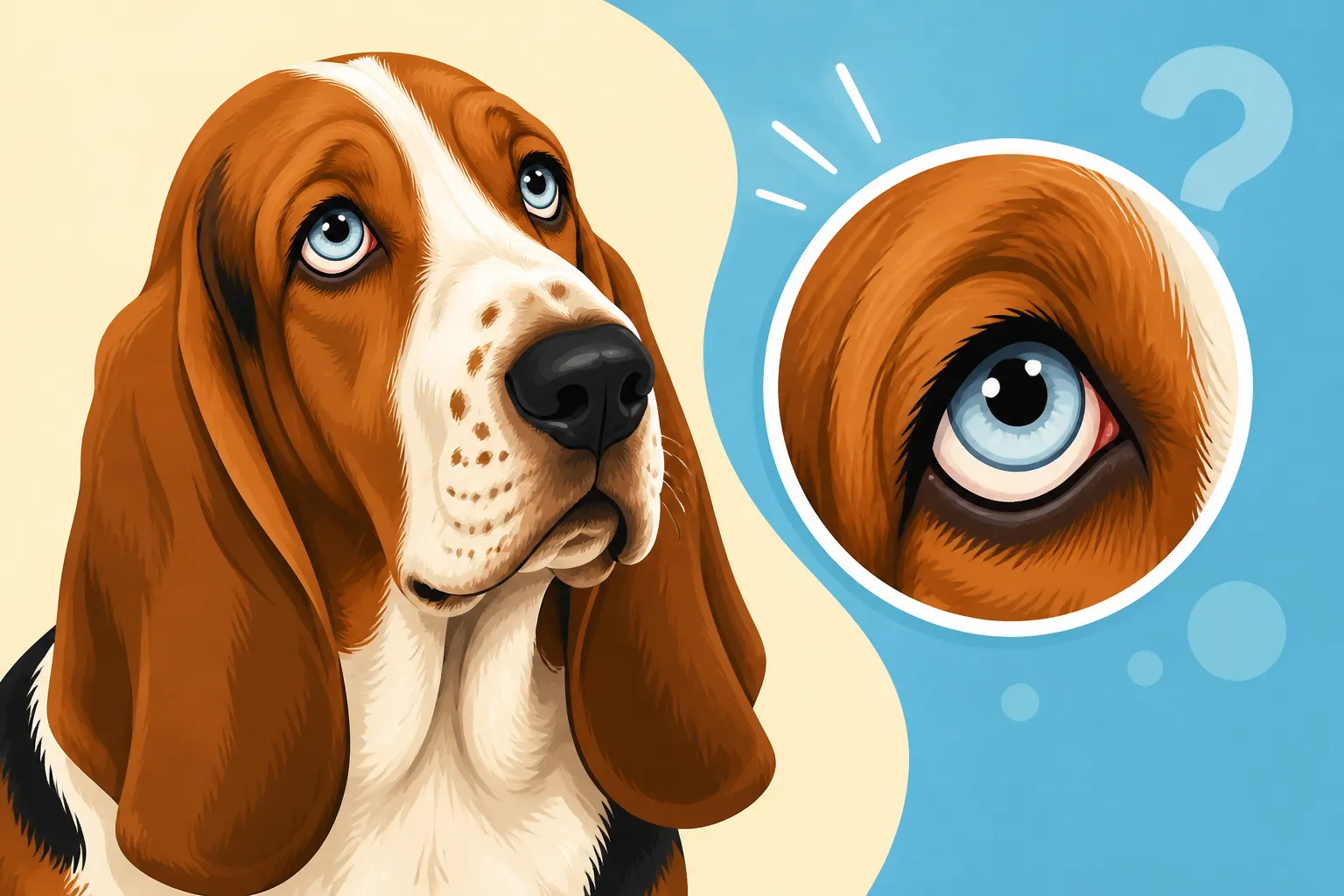
“Light eyes” can also mean several different things. One dog may have warm hazel eyes that look golden in sunlight; another may have pale blue-gray eyes, or one eye that differs noticeably from the other. Hazel or lighter brown eyes can be a normal variation, particularly in a pale-coated dog. Blue or unusually pale eyes in an adult Basset are less typical and deserve a closer look, although appearance alone cannot establish a medical problem.
If you are considering a puppy, ask the breeder what eye color the parents have and whether the puppy’s eyes have changed as it has grown. A responsible breeder should be comfortable discussing health history and screening, not just coat and eye color. For more on breeding-related eye checks, see Whether a Basset Hound's Eyes Should Be Screened Before Breeding.
Coat color and genetics can affect the appearance
Pigment influences the color of a dog’s eyes, skin, and coat. A Basset Hound with a very light coat may have lighter-looking eyes than a heavily pigmented dog, but coat color does not let you predict eye health with certainty. Two dogs with similar coats can have different eye shades, and a puppy’s eyes may look different from the color they settle into as it matures.
Lighting can make the same eye appear to change. Hazel eyes can look brown indoors and more golden outside; reflections from a window or phone camera can create a pale blue or silvery cast. Look at both eyes in ordinary, even light before deciding that the color is truly unusual. A photo taken with flash is especially unreliable for judging eye color.
Eye color is only one small part of the picture. A Basset with hazel eyes that are clear, comfortable, and stable may simply have natural variation. A Basset with dark eyes that suddenly become cloudy, red, or painful needs attention just as promptly. If you are comparing a pale-coated dog with the breed’s typical coloring, What the Lemon and White Basset Hound Looks Like offers helpful coat-color context.
How to tell normal light eyes from a possible eye problem
Stable color is different from a sudden change
A dog’s natural eye color is usually consistent over time. If your Basset has always had hazel or light brown eyes and both eyes look clear and comfortable, that is less concerning than a new change noticed over a day or two. Take a clear photo in natural light when the eyes look normal; it can give you a useful reference if you later notice a difference.
A color change that seems to happen quickly should not be brushed off as a quirk of the breed. Cloudiness, a blue-white haze over the surface, a visibly enlarged or differently shaped pupil, or one eye looking different from the other can signal a problem. These changes may be subtle at first, and dogs do not always show obvious discomfort even when an eye hurts.
Some changes are emergencies rather than “wait and see” issues. Contact a veterinarian promptly if your Basset is squinting, holding an eye shut, pawing at the face, suddenly bumping into things, or has a red, swollen, cloudy, or injured eye. A red eye can have several causes, including conditions that need urgent treatment; Whether a Basset Hound's Red Eye Is an Emergency explains the warning signs in more detail.
Watch the whole eye, not just its color
When you check your dog’s eyes, look for changes in comfort and function as well as color. Does your Basset open both eyes equally? Are the pupils similar in size? Is there discharge, excessive tearing, redness, or a film over the eye? Does your dog hesitate in dim rooms or seem less sure of familiar steps?
Basset Hounds have loose eyelids and prominent lower lids, which can make their eyes more exposed to irritation and discharge. That does not mean every watery or droopy eye is serious, but recurring irritation should not be assumed to be “just how the breed looks.” If you are seeing persistent tearing, Whether a Basset Hound's Eyes Water may help you understand what to track before the appointment. For the broader concerns associated with the breed’s eyelids, read Whether a Basset Hound's Droopy Eyelids Cause Trouble.
| What you notice | What it may suggest | A sensible next step |
|---|---|---|
| Hazel or light brown eyes that have always looked the same | Normal individual variation, especially in some light-coated dogs | Mention it at routine checkups and keep an eye on any changes |
| Pale or blue-gray eyes in an adult dog | Unusual pigmentation or a change affecting the eye’s appearance | Arrange a veterinary examination, especially if the color is new |
| A cloudy or blue-white film that appeared recently | Possible eye disease or injury | Contact a veterinarian promptly |
| Redness, squinting, rubbing, or apparent pain | Irritation, injury, infection, or another painful condition | Seek veterinary advice promptly |
| One eye suddenly looks different from the other | A change that may need examination | Call your veterinarian rather than waiting for it to resolve |
The table is a guide to what you might notice, not a way to diagnose the cause at home. If you are unsure whether the eye is newly cloudy or simply reflecting light differently, a veterinarian can examine the surface and internal structures of the eye.
Eye conditions to keep in mind with a Basset Hound
Glaucoma is about pressure, not eye color alone
Glaucoma involves increased pressure inside the eye and can threaten vision. It is not diagnosed by eye color: a Basset with light eyes does not necessarily have glaucoma, and dark eyes do not rule it out. Early signs may be difficult to spot at home, which is one reason changes in comfort, redness, cloudiness, or vision should be taken seriously.
Possible warning signs include a red or painful-looking eye, squinting, a cloudy appearance, a larger-looking eye, or sudden vision trouble. These signs can also occur with other conditions, so they do not confirm glaucoma. A veterinary examination, which may include measuring pressure inside the eye, is needed to determine what is happening.
Basset Hounds can have inherited eye-health concerns, so it is useful to know the health history of your dog’s parents and relatives. If glaucoma is part of the family history, tell your veterinarian rather than waiting for symptoms. For a closer look at the inherited risk, see The Glaucoma a Basset Hound Inherits. Any sudden painful red eye should be treated as urgent.
Other causes can make an eye look pale or unusual
A pale appearance can come from the eye’s surface, the lens, or changes in how light passes through the eye. A normal reflection may look blue or silver in a photograph, while a true haze may remain visible from different angles and in different lighting. Owners often cannot reliably tell these apart at home.
In older dogs, some age-related changes can make the eyes look cloudy. That does not mean every cloudy eye is harmless or that every change means blindness. A veterinarian can distinguish common age-related changes from problems that need treatment, and can check whether vision is affected.
Discharge and irritation can also change how an eye looks without changing its underlying pigment. Redness, tears, crusting, and rubbing are clues that something may be irritating the eye or eyelids. Avoid using human eye drops or leftover medication unless your veterinarian specifically directs you to do so. Products can be unsuitable for the cause, and some medicines can make certain eye problems worse.
What to do if your Basset Hound has light eyes
Make a calm, useful home observation
If the color has been stable and your dog seems comfortable, note what you see rather than repeatedly handling or wiping the eye. Check both eyes in soft daylight and take a photo from the same distance for comparison later. Write down whether the color is in one eye or both, when you first noticed it, and whether there are changes in discharge, redness, or behavior.
Keep the observation practical. A Basset that navigates the house confidently, opens both eyes normally, and has clear, comfortable eyes may simply have lighter pigmentation. A dog that starts hesitating at doorways, misjudging steps, or avoiding bright light should be assessed even if the eyes do not look dramatically different.
Do not try to test vision by waving objects close to the face or shining a bright light into the eyes. Those approaches are unreliable and may frighten or irritate your dog. If you have a concern, a clear description and a few dated photos are more useful to your veterinarian than repeated home tests.
Know when to book an appointment
Bring up stable light eyes at your next routine checkup, particularly if your Basset is young and you are not sure whether the color has finished changing. Book a sooner appointment if the eyes are unusually pale, if one eye differs from the other, or if you have noticed a gradual change. Call promptly for redness, squinting, cloudiness, rubbing, injury, or sudden vision changes.
Before the visit, note when the change began and whether it is getting worse. Mention any family history of eye disease, current medicines, and any recent head or eye injury. If you have already used an eye product, tell the veterinarian exactly what it was. When the vet recommends a specific eye-safe product or supplies, follow their instructions; a clinic, pharmacy, or retailer such as Chewy may be one way to obtain the exact item, but the product should be chosen for your dog’s diagnosis.
If treatment is prescribed, follow the label and the veterinarian’s directions closely. Eye medications can be easy to confuse, especially when a dog has more than one bottle or when the schedule changes. Keep the written instructions with the medication, and ask the clinic to clarify anything that is unclear. For a refill, confirm that you are ordering the same formulation and strength; if using Chewy or another retailer, do not substitute a product based only on a similar label or package.
A Basset Hound’s eyes deserve the same routine attention as its ears, skin, and joints. Keep a note of any changes and raise recurring concerns during checkups. If your veterinarian recommends a particular cleanser or other nonprescription item around the eyes, verify that it is intended for that use; Chewy can be one possible source for a specified product, but avoid improvising with household or human products.
Disclaimer
This article is for general informational purposes only and does not constitute professional advice. Laws, prices and regulations vary by location and change over time. Consult a qualified professional for guidance on your specific situation.