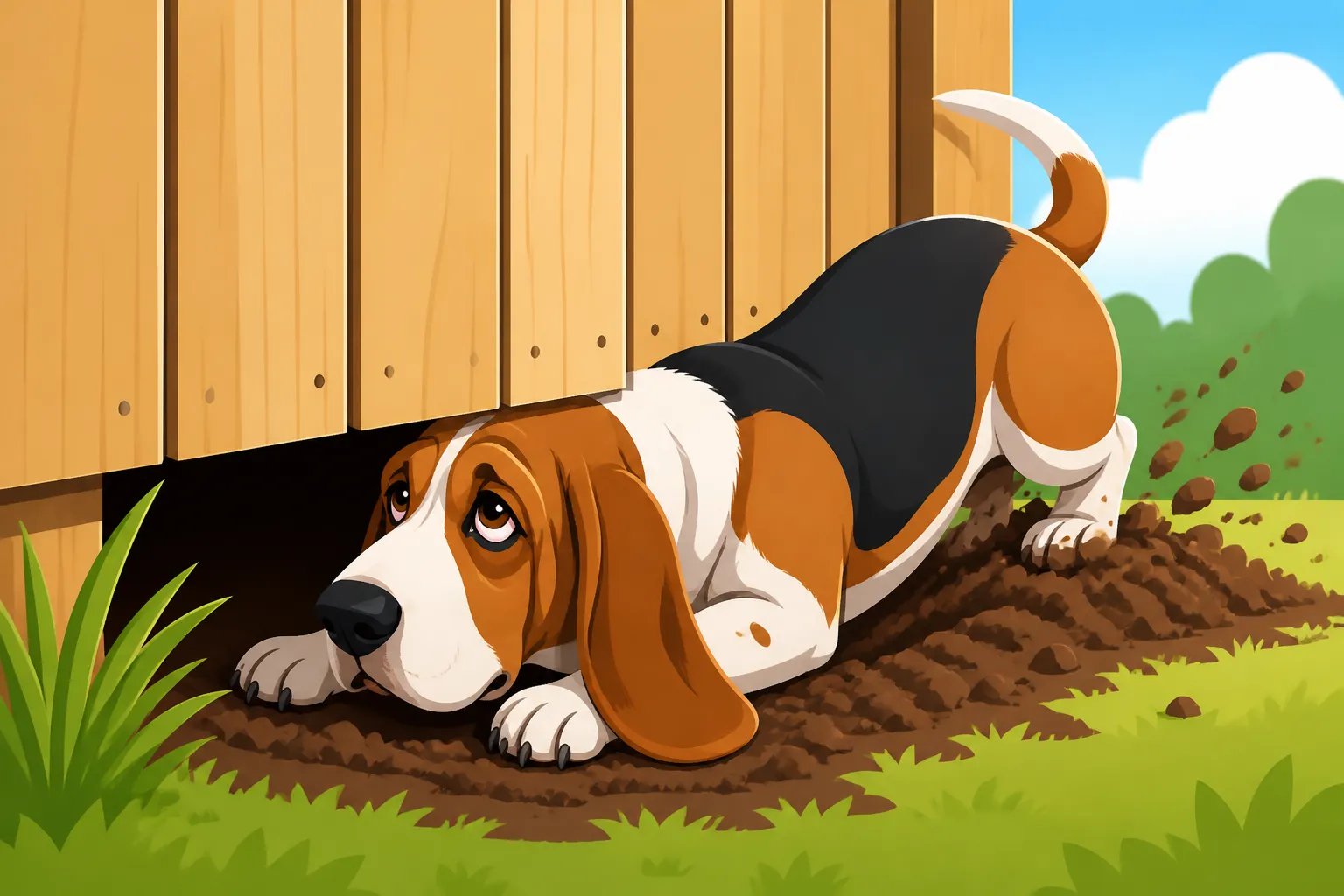
Whether a Basset Hound Digs Under a Fence
It's a familiar scene for many Basset Hound owners: you step outside, expecting to see your long-eared companion enjoying the yard, only to find a fresh trench appearing under the fence, hinting at an imminent escape. The frustration is real, and the worry about your beloved hound wandering off on a scent adventure is palpable. This guide aims to shed light on why your Basset might be digging under the fence and, more importantly, to provide practical, realistic strategies to help you keep them safely contained.
Understanding Why Your Basset Hound Digs
Before we can even think about solutions, it's crucial to understand the "why" behind your Basset's digging antics. It's rarely out of malice or an attempt to annoy you. Instead, it's usually rooted deeply in their breed instincts, their intelligence, or sometimes, a simple case of boredom. Your Basset isn't being stubborn; they're often just being a Basset Hound.
The Irresistible Call of Scent
Basset Hounds are, first and foremost, scent hounds. Their entire physiology, from their long ears that sweep scents upwards to their incredible noses, is designed for trailing. When they catch an interesting whiff – be it a squirrel, a rabbit, or even the faint scent of a neighborhood dog that passed by hours ago – their world narrows down to that single, compelling trail. Digging under a fence is simply a means to an end: following that scent.
Imagine, for a moment, being a Basset. Your nose is bombarded with a symphony of smells that humans can barely comprehend. A faint trail leads under the fence, hinting at a fascinating adventure. To deny that instinct is like asking a human to ignore their favorite food placed right in front of them. It's a powerful, primal drive, and for a Basset, a fence is merely a minor inconvenience if an interesting scent lies beyond. This is why you'll often see them nose-down, almost hypnotized, as they begin their excavation. It’s not about escaping you; it’s about answering the call of the wild, or at least, the wild beyond your yard. This powerful drive is also why a Basset Hound will stop hearing you when it smells something.
Boredom and Energy Release
While they might seem laid-back, Basset Hounds do need mental and physical stimulation. A bored Basset is a creative Basset, and sometimes, that creativity manifests as digging. If your hound isn't getting enough opportunities to use its brain or expend its energy, digging can become a self-rewarding activity. It's stimulating, it provides a sense of accomplishment, and it offers a chance for exploration.
Think about it from your Basset's perspective. If they spend hours alone in the yard with nothing to do, the ground offers an endless canvas for investigation. They might be digging for grubs, moles, or simply for the sheer joy of it. This isn't laziness; it's a lack of appropriate outlets for their natural curiosity and drive. Providing constructive ways to use their nose and brain can dramatically reduce the urge to dig out of sheer boredom. We often assume Bassets are couch potatoes, but a neglected mind can be just as destructive as an under-exercised body.
Seeking Company or Escape
Sometimes, digging isn't about a scent or boredom at all. It can be a symptom of a deeper issue, such as separation anxiety. If your Basset is feeling anxious or lonely when left alone, they might try to dig their way out to find you or any human companionship. This is a cry for help, not a mischievous act.
It's important to observe your Basset's behavior. Do they only dig when you're gone? Are there other signs of distress like howling, pacing, or destructive behavior inside the house? Whether a Basset Hound Gets Separation Anxiety is a very real concern for many owners. If they're trying to escape to be with you, the solution isn't just about reinforcing the fence, but also about addressing the underlying anxiety through training, increased interaction, or even professional help. A Basset who feels secure and content is far less likely to attempt an escape.
Assessing Your Fence and Yard's Vulnerabilities
Now that we understand why they dig, it's time to look at where they're most likely to make their escape. Bassets are not massive jumpers, but they are incredibly persistent and surprisingly strong for their relatively short stature. What looks like a secure boundary to you might appear as a tantalizing challenge to a determined Basset.
Identifying Weak Points
Walk your fence line as if you were a Basset Hound with a mission. Get down on their level if you need to. Where does the fence meet uneven ground? Are there gaps created by erosion, roots, or just poor installation? Does your fence sit directly on the ground, or is there a small space that could be widened with a bit of effort?
Bassets are experts at finding the path of least resistance. They’re not looking to tunnel to China; they’re looking for a quick exit. Pay particular attention to corners, gates, and any areas where the soil might be softer or looser. Sometimes, even a slight depression in the ground can provide the perfect starting point for an ambitious digger. Don't assume a solid fence is foolproof; it's the ground underneath that's often the Achilles' heel. Think about how a toddler views the world – every crack and crevice is an opportunity for exploration, and a Basset's approach to a fence is much the same.
Different Fence Types and Their Challenges
Not all fences are created equal when it comes to containing a Basset Hound. A chain-link fence, while providing a visual barrier, offers numerous footholds for digging and is often not buried deep enough. Wooden fences, if not properly installed with kickboards or buried, can also present easy digging opportunities.
Consider your fence's material and construction. A simple wire fence might deter a casual wanderer, but a Basset will see it as an invitation. For serious diggers, you might need to consider more robust solutions. A privacy fence might block visual stimulation, but if the bottom isn't secure, it's still a gateway. The ideal fence for a Basset needs to be solid both above and below ground. How High a Fence a Basset Hound Needs is often less about height and more about what's at the base.
| Fence Type | Pros | Cons for Basset Hounds | Digging Vulnerabilities |
|---|---|---|---|
| Chain Link | Affordable, good visibility | Easy to climb, often not buried deep | Easy to dig under due to open structure |
| Wooden Privacy | Visual barrier, good aesthetics | Can rot at base, gaps can form | Gap between bottom and ground, soft earth |
| Vinyl | Durable, low maintenance | Can be brittle if hit, may not be buried deeply | Similar to wood, gaps at ground level |
| Wrought Iron | Aesthetically pleasing, very strong | Large gaps between pickets, not typically buried | Ample space under bottom rail for digging |
| Concrete/Block | Extremely secure, no digging possible | Very expensive, visually restrictive, difficult to install | None, if properly installed |
Practical Strategies to Prevent Digging
Once you've identified the "why" and "where," it's time to implement solutions. A multi-pronged approach usually works best, combining physical barriers with enrichment and management strategies. Remember, consistency is key when dealing with a determined Basset.
Physical Barriers and Reinforcements
The most direct way to stop digging is to make it physically impossible. There are several ways to reinforce the bottom of your fence, creating an impenetrable barrier that even the most persistent Basset Hound can't get through.
- Burying Wire or Mesh: One highly effective method is to bury a section of wire mesh or chicken wire along the bottom of your existing fence. Dig a trench at least 12-18 inches deep and wide, and place the wire vertically, bending it outwards into an "L" shape on the ground. This "L-footer" discourages digging because as your Basset attempts to dig down, they hit the horizontal mesh. They essentially dig onto the wire, not under it. You can secure this to the fence posts with zip ties or fence staples. This method creates a frustrating barrier for even the most determined digger, like a phantom floor they can't quite get around. You can find robust wire mesh suitable for this on platforms like Amazon.
- Concrete or Pavers: For very persistent diggers, or sections of the fence that are particularly vulnerable, consider laying concrete footers or burying pavers along the fence line. This creates a solid, unyielding barrier. While more labor-intensive, it’s a permanent solution that leaves no room for error. You don't need to pour a full foundation; even a narrow strip of concrete or a line of heavy-duty landscape pavers can be enough to deter digging attempts. Just make sure they are flush with the ground and extend a bit under the fence line.
- Rocks and Gravel: While not as foolproof as buried wire or concrete, placing large, heavy rocks or a deep layer of gravel along the inside of the fence line can make digging unpleasant and difficult. Bassets prefer soft earth, and encountering hard, unmovable objects can quickly make them lose interest in that particular spot. This can be a good option for less intense diggers or as a temporary measure while you prepare a more permanent solution.
Enrichment and Mental Stimulation
A tired Basset is a good Basset, and a mentally stimulated Basset is often a less destructive Basset. Since their primary drive is scent, leaning into that can be incredibly effective.
- Scent Work and Puzzle Toys: Engage your Basset's incredible nose in constructive ways. Invest in snuffle mats, puzzle toys, or treat-dispensing toys that require them to use their sniffing skills to get a reward. Hide treats around the yard (in places not near the fence!) or inside the house for them to find. This gives them an appropriate outlet for their natural instincts. Giving a Basset Hound's Nose Something to Do is not just fun; it's essential for their well-being and can tire them out mentally far more than a simple walk.
- Dedicated Digging Zone: If your Basset absolutely loves to dig, consider creating a designated "digging pit" in a corner of the yard, far from the fence. Fill a sandbox or a large, sturdy container with sand and bury toys or treats for them to unearth. Teach them that this is the place where digging is allowed and rewarded. You might be surprised how quickly they learn if you consistently redirect them to their special spot.
- Increased Exercise and Play: Even though Bassets aren't marathon runners, they still need regular exercise to prevent boredom and pent-up energy. Short, frequent walks where they can sniff to their heart's content are ideal. Remember, mental exercise from sniffing is just as important, if not more so, than physical exertion. A good sniffari walk is far more beneficial than a brisk jog for a Basset. If they are getting weight off a Basset Hound that will not exercise, these shorter, scent-focused outings can be invaluable.
Training and Supervision
While Basset Hounds are known for their independent streak, consistent training and supervision can still make a huge difference.
- "Leave It" Command: Teach your Basset a strong "leave it" command. This can be invaluable if you catch them starting to investigate a potential digging spot. Reward them heavily when they disengage from the fence. Consistency is vital here; everyone in the household needs to use the same command and rewards.
- Supervised Yard Time: Never leave a Basset Hound unsupervised in the yard, especially if they have a history of digging. Even a few minutes alone can be enough for them to make significant progress on an escape tunnel. When you are outside with them, actively engage with them or keep an eye on their activities. This is also why Whether a Basset Hound Should Ever Be Off Leash is such a critical consideration – their nose will always win.
- Harness and Long Line: If you're struggling to contain them, a secure harness and a long line can provide both control and a safety net during supervised outdoor time. This allows them some freedom to roam and sniff within a safe perimeter while you maintain control. Brands like BAXTER & Bella, known for their training programs, often emphasize positive reinforcement techniques that can be applied to teaching a Basset appropriate yard behavior.
What to Do if Your Basset Hound Still Finds a Way
Sometimes, despite your best efforts, your resourceful Basset might still manage to find or create a new escape route. It's frustrating, but it doesn't mean you've failed. It means you need to re-evaluate and adapt.
Re-evaluating Your Security Measures
If your Basset is still digging out, it's time for another fence inspection. Did you miss a spot? Has a new weak point developed? Could the previous barriers have been installed deeper or wider? Sometimes the issue isn't the method, but the execution or a simple oversight.
Consider the depth of your buried wire or pavers. A Basset's short legs might make them seem less capable, but their determination for a good scent trail is boundless. It's possible they found an area where the buried wire wasn't quite deep enough, or where a small gap still allowed purchase. Don't be afraid to add another layer of reinforcement or extend your barriers further along the fence line. A comprehensive review often uncovers the flaw.
Consulting a Professional Trainer or Behaviorist
If digging persists despite all your efforts, it might be time to call in the experts. A professional dog trainer or a veterinary behaviorist can help identify underlying behavioral issues, such as anxiety or obsessive digging, that you might be missing. They can offer tailored strategies and hands-on guidance.
Sometimes, what looks like "stubbornness" is actually a deeply ingrained behavioral pattern that requires specialized intervention. A professional can assess your Basset's individual motivations and help you develop a customized training and management plan. This isn't admitting defeat; it's seeking specialized help to ensure your Basset's safety and your peace of mind. Many online resources, like those offered by BAXTER & Bella, also provide access to trainers or extensive behavioral guides that can be a great starting point for understanding and addressing these challenges.
Temporary Containment Solutions
In the interim, while you're reinforcing your fence or working with a trainer, consider temporary containment solutions to keep your Basset safe. A secure, heavy-duty dog playpen or kennel, placed in a well-shaded and comfortable area of the yard, can provide a safe space for them to enjoy supervised outdoor time without the risk of escape.
Remember, this isn't a long-term solution, but it can be invaluable for preventing escapes and ensuring your Basset's safety while you implement permanent fixes. You can find various sizes and styles of durable outdoor kennels and playpens on Amazon. Just ensure it's secure, comfortable, and provides protection from the elements. Whether a Basset Hound Needs a Tracking Collar is also a good question to ponder if escapes are a frequent concern, giving you an extra layer of reassurance.
Keeping your Basset Hound safely and happily contained in your yard is an ongoing commitment. By understanding their natural instincts, reinforcing your boundaries effectively, and providing plenty of mental and physical enrichment, you can turn a notorious digger into a contented companion.
Disclaimer
This article is for general informational purposes only and does not constitute professional advice. Laws, prices and regulations vary by location and change over time. Consult a qualified professional for guidance on your specific situation.