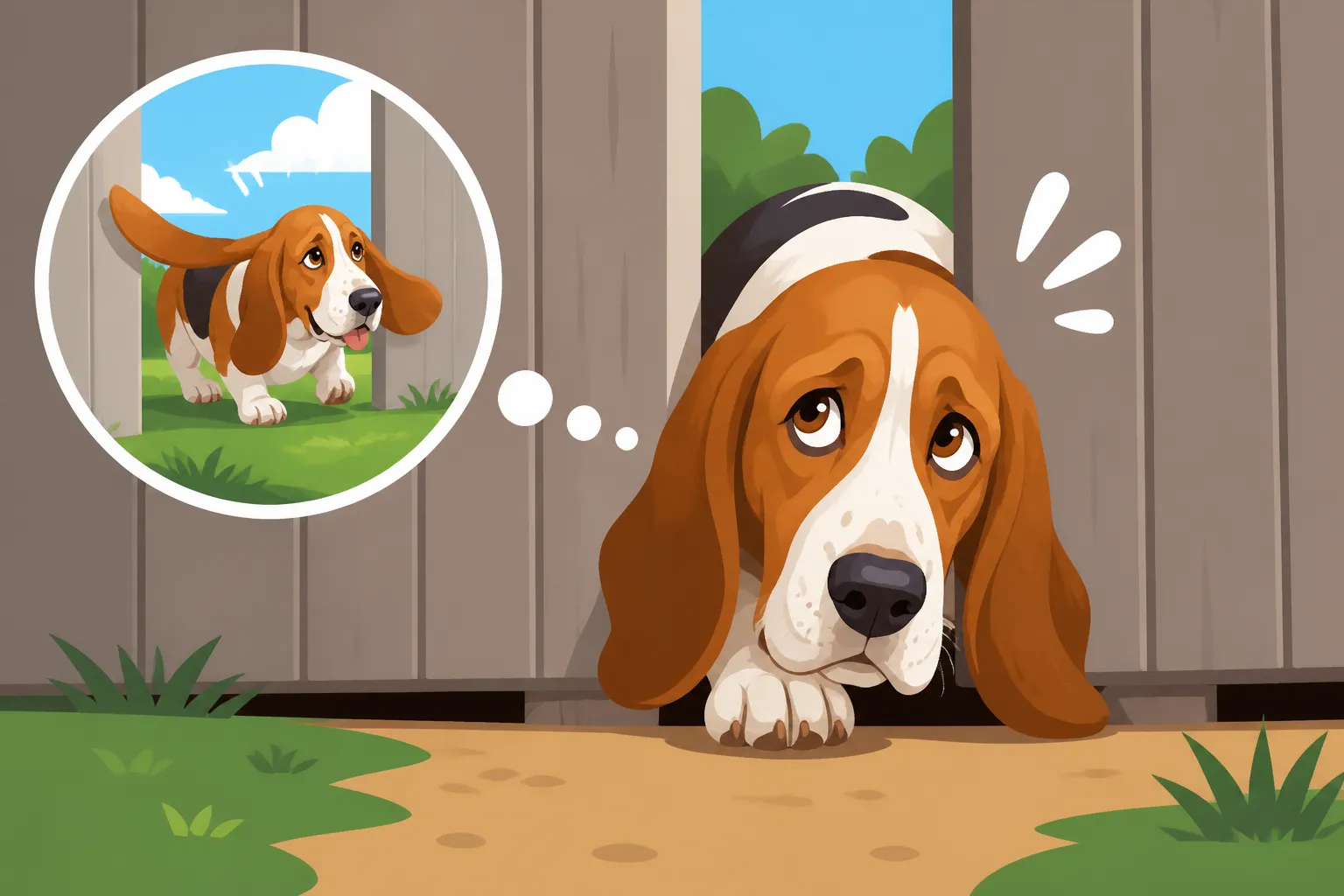
Whether a Basset Hound Squeezes Through Gaps
If you've ever owned a Basset Hound, you know they possess a unique combination of low-to-the-ground sturdiness and an uncanny ability to become surprisingly flat. This often leads to the frustrating realization that your seemingly secure yard or home might have gaps that are, in fact, Basset-sized escape routes. It feels like they defy physics, squeezing through spaces you'd swear a much smaller dog couldn't navigate, leaving you wondering if your lovable lump of hound has secret Houdini aspirations. This guide will explore why Basset Hounds are prone to slipping through small openings, identify common weak points in your home and yard, and provide practical, real-world solutions to keep your beloved scent hound safely contained.
The Deceptive Agility of a Low-Slung Hound
Don't let that lumbering gait or those sorrowful eyes fool you; a Basset Hound is a creature of surprising determination and, when motivated, can exhibit remarkable flexibility. Their unique physique, combined with their intense drive to follow a scent, makes them surprisingly adept at exploiting weaknesses in your containment strategy.
Built for the Ground, Not for Obstacles
Basset Hounds are literally built "bas," which means "low" in French. Their short, stout legs and long, heavy bodies are designed to keep their powerful noses close to the ground, trailing scents for miles. This low center of gravity and the sheer weight of their bone structure often give people the impression that they're not agile. However, their loose skin, flexible spine, and ability to flatten their bodies can be incredibly deceiving. A Basset can often "pancake" itself and slither through surprisingly tight spaces. Think of it less like a dog squeezing through and more like a liquid, conforming to the contours of the gap. Many an owner has stared in disbelief as their hefty hound wriggled through a gap that looked far too narrow for their broad chest.
The Unstoppable Power of Scent
The primary driver behind a Basset Hound's escape artistry is, almost without exception, their nose. These dogs were bred for centuries to follow a scent trail relentlessly, and when a tantalizing aroma wafts from beyond the fence line, a Basset's brain essentially goes into tunnel vision. They don't weigh the risks or consider your stern commands; they simply must investigate. Why a Basset Hound Stops Hearing You When It Smells Something is not just a quirky trait, it's a fundamental part of their being. If there's a gap, a loose latch, or a weakened spot in the fence, and a captivating smell on the other side – be it a rabbit, a squirrel, or even just the lingering scent of another dog – your Basset will test that weakness. Their determination, which some might call stubbornness, means they will persist until they either succeed or give up due to sheer exhaustion, not because they’ve decided to obey. This is why relying on recall alone is often insufficient, as The Recall a Basset Hound Will Never Reliably Give You when they are truly on a mission.
Identifying the Sneaky Escape Routes in Your Home and Yard
Before you can truly secure your property, you need to think like a Basset. Get down on their level, physically crawl around your yard, and look for any opening that seems "just a little too wide" or "a bit low." You'd be amazed at what they consider an invitation.
Fence Lines and Gate Gaps
Fences are often the first line of defense, but they're also frequently the weakest. A Basset Hound's low stature means they're not usually jumpers, but they are masters of finding and exploiting ground-level weaknesses.
- Under the Fence: This is a classic Basset escape route. They don't necessarily dig deep tunnels like some breeds; rather, they'll nose at a loose spot, push, and wriggle their way under if there's enough clearance. Over time, soil erosion or shifting ground can create small gaps where the fence meets the earth. A determined Basset will push their head through, then their shoulders, and the rest of their surprisingly flexible body often follows. Whether a Basset Hound Digs Under a Fence explores this further, but even minor ground irregularities can become major problems.
- Between Fence Panels or Posts: Wooden fences, especially older ones, can warp, shrink, or simply have minor construction flaws that leave gaps between panels or where panels meet posts. Even a gap of just a few inches can be enough for a determined Basset to flatten themselves and slide through.
- Gates with Clearance: Gates are notorious weak points. Often, they have a larger gap at the bottom than the rest of the fence, or there might be space between the gate and the latch post. If the latch isn't completely secure, a clever Basset might even learn to nudge it open. Whether a Basset Hound Wanders if the Gate Opens is a common scenario, and even a well-meaning visitor who doesn't fully close the gate can spell disaster.
Doors and Windows: Unseen Openings
It's not just the yard you need to worry about. Inside the home, a Basset Hound's curiosity and scent drive can lead them to unexpected escape attempts.
- Screen Doors: A flimsy screen door is no match for a Basset's determined nose. They can push through them, or if the screen is old or damaged, tear right through it. Even a securely latched screen door can be compromised if the frame itself is weak or if they discover a way to paw at the latch.
- Unlatched or Open Doors: A back door left ajar for "just a second," or a front door that's not fully secured, presents an irresistible opportunity. Basset Hounds are often surprisingly quick when they decide to bolt, especially if a thrilling smell awaits them.
- Low Windows: If you have windows that open inward or slide open and are low to the ground, especially in a quiet room, a Basset might try to investigate if a strong scent passes by. While less common, it's a possibility, particularly if they can lean against the screen.
Fortifying Your Property Against a Basset Houdini
Securing your home and yard against a Basset Hound requires a multi-layered approach, combining physical barriers with vigilant management. Think of it as creating concentric rings of security.
Reinforcing Fence Lines and Gates
Physical barriers are paramount. An "invisible fence" or electronic containment system alone is often insufficient for a Basset Hound, whose drive to follow a scent can easily override the discomfort of a collar correction. While Whether an Invisible Fence Holds a Basset Hound is a question many owners ponder, for a true scent hound, it's often not reliable enough.
- Close Ground Gaps: For existing fences, bury chicken wire or hardware cloth along the bottom edge, extending it a foot or more into the ground and bending it outward to deter digging. You can also run landscape timbers or large rocks along the base of the fence. For wooden fences, add a kickboard along the bottom to fill any gaps.
- Secure Fence Panels: Inspect your fence regularly for warped or loose panels. Reinforce them with additional screws or brackets. For chain-link fences, ensure the links are tight and consider adding fence bottom wire or a tension bar to prevent it from being lifted.
- Gate Upgrades: Replace flimsy gate latches with heavy-duty, spring-loaded hardware that automatically closes and latches. Consider adding a secondary bolt or even a padlock for extra security, especially if you have children or guests who might forget to latch it properly. Look for gates that sit flush with the ground or add a piece of wood or metal along the bottom to eliminate any clearance. You can find a wide array of gate reinforcement hardware on Amazon, from heavy-duty latches to self-closing hinges.
Securing Doors and Windows
Even indoors, vigilance is key. A Basset left unsupervised for too long, especially if bored or restless, might test household boundaries.
- Double-Check All Doors: Make it a habit to always ensure doors leading outside are fully closed and latched. For screen doors, install stronger screens or metal mesh if your Basset is a persistent pusher.
- Install Baby Gates: Inside the house, baby gates are your best friend. They can prevent access to certain rooms, block off stairways (which is also good for a Basset's back health!), or create a secure "den" area. There are many robust What Baby Gates Cost a Basset Hound Owner options available that can keep even a determined Basset contained within a specific zone.
- Window Screens: Ensure all window screens are secure and in good repair. If your Basset can reach a low window, consider adding a physical barrier or simply keeping that window closed when you're not actively supervising.
Using Technology to Your Advantage
While physical barriers are primary, technology can offer a valuable layer of reassurance and aid in recovery should an escape occur.
- GPS Trackers: Even with the best precautions, accidents happen. A GPS tracker collar can be a lifesaver if your Basset manages to slip away. Devices like the Fi collar or Tractive can provide real-time location tracking, allowing you to quickly locate your wandering hound. Whether a Basset Hound Should Wear a Tracker is a question with a resounding "yes" for any Basset owner, given their strong scent drive and potential for getting lost. You can find various brands of GPS trackers on Amazon.
- Security Cameras: Installing outdoor security cameras can help you identify exactly how your Basset is getting out, allowing you to address specific vulnerabilities. It's often surprising to see just how determined and creative they can be!
Training and Management to Bolster Your Defenses
Beyond physical fortifications, consistent training and smart management strategies play a crucial role in preventing escapes. While a Basset's nose is a powerful force, positive reinforcement and routine can help mitigate risks.
Supervised Outdoor Time
Never assume your yard is 100% escape-proof, especially when you first bring a Basset Hound home or after a significant weather event that might have created new vulnerabilities.
- Active Supervision: Whenever your Basset is in the yard, be out there with them, actively observing. Use this time to not only enjoy their company but also to watch for any areas they seem interested in exploring, sniffing intently, or attempting to push through. This proactive observation can reveal new escape attempts before they succeed.
- Leash Walks: Outside of a truly secure, supervised area, your Basset should always be on a leash. Their nose will lead them, and even if they're usually good, that one irresistible scent can trigger their primal trailing instinct. Whether a Basset Hound Pulls Hard for Its Size is a common complaint, so a sturdy harness and leash are essential for comfortable and secure walks.
The Role of Training
While a Basset's scent drive can override learned commands, foundational training is still important for general safety and house manners.
- Strong Recall (Even if Imperfect): Continue to practice recall in low-distraction environments. While a Basset on a hot trail might ignore you, a solid recall can be invaluable in other scenarios, like if they slip out the front door before fully engaging their scent drive. Training platforms like BAXTER & Bella offer comprehensive online courses that can help you build a stronger foundation for commands like "come," even with a scent hound's unique challenges.
- "Leave It" and "Wait": These commands can be extremely useful. "Leave it" teaches them to ignore enticing items or scents, and "wait" can be used at doorways or gates to prevent bolting. These commands require consistent, positive reinforcement.
- Crate Training: A crate isn't just for puppies; it's a safe, secure den for your Basset when you can't actively supervise them. It prevents them from finding trouble, chewing inappropriate items, or testing your home's boundaries. What a Crate That Fits a Basset Hound Costs is an investment in safety and peace of mind.
Enrichment and Mental Stimulation
A bored Basset is a Basset looking for something to do, and that "something" might just be finding a way out. Mental stimulation can help tire them out and satisfy their innate drives in a constructive way.
- Scent Work: Lean into their incredible noses! Use puzzle toys, snuffle mats, or hide-and-seek games with treats around the house. These activities tap into their natural instincts and provide mental exercise. Whether a Basset Hound Takes to Scent Work is a definite yes, and it's a fantastic way to bond and provide enrichment.
- Chew Toys: Provide a variety of durable, interesting chew toys to keep them occupied, especially when you can't give them your full attention. This can redirect their energy away from destructive behaviors or escape attempts.
Here's a quick overview of common escape points and effective solutions:
| Escape Point | Description | Recommended Solution(s) |
|---|---|---|
| Under Fence | Gaps between fence bottom and ground due to erosion, construction. | Bury chicken wire or hardware cloth (12-18 inches deep, bent outwards). Add kickboards or rocks. |
| Between Fence Panels | Warped wood, gaps in chain-link, insufficient spacing. | Reinforce panels with additional fasteners. Add mesh/wire to cover gaps. |
| Gate Clearance | Large gap under gate, space around latch post. | Add a bottom panel/bar to the gate. Install self-closing hinges and sturdy, locking latches. |
| Screen Doors | Flimsy screens, weak frames, easily pushed open. | Install heavy-duty pet-proof screens. Add a sturdy metal grille. Always use a secondary lock. |
| Unlatched Doors | Doors not fully closed or secured by humans. | Establish strict "door discipline." Use baby gates as a secondary barrier inside the home. |
| Low Windows | Easily accessible windows with screens that can be pushed out or torn. | Keep low windows closed or install secure metal grilles. Supervise closely if open. |
Successfully containing a Basset Hound means recognizing their incredible capabilities and planning accordingly. It's a commitment to vigilance and often involves a bit of creative problem-solving on your part. But with a secure environment and consistent management, you can ensure your beloved Basset is safe, sound, and not out exploring the neighborhood without you.
Disclaimer
This article is for general informational purposes only and does not constitute professional advice. Laws, prices and regulations vary by location and change over time. Consult a qualified professional for guidance on your specific situation.