Whether a Basset Hound Is Actually Unintelligent
It's a common, often frustrating, misconception that Basset Hounds are unintelligent. Many owners interpret their independent streak and scent-driven focus as stubbornness or even outright stupidity, leading to exasperated sighs and unfulfilled training goals. This guide aims to clear up that misunderstanding, revealing the nuanced intelligence of the Basset Hound and offering practical insights into how to work with, rather than against, their unique brainpower.
The Misconception of Basset Hound "Stupidity"
Let's be honest, we've all been there. You call your Basset Hound, and they act like you're speaking a foreign language, their nose glued to a fascinating scent on the ground. Or you try to teach them a simple command, and they offer you a look that clearly says, "What's in it for me?" These moments can be incredibly disheartening, making you wonder if your beloved hound truly understands anything at all. But what seems like a lack of intelligence is, in reality, a deeply ingrained set of instincts and a distinct way of processing the world.
Scent-Driven Focus vs. Obedience
The Basset Hound was purpose-bred for one thing: to follow a scent trail. Their magnificent, long ears sweep scents upward, their loose skin captures scent particles, and their incredibly powerful nose is designed to detect and dissect odors with astonishing precision. When a Basset's nose hits a compelling trail, their entire world shrinks to that singular mission. They enter a state of profound focus, often called "nose blindness" or "selective hearing," where external commands fade into the background.
This isn't them being stupid; it's them being brilliant at what they were designed to do. Their brain is actively engaged in interpreting complex olfactory information, a task far more demanding than the simple "sit" command you're attempting to convey. Imagine a scientist engrossed in a groundbreaking experiment – would you call them unintelligent for not immediately responding to a casual question? No, you'd recognize their intense concentration. It's the same for a Basset Hound on a scent trail. Understanding Why a Basset Hound Stops Hearing You When It Smells Something is crucial to appreciating their natural inclination.
Selective Hearing and Independent Thinking
Basset Hounds aren't retrievers, bred to work closely with humans and retrieve fallen game. They were historically hunters who would methodically track game over long distances, with the hunter often following on foot, not riding horseback. This meant they needed to be independent thinkers, capable of making decisions about the trail without constant human direction. Their independence is a feature, not a bug.
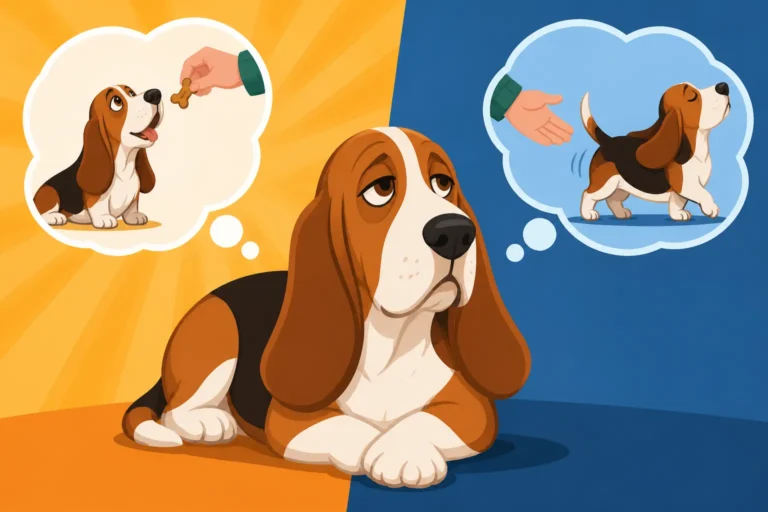
This independent streak manifests as what many owners perceive as stubbornness. They'll weigh your command against their own interests. Is that treat you're offering really better than the smell of that squirrel that just darted across the yard? Often, the answer for a Basset is no. They aren't trying to defy you; they're simply prioritizing. They're capable of understanding, but they're also capable of deciding whether they want to comply. This is a subtle but important distinction from a lack of comprehension. For more on this, check out Whether a Basset Hound Is Stubborn or Just Not Interested.
Understanding the Basset Hound's Unique Intelligence
To truly appreciate a Basset Hound's intelligence, you need to shift your perspective away from conventional "obedience" metrics and look at their natural problem-solving abilities, their social acumen, and their incredible sensory world.
Problem-Solving Prowess
Don't let the doleful eyes and laid-back demeanor fool you; Basset Hounds are incredibly clever when it comes to getting what they want. If there's a perceived weakness in your household security – like an unlatched gate, a counter within reach of a well-timed "stand-up," or a food puzzle that requires a little too much thought – a Basset will figure it out. They can be remarkably resourceful when motivated by food or the desire to explore.
I've known Bassets who could open screen doors, nose open poorly latched cupboards, and even figure out how to retrieve a dropped treat from under the sofa using their long snout and clever paws. This isn't brute force; it's observation, experimentation, and a clear understanding of cause and effect. They learn quickly what actions yield desirable results, even if those results aren't what you had in mind. This type of intelligence is often overlooked because it's not always in service of human commands.
Emotional and Social Intelligence
Beyond their scenting prowess, Basset Hounds possess a surprising degree of emotional and social intelligence. They are incredibly attuned to their human companions' moods, often offering a comforting nudge or a soulful gaze when you're feeling down. They are masters of manipulation (in the most endearing way, of course!). A perfectly timed mournful bay or a sad-eyed stare can often persuade an owner to share a snack or offer extra cuddles.
They are also incredibly adaptable, settling into family routines with ease and forming strong bonds with every member of the household. They understand social dynamics within the home, often knowing exactly who is most likely to give in to their pleas or who to approach for a particular type of interaction. This nuanced understanding of human behavior and relationships speaks volumes about their intelligence, even if it doesn't always translate into a perfect "stay."
Training Strategies for a "Smart but Stubborn" Basset Hound
Since we've established that Basset Hounds aren't unintelligent but rather uniquely motivated and independent, our training approach needs to adapt. Trying to force a Basset into traditional obedience often leads to frustration for both dog and owner. Instead, lean into their natural inclinations.
Motivation is Key
Forget abstract praise alone; Basset Hounds are primarily food-motivated. This is not a flaw; it's a powerful tool! High-value, irresistible treats are your best friend. Think small pieces of cooked chicken, cheese, or specialized training treats they rarely get otherwise. Use these rewards generously and consistently, especially in the early stages of learning a new command. This helps them understand that complying with your wishes can be far more rewarding than following their nose.
Beyond food, finding what else truly lights up your Basset can unlock their willingness to engage. For some, it might be a favorite squeaky toy, for others, a short, enthusiastic game of tug. The key is to make training a positive, rewarding experience that directly benefits them. Consider exploring resources like BAXTER & Bella for comprehensive online dog training programs that emphasize positive reinforcement and understanding different breed motivations. They often provide valuable insights into working with dogs that have independent streaks.
Short, Engaging Sessions
Basset Hounds aren't built for long, repetitive training drills. Their attention span, especially when not actively engaged by a scent, can be surprisingly short. Instead of 20-minute sessions, aim for multiple 3-5 minute bursts throughout the day. Keep it fun, keep it varied, and end on a high note before they get bored or distracted.
Vary the environment too. Start in a quiet, distraction-free space, then gradually introduce new locations with increasing levels of stimulation. This helps generalize commands, so they understand "sit" means "sit" whether they're in the living room or on a walk. This strategy respects their inherent nature and avoids pushing them to a point of disengagement. You might find that Whether a Basset Hound Learns Slowly is less about their intelligence and more about your approach to training sessions.
Harnessing Their Nose for Good
Instead of fighting their powerful nose, channel it! Scent work, also known as nose work, is an incredible way to engage a Basset Hound's intelligence, tire them out mentally, and build a stronger bond. You can start simply with a snuffle mat (easily found on Amazon) where you hide treats, or by scattering kibble in the grass for them to find.
More advanced scent games can involve hiding treats in various rooms or teaching them to find specific odors. This kind of activity satisfies their deepest instinct and provides immense mental stimulation. It allows them to use their extraordinary talent in a constructive way, making them happier and often more settled hounds. You can find a myriad of puzzle toys and interactive feeders on Amazon that cater specifically to dogs who love to use their noses to problem-solve. Engaging their natural abilities can truly transform a Basset Hound's behavior and willingness to participate in activities. Giving a Basset Hound's Nose Something to Do is one of the best ways to connect with them.
Common Scenarios and How to Interpret Them
Many behaviors that baffle or frustrate Basset Hound owners are actually clear indicators of their unique intelligence and instincts, rather than a lack thereof. Learning to read these signals can transform your relationship with your hound.
The "Frozen" Basset
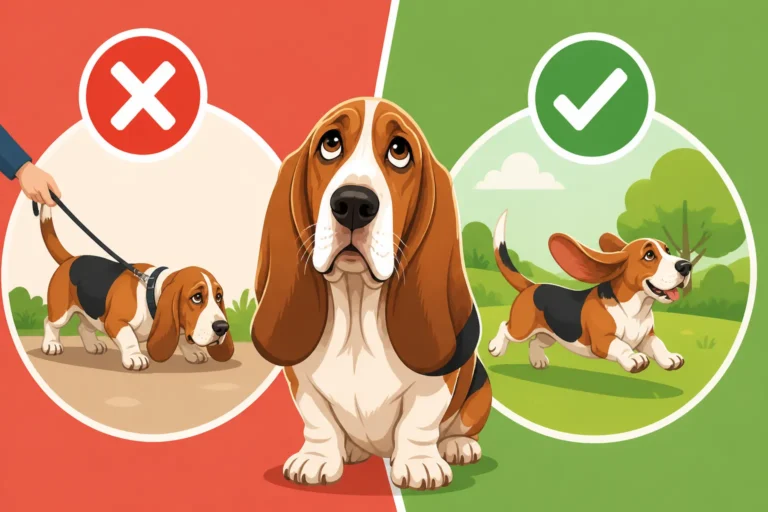
Picture this: you're on a lovely walk, and suddenly your Basset Hound slams on the brakes. Their nose is to the ground, tail might be slightly wagging, and no amount of cajoling, pulling, or tempting seems to get them to budge. They look like a statue, rooted to the spot. This is the classic "frozen Basset" maneuver, and it's almost always a sign that they've hit a scent jackpot.
This isn't them being stubborn for the sake of it, or suddenly forgetting how to walk. Their brain is utterly absorbed in deciphering the invisible story left by another creature. They are processing information, much like a detective at a crime scene. Trying to drag them away immediately is akin to interrupting someone mid-thought. Instead, give them a moment (within reason and safety), then use your highest-value treat to gently lure them forward. Sometimes, giving them a few seconds to "finish reading" the scent will make them more willing to move on. If they frequently stop mid-walk, you might want to look into Whether a Basset Hound Sits Down Mid Walk for more insights.
The Art of the "Basset Bay"
The Basset Hound's bay is legendary, a deep, resonant sound that carries for considerable distances. New owners often worry if their Basset is "too loud" or "bays for no reason." However, the bay is a distinct form of communication, rooted in their hunting heritage. It's not mindless noise; it's a declaration.
A Basset will bay when they've picked up a strong scent, announcing to their pack (or you, their human pack) that they are on the trail. They might bay when they hear another dog, a distant siren, or even when they're excited or feeling neglected. It’s an expression of their instincts and emotions. Understanding what triggers your Basset's bay can help you manage it. If they bay at every passing squirrel, it’s not a sign of unintelligence, but rather a powerful, instinctual response. While you can work on a "quiet" cue, acknowledging the root of the bay is the first step. For a deeper dive into their vocalizations, consider The Bay a Basset Hound Uses and the Neighbors Hear.
Ultimately, seeing a Basset Hound as "unintelligent" is a disservice to a breed that is profoundly clever in its own unique way. They may not be the flashiest obedience stars, but their keen senses, problem-solving skills, and deep emotional connections make them incredibly intelligent companions, if you're willing to learn their language.
| Common Perception (Misconception) | Basset Hound Reality (Intelligence) |
|---|---|
| "They're stubborn and don't listen." | They are independent thinkers, prioritizing powerful instincts (like scent) or their own desires over human commands. |
| "They're slow to learn commands." | They learn quickly when highly motivated, but their short attention span requires concise, engaging training. |
| "They ignore me on walks." | Their nose takes precedence; they are deeply engrossed in processing complex scent information. |
| "They're lazy and don't want to exercise." | They conserve energy and can be strategic about movement, especially if a more interesting scent hasn't appeared. |
| "They just make noise for no reason." | Their bay is a form of communication, often triggered by scents, other sounds, or emotional states. |
| "They're not very smart." | They excel at problem-solving when self-motivated (e.g., accessing food, escaping), and have high social intelligence. |
Disclaimer
This article is for general informational purposes only and does not constitute professional advice. Laws, prices and regulations vary by location and change over time. Consult a qualified professional for guidance on your specific situation.