Whether a Basset Hound Learns Tricks
Oh, the eternal question for Basset Hound owners! You’ve got this wonderful, floppy-eared companion, and you see other dogs doing all sorts of impressive tricks, while your Basset seems to regard your requests with a look that says, "Is there food involved? No? Then I'll just stand here and think about sniffing." It’s easy to feel like your beloved Basset is uniquely untrainable when it comes to learning tricks, but the truth is, they absolutely can learn them – it just requires a different approach, a whole lot of patience, and a deep understanding of what makes a Basset tick (or, more accurately, sniff). This guide will help you unlock your Basset's hidden potential for trick training, transforming those moments of mutual bemusement into shared accomplishment.
Understanding the Basset Hound Brain for Trick Training
Before you even think about teaching "sit" or "shake a paw," it's crucial to understand the unique way a Basset Hound's mind works. They aren't wired like a Border Collie or a Poodle; their priorities are distinctly, gloriously hound-like.
The Basset Hound's Motivation: Scent First, Everything Else Second
Let's be brutally honest here: your Basset Hound's universe revolves around its nose. Their olfactory capabilities are legendary, often cited as second only to a Bloodhound's. This incredible sense of smell isn't just a fun fact; it's the lens through which they experience the world and interpret your requests. When you're trying to teach a trick, and your Basset seems completely oblivious, it's often not defiance. It's because a fascinating new scent wafted in from outside, or perhaps a crumb of breakfast cereal landed under the sofa that morning. That scent is, to your Basset, the most compelling drama unfolding in their world at that precise moment.
For a Basset, a smell is like a full-color, IMAX movie with surround sound, and your voice asking them to "stay" is a distant whisper from a forgotten commercial break. This makes consistent attention during training a real uphill battle. This isn't to say they can't focus, but their focus can be pulled away by the slightest whiff of something interesting. Because of this, What Actually Motivates a Basset Hound is almost always going to be something they can eat. You might find that praise alone, while nice, simply doesn't cut it when competing with the invisible world of odors.
"Stubborn" or "Selective Hearing"? Deciphering Basset Behavior
Many Basset owners, myself included, have affectionately (or exasperatedly) called their dogs "stubborn." They certainly have a reputation for it! But is it true stubbornness, or something else entirely? Often, what looks like stubbornness in a Basset Hound is actually a combination of strong independent thought, low motivation for things that don't involve food or scent, and a touch of self-preservation (why exert effort if there's no payoff?). They're not necessarily trying to defy you; they're simply weighing the pros and cons of your request against their own innate desires. If fetching a ball doesn't provide a direct, immediate, and high-value reward, why bother?
They don't often feel the inherent need to please in the same way some other breeds do. They please themselves first, and if your request aligns with their self-interest, then great! If not, you might as well be talking to a brick wall. This is where the "selective hearing" comes in. They hear you, alright, but they're choosing whether or not to process and act on that information. Understanding this shift in perspective – from "my dog is stubborn" to "my dog needs a good reason to do what I ask" – is the first step toward successful trick training. You're not battling defiance; you're just negotiating with a very discerning individual. If you've ever wondered Whether a Basset Hound Chooses Not to Obey, the answer is often tied to this selective engagement rather than genuine malice.
Setting Realistic Expectations for Basset Hound Tricks
Armed with a better understanding of your Basset's unique mental landscape, it's time to set some realistic goals. You're not training a circus dog, and that's perfectly okay. The joy comes from the shared experience and the small victories.
Simple vs. Complex Tricks: Where Bassets Shine
When it comes to tricks, start simple. Think foundational behaviors that lead into slightly more complex ones. Bassets excel at tricks that are physically comfortable for them and offer clear, immediate rewards. Things like "sit," "down," "stay" (in short bursts!), "paw" or "shake," and "roll over" are often attainable. These tricks leverage natural movements or can be easily lured with a treat. For example, getting a Basset to "sit" often just involves holding a treat over their head and moving it backward; their backend naturally drops to follow. Whether a Basset Hound Sits on Command is a great starting point for any training journey.
More complex, multi-step tricks, or those requiring significant agility or sustained high energy, will be much harder, if not impossible, for most Bassets. Think about their build: a long, heavy body on short, often bowed legs. Jumping through hoops or intricate weaving patterns aren't their forte, nor are they particularly good for their long backs. Focus on tricks that allow them to use their brains, their charm, and their food motivation. Don't compare your Basset to the dogs you see on social media doing intricate routines. Your Basset has its own, distinct talents, like being a master sniffer and a champion napper.
The Importance of Short, Engaging Training Sessions
This is perhaps the most critical piece of advice for Basset Hound trick training: keep sessions short. Incredibly short. We're talking 3-5 minutes, maybe twice a day, tops. Anything longer, and you'll likely see their attention wane, their interest wander, and their "stubborn" side emerge. Bassets aren't built for prolonged, intense mental exertion in a structured training environment. Their brains are designed for long, slow tracking, not rapid-fire command execution.
The goal is to always end on a high note, even if it's just one successful "sit." This concept is often called "quit while they're winning." You want your Basset to associate training with positive feelings, yummy treats, and fun, not with boredom or frustration. If you notice them getting distracted, sniffing the floor, or simply walking away, it's time to call it quits for that session. Whether Short Sessions Suit a Basset Hound is an emphatic yes. Consistency over duration is key here. A few short, successful sessions a day will yield far better results than one long, frustrating one.
Practical Strategies for Teaching Your Basset Hound Tricks
Now that we've set the stage, let's dive into the how-to. Remember, patience is your most valuable tool, right alongside those high-value treats.
High-Value Rewards and Consistent Reinforcement
When training a Basset Hound, your reward system needs to be top-tier. Kibble, which they likely get every day, is often not "high-value" enough to compete with a compelling scent or their own desire for a nap. You need something they love. This could be small pieces of cooked chicken, cheese, hot dogs, or specially made soft training treats. Think of it as currency: for a Basset, you need to offer premium currency for their efforts. Many owners find great success with soft, smelly treats from brands available on platforms like Amazon, as these tend to be irresistible.
Consistency is also paramount. When your Basset performs the desired action, the reward needs to appear instantly – within a second or two. This immediate reinforcement helps them understand exactly what behavior earned them that tasty morsel. If there's a delay, they might not connect the treat to the trick you're trying to teach. Combine the treat with enthusiastic verbal praise ("Yes! Good boy/girl!") to build a positive association. Avoid holding out on rewards to see if they'll do it "for free." Especially in the early stages, every correct response deserves a payoff. If you’re ever asked Whether a Basset Hound Works for Food Only, you can confidently say that it’s often the most reliable motivator!
Breaking Down Tricks into Tiny, Manageable Steps
Even simple tricks can seem overwhelming if you try to teach the whole thing at once. The key is "shaping" – breaking the trick down into the smallest possible steps and rewarding each successful increment.
Let's take "shake a paw" as an example:
- Ask for a "sit": Your Basset should already know this. Reward immediately.
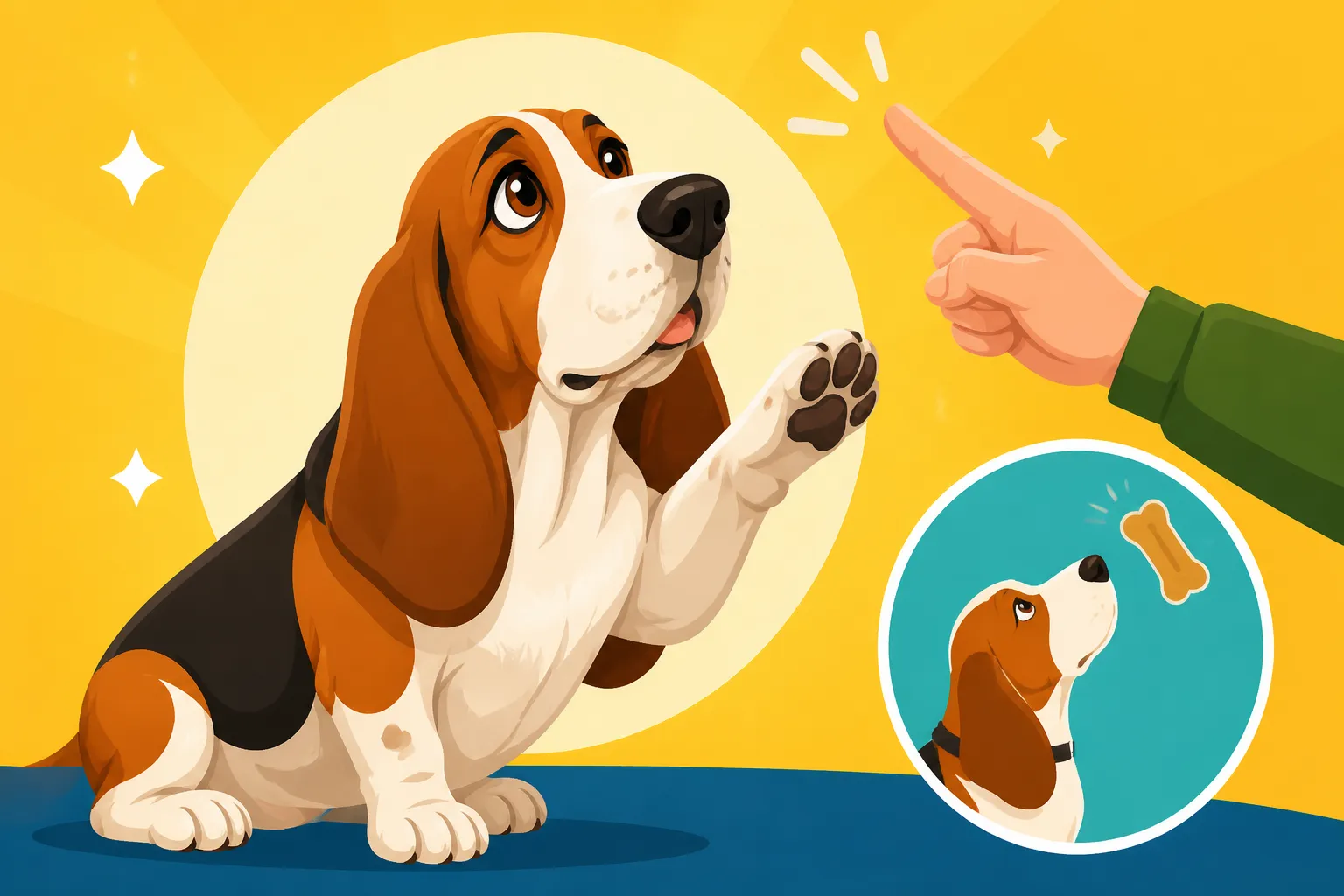
- Lure the paw lift: While they're sitting, hold a high-value treat in a closed fist. Present your closed fist to your Basset's nose.
- Wait for interaction: Your Basset will likely try to sniff or lick the treat. Be patient. At some point, they might gently tap your hand with their paw to try and get the treat. The instant their paw touches your hand, open your hand, give them the treat, and praise. This is the crucial moment.
- Repeat and refine: Repeat step 3 multiple times. Once they consistently tap your hand, start adding the verbal cue "shake" or "paw" just as they lift their paw.
- Elevate the paw: Gradually, you can begin to lift your hand slightly, encouraging them to lift their paw higher. Reward for more pronounced lifts.
- Take the paw: Once they are consistently lifting, gently take their paw in your hand as you say "shake" or "paw," give the treat, and praise.
It might take several short sessions to get through these steps, and that's perfectly fine. Don't rush it. This process builds confidence and makes learning achievable for your Basset. Consider resources like BAXTER & Bella, which offer online training programs that break down behaviors into manageable steps and often provide visual aids, which can be really helpful when you're trying to shape a behavior.
Making Training a Game, Not a Chore
For a Basset Hound, training needs to feel like an extension of play or a way to earn delicious treats, not a tedious drill. Incorporate short bursts of training into your daily routine. Practice a trick once or twice before a meal, or during a walk if there aren't too many distractions. Keep your energy positive and upbeat. If you're stressed or frustrated, your Basset will pick up on it and be less inclined to participate.
Think about what your Basset enjoys. Do they love sniffing? Integrate scent work games that subtly introduce commands. For instance, hide treats around the house and give a "find it" command, then reward for the successful "find." This makes learning a sensory adventure, which is exactly what a Basset thrives on. Whether a Basset Hound Enjoys a Snuffle Mat is generally a resounding yes, and these can be used to make finding food-based rewards part of a game. The more you can frame training as a fun interaction with you, rather than a demanding task, the more receptive your Basset will be.
Common Challenges and Troubleshooting in Basset Trick Training
Even with the best intentions and strategies, training a Basset Hound for tricks will present its own unique set of challenges. It's part of their charm, and knowing how to navigate these moments is key to success.
When Your Basset Just Walks Away
Ah, the classic Basset Houdini move – walking away mid-session, often with a profound sigh, as if to say, "I have better things to do." This is perhaps the most common frustration for Basset owners attempting trick training. When this happens, it's usually a sign of one of two things:
- Overwhelm or boredom: The session is too long, the trick is too hard, or the rewards aren't compelling enough.
- Distraction: A more interesting scent, sound, or sight has captured their attention.
When your Basset walks away, don't chase them or force them back. This will only build negative associations with training. Instead, accept it as a sign to end the session. You might try to recapture their attention with an irresistible treat and one very easy, known trick (like "sit") for a quick win before officially ending. This leaves them on a positive note. For the next session, shorten it even further, increase the value of your treats, or move to a less distracting environment. Remember, their attention span is not their strongest suit, and it's better to quit early than to have a battle of wills.
Maintaining Tricks Over Time and in Different Environments
You've taught your Basset "down" perfectly in the kitchen, but the moment you ask for it in the living room, or worse, outside at the park, it's like they've never heard the word before. This is a common phenomenon in dog training called "generalization" or "proofing." Dogs don't automatically generalize a learned behavior to new environments or with different distractions.
To help your Basset maintain tricks:
- Practice in varied locations: Once a trick is solid in one quiet spot, gradually introduce it in different rooms of your house, then your yard, then a quiet park. Start with minimal distractions and slowly increase them.
- Vary your cues: Don't just use your voice. Try hand signals. This adds redundancy and can be helpful if your Basset is distracted by sound or if you're in a noisy environment.
- Intermittent reinforcement: Once a trick is reliably learned, you don't need to reward every single time. Start rewarding randomly – sometimes with a treat, sometimes with just praise, sometimes with a quick game of tug. This keeps them guessing and motivates them to keep trying, as they never know when the big payoff might come. Be careful not to phase out treats too quickly, though, especially with a Basset!
- Keep it fun: Periodically revisit old tricks with high-value rewards to keep them polished and enjoyable. A short burst of "sit," "down," "paw" for a shower of treats can be a fun way to warm up for longer walks or cuddle sessions.
Think of it this way: your Basset is capable of learning, but their primary focus is elsewhere. It's your job to make trick training worth their while, understanding their hound nature, and celebrating every little success along the way.
| Trick Difficulty | Examples of Tricks | Basset Hound Suitability | Training Tips |
|---|---|---|---|
| Easy | Sit, Down, Stay (short), Paw/Shake, Touch (nose to hand) | High; leverages natural movement, low physical demand, strong food motivation works well | Use luring with high-value treats. Keep sessions very short (2-3 min). Practice frequently in quiet environments. |
| Medium | Roll Over, Spin, Play Dead, Bow, Speak | Moderate; requires more coordination, patience, and shaping of behavior. May be physically awkward for some. | Break into tiny steps. Use a clicker for precise timing. Introduce hand signals early. Expect longer learning curve. |
| Challenging | Weave Poles, Fetch specific items, Jump through hoop, Agility courses | Low; generally high physical demand or extended attention/complex sequencing. Not ideal for their build or typical temperament. | Focus on fun and engagement, not perfection. Modify activities to be low-impact and scent-based. Celebrate effort over flawless execution. |
Basset Hounds absolutely can learn tricks, and they can be incredibly charming performers once they understand what's being asked and why it's worth their precious energy. It's not about forcing them to be something they're not, but rather about tapping into their innate intelligence and motivations. By being patient, using irresistible treats, keeping sessions brief and fun, and breaking down commands into tiny, achievable steps, you'll find that your Basset Hound is far from stubborn; they're simply discerning, and once convinced, surprisingly eager to show off their (adorable) skills.
Disclaimer
This article is for general informational purposes only and does not constitute professional advice. Laws, prices and regulations vary by location and change over time. Consult a qualified professional for guidance on your specific situation.