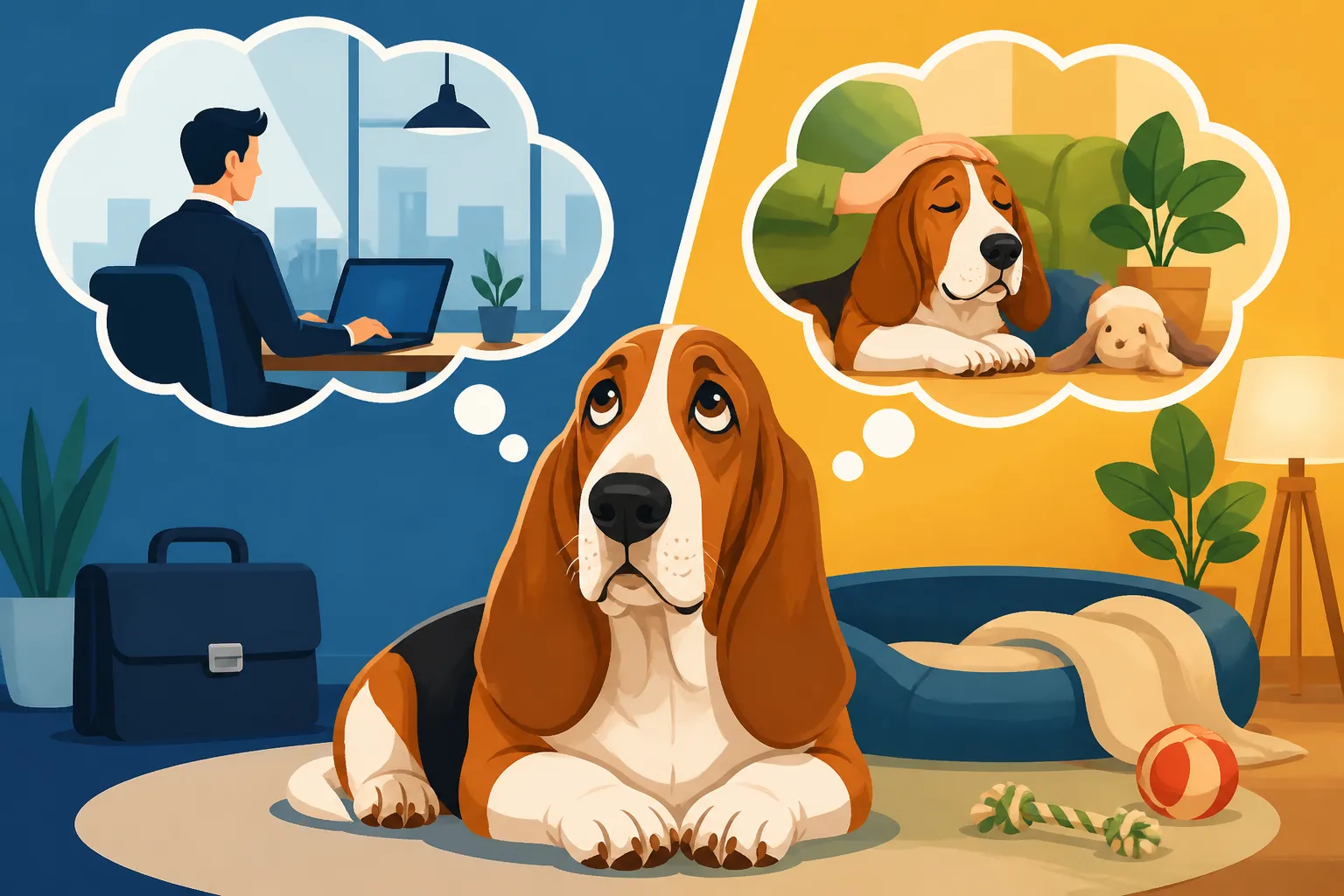
Whether a Basset Hound Suits a Full Time Worker
A Basset Hound can live with a full-time worker, but a regular workday spent entirely alone is rarely a good arrangement without support. The breed’s affectionate nature, need for bathroom breaks and tendency to follow its nose all matter. This guide explains what a realistic weekday can look like, what changes for puppies, and how to decide whether your schedule can meet a Basset Hound’s needs.
Can a Basset Hound Be Left Alone While You Work
An adult dog may manage a workday with support
A settled adult Basset Hound may cope with time at home while you work, especially if it has a predictable routine, a comfortable safe space and enough company before and after your shift. But “adult dogs can be left alone” does not mean that every dog can comfortably spend a full day by itself. Some settle and sleep; others become distressed, bay, chew, pace or have accidents.
The practical question is not simply whether your dog can physically stay home. It is whether the arrangement gives it a chance to go outside, move around, sniff and interact with someone during a long day. A visit from a dog walker, a trusted neighbor or a family member can break up the hours and give your hound a toilet break. If nobody can check in, the plan may be difficult to sustain, even if the dog seems quiet when you return.
Basset Hounds are often attached to their people, and their loud bay can carry through a home or apartment. A dog that vocalizes when alone may create a problem for neighbors as well as a sign that the setup needs attention. Before adopting, consider how your building, household and work commute would handle a dog that struggles to settle. For more on the breed’s vocal nature, see The Bay a Basset Hound Uses and the Neighbors Hear.
A puppy needs a different plan
A young puppy is not ready to be left alone for an entire workday. Puppies need frequent opportunities to go outside, close supervision, social contact and short, gradual practice being alone. They are also still learning what is safe to chew and how to settle when the household is quiet. A crate or puppy-proofed room can help with safety, but neither replaces human care.
That means a full-time worker bringing home a puppy usually needs reliable daytime help. Options may include taking leave during the first settling-in period, arranging for someone to visit, staggering schedules with another adult, or finding suitable daytime care. The right choice depends on the individual puppy, its vaccination status and the care provider’s setup. A rushed drop-off routine followed by a long day alone can make house-training and confidence harder.
Puppy plans are worth sorting out before you commit, rather than after the first week of chewed shoes and missed toilet breaks. If your work schedule is inflexible and nobody can help during the day, an adult dog with a known history of settling alone may be a more realistic match than a puppy. Even then, assess that dog’s specific behavior rather than assuming age alone guarantees an easy transition.
What a Workday Needs to Include
Build in a real midday break
A workable routine usually includes activity and a toilet opportunity before work, a midday visit, and attention again after you get home. The midday visit does not have to be an elaborate outing every time. A walk, a chance to sniff at a safe pace, water and a little company can make a meaningful difference. For a hound, sniffing is also mental activity, not just a way to pass time.
| Part of the day | A practical goal | What to watch for |
|---|---|---|
| Before work | Toilet break, gentle movement and time to sniff | Avoid rushing straight from bed to a long period alone |
| Midday | Toilet opportunity, company and a change of scene | A brief visit may not be enough for a dog that becomes anxious |
| After work | Walk or enrichment, interaction and a calm routine | Keep activity suitable for the dog’s age and comfort |
| Evening | Relaxed company and a final toilet break | Late-night excitement can make settling harder |
The details will vary. A senior dog may need shorter walks or more frequent toilet breaks, while a healthy adult may enjoy a longer sniffing walk. Heat, rain, mobility and the dog’s individual preferences also affect the plan. If a walker is involved, explain that a Basset Hound can be determined when it finds an interesting scent. A secure leash and a route away from traffic are more important than trying to hurry the dog along.
Many owners arrange practical items such as a sturdy leash, food puzzle or washable mat before the workweek begins. Chewy is one place people may browse for those everyday supplies, but check that any item suits your dog’s size, chewing habits and home setup. An enrichment toy should be introduced while you are present first, rather than leaving an unfamiliar object with a dog that might chew or swallow pieces.
Alone-time practice matters as much as the schedule
A dog that has never practiced being alone may find even a short absence unsettling. Start with brief departures and return before the dog becomes highly distressed. Gradually extend the time only when it is coping comfortably. Keep departures and arrivals calm, and provide a safe, familiar resting area. Forcing a dog to “cry it out” can intensify distress rather than teach relaxation.
Look for more than obvious destruction. A dog may pace, drool, bark or bay repeatedly, scratch at doors, refuse food, or become unusually excited or clingy when you return. A pet camera can help you understand what happens after you leave, but it is only an observation tool; it does not provide company or care. If the dog appears distressed, ask a veterinarian or qualified behavior professional for help creating a gradual plan.
Some dogs benefit from a predictable activity before the owner leaves, such as a short sniff walk or a food puzzle they can use safely. But enrichment cannot compensate for an absence that is too long or for significant separation distress. If you are exploring gradual training, Whether a Basset Hound Can Be Left Alone and Whether a Basset Hound Gets Separation Anxiety offer related considerations.
Basset Hound Needs That Affect the Fit
A long walk is not the only answer
Basset Hounds were bred to follow scent, so an interesting trail can command more attention than a person calling from the path. A fenced area or leash is important; do not count on recall as your only safeguard. Daily movement is useful, but it should be appropriate to the dog’s age, health and build. A slow sniffing walk may suit a Basset Hound better than strenuous exercise or a forced run.
The breed’s compact legs and substantial body also make it sensible to be thoughtful about repeated jumping and stairs. Keep the home layout in mind when considering where the dog will rest and how it will get into a car. A worker who wants a dog to accompany them on long, fast hikes every day may find the breed a poor match, while someone happy with steady walks and nose-led enrichment may be more compatible. See How Far a Basset Hound Should Walk for more on tailoring activity.
Grooming and routine care add to the daily picture. Long ears need regular attention, and skin folds, nails and weight need monitoring. These tasks are manageable, but they take time and consistency—especially when a dog is already uncomfortable or uncooperative. Owners who work long hours should plan when care will happen rather than assuming every task can be squeezed in after a tiring day. Relevant guides include The Twice Weekly Ear Ritual a Basset Hound Owner Signs Up For and Cleaning the Folds a Basset Hound's Face Is Made Of.
Consider the dog’s age, health and temperament
A dog’s needs can change over time. A newly adopted Basset Hound may need extra support while it adjusts to a new home, even if it is fully grown. A senior may sleep more but also need help standing, more frequent outdoor breaks or a gentler routine. A dog with pain or other health concerns may not behave like the healthy adult you expected, so discuss any special care needs with a veterinarian.
Temperament matters just as much as age. Some Basset Hounds are relaxed when left with a comfortable bed and familiar sounds. Others are unusually social, sensitive to noise or uncomfortable alone. Ask a rescue or previous caregiver specific questions: What does the dog do after the door closes? Has it stayed alone before? Does it bay, chew, soil indoors or panic? A vague answer such as “he’s a good dog” does not tell you whether the weekday arrangement will work.
Also consider the full household, not just the time you are away. A dog may need a quiet place to rest, secure food storage and a plan for visitors, deliveries and other pets. Because food is a powerful motivator for many hounds, counters and bins should be managed carefully. A slow feeder or puzzle feeder may help with meals, but choose one suited to the dog’s eating style; Chewy product listings can be one way to compare types and materials, alongside advice from your veterinarian if food or weight management is a concern.
How to Make the Arrangement More Reliable
Plan the weekday before bringing the dog home
Write out an ordinary workday, including commute time—not just the hours on your timesheet. Mark when the dog will go out, who will handle the midday break, and what happens if that person is sick or unavailable. Think through bad-weather days, late meetings and the occasional work emergency. A plan that only works when everything goes perfectly is likely to create stress for both you and the dog.
If you hire a walker, arrange a meet-and-greet and explain the dog’s habits, leash needs and any handling sensitivities. A neighbor may be a good option if they are dependable and comfortable with a strong, scent-focused hound. Daycare can suit some dogs, but not all; visit the facility, ask how rest and supervision are managed, and consider whether your dog enjoys the environment rather than choosing it solely for convenience.
Set up the home so the dog can be safe and comfortable. Remove tempting food, secure trash, block access to unsafe rooms and provide water and a resting place. Avoid leaving a dog with new chews or toys until you know how it uses them. If you’re gathering basic supplies, Chewy may help you browse options such as gates, beds or feeding toys; compare dimensions and safety details rather than buying an item just because it is marketed for dogs.
Use a realistic readiness check
A Basset Hound is more likely to suit a full-time worker when the household can provide regular daytime care, gradual alone-time training and attention outside work hours. It is a less promising fit if the dog would routinely be alone from early morning until evening, nobody can provide a break, and there is little flexibility for settling-in or illness. Being honest about the schedule is kinder than hoping the dog will simply adapt.
Ask yourself these questions before deciding:
- Can someone reliably give the dog a toilet break and company during a long workday?
- Can you make time for walks, sniffing and interaction before or after work?
- Is there a backup if your usual dog walker or helper is unavailable?
- Can you manage barking or baying in your home or neighborhood?
- Are you ready to adjust the routine if the dog shows distress or develops different needs?
If most answers are yes, a full-time job does not automatically rule out a Basset Hound. It means the dog’s care has to be built into the week, not treated as an afterthought. If the plan depends on leaving a puppy or adult dog alone for the entire day with no break, consider waiting, changing the care arrangement or looking for a dog whose needs better match your household.
For more on what this breed is like at home, read The Household a Basset Hound Actually Fits, Whether a Basset Hound Suits a First Time Owner and What Basset Hound Owners Wish They Had Known. These topics can help you weigh the appealing parts of the breed against the ordinary, sometimes inconvenient work of sharing your life with one.
Disclaimer
This article is for general informational purposes only and does not constitute professional advice. Laws, prices and regulations vary by location and change over time. Consult a qualified professional for guidance on your specific situation.