Whether a Hunting Basset Hound Is Lighter Built
A hunting Basset Hound can look leaner and more athletic than a show-focused dog, but “lighter built” is a tendency, not a guarantee. Working lines vary, and a slim outline alone does not prove good fitness or sound structure. This guide explains what the phrase usually means, how to assess a dog’s condition, and what to ask when comparing lines.
What “lighter built” usually means
Frame, muscle, and body condition are different things
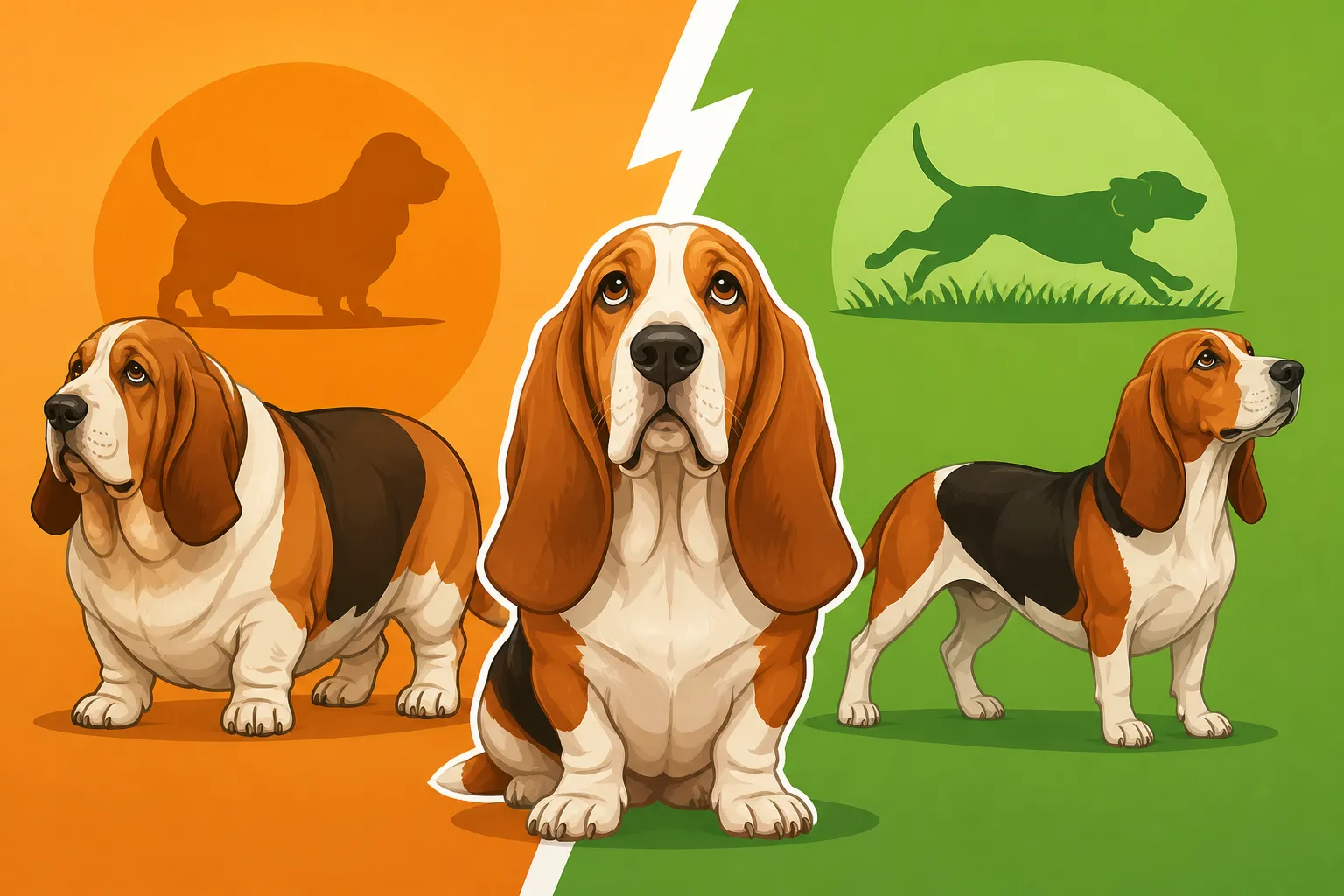
When people describe a hunting Basset Hound as lighter built, they may mean that the dog looks less massive: less overall bulk, a less heavily boned appearance, or a more defined waist and tuck-up. They may also be noticing stronger-looking muscles and a dog that moves with more ease. Those traits can occur together, but they are not interchangeable.
A dog’s frame is its underlying structure: proportions, bone, and overall shape. Muscle develops with activity and conditioning. Body condition, meanwhile, is about how much fat the dog carries. A Basset Hound can have a substantial frame and still be lean, or have a relatively moderate frame and be overweight. So “lighter” does not automatically mean “healthier,” and a lower number on the scale does not tell the whole story.
The breed’s characteristic long body, short legs, and heavy-looking front can make judging condition tricky. Loose skin and a deep chest can also disguise the outline that people expect to see on a more typical, long-legged dog. For an explanation of the breed’s shape, see Why a Basset Hound Weighs as Much as a Labrador and How Heavy a Basset Hound Really Is.
Why some working dogs may appear more athletic
A dog that regularly follows scent over varied ground may build muscle through that activity. Its routine may include long periods of steady movement rather than brief bursts of intense exercise. That kind of work can contribute to a more conditioned appearance, especially when the dog’s food intake matches its activity level.
However, hunting work does not produce one universal body type. A dog’s appearance also reflects inherited traits, age, sex, health, diet, and the amount and type of exercise it receives. A working dog that spends much of its time resting between outings may not look especially athletic. A dog from a show-oriented line may be active and fit, too.
It helps to separate what you can observe from what you’re assuming. A lean-looking dog may be in good condition, underweight, or simply built differently. If you are considering a particular dog, look at how it moves, how it recovers from exercise, and whether a veterinarian considers its weight appropriate. Breed-line labels alone cannot answer those questions.
How hunting and show lines can differ
Line type is a clue, not a body-type guarantee
Breeders may select dogs for different priorities. A hunting-oriented program may place emphasis on working ability, scenting, stamina, and practical movement in the field. A show-oriented program may place more emphasis on how closely a dog fits a written breed standard and how it presents in the ring. There is overlap: show dogs can work, and dogs from hunting lines can have a substantial appearance.
The phrase “hunting Basset Hound” can also be used loosely. It may refer to a standard Basset Hound from a line used for hunting, rather than a separate breed. Other low-set French hounds, including the Basset Artesien Normand, are distinct breeds. If a breeder uses a particular label, ask what they mean by it and what dogs they are referring to. The background on The Split Between Show and Hunting Basset Hounds and Whether Show and Field Basset Hounds Differ can help frame those questions.
It is better to assess the individual dog than to treat “field bred” or “show bred” as a guarantee of a certain build. Ask to see adult relatives, learn what the dogs do day to day, and request clear information about health and temperament. A puppy’s proportions also change as it grows, so a young dog’s current appearance may not predict its adult shape precisely.
Compare movement and function, not just outlines
A useful comparison starts with the dog standing naturally, then continues with watching it walk and turn. Look for comfortable, coordinated movement rather than a particular silhouette. Does the dog move willingly? Does it appear balanced? Does it recover normally after ordinary activity? These observations do not replace an examination, but they are more meaningful than deciding that one dog “looks like a hunter.”
Do not assume that a lighter-looking dog necessarily has straighter legs, a stronger back, or fewer joint concerns. Those are separate questions. Basset Hounds can have differences in front-leg shape and movement, and a dog’s appearance from a distance may not reveal the details. For more context, read Whether a Basset Hound's Front Legs Are Meant to Bow and Why a Basset Hound's Body Length Is a Welfare Problem.
A breeder’s description is most useful when it comes with specifics. Ask what work the adults have done, how often they work, how they are kept fit, and whether they have had relevant health evaluations. Ask what “lighter built” means in that breeder’s own program. One breeder may mean less body mass; another may mean a narrower frame or a more visibly conditioned dog.
How to judge whether a Basset Hound is fit
Use body condition and veterinary guidance
Rather than aiming for a particular look, check whether the dog’s body condition is appropriate. In many dogs, you should be able to feel the ribs beneath a light covering without pressing hard, while the ribs should not be sharply visible. From above, there is usually some waist behind the rib cage; from the side, the abdomen may rise toward the hindquarters. Basset Hound skin and proportions can make these cues harder to read, so ask a veterinarian to assess the dog rather than relying on a single visual rule.
Weight should be interpreted alongside body condition, frame, age, and health. Two dogs of similar height may not have the same healthy weight, and a breed-average figure cannot settle what is right for a particular dog. If you are comparing dogs, avoid treating the lightest one as automatically the fittest. A very lean dog can be poorly conditioned or unwell, just as a heavy dog can carry excess fat that puts added strain on its body.
Activity should suit the individual dog. A Basset Hound that is not accustomed to field work should not be pushed into strenuous outings simply because it belongs to a hunting line. Build activity gradually and pay attention to soreness, reluctance to move, or changes in gait. If the dog limps or seems uncomfortable, pause the activity and contact a veterinarian. Whether a Basset Hound Is Fat or Just Built That Way offers further guidance on the challenge of judging a low-set dog’s shape.
Match equipment to the dog in front of you
A leaner or narrower dog may need different equipment sizing from a broader dog, even if both are the same breed. Measure the dog’s chest and neck according to the manufacturer’s instructions before choosing a harness, and check that the fit does not rub behind the front legs or restrict shoulder movement. A harness that fits one Basset Hound may not fit another comfortably because body proportions vary.
Online catalogs, including Chewy, can be useful for comparing harness styles and checking what measurements a product requires. Still, use the listed sizing chart rather than guessing from breed or weight alone. If you can, try the harness on the dog and check its fit during a short, controlled walk before relying on it for a longer outing.
The same practical approach applies to home and travel gear. A dog that is active in the field still needs safe ways to get into a vehicle, and its build can affect what is comfortable. Chewy’s listings may help you compare ramp designs, but consider the dog’s confidence, the height of the vehicle, and whether the ramp has a stable surface. Don’t choose equipment just because it is marketed for a “large” or “working” dog.
Questions to ask before choosing a hunting-line Basset Hound
Ask what the breeder means by “lighter”
A clear conversation can prevent mismatched expectations. Ask whether the breeder means the dogs have a lighter frame, less mass, more visible muscle, or a leaner body condition. These descriptions point to different things. Request photographs or, better, a chance to meet adult dogs from the line and see how they move in ordinary conditions.
Ask about the adults’ daily routines, too. A dog that looks athletic may be exercised regularly, while a dog from the same line kept mostly at home may have a different level of conditioning. Find out whether the breeder’s dogs are actively worked, what kind of terrain they encounter, and how their fitness is maintained outside the hunting season.
It is also reasonable to ask about health testing and veterinary care. “Lighter built” is not a health screening result. A responsible discussion should cover the dogs’ health history, any known issues in the family, and the records available for the puppy’s parents. The broader overview in The Health Tests a Basset Hound Breeder Should Run can help you prepare.
Make the decision around the dog’s needs
If you want a companion for scent work or field outings, ask whether the breeder’s dogs have the temperament, training, and activity level that fit your plans. A dog’s heritage may offer clues, but it does not guarantee that every puppy will enjoy the same tasks or have the same stamina. Individual personality matters.
If your main concern is avoiding an overly heavy dog, focus on long-term care rather than line label alone. Portion control, measured meals, appropriate exercise, and regular veterinary check-ins help maintain a healthy condition. A Basset Hound that begs enthusiastically may still be receiving enough food; appetite is not a reliable guide to need. For more on activity and conditioning, see Whether a Basset Hound Still Hunts and Whether a Basset Hound Is Lazier Than a Bulldog.
Chewy may also be a convenient place to compare practical items such as food storage or walking gear, but product choice should follow the dog’s actual size and needs. If a dog is gaining or losing weight unexpectedly, changing food or exercise without investigating the cause can miss a health issue. Bring the dog’s feeding routine and recent weight history to the veterinarian so you can make a sensible plan together.
| What you are comparing | What it may tell you | What it does not prove |
|---|---|---|
| A leaner outline | The dog may carry less body fat or have a more defined shape | That the dog is healthy, fit, or from a hunting line |
| Visible muscle | The dog may be regularly active or naturally muscular | That it has sound joints or is ready for strenuous work |
| A breeder’s “field bred” label | The breeder may select for working traits | That every dog in the line is lighter or actively hunted |
| Scale weight | A number to track over time | Whether the weight is suitable without considering frame and body condition |
| Easy, coordinated movement | The dog appears comfortable during that observation | A complete assessment of its health or structure |
A hunting Basset Hound may be lighter looking and more athletic, but there is no single build shared by every working line. Look beyond labels: consider body condition, movement, family history, and the individual dog’s health. Ask breeders to explain what they mean by “lighter,” and use a veterinarian’s assessment to judge whether a particular Basset Hound is at a healthy weight.
Disclaimer
This article is for general informational purposes only and does not constitute professional advice. Laws, prices and regulations vary by location and change over time. Consult a qualified professional for guidance on your specific situation.