Foods That Are Dangerous to a Basset Hound
It's a familiar scenario for any Basset Hound owner: you turn your back for a split second, and suddenly, your furry shadow has acquired a forbidden snack. Their incredible noses and opportunistic nature mean they're often more successful at finding dropped crumbs or counter-surfed delights than we'd ever give them credit for. But while their relentless pursuit of food can be endearing (and sometimes maddening!), it also puts them at serious risk. This guide will walk you through the most dangerous human foods for Basset Hounds, offering clear advice on what to avoid and how to keep your perpetually hungry hound safe and healthy.
The Sneaky Scavenger: Why Basset Hounds Are Prone to Eating What They Shouldn't
If you live with a Basset Hound, you know their relationship with food is… complicated. It’s a love affair, really, and one that often seems to defy all logic or satiety. This isn't just a quirky trait; it's deeply ingrained in their breed and contributes significantly to why they're so good at finding—and ingesting—things that can make them very, very sick.
Their Inquisitive Noses and Low Stature
Let's be real: a Basset Hound's nose is a superpower. It's truly one of the most incredible scent-detecting instruments in the animal kingdom, capable of picking up faint odors we can't even imagine. This means that even a tiny crumb under the sofa cushion, a forgotten piece of dropped toast under the table, or a faint whiff of last night's dinner in the kitchen trash is an irresistible invitation for exploration. They don't just sniff; they investigate with an intensity that can easily lead them into trouble. And combine that with their distinctive low-slung, long-bodied physique, and suddenly every low surface, every table leg, every counter overhang becomes a potential goldmine.
They don't have to reach high or jump far; the world of delicious (and dangerous) human food is right there at nose level. A Basset can easily nudge open a cabinet door, sweep a bag off a low shelf, or simply vacuum up anything that falls to the floor before you even realize it's gone. Many an owner has walked into the living room to find their Basset looking suspiciously innocent, with the faint scent of something distinctly non-dog food lingering in the air. This inherent drive to follow their nose, coupled with their physical build, makes them particularly adept at illicit snacking, and it's a constant battle for us to stay one step ahead. It’s why topics like Whether a Basset Hound Steals Food are so universally understood among Basset owners.
The "Always Hungry" Basset Hound Mentality
Beyond their exceptional sniffing skills, Basset Hounds also seem to operate under the assumption that food is a finite resource that must be consumed immediately, regardless of when their last meal was. This "always hungry" mentality can be a real challenge. You might have just fed them a full, healthy meal, but the moment you open the pantry or sit down to eat, they're right there, looking at you with those mournful, pleading eyes, acting as if they haven't seen a morsel in days. This persistent hunger means they are often less discerning about what they eat. They're not going to analyze the nutritional value or potential toxicity of that dropped chocolate chip cookie; if it smells like food, it's fair game.
This can lead to significant issues, from simply overeating and weight gain – which can exacerbate joint problems or back issues, a common concern discussed in What Extra Weight Does to a Basset Hound – to consuming truly harmful substances. Their eagerness to eat means they're less likely to chew thoroughly, increasing the risk of choking or internal obstructions from things like fruit pits or cooked bones. We sometimes joke that Basset Hounds are walking stomachs on short legs, but this characteristic, while part of their charm, is also a serious safety consideration. Owners must be ever-vigilant, not just about what they offer their Basset, but about preventing access to anything potentially edible in the first place.
Common Household Foods That Pose a Serious Threat
It's not just about guarding your dinner plate; many everyday items we consume without a second thought can be lethal for our beloved Bassets. Understanding these specific dangers is the first step in ensuring their safety.
Chocolate and Caffeine: The Obvious Culprits (and Hidden Ones)
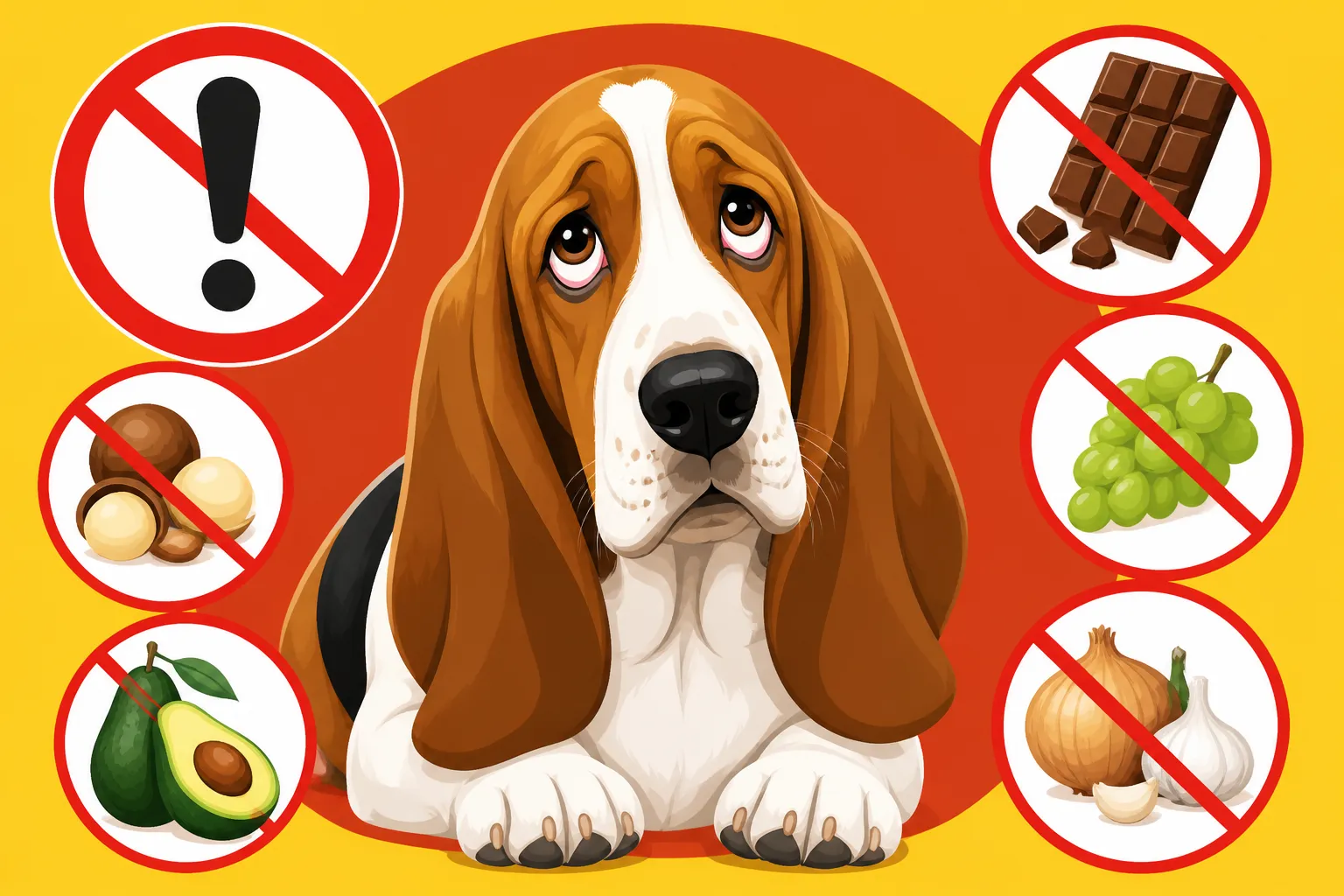
Everyone knows chocolate is bad for dogs, right? But the why and the how bad often get lost in translation. The real villain here is theobromine, a stimulant similar to caffeine, which dogs process much more slowly than humans. This means it stays in their system longer, building up to toxic levels. Different types of chocolate contain varying amounts of theobromine: baking chocolate and dark chocolate are the most dangerous, followed by semi-sweet, milk chocolate, and white chocolate (which contains very little and is less of a concern, though still not recommended).
Imagine you've left a forgotten half-eaten brownie on the coffee table, thinking your Basset couldn't possibly reach it. Or a bag of dark chocolate chips spills from an unlatched pantry door. These are common scenarios that can quickly escalate to an emergency. Symptoms of chocolate toxicity can range from vomiting, diarrhea, and increased thirst to restlessness, hyperactivity, tremors, seizures, and even heart failure in severe cases.
And it’s not just chocolate. Caffeine, found in coffee, tea, energy drinks, and even some diet pills, is equally dangerous due to its stimulant properties. A spilled cup of coffee or an unsupervised tea bag can be just as problematic as a chocolate bar. We have to remember that our Bassets are so driven by scent, they won't discriminate based on packaging or whether it looks "tasty" to us; if it smells interesting, they'll investigate.
Xylitol: A Silent Killer in Unexpected Places
This is one of the most insidious dangers because xylitol, a sugar substitute, is becoming increasingly common in many household products, and its presence isn't always obvious. For dogs, xylitol is incredibly toxic, causing a rapid and severe drop in blood sugar (hypoglycemia) and potential liver failure. Even small amounts can be lethal.
Where do you find it? It's in sugar-free gum, mints, candies, and some chewable vitamins. Crucially, it's also found in many brands of peanut butter (always check the label!), certain toothpastes, mouthwashes, and even some baked goods or sugar-free desserts. A quick trip to Chewy or Amazon for pet supplies might even turn up dental treats or other products where you wouldn't expect xylitol, so vigilance is key. If your Basset gets into a packet of gum or a jar of xylitol-containing peanut butter, the situation becomes critical very quickly. Symptoms often appear within 15-30 minutes and include vomiting, weakness, staggering, collapse, and seizures. This is a true emergency, and immediate veterinary attention is crucial.
Grapes and Raisins: The Mysterious Toxin
Grapes and raisins are another baffling yet highly dangerous food for dogs. The toxic substance isn't fully understood, but it's clear that even a small amount can cause acute kidney failure in some dogs. There's no known "safe" amount, and individual sensitivity varies wildly. What might be fine for one dog could be fatal for another.
Think about common scenarios: a child drops a handful of raisins from their trail mix, or a fruit salad with grapes is left on a low counter. A Basset's low stature and quick scavenging abilities make these easily accessible. Raisin bread, grape jelly, and even currants (which are dried grapes) are also off-limits. Symptoms of grape or raisin toxicity can include vomiting, diarrhea, lethargy, dehydration, increased thirst, and reduced appetite, often progressing to kidney failure within days. If you suspect your Basset has eaten even one grape or raisin, contact your veterinarian immediately.
Onions, Garlic, and Chives: More Than Just Flavor Enhancers
These aromatic vegetables, all part of the Allium family, contain compounds that can damage a dog's red blood cells, leading to anemia. While a tiny amount might not cause immediate problems for a large dog, repeated exposure or a significant quantity can be very dangerous. Basset Hounds, with their robust appetites, aren't likely to pick out the garlic bits from a dropped pizza crust or a bowl of chili.
All forms are toxic: raw, cooked, dried, or powdered. This means you need to be cautious about table scraps that might contain these ingredients, such as gravies, sauces, leftover pasta, or even baby food that sometimes includes onion or garlic powder. Symptoms of toxicity might not appear immediately, often taking a few days. They can include lethargy, weakness, pale gums, increased heart rate, and difficulty breathing. It's best to keep all members of the Allium family completely out of reach.
Avocado: A Dose-Dependent Risk
Avocado contains a fungicidal toxin called persin. While the flesh of the avocado isn't typically as toxic to dogs as it is to some other animals (like birds or horses), it can still cause gastrointestinal upset in sensitive dogs. More importantly, the pit of an avocado poses a significant choking hazard, especially for a dog with a large gullet like a Basset. If swallowed, it can also cause an intestinal obstruction, which is a serious emergency.
Beyond the pit, the high-fat content of avocado flesh, if consumed in large quantities, could potentially contribute to pancreatitis, a painful inflammation of the pancreas, a concern we might also discuss in Whether a Basset Hound Gets Pancreatitis. While a tiny taste of plain avocado flesh might not be harmful for many dogs, it's generally safer to avoid it entirely due to the pit and the potential for tummy upset.
Alcohol and Yeast Dough: Fermentation Fright
Alcohol, in any form, is highly toxic to dogs. Their smaller body size and different metabolism mean that even a small amount can cause severe alcohol poisoning, leading to vomiting, diarrhea, disorientation, tremors, difficulty breathing, coma, and even death. This includes alcoholic beverages, but also things like rubbing alcohol, some liquid medications, or fermenting fruit.
A lesser-known but equally dangerous culprit is raw yeast dough. If a Basset Hound eats raw bread dough, the warm, moist environment of their stomach acts like an oven, causing the yeast to rise and expand the dough. This can lead to severe bloating, abdominal pain, and potentially a life-threatening condition called gastric dilatation-volvulus (bloat). Additionally, as the yeast ferments, it produces alcohol, leading to alcohol poisoning. This is a double whammy of danger that requires immediate veterinary intervention.
Macadamia Nuts: Causing Weakness and Vomiting
Macadamia nuts are another specific food that can cause problems for dogs, although the exact toxic compound and mechanism are unknown. Ingestion can lead to symptoms such as weakness, depression, vomiting, tremors, and hyperthermia (elevated body temperature). While fatalities are rare, the symptoms can be quite distressing and require veterinary care.
These nuts are often found in cookies, candies, and trail mixes, making them easily accessible targets for a foraging Basset. Just a small handful can cause symptoms, so it's essential to keep them out of reach.
Bones (Cooked): Choking and Internal Damage
While dogs are known for chewing on bones, cooked bones are a significant hazard. The cooking process makes bones brittle and prone to splintering into sharp shards. These shards can cause serious internal damage, including perforating the esophagus, stomach, or intestines. They can also get lodged in the throat, creating a choking emergency, or cause severe constipation and blockages.
Never give your Basset Hound cooked bones from chicken, turkey, steak, or any other meat. The risks far outweigh any perceived benefit. If you're considering bones for chewing, always opt for veterinarian-approved raw bones or safe, digestible chews specifically designed for dogs.
Dairy Products: Tummy Trouble for Many Bassets
Most Basset Hounds, like many dogs, are lactose intolerant to varying degrees. As puppies, they have an enzyme that helps them digest milk, but this often diminishes as they mature. Giving them dairy products like milk, cheese, or ice cream can lead to gastrointestinal upset, including diarrhea, vomiting, and abdominal pain.
While a tiny piece of cheese might be okay for some Bassets, it's best to avoid dairy or offer it in very small, controlled amounts to test their tolerance. High-fat dairy items like full-fat cheese or ice cream can also contribute to weight gain or pancreatitis. If you want to give a treat, stick to plain yogurt with live cultures, as the fermentation process breaks down much of the lactose. However, even then, moderation is key for a breed already prone to digestive sensitivities, as mentioned in Whether a Basset Hound Has a Sensitive Stomach.
Salty Snacks: Dehydration and Sodium Poisoning
A few dropped potato chips or pretzels might seem harmless, but excessive consumption of salty snacks can lead to sodium ion poisoning in dogs. Basset Hounds, with their tendency to vacuum up anything edible, might not stop at just a few. Symptoms of too much salt can include vomiting, diarrhea, lethargy, tremors, excessive thirst, and urination, and in severe cases, seizures and neurological issues.
It’s especially dangerous if they don't have access to fresh water to help flush the excess sodium from their system. Always keep salty human foods like chips, pretzels, crackers, and salted nuts out of their reach. When looking for safe treats, remember that bland is best.
Foods to Avoid in Moderation or With Caution
While the previous list included outright no-gos, some foods fall into a grey area. They might not be immediately toxic in small amounts but carry significant risks due to their composition or physical properties. As a Basset owner, exercising extreme caution with these items is paramount.
Fat Trimmings and Rich Foods: Pancreatitis Alert
Oh, those pleading Basset eyes when you're trimming fat off a piece of meat or scraping plates after a rich meal! It's so tempting to toss them a little "treat." However, large quantities of fat trimmings, bacon grease, heavy cream, or other rich, fatty foods can wreak havoc on a Basset Hound's digestive system. The primary concern here is acute pancreatitis, a painful inflammation of the pancreas.
Pancreatitis can be incredibly serious, causing severe abdominal pain, vomiting, diarrhea, lethargy, and loss of appetite. In some cases, it can be life-threatening and require extensive veterinary care. A Basset's system, while hardy in some respects, isn't designed to handle the sudden influx of high-fat, highly processed human foods. Holiday meals, with their abundance of gravy, buttery sides, and fatty meat scraps, are particularly risky times. Even seemingly innocuous items like turkey skin can be too fatty. It's far better to resist those soulful stares and offer a small, plain, cooked piece of lean meat or a dog-specific treat instead. We've certainly discussed the severity of this in Whether a Basset Hound Gets Pancreatitis.
Stone Fruits: Choking Hazards and Cyanide
Fruits like cherries, peaches, plums, and apricots are delicious for us, but their pits (or "stones") are problematic for Basset Hounds. The most immediate danger is the pit itself: it's a perfect size for a Basset to swallow whole, creating a significant choking hazard or a potential intestinal obstruction. Their strong jaws might even crack a pit, which can then release cyanide. While a single pit probably won't cause cyanide poisoning, repeated ingestion or a large quantity could be dangerous.
Beyond the pits, the fruit flesh itself, if given in large amounts, can cause diarrhea due to its sugar and fiber content. It's crucial to always remove the pit entirely before offering any small pieces of these fruits to your Basset, and even then, only do so in strict moderation. It's often easier and safer to simply avoid them altogether to remove any risk.
Corn Cobs: The Indigestible Obstruction
Sweet corn on the cob is a summer delight, but for dogs, the cob itself is a huge danger. While the corn kernels are generally digestible in small amounts, the fibrous cob is not. A Basset Hound, with its enthusiastic eating style, can easily chew off a section of a corn cob and swallow it. These pieces don't break down in the digestive system and are notorious for causing severe intestinal obstructions.
An obstruction is a veterinary emergency that often requires surgery to remove. The symptoms can include vomiting, loss of appetite, abdominal pain, and straining to defecate. After a BBQ or family meal, ensure all corn cobs are immediately secured in a trash can that your Basset cannot access. Their powerful noses mean that even a half-eaten cob in the bin is a target.
Small Amounts of Human Food: Is it Ever Okay?
This is where the waters get a little murky, and it really depends on the specific food and your Basset's individual sensitivities. Generally, plain, cooked, lean meats (like chicken or turkey breast, without skin or bones) in very small quantities can be safe treats. Many Basset Hounds also enjoy small pieces of certain plain vegetables, like carrots, green beans, or sweet potato.
The key is "small amounts," "plain," and "cooked." We're talking about a pea-sized piece, not a spoonful. Always introduce new human foods slowly and in tiny quantities to watch for any adverse reactions like upset stomach or diarrhea, which can happen even with safe foods if their system isn't used to it. And remember, these should never replace their balanced dog food diet. For instance, reputable pet food brands like Ollie focus on human-grade, whole ingredients that are formulated specifically for dogs, removing the guesswork and ensuring nutritional completeness and safety. This allows you to give your Basset delicious, nutritious meals without worrying about hidden dangers or imbalanced nutrients.
A Basset's seemingly bottomless pit of a stomach and their uncanny ability to sniff out anything edible means we, as their guardians, have to be incredibly diligent. It's a delicate balance between indulging those adorable expressions and safeguarding their health. When in doubt, always err on the side of caution.
What to Do If Your Basset Hound Eats Something Dangerous
The moment you realize your Basset Hound has ingested something potentially harmful, panic can easily set in. But staying calm and acting swiftly is crucial for their well-being. Knowing the right steps can make all the difference.
Immediate Actions and When to Call the Vet
First and foremost: do not try to induce vomiting at home without direct instruction from your veterinarian or a pet poison control center. While inducing vomiting might seem like the logical first step, it can sometimes do more harm than good, especially with certain toxins or if your dog is already showing severe symptoms. Some substances, like caustic cleaners, can cause additional damage coming back up, and if your Basset is already lethargic or having seizures, there's a risk of aspiration (inhaling vomit into the lungs).
Instead, your immediate actions should be:
- Remove any remaining dangerous substance from your Basset's reach to prevent further ingestion.
- Gather information. This is vital for your vet. Try to determine:
- What was eaten (e.g., milk chocolate, sugar-free gum, grapes). If it's a packaged item, grab the packaging so your vet can check ingredients.
- How much was eaten (estimate as best you can – a few squares, a whole pack, half a cup).
- When it was eaten (the approximate time helps determine the urgency and potential absorption).
- Your Basset's weight. This is essential for calculating potential toxicity doses.
- Call your veterinarian immediately. Don't wait for symptoms to appear. The sooner they know, the more options they have for treatment, which could include inducing vomiting safely in a clinical setting, administering activated charcoal, or providing supportive care. If it's after hours, have the number for your nearest emergency veterinary clinic readily available. You might also consider calling a pet poison control hotline for immediate advice, but always follow up with your vet.
Acting quickly and providing accurate information allows your vet to assess the risk and guide you on the best course of action. It could literally be life-saving.
Preventing Future Incidents
Let's face it, Basset Hounds are master scavengers. Preventing them from getting into trouble requires constant vigilance and a proactive approach to pet-proofing your home.
- Secure Trash Cans: Invest in heavy, lidded trash cans that your Basset cannot easily tip over or open. Foot-pedal cans are often not Basset-proof, as those long noses can usually figure out how to operate them. Locking lids or cans within a cabinet are ideal.
- Clear Counters and Low Surfaces: Develop a habit of immediately clearing food scraps, dirty dishes, and any potentially dangerous items from kitchen counters, tables, and any low surfaces your Basset can reach. Their low stature means they can reach surprising places, and those long ears are excellent at sweeping up crumbs. Don’t forget to consider a solution for their long ears at mealtime, perhaps like the one discussed in Whether a Basset Hound Needs a Snood at Dinner.
- Store Food Safely: Keep all human food, especially dangerous items like chocolate, grapes, and xylitol-containing products, in secure pantries or high cabinets that are out of reach and sight. Child-proof latches on lower cabinets can be very effective.
- Supervise Meal Times: Never leave food unattended on tables or plates when your Basset is in the room. Even a quick dash to grab a drink can be enough time for them to snatch a forbidden bite.
- Guest Awareness: Inform guests about your Basset's opportunistic nature and the strict rules about not feeding them table scraps or leaving food within their reach.
- Train "Leave It" and "Drop It": These commands are indispensable for Basset Hound owners. Consistent training can help prevent them from picking up dropped items or relinquishing something they've already grabbed. Start training early, even with a The Weeks a Basset Hound Puppy Takes to Be Clean during house training, as these commands build crucial control.
- Provide Appropriate Chews and Toys: Ensure your Basset has plenty of appropriate, safe chew toys and puzzle feeders to keep them occupied and mentally stimulated, diverting their attention from unauthorized snacks.
- Manage Access: Use baby gates to block access to certain rooms, like the kitchen or dining area, especially when you're preparing food or eating. This can significantly reduce opportunities for mischief.
Being a Basset Hound owner means signing up for a lifetime of adorable, floppy-eared mischief, and a big part of that is managing their insatiable hunger and incredible nose. By being aware of the dangers and implementing preventative strategies, you can help ensure your Basset lives a long, happy, and healthy life free from accidental poisonings.
| Dangerous Food Item | Primary Danger | Common Places Found |
|---|---|---|
| Chocolate/Caffeine | Theobromine/Caffeine Toxicity | Candies, baked goods, coffee, tea, energy drinks, cocoa powder |
| Xylitol | Hypoglycemia, Liver Failure | Sugar-free gum, mints, some peanut butter, toothpaste, baked goods |
| Grapes/Raisins | Acute Kidney Failure | Fruit bowls, trail mix, cereals, baked goods, wine |
| Onions/Garlic/Chives | Red Blood Cell Damage (Anemia) | Sauces, gravies, cooked dishes, powdered spices, baby food |
| Avocado | Choking hazard (pit), GI upset (flesh), Persin | Guacamole, fresh fruit, salads |
| Alcohol/Yeast Dough | Alcohol poisoning, Bloating, Obstruction | Alcoholic beverages, raw bread dough, fermenting fruit |
| Macadamia Nuts | Weakness, Vomiting, Tremors | Cookies, trail mix, nut blends |
| Cooked Bones | Choking, Splintering, Obstruction | Table scraps, leftover meals |
| Dairy Products | Lactose Intolerance, GI Upset, Pancreatitis | Milk, cheese, ice cream, yogurt, butter |
| Salty Snacks | Sodium Ion Poisoning, Dehydration | Chips, pretzels, salted nuts, processed meats |
| Fat Trimmings/Rich Foods | Pancreatitis | Bacon, sausage, gravy, holiday meal scraps, buttery foods |
| Stone Fruits (Pits) | Choking, Obstruction, Cyanide Toxicity | Cherries, peaches, plums, apricots (pits) |
| Corn Cobs | Intestinal Obstruction | Leftover corn on the cob |
Living with a Basset Hound means living with an adorable, scent-driven eating machine. Their incredible noses and persistent hunger are part of their charm, but they also mean that as owners, we have an extra layer of responsibility to ensure their environment is safe. By understanding which common human foods pose a threat and taking proactive steps to keep them out of reach, you can protect your Basset from painful and potentially life-threatening emergencies. Stay vigilant, stay informed, and always remember that a moment of caution is worth a lifetime of health for your beloved floppy-eared companion.
Disclaimer
This article is for general informational purposes only and does not constitute professional advice. Laws, prices and regulations vary by location and change over time. Consult a qualified professional for guidance on your specific situation.