Signs a Basset Hound Is Carrying Too Much Weight
It's incredibly frustrating, isn't it, trying to figure out if your beloved Basset Hound is carrying a little too much weight? Their unique, soulful build, with all that loose skin and heavy bone, often makes it a real challenge to tell if they're just robust or genuinely overweight. This guide is here to cut through that confusion, helping you spot the subtle and not-so-subtle signs that your Basset might be tipping the scales, so you can take proactive steps for their health and happiness.
Why Judging a Basset Hound's Weight Is So Hard
Let's be honest, trying to assess a Basset Hound's physique is like trying to guess the shape of a cloud – it's constantly shifting and draped in layers. Their distinctive appearance, which we all adore, is also the very thing that makes weight management such a puzzle for their dedicated owners. You look at them and think, "Are they supposed to look like this?" and it's a completely valid question.
The Deceptive Drape: Loose Skin and Heavy Bone
One of the most charming characteristics of a Basset Hound is all that wonderful, loose skin. It drapes beautifully, creating those iconic wrinkles on their face and neck, and giving them that slightly saggy, lovable appearance. But this very trait, combined with their naturally heavy bone structure, can act like a masterful disguise for excess fat. You might feel a soft cushion under your hands and assume it's just their characteristic skin, when beneath it, there could be a significant layer of adipose tissue.
This generous skin can obscure the underlying body contours that we usually rely on to judge a dog's weight. You might not see a clearly defined waist or feel prominent ribs, not because they're covered in fat, but because the skin itself provides a cushion. It's easy to dismiss a rounded belly as "just how Bassets are" when, in fact, it could be a sign of abdominal fat pushing everything out. This unique build is a gift, but it requires a different approach to health assessment.
The "Just Built That Way" Misconception
It’s a common refrain among Basset Hound owners, and honestly, who can blame us? "Oh, he's just built that way," we might say, looking at our solid, low-slung companion. There's a strong tendency to attribute any extra bulk to their breed standard – their substantial bone, short legs, and deep chest. We know they aren't meant to be sleek and athletic like a Whippet, so our perception of "healthy" can get skewed.
However, embracing this idea too readily can lead to overlooking genuine weight concerns. While Basset Hounds are indeed stocky and heavy for their size, there's a world of difference between a healthy, well-muscled, heavy-boned Basset and one carrying too much fat. The Crooked Front a Basset Hound Is Built On is part of their charm, but even with their unique angulation and structure, they still have an ideal body condition. This misconception can sadly shorten their lifespan and dramatically impact their quality of life. Whether an Overweight Basset Hound Lives Shorter is a very real concern for our beloved companions. We need to learn to differentiate between their natural robust nature and unhealthy weight gain.
The Essential Body Condition Score: A Hands-On Guide
Because their distinctive build can be so deceptive, a visual-only assessment isn't enough for Basset Hounds. You really need to get your hands on them, feeling through that luscious loose skin and dense coat to understand what's happening underneath. This hands-on approach is often referred to as a "body condition score" (BCS), and it's your most powerful tool for an accurate assessment.
Feeling for Ribs and Spine: The Touch Test
This is arguably the most crucial step. You need to become familiar with what your Basset's ribs and spine feel like under normal conditions. Place your palms flat against your Basset Hound's sides, just behind their front legs. Gently run your fingers along their rib cage. You should be able to feel each individual rib with only slight pressure, almost like feeling the knuckles on the back of your hand. You shouldn't see them, but you should definitely feel them distinctively.
If you have to press hard to locate the ribs, or if they feel like they're covered in a thick, spongy layer – more like feeling the palm of your hand – that’s a clear sign of excess fat. Do the same along their spine, running your fingers down their back. You should be able to feel the individual bumps of the vertebrae without pressing too hard. If their back feels broad, flat, or like a smooth, unbroken cushion, it's highly likely they're carrying too much weight. This "touch test" is far more reliable than just looking, especially with all that wonderful Basset skin. It's a key part of Feeling for a Basset Hound's Ribs Under Loose Skin.
Locating the Waistline and Abdominal Tuck
Now, a Basset Hound isn't going to have the super-cinched waist of a Greyhound, but they should still have a discernible one. Stand over your Basset Hound and look down at their back. Behind their rib cage, where their body meets their hindquarters, you should see a gentle indentation, a slight hourglass shape. It won't be dramatic, but it should be there. If their body looks like a straight line from their chest to their tail, or worse, bulges out in the middle, then they've lost their healthy waistline.
Next, crouch down and look at your Basset from the side. After their deep chest, their abdomen should subtly tuck up towards their hind legs, rather than hanging straight down or even sagging. A Basset with a healthy weight will have a discernible tuck, even if it's not extreme. If their belly hangs low, forms a straight line parallel to the ground, or visibly sags, it indicates abdominal fat accumulation. This sagging belly can also lead to other issues, like The Skin Under a Basset Hound's Folds becoming more prominent and prone to irritation.
Visual Cues: Overhead and Side Views
While the hands-on approach is paramount, once you understand what you're looking for, visual cues become more helpful. From an overhead perspective, as mentioned, you want to see that subtle waistline. Imagine an hourglass; your Basset should have a hint of one, not look like a barrel or a sausage. Their body should narrow slightly between their last rib and their hips. If they resemble a perfectly rectangular block from above, or if their sides bulge outwards, it's a red flag.
From the side, in addition to the abdominal tuck, observe their overall silhouette. A healthy Basset should appear solid and sturdy, but not round. Their chest should be deep, but their belly shouldn't droop. Pay attention to the fat pads that can develop over their hips and at the base of their tail. If these areas feel noticeably padded and squishy, or if you see visible rolls of fat, it’s a sign of excess weight. Remember, even with their loose skin, these underlying structures should still give clues. It helps to compare what you see and feel to illustrations of body condition scores, which your vet can also provide.
| Body Part | Underweight | Ideal Weight | Overweight | Obese |
|---|---|---|---|---|
| Ribs | Easily visible and felt, even without touch | Easily felt with slight pressure, not seen | Require moderate pressure to feel | Very difficult or impossible to feel, covered in thick fat |
| Spine/Backbone | Easily visible and felt without touch | Easily felt with slight pressure | Require moderate pressure to feel | Difficult or impossible to feel, broad and flat |
| Waistline (Overhead) | Dramatically tucked, very obvious indentation | Clearly discernible, gentle hourglass shape | Absent or very slight, straight or bulging sides | Broad, distinctly bulging, no waistline |
| Abdominal Tuck (Side View) | Very pronounced tuck, almost gaunt | Slight but distinct tuck up after rib cage | Straight line, no tuck, or slightly sagging | Hanging low, significant sag |
| Fat Pads | Absent | Minimal fat, smooth contours | Noticeable fat deposits over hips, tail base | Large, obvious fat deposits everywhere |
Beyond the Scale: Behavioral and Physical Warning Signs
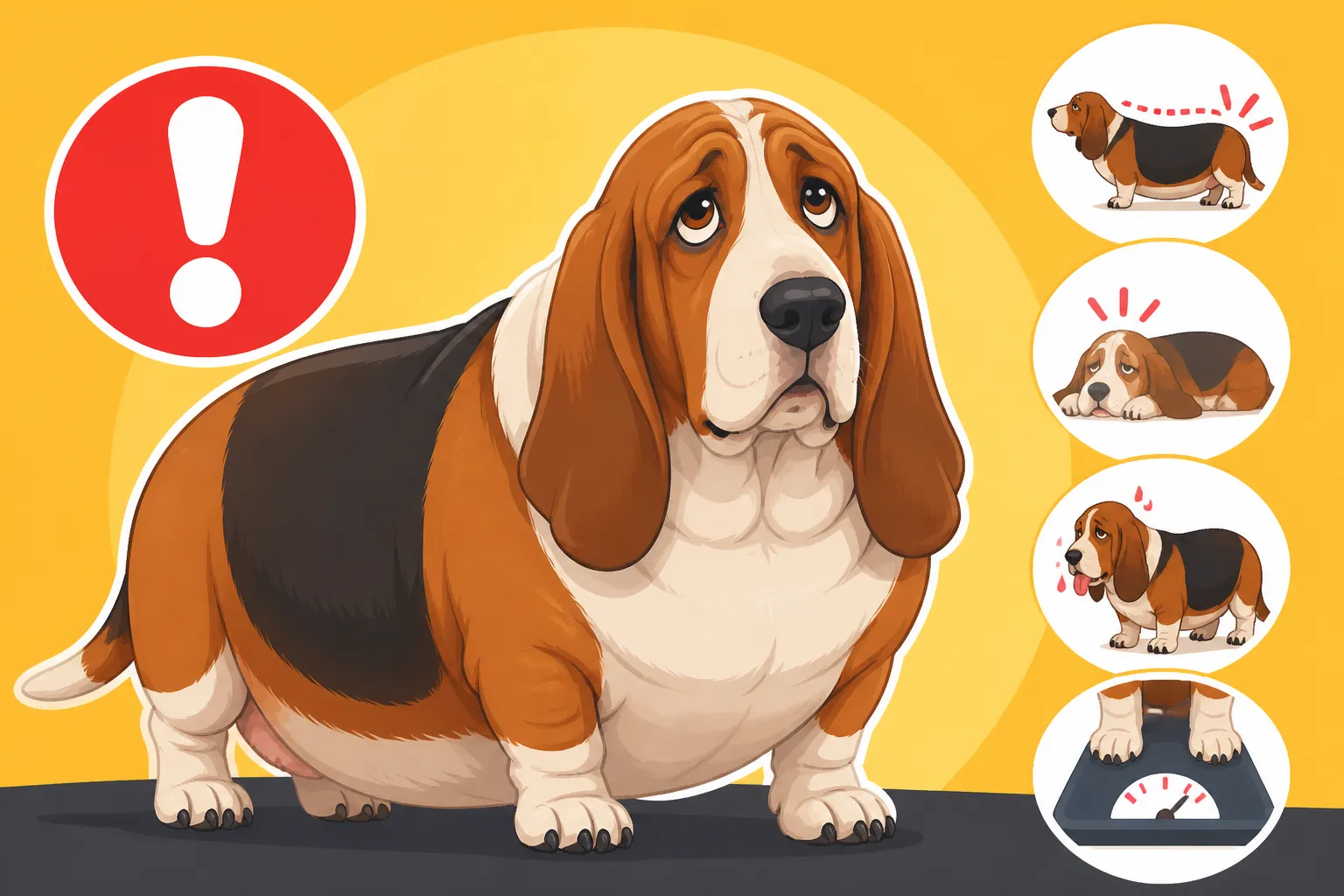
Sometimes, the most telling signs of excess weight aren't just what you see or feel, but what you observe in your Basset Hound's daily life. They're masters of stoicism, but even Bassets will show changes when their body is working harder than it should. These behavioral and physical clues are often the first things owners notice, even before they realize the cause is weight gain.
Changes in Movement and Energy Levels
One of the earliest and most heartbreaking signs of a Basset Hound carrying too much weight is a noticeable decline in their enthusiasm for activity. They might start refusing to go for walks, or if they do, they'll be much slower, lagging behind, or stopping more frequently. That joyful, scent-driven trot might turn into a sluggish waddle. You might see them struggling to get up from a lying position, or hesitating before jumping onto a low couch or ramp.
This isn't necessarily just "getting old" or being "lazy" – though Bassets do love a good nap! – it can be a direct result of their body having to lug around extra pounds. Imagine carrying a heavy backpack all day, every day; it makes everything harder. They might even lie down mid-walk, not out of stubbornness, but because they are genuinely tired or sore. The Old Basset Hound That Cannot Get Off the Floor is a common scenario for senior Bassets, and excess weight significantly hastens this decline. Monitoring their daily activity and comparing it to their usual zest can provide valuable insights.
Breathing Difficulties and Heat Sensitivity
Basset Hounds, with their deep chests and often a bit of a "snore," aren't usually known for silent breathing, but significant changes can indicate weight issues. If your Basset starts panting excessively, even after minimal exertion or in mild temperatures, it’s a major warning sign. Extra fat acts like an insulating blanket, making it much harder for them to regulate their body temperature, especially in warmer weather.
You might notice they struggle more in the summer, seeking out cool spots and panting heavily, long after other dogs have settled down. This labored breathing, snorting, or even more pronounced snoring during sleep, suggests their respiratory and cardiovascular systems are under strain. The heart and lungs have to work overtime to supply oxygen to a larger body mass, and this effort is significantly increased by any excess fat. Whether a Basset Hound Overheats in Summer is a critical concern, and being overweight exacerbates this risk considerably.
Grooming Challenges and Skin Irritations
Our Basset Hounds love to keep themselves clean, but if they're overweight, their flexibility can be severely compromised. They might no longer be able to reach certain areas, particularly around their hindquarters or under their tail, to groom themselves properly. This can lead to matted fur, skin infections, or a persistent odor in those hard-to-reach spots.
Moreover, the increased bulk can cause skin folds to become deeper and more prominent, especially around their neck, chest, and groin. These deeper folds can trap moisture, dirt, and bacteria, leading to irritation, redness, and painful skin fold dermatitis. This is especially true for Skin Fold Infections on a Basset Hound, which are already a concern for the breed. If you notice your Basset struggling with self-grooming or developing persistent skin issues in areas they can't easily reach, it's worth considering their weight as a contributing factor.
Increased Strain on Joints and Back
Basset Hounds are already predisposed to certain musculoskeletal issues due to their unique conformation. Their long backs and short, heavy legs mean their joints and spine are under constant pressure. Adding extra weight amplifies this strain exponentially, accelerating wear and tear on cartilage and ligaments. Conditions like Arthritis in a Basset Hound at Seven can develop much earlier and progress more severely in an overweight Basset.
You might observe lameness, stiffness, reluctance to jump or use stairs, or even a subtle shift in their gait as they try to compensate for discomfort. Their bowed front legs, a hallmark of the breed, are designed to carry their substantial body, but not an overly substantial one. What Extra Weight Does to a Basset Hound cannot be overstated; it's a direct path to chronic pain and reduced mobility, significantly impacting their quality of life as they age. Protecting their joints and back through healthy weight management is one of the most loving things you can do for them.
Taking Proactive Steps: Monitoring and Professional Advice
Once you've identified that your Basset Hound might be carrying too much weight, the next step is to take action. This isn't about shaming or blame; it's about giving them the best chance at a long, comfortable, and happy life. Proactive monitoring and professional guidance are your best allies in this journey.
Implementing Regular Home Weigh-Ins
While the hands-on body condition scoring is fantastic, having an objective measure like their actual weight is invaluable for tracking progress. Make regular weigh-ins a part of your routine. For smaller Basset Hounds, you might be able to use a large kitchen scale or a baby scale. For larger adults, a bathroom scale can work: weigh yourself, then pick up your Basset and weigh yourself again, subtracting your weight from the total. Alternatively, many veterinary clinics offer walk-in weigh services, or you can invest in a dedicated pet scale, readily available from online retailers like Chewy or Amazon, to make this easier at home.
Knowing How Much a Basset Hound Should Weigh is the goal, but even without an exact target weight, tracking weekly or bi-weekly changes can show you trends. Keep a little journal or a note on your phone. Even small, consistent gains or losses can add up. This data, combined with your body condition checks, gives you a comprehensive picture of their weight status. It empowers you to see if your efforts are making a difference and to catch any creeping weight gain early.
Partnering with Your Veterinarian for a Healthy Weight Plan
Your veterinarian is your most important partner in managing your Basset Hound's weight. They can accurately assess your dog's current body condition, determine an ideal target weight based on their specific build and age, and help rule out any underlying medical conditions (like Signs a Basset Hound's Thyroid Has Failed) that might contribute to weight gain. Don't hesitate to book an appointment specifically to discuss weight management.
Together, you and your vet can create a tailored plan that includes appropriate diet recommendations and an exercise regimen. They can advise on portion control, the best type of food for weight loss (often a lower-calorie, higher-fiber option), and healthy treat alternatives. They might even recommend specific joint supplements to support their body as they lose weight. Losing weight isn't easy for Basset Hounds, and Getting Weight Off a Basset Hound That Will Not Exercise can feel like a Herculean task, but with your vet's guidance, you can develop a realistic and effective strategy to get your Basset Hound back to their optimal, healthy weight.
Disclaimer
This article is for general informational purposes only and does not constitute professional advice. Laws, prices and regulations vary by location and change over time. Consult a qualified professional for guidance on your specific situation.