Whether a Basset Hound Should Be Carried Down Stairs
It's a common dilemma for Basset Hound owners: your beloved, long-backed companion stands at the top or bottom of a flight of stairs, gazing at you with those characteristic soulful eyes, and you can practically hear them weighing the monumental effort involved. The question quickly becomes, "Do I carry them, or do I let them tackle it themselves?" This guide will delve deep into the unique challenges stairs present for Basset Hounds and help you understand when carrying your hound is the safest and most supportive option, as well as how to do it correctly and what alternatives exist.
The Basset Hound's Unique Anatomy and Stair Challenges
Basset Hounds are undeniably charming, but their distinctive physique – long spine, short legs, and heavy bone structure – is also their Achilles' heel when it comes to activities like navigating stairs. Understanding why stairs pose such a risk is the first step in protecting your floppy-eared friend.
The Vulnerable Basset Spine
The most significant concern for a Basset Hound on stairs is the immense stress placed upon their long, low back. Their body is built for trailing scent with their nose to the ground, not for agile climbing or descending. Each step up or down forces their spine to contort in ways that can be detrimental over time. Imagine trying to maneuver a long, heavy plank of wood up and down a set of steps; that's somewhat analogous to what your Basset's spine endures. This repeated impact and twisting motion can contribute to or exacerbate conditions like Intervertebral Disc Disease in a Basset Hound, a painful condition where the cushioning discs between the vertebrae bulge or rupture, potentially leading to pain, weakness, or even paralysis.
When a Basset Hound goes down stairs, the impact on their front legs and shoulders can jar their entire frame, sending shockwaves through their spine. Going up stairs involves a significant amount of pushing with the hind legs and lifting with the front, putting strain on the lumbar region and hips. Over time, this constant stress can weaken the spinal column and the supporting musculature, paving the way for serious issues. It’s not just about one bad step; it’s the cumulative effect of countless repetitions throughout their life that truly takes its toll. Many owners don't realize the quiet damage that can accumulate.
Joint Strain and Musculoskeletal Stress
Beyond the spine, a Basset Hound’s short, bowed legs and heavy body put considerable stress on all their joints, particularly their elbows, shoulders, hips, and hocks. These joints are not designed for high-impact activities or rapid changes in elevation. When your Basset thumps down each stair, the force reverberates through their leg bones and into their joints.
Consider the force exerted on their elbow joints, which are already prone to issues like Elbow Dysplasia in a Basset Hound. Repeated jarring from stair descent can worsen existing conditions or hasten the onset of new ones. Similarly, the hips and knees bear the brunt of weight distribution and propulsion when climbing. While Bassets might appear sturdy, their low-slung build means their limbs work harder than those of a taller dog to achieve the same vertical movement. This ongoing strain can lead to early onset arthritis or accelerate its progression, making their senior years much more uncomfortable. You might notice subtle signs like a slight limp after a walk or reluctance to use stairs at all, which are often early indicators of joint discomfort. Regularly checking in with your vet to monitor joint health and discuss preventative measures is always a good idea.
The Risk of Falls and Accidents
Let's be realistic: Basset Hounds are not known for their agility or grace. Their long bodies, short legs, and sometimes clumsy gait make stairs a genuine tripping hazard. Their long ears, a hallmark of the breed, can also be a literal stumbling block, getting caught under their paws as they descend. I've heard countless stories of Bassets misjudging a step, tumbling a few stairs, or even falling an entire flight.
A fall, even from a few steps, can result in sprains, fractures, or severe spinal trauma. For a breed already predisposed to back problems, a fall could be catastrophic, leading to immediate paralysis or worsening an existing disc issue. Puppies and senior Basset Hounds are particularly vulnerable. Puppies might lack coordination and depth perception, making them more prone to accidents. The Old Basset Hound That Cannot Get Off the Floor often has weakened muscles, poor balance, and reduced eyesight, significantly increasing their risk of a dangerous fall on stairs. It's not just about their bones; a serious fall can shake their confidence, making them fearful of stairs even after recovery, and adding a new layer of behavioral challenges.
When Carrying Becomes Necessary: Assessing the Risks and Benefits
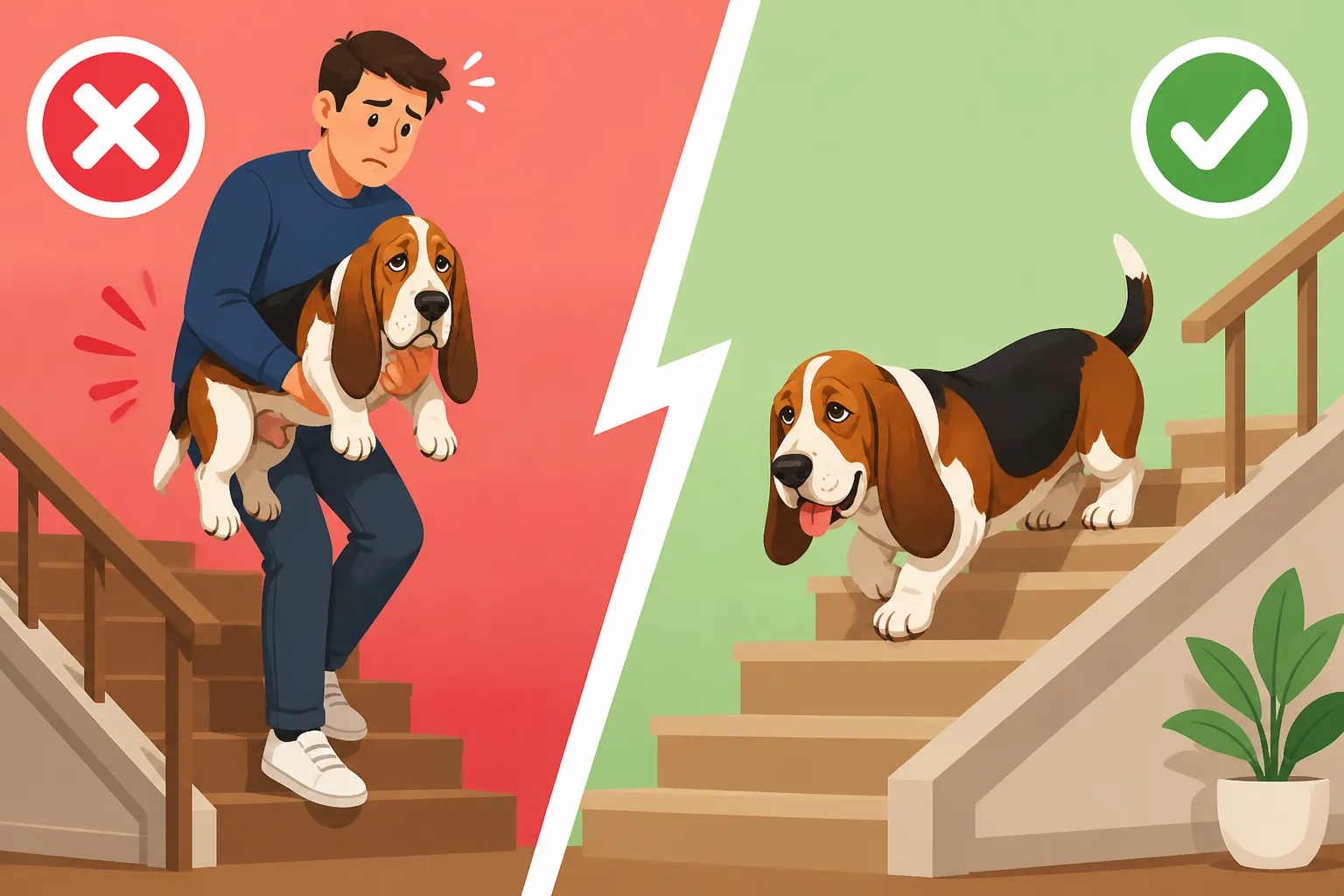
Given the inherent risks, carrying your Basset Hound, especially up or down stairs, is often the most responsible choice for their long-term health and well-being. However, there's an art to carrying a Basset safely, and it's not without its own considerations.
Mitigating Long-Term Health Risks
The primary benefit of carrying your Basset Hound on stairs is the significant reduction in wear and tear on their spine and joints. By taking away the repetitive impact and twisting motions, you are actively working to prevent or delay the onset of common Basset Hound ailments. This is especially true for young puppies whose bones and joints are still developing, and for older dogs who might already be showing signs of Arthritis in a Basset Hound at Seven. Every time you carry them, you're investing in their future comfort and mobility.
For Basset Hounds already diagnosed with conditions like Intervertebral Disc Disease, even if currently asymptomatic, carrying them is crucial. A sudden twist or jolt on the stairs could trigger a painful flare-up or severe progression of the disease. It’s about proactive care and understanding the breed’s vulnerabilities. While it might feel like a minor inconvenience to you, it could mean the difference between a lifetime of comfortable mobility and years of chronic pain or expensive surgeries like What Disc Surgery Costs on a Basset Hound. This preventative measure is one of the most impactful things you can do to support their unique physical structure.
Weighing the Practicalities and Physical Demands
While carrying offers significant health benefits for your Basset, it's essential to be realistic about the physical demands it places on you. Basset Hounds are surprisingly heavy for their stature, with many adult dogs weighing as much as a small Labrador. How Much a Basset Hound Should Weigh can range significantly, but even a lean Basset is dense and can be awkward to lift.
Consider your own physical capabilities. Do you have any back issues or mobility concerns? Can you safely lift and carry your dog without risking injury to yourself? If you have multiple flights of stairs or a particularly large Basset, this task can quickly become unsustainable. It’s also worth noting that consistency is key. If you decide to carry your Basset on stairs, you need to commit to doing it every time, as sporadic use can still lead to issues. For households with children or elderly members, delegating this task might not always be possible. This means you need to have a realistic conversation about who is responsible for carrying the dog and if it's truly feasible for everyone involved, or if other solutions are more appropriate.
When NOT to Carry Your Basset Hound
There are indeed times when carrying your Basset Hound might not be the best idea, or even dangerous. If your Basset is significantly overweight, for instance, the sheer bulk and lack of a firm grasp can make lifting precarious for both of you. Why a Heavy Basset Hound Breaks Down Faster is a real concern, and it also applies to the person trying to lift them.
If your Basset is particularly wiggly, anxious, or prone to struggling when lifted, attempting to carry them on stairs can be risky. A sudden lurch or jump could lead to a fall for both of you, potentially causing serious injury. It's important to assess your dog's temperament and their comfort level with being handled in this way. If your Basset is in pain, especially spinal pain, lifting them incorrectly or against their will can exacerbate their condition. In such cases, seeking veterinary advice on safe handling techniques or alternative mobility aids is paramount. Always prioritize safety for both you and your hound. If you're unsure, it's always better to err on the side of caution and explore other options.
The Art of the Basset Lift: How to Carry Your Hound Safely
If carrying your Basset Hound is the chosen method for navigating stairs, doing it correctly is vital to protect both your back and theirs. It’s not just about picking them up; it’s about proper support and stability.
The Two-Person Lift: Optimal Support
For larger or more uncooperative Basset Hounds, or for owners with physical limitations, a two-person lift is often the safest and most comfortable method. This technique ensures the Basset's long body is fully supported, minimizing any strain or twisting of their spine.
To execute a safe two-person lift:
- Coordinate: Both people should position themselves on either side of the Basset. One person will support the front half of the dog, while the other supports the rear.
- Front Support: The person at the front should place one arm across the dog's chest, just in front of their front legs, and the other arm underneath their chest/belly, between the front legs. This cradles the chest and provides good leverage.
- Rear Support: The person at the rear should place one arm underneath the dog's hindquarters, supporting their rear end, and the other arm across their flank for added stability.
- Lift Simultaneously: On a count of "one, two, three, lift!", both people should lift the Basset in unison, keeping their backs straight and lifting with their legs. The goal is to keep the dog's body as level and straight as possible, like a stretcher.
- Steady Transit: Move slowly and deliberately up or down the stairs, maintaining a firm, stable grip. Communication is key to ensure smooth coordination.
This method effectively distributes the Basset’s weight and prevents any single point of their spine from bearing excessive strain. It’s the gold standard for protecting their delicate back, particularly for those with known back issues.
The Single-Person Lift: Technique for Smaller Bassets
For smaller Basset Hounds or if you're alone, a single-person lift can be performed safely with the right technique. The key is to provide full spinal support and avoid letting their body dangle.
Here’s how to do it:
- Approach from the Side: Stand alongside your Basset, bending at your knees, not your waist.
- Scoop the Front: Slide one arm under your Basset's chest, just behind their front legs, ensuring their sternum is supported.
- Support the Rear: Slide your other arm under their hindquarters, making sure to support their entire rear end, including their hips and tail base.
- Cradle the Body: Once both arms are in place, gently draw the Basset close to your body. Their long torso should be supported along your forearm and against your chest. This prevents their back from arching or sagging.
- Lift with Legs: Straighten your legs to lift, keeping your back straight. Avoid twisting your body.
- Maintain Position: Keep the Basset close and secure as you navigate the stairs, taking one step at a time. Do not allow them to squirm or jump down until you are on solid ground.
This method, often referred to as How to Lift a Basset Hound Safely, minimizes stress on their spine by keeping their body aligned and well-supported. It might take a few tries to get comfortable, but practice makes perfect for both you and your Basset. Always ensure you have a firm grip and that your Basset feels secure throughout the process.
| Lift Method | Pros | Cons | Best For |
|---|---|---|---|
| Two-Person Lift | Maximum spinal support, safer for handler, less stress for dog, ideal for heavy/anxious Bassets | Requires two capable individuals, can be slower | All Bassets, especially larger, older, or those with back issues |
| Single-Person Lift | Possible when alone, builds bond with handler | Higher risk of handler injury, requires strong core, less even support for very long dogs, dog must be cooperative | Smaller, calm Bassets, owners without physical limitations |
| Ramps | Eliminates lifting, reduces joint impact, independence for dog, can be used for cars/furniture | Can be bulky, requires space, some dogs need training, not always practical for all staircases | Any Basset, especially those with arthritis or IVDD |
| Gates/Management | Prevents access entirely, simple solution | Restricts dog's movement, not practical for all levels of a multi-story home | Preventing access to specific dangerous staircases |
Beyond the Lift: Alternatives for Stair Management
While carrying is a great solution, it's not always practical for every Basset Hound owner or every home. Fortunately, there are several excellent alternatives and supplementary strategies to ensure your Basset's safety and comfort around stairs.
Installing Ramps for Easy Access
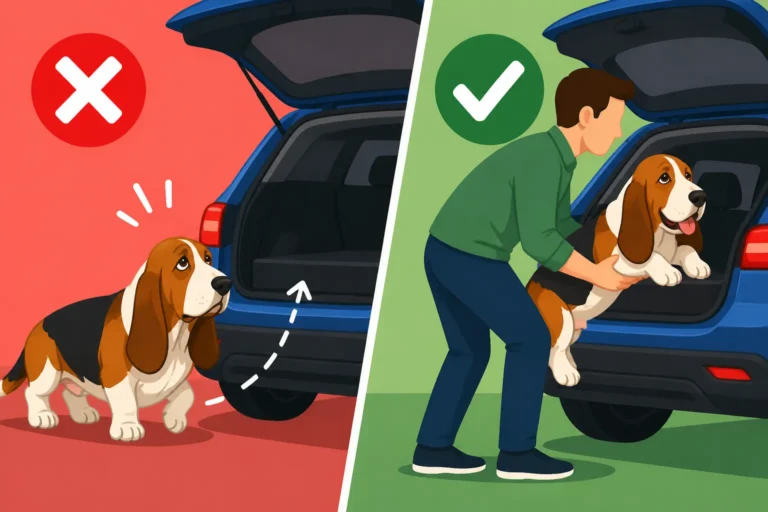
Ramps are perhaps the most ideal long-term solution for Basset Hounds and stairs. A well-placed ramp completely eliminates the need for jumping or climbing, providing a gentle incline that is far kinder to their spine and joints. Think about how much easier it would be for you to walk up a gradual slope versus a steep flight of steps; it's the same for your Basset.
Ramps come in various materials and designs, from carpeted wooden ramps for indoor use to portable, foldable ramps for cars or short outdoor steps. When choosing a ramp, prioritize a non-slip surface to give your Basset confidence and prevent falls. The incline should be as gradual as possible. A long-tail article like Whether a Basset Hound Should Use a Ramp often highlights the benefits for their long-term spinal health. You can find a wide variety of sturdy and durable ramps on platforms like Amazon and Chewy, making it easy to compare options and find one that fits your home's aesthetic and your dog's needs. Introducing a ramp can take some patience and positive reinforcement, often with treats, but it's an investment that pays dividends in comfort and safety for years to come.
Strategic Use of Gates and Blockades
Sometimes, the simplest solution is the most effective: blocking off stair access entirely. Baby gates or specialized pet gates can be installed at the top and bottom of staircases to prevent your Basset Hound from attempting to use them unsupervised. This is particularly useful for puppies who haven't yet learned spatial awareness or for senior dogs whose mobility has significantly declined.
Using gates ensures that your Basset only navigates stairs when you are there to assist them, either by carrying them or guiding them up a ramp. For homes with multiple levels, this might mean designating certain areas as "Basset-friendly zones" or managing their access throughout the day. It’s a passive but highly effective way to prevent accidental falls and reduce the cumulative stress on their body. While it might slightly limit their freedom within the house, it's a small trade-off for protecting their health. Many pet supply stores, including major retailers like Chewy, offer a range of sturdy gates designed to contain even the most determined Basset.
Training for Stair Caution
While carrying or using ramps is ideal, sometimes a Basset Hound might still encounter stairs unexpectedly. In these situations, basic training for stair caution can be invaluable. This doesn't mean training them to run up and down gracefully, but rather to approach stairs with care and at a slower pace.
You can teach your Basset to go "slow" or "wait" at the top or bottom of stairs, encouraging them to take each step deliberately. This can be achieved through positive reinforcement, using high-value treats to reward calm and measured behavior. For instance, you might place a treat on each stair, encouraging them to pause and collect it, thus slowing their descent or ascent. It's a method of teaching impulse control around a potential hazard. However, it's crucial to understand that training alone will not eliminate the anatomical risks. It's a supplementary measure, not a primary solution, and should always be combined with physical barriers or direct assistance when possible. Ensuring your Basset is at a healthy weight, perhaps with a diet like Ollie's fresh food options, can also improve their overall mobility and reduce strain on their joints, making any stair negotiation, however rare, a bit easier.
Disclaimer
This article is for general informational purposes only and does not constitute professional advice. Laws, prices and regulations vary by location and change over time. Consult a qualified professional for guidance on your specific situation.