Whether the Basset Hound Started in France
Many Basset Hound owners, or those just curious about these wonderfully unique dogs, often wonder about their deep historical roots. It’s natural to feel a connection to a breed’s past, especially one as distinctive as the Basset. You might have heard whispers of French origins, or perhaps seen images of regal hounds in old paintings, and found yourself asking: did the Basset Hound truly start in France? This guide will dive deep into the fascinating lineage of these beloved dogs, confirming their undeniable French heritage and exploring how their distinctive traits evolved from practical hunting needs in centuries past.
The French Connection: Where the Basset Hound's Story Begins
The Basset Hound's story is indeed deeply intertwined with French history, particularly with hunting practices that date back centuries. Understanding this origin helps us appreciate not just their adorable, droopy appearance, but the very essence of their temperament and instincts.
A Legacy of Low-Slung Hounds
When we talk about the Basset Hound starting in France, we're not just referring to a geographical location, but a fundamental concept in hound breeding. The word "basset" itself is French, derived from the adjective "bas," meaning "low." This wasn't originally a breed name, but rather a descriptor for any dog bred to be low to the ground. Imagine hunting in dense undergrowth or through thick forests – a tall, fast hound might outrun the hunters, disappearing from sight. But a low-slung dog, moving at a slower, more deliberate pace, could be followed on foot, making the hunt a shared experience rather than a mad dash. This focus on a slower, more methodical hunt for specific types of game, often rabbits or hares, was a practical need that shaped the initial development of what would become the Basset. The idea was to create a hound that could meticulously follow a scent without being too quick for the hunters on foot to keep up. What Bas Means in French really sets the stage for understanding this.
This concept of a "basset" type emerged from a pragmatic approach to hunting. Nobles and commoners alike would have appreciated a dog that could work effectively without requiring horses or immense athleticism from the humans involved. These dogs, with their shorter legs, could weave through thickets and push through dense brush that might impede a taller dog, keeping their powerful noses close to the ground where scent lay strongest. It’s a testament to the ingenuity of early breeders that they saw the value in these physical adaptations for a specific hunting style.
Saint Hubert and the Abbey Hounds
The earliest documented ancestors of the Basset Hound are believed to be the hounds bred at the Abbey of Saint Hubert in Belgium (which historically had strong ties to French culture and royalty). Legend and historical accounts point to the monks of this abbey, particularly those associated with Saint Hubert himself, as cultivating a distinct strain of scent hound. These "Saint Hubert Hounds" were large, powerful, deep-chested dogs, renowned for their incredible sense of smell and persistence on a trail. They were essentially the ancestors of what we now call Bloodhounds.
Over time, variations began to emerge from these formidable Saint Hubert Hounds. It's believed that shorter-legged mutations or selectively bred individuals from these lines were deliberately cultivated to create a "basset" version – a low-slung hound that retained the superb scenting ability of its larger ancestors but was better suited for hunting on foot. So, while the Basset Hound as a distinct, modern breed is a later development, its genetic and functional roots firmly trace back to these ancient French and Belgian hunting traditions and the dedicated breeding efforts, particularly The Abbey Hounds a Basset Hound Descends From. These early hounds laid the groundwork for the exceptional nose and tracking capabilities that define the Basset Hound today.
Evolution and Divergence: From Ancient Roots to Modern Basset
The journey from those early French hunting types to the recognizable Basset Hound of today is a story of selective breeding, historical upheaval, and cross-cultural development. It wasn't a straight line, but a meandering path shaped by human needs and preferences.
Distinguishing Early "Bassets" from the Basset Hound We Know
It's crucial to understand that in early French hunting circles, "basset" was a category rather than a single, defined breed. There were numerous regional variations of short-legged hounds, all generally referred to as "bassets." Think of it like a broad family of dogs, each with slightly different characteristics depending on the locale and the specific game they were intended to hunt. Some might have been heavier-boned, others lighter, some with longer or shorter ears. These were working dogs, and their appearance was primarily dictated by their function.
The Basset Artesien Normand, for instance, is another French basset breed that shares some ancestral ties but is distinct from the Basset Hound. The Basset Hound we recognize today—with its extraordinarily long ears, heavy bone, profuse loose skin, and melancholy expression—is the result of very specific breeding programs that started to coalesce these traits into a distinct type. While the general "basset" idea was widespread, the particular combination of characteristics that define our Basset Hound was carefully selected and refined over generations, leading to a truly unique canine silhouette. Whether a Basset Hound Was an Accident is a question many people ponder, but the development was largely intentional, even if some initial traits arose spontaneously.
The French Revolution's Impact and the Breed's Journey Abroad
Historical events often have unexpected impacts on dog breeds, and the French Revolution was no exception. Before the revolution, many of these "basset" type hounds were kept by French nobility and wealthy landowners for hunting on their vast estates. The upheaval of the revolution, with its dramatic social and political changes, led to the dispersal and often the decline of many aristocratic kennels.
However, this disruption also inadvertently helped spread these unique hounds beyond France's borders. Many of the dogs found new homes, particularly in England, where a fascination with French hunting breeds was growing. English breeders took these French "basset" types and began to selectively breed them, often focusing on exaggerating certain desirable traits, such as the length of the ears and the amount of loose skin. This period in the late 19th and early 20th centuries was pivotal, transforming the functional French "basset" into the more standardized, often show-ring focused, Basset Hound that became popular worldwide. It was through this international exchange and refinement that the breed truly solidified its distinct identity, building upon its robust French foundation. You can read more about its journey in When the Basset Hound Reached Britain.
Solidifying the Breed: French Influence and International Recognition
While the breed found its definitive shape and worldwide recognition outside of France, the initial French influence remained the bedrock upon which all subsequent development was built.
French Breeders Shaping the Basset Hound
Even as the Basset Hound gained popularity and further development in countries like England, French breeders continued their work, often maintaining slightly different lines and priorities. In France, the focus might have remained closer to the working heritage, emphasizing strong scenting ability and endurance in the field. This meant some French lines might have had less exaggerated features compared to their English counterparts, who were often breeding for show ring aesthetics.
However, it's undeniable that the core characteristics – the powerful nose, the low stature, the distinctive bay – were all refined and celebrated by French breeders first. They understood the unique advantages of a hound designed to follow scent trails methodically, allowing hunters to keep pace on foot. This dedication to function above all else truly shaped the Basset Hound's fundamental character and abilities. The emphasis on a specific type of hunting, where the dog's pace matched the hunter's, ensured that certain traits were continually reinforced, ensuring Whether a Basset Hound Was Bred to Be Outrun by Hunters was indeed the case.
The Basset Hound's Arrival and Development in Other Countries
The Basset Hound's arrival in other countries marked a new chapter in its development. As mentioned, England played a particularly crucial role in formalizing the breed standard. Breeders there were captivated by the Basset's unique appearance and exceptional nose. They began to breed specifically for the traits we associate with the modern Basset Hound – the heavily wrinkled brow, the deeply set eyes, the massive, pendulous ears, and the deep, resonant bay.
In America, the breed's popularity soared, partly due to its charming, somewhat comical appearance and its gentle nature. American breeders continued the work of refining the breed, and eventually, the American Kennel Club (AKC) recognized the Basset Hound. This recognition helped standardize the breed across the globe, though subtle differences in type can still be observed between Basset Hounds bred in different countries. For instance, some European lines might appear slightly less exaggerated than their American or British counterparts. Regardless of these nuances, the foundational traits – the incredible nose, the low carriage, and the distinctive vocalizations – all harken back to its French hunting origins. The Year the Basset Hound Joined the AKC was a significant milestone in its journey.
The Enduring French Spirit of the Basset Hound
Even though the breed has traveled far from its original stomping grounds, the essence of its French heritage remains deeply embedded in every Basset Hound. Their physical traits and instincts are living testaments to their ancestral purpose.
Characteristics That Echo Its French Heritage
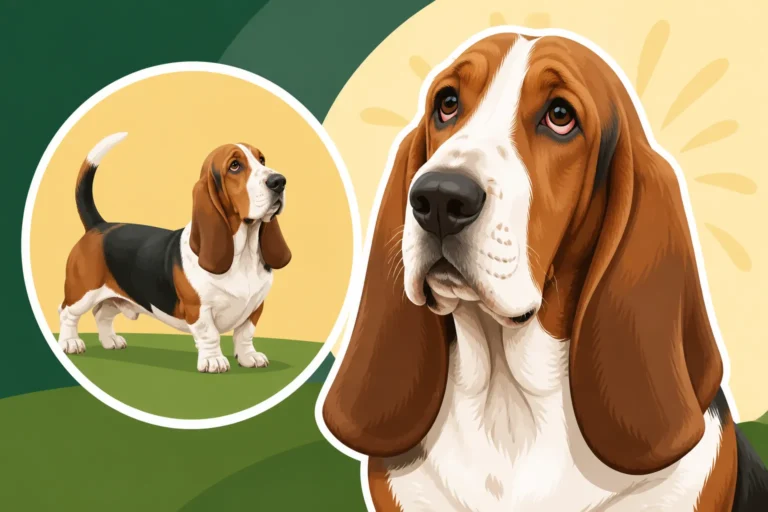
Look at a Basset Hound today, and you're seeing a dog whose very design is a testament to its French hunting past. Those incredibly long ears, for example, aren't just for show. They're believed to sweep scent upwards towards their highly sensitive noses, helping them concentrate and interpret even the faintest of trails. This specialized olfactory equipment is what makes them such superb scent hounds, often second only to the Bloodhound in terms of pure scenting prowess. You can explore more about this in The Nose That Puts a Basset Hound Second to a Bloodhound and Whether a Basset Hound's Ears Stir Scent Toward Its Nose.
Their short, powerful legs and heavy bone structure allow them to move steadily and persistently through dense undergrowth, keeping their noses close to the ground. This low profile is perfectly adapted for tracking game like rabbits or pheastt, allowing them to follow a trail without breaking stride. And that deep, resonant bay? That's not just a cute sound; it's a communication tool honed over centuries, designed to alert hunters to their progress on the trail, even when out of sight. The Bay a Basset Hound Uses and the Neighbors Hear is a characteristic that owners quickly come to appreciate (or, sometimes, tolerate!).
Why Its French Origin Matters Today
Understanding the Basset Hound's French origins is more than just a fun historical fact; it's crucial for understanding the breed today. When you see your Basset with its nose glued to the ground, utterly oblivious to your calls, it's not being stubborn (well, not always); it's simply fulfilling an ancient instinct, following a scent trail with the same single-minded dedication its ancestors did in French forests. This profound drive to follow scent means a Basset Hound should rarely, if ever, be off-leash in an unfenced area, a lesson many new owners learn the hard way.
Knowing this history also helps you appreciate their unique quirks, like their tendency to howl or bay. These aren't just random noises; they are echoes of their past as vocal pack hunters. Providing opportunities for scent work—whether through formal tracking, nose work games, or simply allowing them ample time to sniff on walks—can be incredibly enriching for a Basset, tapping into their innate talents. It also helps you appreciate why a Basset Hound is truly happiest when its nose is engaged, even if it’s just exploring the smells in your backyard. You might even find historical texts or breed-specific books on sites like Chewy that delve into these very topics, giving you even more insight into your furry friend's unique heritage.
Key Characteristics Shaped by French Origins
| Characteristic | French Origin Purpose | Impact on Modern Basset Hound |
|---|---|---|
| "Basset" (Low Stature) | Allowed hunters on foot to follow, navigated dense brush | Slower pace, excellent for sniffing close to the ground, prone to back issues if not managed |
| Long, Pendulous Ears | Swept scent towards the nose, gathered ground odors | Enhanced scenting ability, prone to ear infections and require regular cleaning |
| Deep, Resonant Bay | Communicated position to hunters in thick cover | Distinctive vocalization, can be loud, used for communication or alerting |
| Exceptional Nose | Tracked game over long distances, persistent trailing | Intense drive to follow scent, can be "deaf" to commands when on a trail |
| Heavy Bone Structure | Provided strength and endurance for long hunts on foot | Sturdy, powerful build, contributes to overall weight and can impact joints with age |
| Loose Skin/Wrinkles | May have helped trap scent, protective in dense cover | Gives characteristic "sad" look, requires cleaning in folds to prevent skin issues |
This table truly highlights how every distinctive feature of the Basset Hound ties back to its initial purpose as a highly effective, low-to-the-ground scent hound in the forests of France. It’s a breed carefully crafted by centuries of selective breeding to perform a very specific job, and understanding this provides a deeper appreciation for these magnificent dogs.
Disclaimer
This article is for general informational purposes only and does not constitute professional advice. Laws, prices and regulations vary by location and change over time. Consult a qualified professional for guidance on your specific situation.