Whether a Basset Hound Is Lazier Than a Bulldog
A Basset Hound sprawled across the rug can look like the laziest dog in the room, while a Bulldog may seem equally committed to the sofa. But low-energy appearances can hide very different needs: Bassets are scent-driven hounds, while Bulldogs may tire quickly because of their build and breathing limitations. This guide compares their activity, comfort, and everyday exercise needs.
Are Basset Hounds Really Lazier Than Bulldogs
Why a Basset Hound’s relaxed look can be misleading
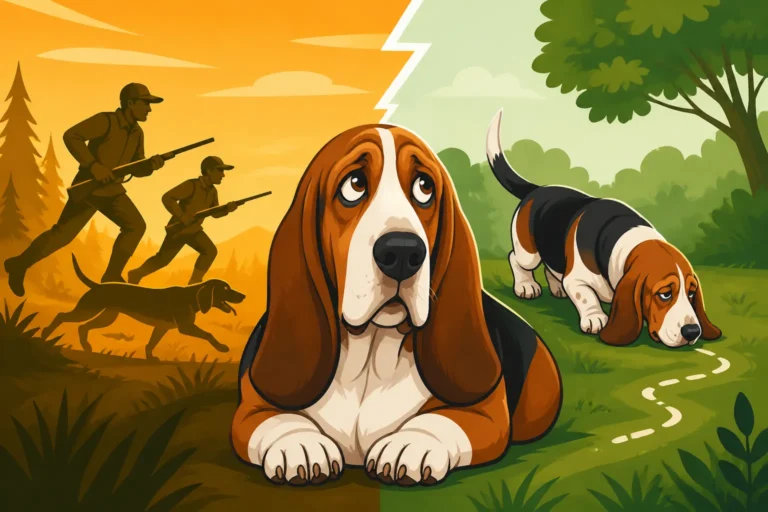
Basset Hounds are often calm indoors, and many are perfectly happy to nap near their people after a walk. Their short legs, heavy build, and unhurried pace can make them seem less interested in activity than they really are. But a Basset that stops to investigate every scent on the pavement is not necessarily being lazy. Following a trail is meaningful work for a scent hound, even when the walk covers little distance.
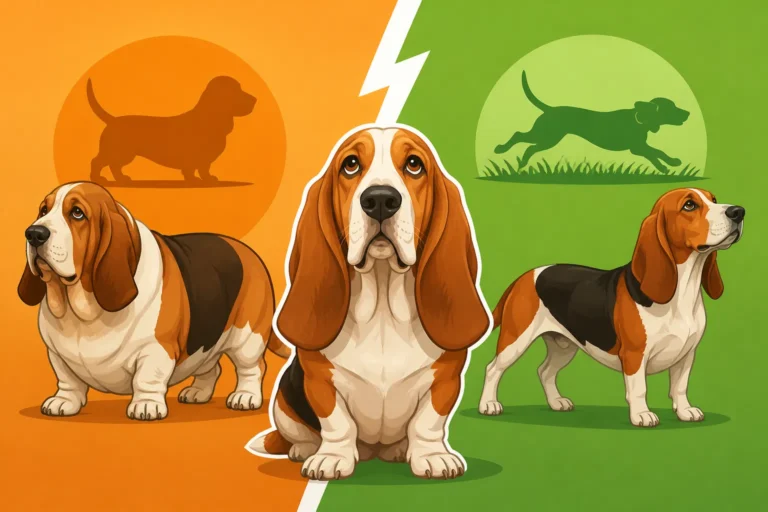
That difference matters when you compare a Basset with a Bulldog. A Basset may move slowly but remain engaged for a long time if there are interesting smells to explore. A Bulldog may be just as fond of resting, yet tire sooner during exertion, especially in warm weather or if breathing is difficult. A slow pace, therefore, does not tell you everything about a dog’s stamina or enjoyment.
If your Basset plants its feet halfway through a walk, it could be asking for a sniffing break, reacting to something nearby, feeling uncomfortable, or simply having reached its limit that day. It is worth learning the difference between a dog who is content to take its time and one who is struggling. Whether a Basset Hound Refuses to Move and Whether a Basset Hound Is Lazy or Sore cover those behaviors in more detail.
“Bulldog” can mean different dogs
People often mean the English Bulldog when they compare a Bulldog with a Basset Hound, but the word can also refer to other breeds, including the French Bulldog. Their size, build, and exercise tolerance are not identical, so it helps to be clear about which dog you have in mind. Even within a breed, health, age, weight, fitness, and individual personality can change how active a dog is.
English Bulldogs are known for a stocky build and a short muzzle. Some have limited tolerance for strenuous activity, and heat can make exertion more concerning. Basset Hounds have their own physical considerations, including a long, low body and heavy frame. Neither dog should be pushed into activity just to prove it is not lazy.
So, is a Basset Hound lazier than a Bulldog? Not as a reliable breed-wide rule. Either dog may be a homebody, and either may enjoy a suitable outing. A Basset may look less energetic because it walks at a measured pace, while a Bulldog may look less active because it needs frequent rest. The reasons behind the behavior are not necessarily the same.
What “lazy” looks like in everyday life
Imagine two dogs on a mild morning walk. The Basset pauses repeatedly to smell a fence post, patch of grass, or trail edge, then carries on at a relaxed pace. The Bulldog walks briskly for a short stretch, starts panting, and wants to turn back. If you only measure distance, the Basset may appear more energetic. If you notice how each dog engages with the outing and recovers afterward, the comparison becomes more useful.
At home, both breeds may spend plenty of time resting. That is not automatically a problem. A dog can be calm indoors and still need regular opportunities to move, explore, and interact. The better question is not “Which breed is lazier?” but “What kind of activity can this particular dog do comfortably, and does it recover well?”
Comparing Their Exercise Needs and Limitations
Basset Hounds need movement and mental engagement
A Basset Hound is not usually a distance-running partner, but it still benefits from regular, comfortable movement. Walks provide exercise, routine, and chances to follow scents. A slow neighborhood loop can be more satisfying than a longer route where the dog is hurried past every interesting smell. Short scent games at home can also give a Basset a job without demanding intense physical effort.
Build activity around your dog’s condition rather than a fixed idea of what a “good walk” should look like. Some Bassets enjoy several manageable outings; others do better with gentler sessions, particularly as they age or if they have joint or back concerns. If your dog is new to exercise, overweight, or recovering from an illness, ask a veterinarian how to increase activity safely. Whether a Basset Hound Needs Any Real Exercise offers more context on why movement still matters, even for a dog that seems content to nap.
Bulldogs may need a different kind of caution
A Bulldog’s exercise plan should account for breathing, temperature, and recovery. A short, easy outing may be appropriate for one dog, while another may need a more conservative routine based on health advice. Heavy panting, noisy or difficult breathing, weakness, or trouble recovering are reasons to stop activity and seek veterinary guidance rather than encourage the dog to keep going.
For both breeds, avoid treating exercise as a contest. Don’t try to make a Basset keep up with a fast-moving dog, and don’t assume a Bulldog should be walked farther just because it seems eager at the start. Warm or humid weather can be especially challenging for dogs that struggle to cool themselves. Whether a Basset Hound Copes With Heat explains why even a breed that enjoys an outing may need a change of plan when conditions are hot.
A practical comparison
| Everyday question | Basset Hound | English Bulldog |
|---|---|---|
| Why might the dog seem inactive? | Relaxed temperament, slow pace, scent stops, discomfort, or excess weight | Relaxed temperament, limited stamina, breathing difficulty, heat, discomfort, or excess weight |
| What activity may be enjoyable? | Easy walks with time to sniff and gentle scent games | Gentle, shorter outings suited to the dog’s breathing and fitness |
| What should owners watch closely? | Limping, reluctance to move, back discomfort, or a sudden change in stamina | Labored breathing, overheating, weakness, or slow recovery |
| Does a slow walk mean the dog is lazy? | No. Sniffing and exploring may be the point of the walk | No. A dog may need a slower pace or more rest for physical reasons |
| Should exercise be identical for every dog of the breed? | No. Age, health, weight, and fitness matter | No. Individual breathing and heat tolerance matter |
The table is a starting point, not a diagnosis. A dog’s normal habits are useful context, but any sudden change deserves attention.
How to Tell Contentment From a Problem
Notice changes from your dog’s usual behavior
A Basset that has always taken its time on walks is different from a dog that suddenly refuses to go outside. Watch for changes in willingness to rise, stride, appetite, mood, or interest in activities it used to enjoy. A previously eager dog that now lags, limps, sits down repeatedly, or seems uncomfortable may need a veterinary check rather than a pep talk.
With a Bulldog, pay close attention to breathing and recovery. Panting during activity can occur, but strained breathing, marked distress, collapse, or unusual weakness should not be dismissed as ordinary laziness. If you are unsure whether your dog is simply tired or struggling, stop the activity and contact a veterinarian for advice.
A simple note on your phone can help: record what kind of activity the dog did, the weather, when the behavior began, and how long it took to settle afterward. Patterns are often easier to explain at an appointment than a general statement like “he seems less active lately.” If mobility is your main concern, How Far a Basset Hound Should Walk may help you think through activity in a breed-specific way.
Consider weight, pain, and the home environment
Extra weight can make movement harder for both breeds. It may also make a dog appear less willing to walk, when the real issue is that each step feels more demanding. Keep an eye on body shape and ask your veterinarian to assess weight rather than relying on appearance alone. A Basset’s loose skin and long body can make visual guesses tricky, and a Bulldog’s broad build can also complicate casual comparisons.
The floor and furniture setup can make a difference, too. Slippery flooring may make a dog hesitant to move, while repeated jumping on and off furniture can be uncomfortable for some dogs. A clear walking route, good traction, and easy access to resting places can help a dog move with more confidence. For a Basset, back and joint comfort are especially important considerations; The Back Trouble a Basset Hound Is Built Into discusses why body structure deserves attention.
Think about what happens before the dog stops moving. Does it hesitate at stairs, pull away when touched, struggle to stand after a nap, or seem reluctant only on hot days? Those details can point toward different explanations. Breed stereotypes are much less useful than noticing the specific circumstances.
When to ask for veterinary help
Contact a veterinarian if low activity is new, persistent, worsening, or accompanied by other changes such as limping, pain, unusual breathing, weakness, or reduced appetite. Seek urgent help for severe breathing distress, collapse, or sudden inability to stand or walk. It is safer to treat those signs as health concerns than to assume your dog is being stubborn or lazy.
A vet can help distinguish normal temperament from pain, weight-related strain, breathing issues, or another health problem. Be ready to describe what changed, when it started, and what makes it better or worse. If possible, note whether the dog behaves differently indoors, outdoors, in warm weather, or after a particular kind of activity.
Helping Either Dog Stay Comfortable and Engaged
Choose activity the dog can enjoy
For a Basset Hound, let sniffing be part of the plan. Give the dog time to investigate safe spots, and consider simple scent games at home, such as hiding a few pieces of its regular food for it to find. Keep sessions manageable and use food from the dog’s daily ration when possible. If you’re looking for a treat-dispensing toy or a comfortable walking harness, Chewy is one retailer where owners may compare options; choose based on fit, safety, and your dog’s needs rather than the product’s marketing claims.
For a Bulldog, favor comfortable conditions and a pace that allows easy recovery. Choose cooler parts of the day when weather is warm, bring water, and head home if the dog shows signs of strain. Avoid trying to make up for an inactive day with a sudden, strenuous outing. Steady routines are usually easier to judge than occasional bursts of activity.
For both breeds, mental activity counts. A few minutes of simple training, searching for kibble, or exploring a new safe route can make an ordinary day more engaging. Chewy may also offer puzzle feeders or enrichment supplies to compare, but a cardboard box with a few safely hidden pieces of kibble can work just as well under supervision.
Make exercise a routine, not a test
A useful routine is one your dog can repeat without discomfort. Watch how it moves during an activity and how it behaves afterward. If the dog is unusually tired for the rest of the day, reluctant at the next outing, or showing signs of soreness, scale back and seek advice if the pattern continues. Whether a Basset Hound Should Jog With You is worth reading before turning a Basset into a running companion.
Keep equipment comfortable and appropriately fitted. A harness should not rub or restrict movement, and a leash setup should let you guide the dog without hauling it along. If you shop through Chewy or another retailer, check sizing guidance carefully and make sure the item is suitable for your dog’s proportions. For a Basset, a well-fitting harness can be particularly helpful for comfortable everyday walks, but no piece of equipment replaces a suitable pace and attention to signs of discomfort.
The goal is not to make either breed look athletic. It is to help the individual dog stay mobile, interested, and comfortable. A Basset sniffing slowly can be having a very good walk. A Bulldog resting after a gentle outing may also be behaving normally. What matters most is whether the activity suits the dog and whether its behavior remains consistent with its own healthy baseline.
Disclaimer
This article is for general informational purposes only and does not constitute professional advice. Laws, prices and regulations vary by location and change over time. Consult a qualified professional for guidance on your specific situation.