Whether a Basset Hound Should Jog With You
It's a common aspiration for dog owners: lacing up your running shoes and hitting the pavement with your furry best friend trotting happily beside you. We see it in movies, in ads, and in our minds, a perfect picture of companionship and fitness. But if you're a Basset Hound owner, you've probably looked down at those wonderfully long ears, those impossibly short legs, and that sturdy, low-slung body, and wondered, "Is this dog really built for jogging?" The short answer is usually no, and this guide is going to dive deep into why that is, helping you understand your Basset's unique needs and discover exercise routines that are truly beneficial and safe for them.
Understanding the Basset Hound's Unique Physiology and Why It Matters for Exercise
Let's face it, Basset Hounds weren't designed to be marathon runners or agility stars. They were bred for a very specific purpose: to follow a scent trail slowly and deliberately, allowing hunters on foot to keep up. This means their entire physical structure is geared towards endurance at a walking pace, not speed or high-impact activity. Understanding these foundational elements of their build is crucial before you even consider any strenuous exercise.
Their Peculiar Build: Short Legs, Long Back, Heavy Frame
The Basset Hound's distinctive appearance isn't just for show; it's a functional design, albeit one that comes with certain limitations for modern lifestyles. They possess a genetic condition called achondroplasia, which results in their characteristic short, bowed legs. While adorable, these legs are not shock absorbers. Every step taken at a faster pace sends impact directly through their joints. Imagine trying to run a sprint with legs that are literally built to be short and slightly crooked – it just doesn't work efficiently or comfortably.
Beyond their legs, Basset Hounds are famously long-backed. This elongated spine, coupled with a surprisingly heavy bone structure for their height, means their back is under constant strain even with normal movement. Add to that their substantial body weight – a healthy Basset can weigh as much as a medium-sized Labrador, despite being half the height – and you have a recipe for orthopedic challenges if they're subjected to repetitive impact. Their body is built for power and stability on uneven ground while following a scent, not for sustained, ground-eating strides. You can find more detail on their unique front structure in The Crooked Front a Basset Hound Is Built On and the inherent spinal challenges in The Back Trouble a Basset Hound Is Built Into.
Heat Regulation and Endurance
Another often-overlooked aspect of Basset Hound physiology is their ability (or lack thereof) to regulate body temperature during exertion. They sport a thick, dense coat, which, while beautiful, doesn't lend itself well to dissipating heat efficiently. Furthermore, while not as extreme as some brachycephalic breeds, Basset Hounds tend to have a slightly more compact muzzle compared to many other hounds. This can sometimes make their panting less effective at cooling them down.
When you combine their dense coat with their heavy build and the effort required for those short legs to keep pace, you're setting your Basset up for potential overheating, especially on warm days. They can't just shed a layer like we can, and pushing them to maintain a jog when they're already struggling to cool down can quickly lead to dangerous levels of heat exhaustion or even heatstroke. They are simply not built for sustained periods of high exertion, particularly in temperatures that would feel comfortable for a human jogger. It's a real challenge for them, and one you should be acutely aware of, especially regarding Whether a Basset Hound Copes With Heat or Whether a Basset Hound Should Walk in the Heat.
The Scent Drive Over Speed
Let's not forget the most defining characteristic of a Basset Hound: their incredible nose. Bred to follow scent, their world is primarily experienced through olfaction. When a Basset Hound is out and about, their nose is glued to the ground, processing an intricate tapestry of smells. This instinct is incredibly powerful, and it completely overrides any human desire for a steady, rhythmic jog.
Imagine trying to stay focused on your running pace when every other step brings a tantalizing, irresistible new aroma to your attention. For a Basset, that's their reality. They will stop. They will pull. They will change direction abruptly to investigate a scent that we humans can't even perceive. This isn't stubbornness; it's simply them being true to their nature. Trying to force them into a non-stop jogging routine goes against their very essence and will likely be a frustrating experience for both of you. Their primary driver is often explored in articles like Why a Basset Hound Stops Hearing You When It Smells Something and how their impressive nose compares to other breeds, such as in The Nose That Puts a Basset Hound Second to a Bloodhound.
The Risks and Realities of Jogging with a Basset Hound
So, we've talked about why their bodies and brains aren't naturally inclined towards jogging. Now, let's get serious about the potential dangers. As a Basset owner, you're signing up for a lifetime of care for a breed prone to certain structural and health issues, and high-impact exercise can significantly worsen these.
Joint and Spinal Strain
This is arguably the biggest concern when considering jogging with a Basset Hound. Their unique skeletal structure, as discussed, is inherently vulnerable to certain orthopedic conditions. Elbow dysplasia, where the elbow joint doesn't form correctly, is a significant issue in the breed. Repetitive pounding on hard surfaces like pavement during a jog can cause immense pain and accelerate the degeneration of already compromised joints. Even in Bassets with healthy elbows, the constant impact can lead to premature arthritis. More on this can be found in Elbow Dysplasia in a Basset Hound.
But the real boogeyman for Basset Hounds is intervertebral disc disease (IVDD). Their long spine, combined with their short legs and heavy body, makes them highly susceptible to slipped or ruptured discs. A sudden jarring motion, an awkward jump, or the continuous stress of high-impact exercise like jogging can be the trigger for a painful, debilitating, and expensive spinal injury. We're talking about conditions that can lead to paralysis and require extensive surgery and rehabilitation. It's simply not worth the risk for a few miles of exercise that isn't even suited to their natural inclinations. To learn more about this prevalent issue, refer to Intervertebral Disc Disease in a Basset Hound.
Overheating and Heatstroke
As touched upon earlier, a Basset Hound's physiology makes them poor candidates for strenuous exercise in anything but cool, mild weather. Their thick coat, heavy frame, and relatively less efficient cooling system mean they can overheat much faster than a sleek, athletic breed. A jog that feels refreshing to you on a sunny 70-degree Fahrenheit day could be genuinely life-threatening for your Basset.
Signs of overheating include excessive panting, drooling, lethargy, bright red gums, and a staggering gait. If you see these, you need to stop immediately, move your dog to a cool, shaded area, offer water, and cool them with wet towels. Heatstroke is an emergency that can cause organ damage and death. The risk is simply too high to justify sustained jogging, especially during warmer months or even warm parts of the day. They have a tougher time cooling down than many people realize, as detailed in Whether a Basset Hound Overheats in Summer.
Behavioral Challenges on a Run
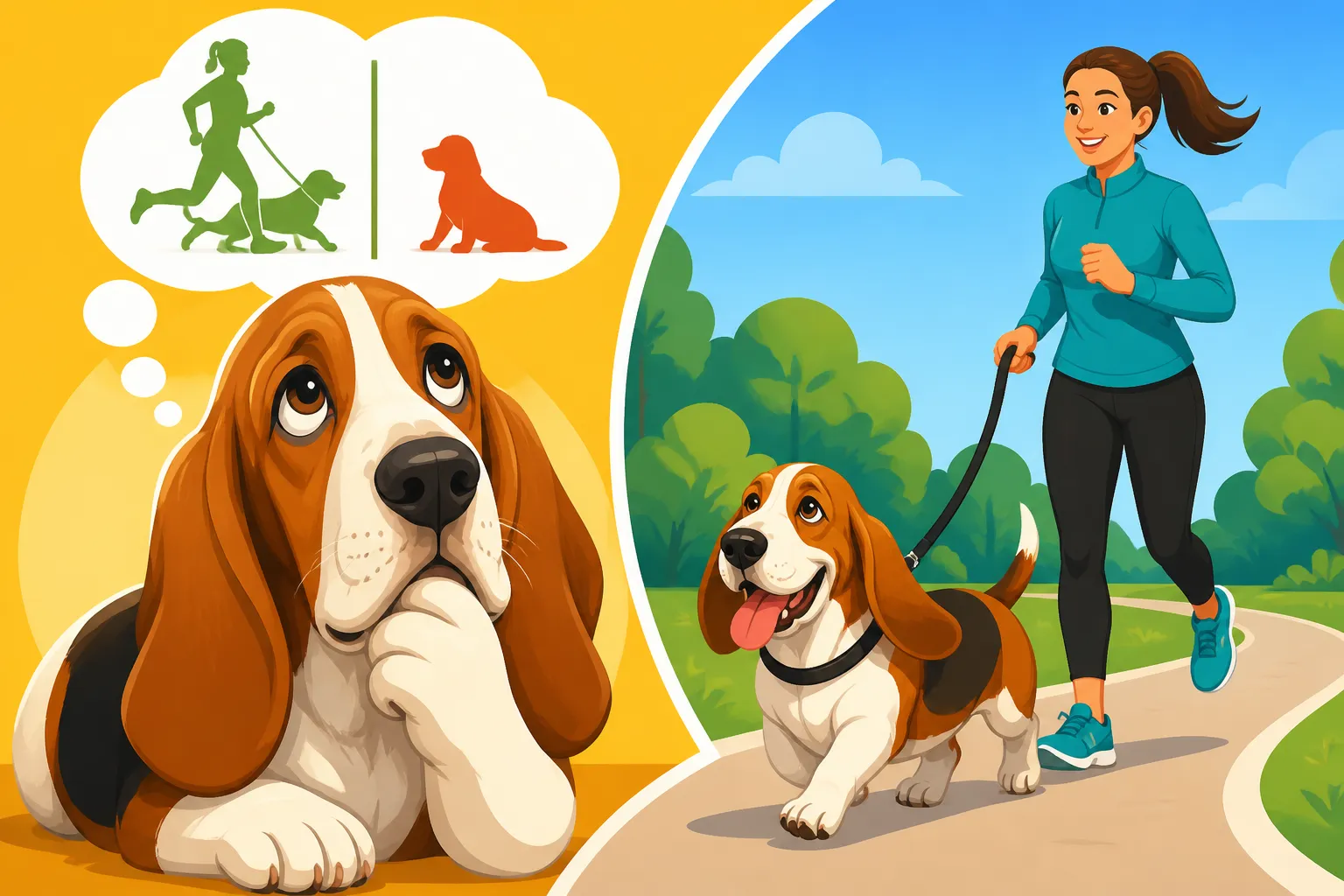
Beyond the physical risks, there's the simple reality of trying to jog with a Basset Hound: it's often more frustrating than fun. Their nose is their master. If you're hoping for a steady pace, you're in for a rude awakening. Every interesting scent — a squirrel's path, a patch of intriguing grass, the lingering smell of another dog — becomes an irresistible magnet, bringing your run to a grinding halt.
They will pull against the leash, determined to follow that invisible trail. They might suddenly sit down mid-stride and refuse to budge, giving you that classic Basset "I'm done" look. This isn't them being disobedient; it's them being a Basset. Their natural inclination is to move at a slow, methodical pace, nose to the ground, taking their sweet time. Trying to force them into a human-dictated jog will lead to a battle of wills, pulling on the leash, and a generally unpleasant experience for both of you. You might find yourself carrying a protesting Basset home, a scenario discussed in The Basset Hound That Will Not Walk Any Further, or struggling with their surprising strength on the leash, as covered in Whether a Basset Hound Pulls Hard for Its Size.
Safe and Enjoyable Exercise Alternatives for Your Basset Hound
So, if jogging is largely off the table, what can you do to keep your Basset Hound fit, happy, and mentally stimulated? Plenty! The key is to embrace their natural instincts and work with their unique physical attributes, rather than against them.
Leisurely Walks and Scent Walks
This is the bread and butter of Basset Hound exercise, and it’s where they truly shine. Forget miles logged or speed records. Instead, focus on duration and the richness of their sensory experience. Several shorter, leisurely walks throughout the day are far better than one long, forced march. Allow your Basset to stop and sniff to their heart's content. This isn't just "wasting time"; it's how they explore their world, gather information, and get profound mental exercise.
Think of it as reading the newspaper for them. Every lamppost, every bush, every crack in the pavement holds a story told in scent. A 20-minute walk where they get to sniff every interesting spot is often more fulfilling and tiring for a Basset than an hour-long power walk where they're constantly being tugged along. This engages their brain, which is just as important as physical activity. Aim for good, solid walks, but keep their physical limitations in mind. For guidance, consider How Far a Basset Hound Should Walk. You can also maximize their enjoyment by deliberately turning walks into "scent walks," which is discussed in Giving a Basset Hound's Nose Something to Do.
Nose Work and Brain Games
Since their nose is their superpower, let's put it to good use! Nose work activities are fantastic for Basset Hounds. These games tap into their innate desire to track and find, providing immense mental stimulation without any high-impact stress on their joints or spine. You can start simply at home: hide treats around the house and let your Basset sniff them out. A snuffle mat from Amazon, for instance, is a wonderful tool for engaging their nose and slowing down their eating, turning mealtime into a fun brain game.
For more structured activities, look into local nose work or tracking classes. These classes teach your dog to find specific scents or follow a trail, offering a constructive outlet for their powerful olfactory abilities. Even simple puzzle toys that dispense treats when manipulated can provide a good mental workout. These activities are incredibly enriching and often tire a Basset out more effectively than a strenuous physical activity ever could. Find out more about how they take to these activities in Whether a Basset Hound Takes to Scent Work and how they can be mentally exhausting in Whether Nose Work Tires a Basset Hound Out.
Gentle Play and Swimming (with precautions)
Beyond walks and nose games, gentle play can be a good way to burn off some energy. Think short sessions of tug-of-war (without harsh jerking motions that could strain their back), or rolling a soft ball in the yard. Always supervise play, and be mindful of their limitations – no high jumps or sudden twists and turns.
Swimming can also be an excellent low-impact exercise for Basset Hounds, but with significant caveats. Due to their dense bone structure and short legs, Bassets are not natural swimmers and often "sink" rather than float effortlessly. A well-fitting dog life vest is absolutely essential for safety. Always supervise them closely in the water, whether it's a shallow kiddie pool or a lake. After swimming, make sure to thoroughly dry their long ears to prevent ear infections, a common ailment for the breed. Learn more about their swimming abilities, or lack thereof, in Whether a Basset Hound Swims and Whether a Basset Hound Sinks, and the critical post-swim care for their ears in Whether a Basset Hound's Ears Should Be Dried After Swimming.
Preparing Your Basset Hound for Any Exercise Routine (and When to Consult Your Vet)
Even with low-impact activities, preparation is key. Ensuring your Basset Hound is in optimal condition and equipped with the right gear, and that you have a veterinarian in your corner, will set them up for a lifetime of happy, healthy movement.
Conditioning and Weight Management
One of the absolute best things you can do for your Basset Hound's long-term health, especially concerning their joints and spine, is to keep them at a healthy weight. Extra pounds put immense strain on their already vulnerable skeletal structure, exacerbating issues like IVDD, elbow dysplasia, and arthritis. A lean Basset is a happier, more mobile Basset.
Any exercise routine, even gentle ones, should be introduced gradually. Don't go from couch potato to hour-long walks overnight. Start with short, frequent outings and slowly increase duration as your Basset's stamina improves. Pay close attention to their body language. Are they lagging? Panting excessively? Showing signs of discomfort? Listen to what your dog is telling you. A healthy weight is paramount, and you can learn more about managing it in Keeping a Basset Hound at Its Correct Weight and the severe impact of What Extra Weight Does to a Basset Hound.
Proper Gear for Walks
The right gear makes a world of difference for your Basset Hound's comfort and safety during walks. Because Bassets are powerful sniffers and can pull with surprising strength when on a scent, a well-fitting harness is almost always a better choice than a collar. A collar can put undue pressure on their neck and throat, especially if they lunge after a scent. A harness distributes pressure across their chest and shoulders, which is much safer and more comfortable for their unique build.
There are many types of harnesses available, from front-clip harnesses that help reduce pulling to padded Y-front harnesses that allow for full range of shoulder motion. A reputable pet store or online retailer like Amazon offers a vast selection. Look for one that doesn't restrict their short legs or rub under their armpits. When your dog is truly interested in sniffing, they can become oblivious to their surroundings, so a sturdy leash and a secure harness are non-negotiable safety items. For more specific advice on gear, consider Which Harness Suits a Basset Hound and Whether a Basset Hound Should Wear a Collar or Harness.
Regular Veterinary Check-ups
Before starting any new exercise routine, or if you have any concerns about your Basset Hound's mobility or overall health, a visit to your veterinarian is non-negotiable. Your vet can assess your dog's current physical condition, check their joints, listen to their heart, and advise on appropriate activity levels. They can help you identify early signs of orthopedic issues and suggest preventative measures or management strategies.
Regular check-ups are especially important for a breed like the Basset Hound, which is predisposed to several health conditions. Your vet can provide guidance tailored to your individual dog's age, weight, and health status. Don't just assume your Basset is fine; proactive veterinary care is the best way to ensure they remain comfortable and mobile for as long as possible. Understanding what common treatments Bassets undergo can be found in What Basset Hounds Are Most Often Treated For.
Training and Communication
Even if a Basset Hound isn't going to be your jogging partner, basic obedience and good communication are vital for making any outing enjoyable and safe. Positive reinforcement training works best for Bassets; they respond well to treats and praise, and harsh corrections are usually counterproductive for their sensitive, yet independent, nature.
Work on cues like "leave it" (for those irresistible scents), a reliable "come" (though always assume a long line or fence is needed for true off-leash safety due to their nose!), and polite leash manners. Teaching them to walk nicely on a loose leash will make those scent walks much more pleasant for both of you. Online training platforms, such as BAXTER & Bella, can offer structured programs and support for puppy training and basic obedience, helping you build a strong foundation of communication with your Basset Hound. A well-trained Basset is a pleasure to be with, whether you're strolling through the park or enjoying a quiet evening at home.
Here's a quick overview of why certain exercise types are a better fit for your Basset:
| Feature | Jogging for Basset Hounds | Scent Walks for Basset Hounds |
|---|---|---|
| Physical Demands | High impact, repetitive joint stress | Low impact, gentle movement |
| Mental Stimulation | Low, focuses on pace, ignores primary instinct | High, engages primary sense of smell |
| Risk of Injury | High (IVDD, joint issues, overheating) | Low (minimal joint stress, mental engagement) |
| Natural Instincts | Conflicts with scent drive, frustrating | Aligns perfectly with natural trailing behavior |
| Suitability | Generally ill-suited | Highly suitable, beneficial for well-being |
Disclaimer
This article is for general informational purposes only and does not constitute professional advice. Laws, prices and regulations vary by location and change over time. Consult a qualified professional for guidance on your specific situation.