Whether the Basset Hound Was Ever a Rough Coated Breed
A Basset Hound with wiry, shaggy hair can look as though it belongs to an old-fashioned strain of the breed, especially when its coat is longer around the muzzle or legs. But the familiar Basset Hound is a short-coated breed. This guide explains where the rough-coat impression comes from, which related hounds really do have wiry coats, and what an unusual coat may mean for your dog.
The Basset Hound’s coat and its history
The recognized Basset Hound has a short coat
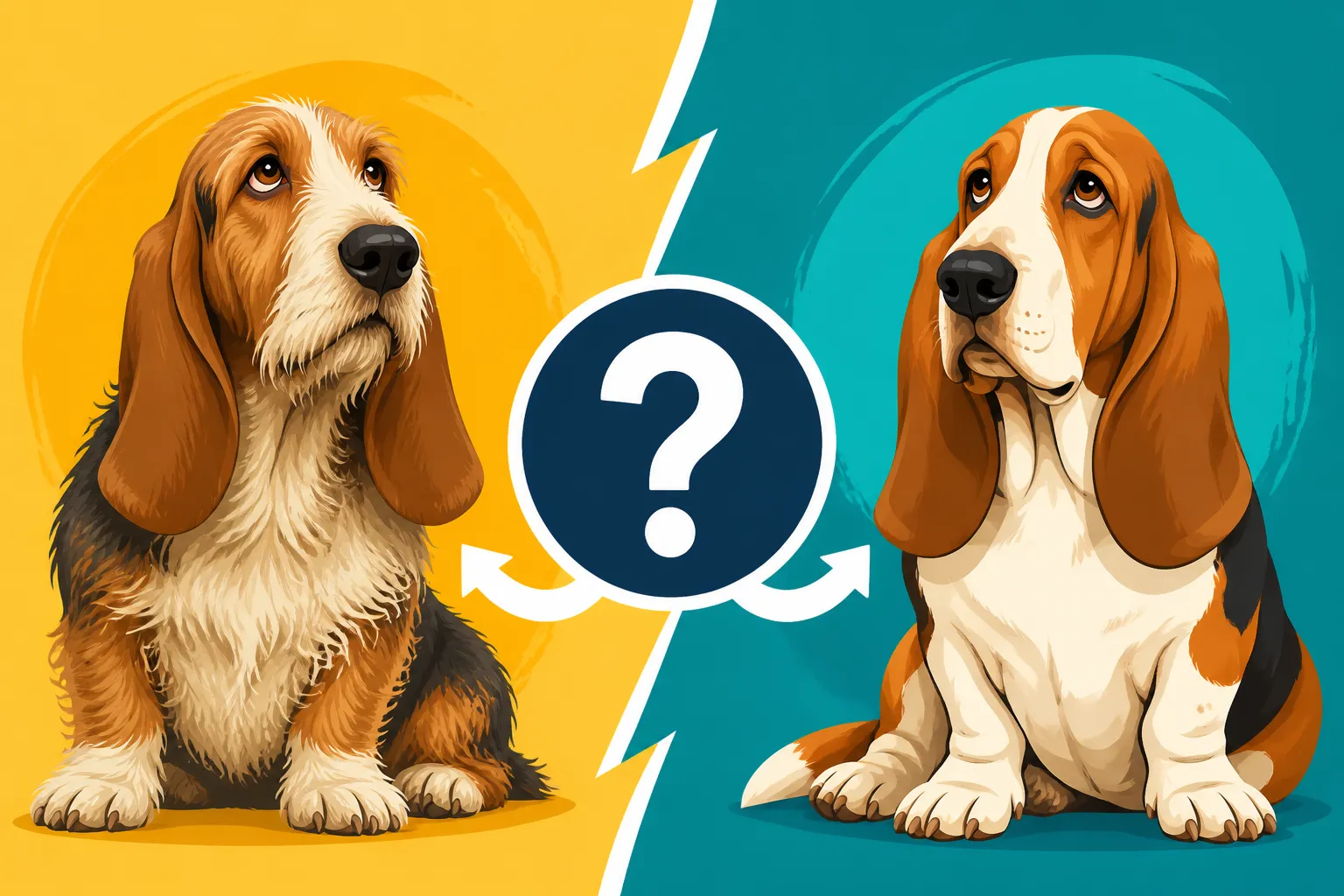
The Basset Hound is known for a short, smooth coat that lies close to the body. It can feel firm to the touch, but it should not look woolly, wiry, or distinctly shaggy. A short coat does not mean a Basset Hound sheds very little: many shed steadily, and loose hairs can show up on furniture, clothes, and bedding.
The breed developed from short-legged French hounds, but “basset” has referred to more than one kind of low-set hound. That shared history can make it easy to assume every dog called a basset had the same coat. In reality, coat type varied among related French hound breeds. The history of the Basset Hound itself is better understood as part of that larger family, rather than as one single line that included every type of basset. The Abbey Hounds a Basset Hound Descends From
The Basset Hound’s recognized appearance is not a rough-coated one. Descriptions of the breed call for a short, smooth coat, while wiry coats are characteristic of different, though related, breeds. For more about the breed’s development and how its different lines came to be, see The Split Between Show and Hunting Basset Hounds.
Related basset breeds can have rough coats
The most likely source of confusion is the Basset Griffon Vendéen. The Petit Basset Griffon Vendéen and Grand Basset Griffon Vendéen are separate breeds with rough, tousled coats. Their names include “basset,” and they share some broad historical connections with other French scent hounds, but they are not rough-coated varieties of the modern Basset Hound.
The Basset Artesien Normand is another related French basset breed. It is generally short-coated, and its name also contributes to the tangle of similar-sounding breed histories. If you have seen photos of several low-set French hounds side by side, it is understandable that their differences can blur together. What the Basset Artesien Normand Is
| Dog or breed type | Typical coat | What to keep in mind |
|---|---|---|
| Basset Hound | Short and smooth | The familiar Basset Hound is not a rough-coated breed |
| Basset Griffon Vendéen | Rough and wiry | A separate breed, not a rough-coated Basset Hound |
| Basset Artesien Normand | Short and smooth | A related French basset breed with its own breed identity |
| Dog with an unusually shaggy coat | Varies | Coat texture alone cannot confirm ancestry |
Why a Basset Hound might look rough-coated
Coat texture can be mistaken for length or scruffiness
Not every coat that looks untidy is genuinely wiry. A Basset Hound may have coarse-feeling hair, a few longer hairs around the face or legs, or a coat that looks scruffy after shedding. Lighting, grooming, age, and the condition of the skin can all change how the coat appears in a photo. A young dog’s coat may also look different from an adult’s as it matures.
A rough coat is usually more than a slightly coarse feel. It tends to look and feel distinctly wiry, with noticeable longer hairs rather than a smooth layer that follows the body. Even then, appearance by itself cannot tell you whether the dog is purebred, mixed, or simply an individual with an unusual coat. Breed ancestry is not reliably established by coat texture alone.
If you are looking at a puppy, ask the breeder what coat type the parents have and whether the puppy’s registration and pedigree identify it as a Basset Hound. A responsible breeder should be willing to discuss the dog’s family and answer questions without treating an unusual coat as proof of a rare or special Basset Hound variety. The Health Tests a Basset Hound Breeder Should Run
A coat difference does not make a dog less of a companion
Owners sometimes worry that a shaggy-looking dog means they have been misled about its breed. It may be reasonable to ask questions, especially if the coat differs substantially from the expected short, smooth type. Still, a dog’s worth as a companion is not determined by whether its coat matches a breed description.
If the dog came from a shelter or rescue, its background may be incomplete. A rough coat could reflect mixed ancestry, or the dog may belong to a related breed that was listed under a broad or informal label. Focus on the dog in front of you: its health, temperament, grooming needs, and fit with your household matter more day to day than a precise label. For a broader look at coat colors and appearance, see The Colors a Basset Hound Comes In.
Caring for a short or wiry coat
Grooming needs depend on the coat the dog actually has
A typical Basset Hound’s short coat generally needs regular brushing to lift loose hair and spread natural oils. A rubber curry brush or a soft grooming tool can work well for many short-coated dogs. If your Basset Hound has a noticeably wiry coat, brushing may need to be more deliberate so the hair does not tangle, particularly around the ears, legs, and areas where the coat is longer.
Watch the skin as you groom. Redness, persistent itching, flakes, greasy patches, or a strong unpleasant smell are not simply signs that a coat is rough. They can point to skin irritation or another problem worth discussing with a veterinarian. Avoid trying to fix a skin concern by bathing repeatedly or using strong products without guidance.
If you are shopping for a basic brush or dog shampoo, Chewy is one retailer where owners may compare grooming supplies. Choose a tool that suits the hair texture and your dog’s comfort, rather than buying a specialized product because the coat looks unusual. For general guidance on routine grooming, see Whether a Basset Hound’s Coat Needs Brushing and How Much a Basset Hound Sheds.
Rough-coated breeds may need a different grooming routine
A wiry coat can need more attention to prevent tangles and keep debris from sitting in the hair. Some owners of rough-coated breeds use a slicker brush or comb, while others get advice from a groomer familiar with that coat type. The right approach depends on the individual coat; vigorous brushing can irritate skin, and clipping or stripping techniques should not be assumed necessary for every dog.
When you speak with a groomer, describe what you are seeing rather than simply asking for a “Basset Hound trim.” If your dog is a Basset Griffon Vendéen or a mix, its grooming needs may be quite different from those of a short-coated Basset Hound. Chewy may offer a range of combs and brushes, but a product listing cannot tell you which tool is right for your dog’s skin and coat. A groomer or veterinarian can help if you are unsure.
Bathing is another place where coat type matters less than the dog’s needs. A Basset Hound with a healthy short coat usually does not need frequent baths just because it sheds. A rough-coated dog may bring more dirt in from walks, but too many baths can dry or irritate skin. Use a dog shampoo suited to your pet, and ask your veterinarian for guidance if there is persistent odor or irritation. Chewy carries dog-care products, but follow veterinary advice if your dog has a diagnosed skin condition. Which Shampoo Suits a Basset Hound
How to tell what you have
Check the breed information before relying on appearance
If you are buying a puppy, look for clear documentation of the breed and ask to meet the parents, if possible. Ask what coat type is typical in the litter and whether the breeder can explain any visible difference. A seller calling a dog a “rare rough-coated Basset Hound” is not, by itself, evidence that rough coats are an established variety of the breed.
When considering a rescue dog, ask what information the organization has about its background. Photos, veterinary records, and notes from a foster home can help you understand the dog’s grooming and care needs, though they may not establish pedigree. Breed organizations and knowledgeable veterinarians can also help distinguish a Basset Hound from a similar-looking related breed. To explore some of those differences, see Whether European Basset Hounds Are Built Differently.
A genetic test may provide clues about ancestry, but its results should be treated as one piece of information rather than a substitute for official pedigree records. If the dog’s health is your concern, a veterinary examination is more useful than trying to infer health from a coat type.
Ask practical questions about the coat
Whether your dog is a smooth-coated Basset Hound, a rough-coated related breed, or a mix, the same practical questions can guide care:
- Does the coat tangle or collect burrs after walks?
- Is the skin comfortable, with no persistent redness, flaking, or itching?
- Does your dog tolerate brushing, or does grooming make it uncomfortable?
- Do you know the dog’s likely breed background and grooming history?
- Has a veterinarian checked a new or changing coat, especially if it comes with skin symptoms?
These questions are more useful than focusing on whether a rough coat is “authentic.” The short, smooth coat is the expected coat for a Basset Hound, while wiry coats are associated with separate related breeds. An individual dog can still be a much-loved companion regardless of whether its ancestry is fully known. Whether the Basset Hound Was an Accident
Disclaimer
This article is for general informational purposes only and does not constitute professional advice. Laws, prices and regulations vary by location and change over time. Consult a qualified professional for guidance on your specific situation.