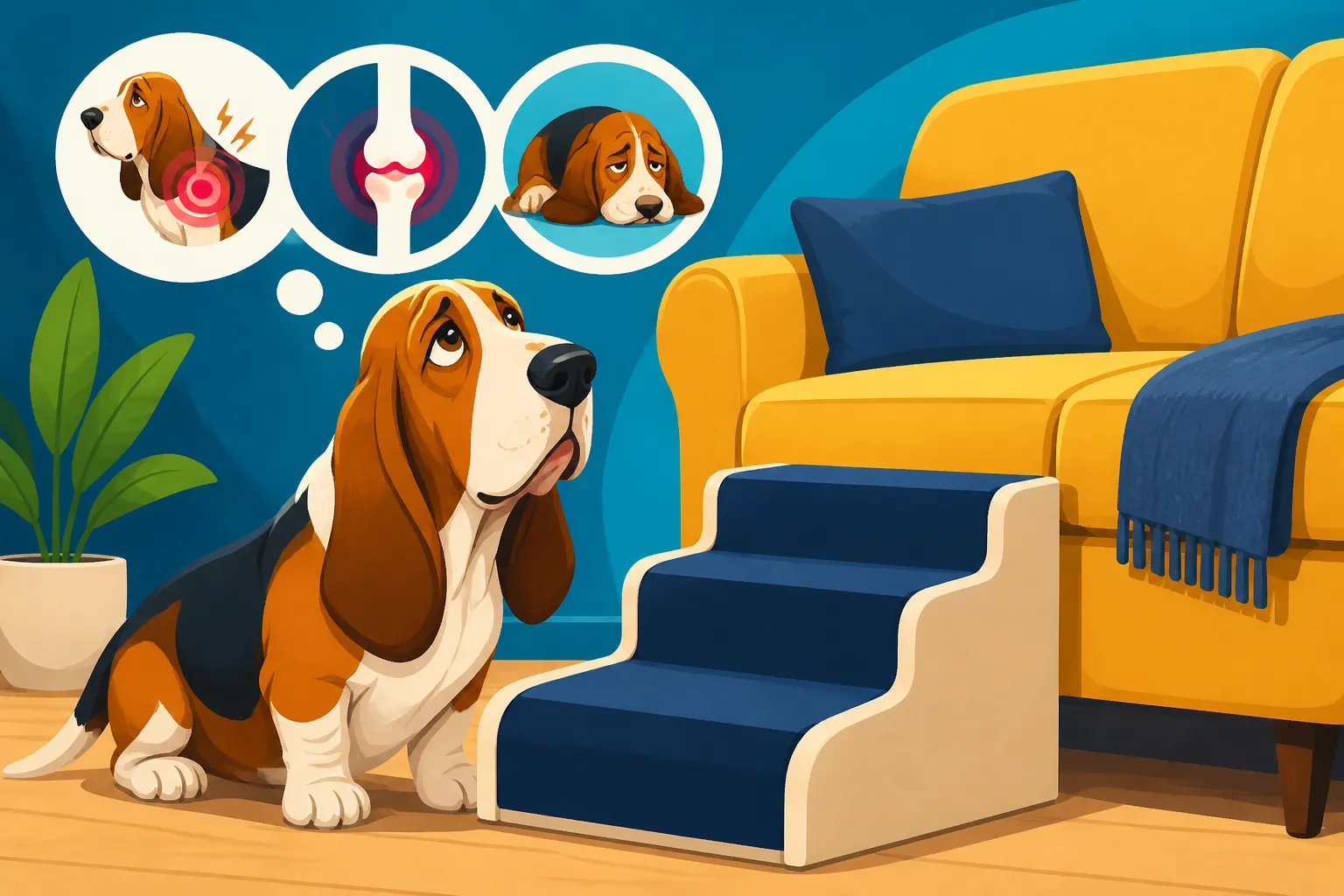
What Steps to the Couch Cost a Basset Hound Owner
One of the most common worries for Basset Hound owners is watching their beloved, low-slung companion try to launch themselves onto the couch or bed. That awkward jump isn't just clumsy; it's a real danger to their unique anatomy. This guide will delve into the practical solutions like pet steps and ramps, exploring their costs, types, and the long-term value they bring to protecting your Basset Hound's health.
Why Your Basset Hound Needs Steps for the Couch
It’s easy to look at a Basset Hound’s short legs and long body and think, "Oh, they just can't jump that high." While that's true, it's also a significant understatement of the risks involved. Their adorable, distinctive build, while perfect for following a scent trail with their nose to the ground, is incredibly vulnerable when it comes to sudden impacts and awkward movements. Allowing them to repeatedly jump off furniture is like constantly asking a finely tuned but delicate instrument to perform a task it wasn't designed for, and the consequences can be heartbreakingly expensive and painful.
Think about it: a standard couch height for us humans is often a significant leap for a Basset Hound, whose legs are deliberately kept short by their breed standard. They don't have the spring or the shock absorption in their joints to handle that kind of repeated stress without it taking a toll. It’s not just about preventing a single dramatic injury; it’s about mitigating the cumulative wear and tear that can lead to chronic conditions that impact their quality of life.
The Impact of Their Unique Anatomy
The Basset Hound's most charming features—their long, heavy body, short, bowed legs, and substantial bone structure—are also their greatest liabilities when it comes to activities like jumping. Their spine, already long and carrying a good amount of weight, is subjected to jarring forces every time they land. Imagine a heavy, flexible bridge being repeatedly struck in the middle; eventually, something has to give. This isn't just anecdotal worry; it's a genuine concern for a breed prone to specific musculoskeletal issues.
Their short legs mean they have to exert a tremendous amount of force to propel themselves upwards, and an even greater strain on their joints when they land. This isn't just about their back; it affects their elbows, shoulders, and hips. Even a small jump can create micro-traumas over time, leading to inflammation and degenerative changes. It’s not a matter of if, but often when, these repeated stresses will manifest as pain or injury. This is a primary reason why investing in solutions like steps or ramps is more about proactive health management than mere convenience.
Preventing Injury and Long-Term Health Issues
The most notorious spinal issue Basset Hounds face is Intervertebral Disc Disease (IVDD). This condition, where the cushioning discs between the vertebrae rupture or bulge, can lead to excruciating pain, nerve damage, and even paralysis. Jumping on and off furniture is a prime trigger for IVDD episodes. It's a sudden, twisting motion, or a hard landing, that can push an already compromised disc past its breaking point. For more on this, you might want to read Intervertebral Disc Disease in a Basset Hound.
Beyond IVDD, Basset Hounds are also susceptible to elbow dysplasia and arthritis in their joints. Repeated impacts from jumping can exacerbate these conditions or hasten their onset. A young Basset might seem invincible, but every jump contributes to the wear and tear that can lead to debilitating Arthritis in a Basset Hound at Seven. Preventing these injuries isn't just about avoiding a vet visit; it's about safeguarding your dog's mobility and comfort for their entire life. Nobody wants to see their playful companion struggling to get off the floor in their senior years because of preventable issues. That’s why providing a safe, easy way for them to access their favorite cuddle spots is one of the kindest things you can do for them.
Types of Couch Steps and Ramps: Understanding the Options
When you start looking for solutions to help your Basset Hound get onto the couch, you'll quickly realize there’s a whole world of pet steps and ramps out there. It's not a one-size-fits-all situation, and what works best for one dog might not be ideal for another, especially when considering the unique physique and potential health concerns of a Basset Hound. The choice often comes down to a balance of safety, durability, aesthetics, and, of course, cost. Taking the time to explore these options and understand their nuances can save you headaches and expenses down the road.
We're not just talking about a generic "pet stair" here; we're looking for something that specifically accommodates the Basset's long body, low center of gravity, and potential joint sensitivities. A flimsy, steep set of steps might be worse than no steps at all, inviting new types of injury.
Different Materials and Their Durability/Cost
The material of pet steps or ramps plays a huge role in both their durability and their price point. You’ll find options ranging from budget-friendly foam to more robust wood constructions.
-
Foam Steps: These are often the most affordable entry point. Made from high-density foam, they are lightweight, soft on joints, and generally easy to move. They usually come with a washable fabric cover. The primary advantages are their low cost and gentle impact. However, foam steps can be less stable for heavier dogs, or those prone to pushing off with force. They might also compress over time, losing their height and firmness. For a sturdy Basset, ensure the foam is truly high-density to provide adequate support. Brands like Chewy often have a wide selection of these, and they can be a good starting point, especially for a puppy or a very old dog who needs minimal impact.
-
Plastic Steps/Ramps: Offering a step up in durability and stability from foam, plastic options are usually injection-molded, providing a sturdy, easy-to-clean surface. They are typically lighter than wood and resistant to moisture. Prices for plastic steps are usually in the mid-range. While more durable than foam, some cheaper plastic models can still feel a bit wobbly, especially if your Basset is on the heavier side. Look for models with wider steps and a stable base to ensure your Basset feels secure.
-
Wood Steps/Ramps: These are generally at the higher end of the price spectrum but offer superior durability, stability, and often a more aesthetic look that can blend with your home decor. Wood steps and ramps can be quite sturdy, capable of supporting a substantial Basset Hound without flexing or tipping. Many come with carpeted treads for grip and to protect paws. The main downsides are their higher cost and heavier weight, making them less portable. Some also require assembly. However, for a long-term, robust solution, especially for a Basset prone to The Old Basset Hound That Cannot Get Off the Floor, wood can be an excellent investment.
Steps vs. Ramps: Which is Better for Your Basset?
This is a crucial decision for Basset Hound owners, as both options have distinct advantages and disadvantages tailored to different needs.
-
Steps: Pet steps typically mimic human stairs, offering distinct risers and treads. For a Basset, steps should have shallow rises and deep treads to accommodate their long bodies and short legs. Steeper, narrower steps can still put strain on their back and joints, forcing them into an unnatural angle. Steps are often better for dogs who are still relatively agile but need a little boost, or for those who are trained to use stairs safely. They are often more compact than ramps, making them suitable for smaller living spaces. However, if your Basset is already showing signs of joint pain or has been diagnosed with IVDD, the repeated impact, even on shallow steps, might not be ideal. Whether a Basset Hound Should Climb Stairs is a related consideration, as even regular household stairs can be problematic.
-
Ramps: Ramps offer a gradual incline, eliminating the jarring impact of steps. This makes them an excellent choice for Basset Hounds with existing joint issues, arthritis, or those recovering from surgery. They are generally considered safer for dogs with spinal conditions like IVDD because they allow for a smooth, continuous movement rather than individual impacts. The main drawbacks are that ramps take up more floor space due to their length and can sometimes be more challenging for a dog to get traction on if they don't have good carpeting or a non-slip surface. However, a well-designed ramp with a gentle slope and good grip is often the superior choice for preventing injuries and supporting a Basset's long-term mobility. Whether a Basset Hound Should Use a Ramp further explores this important consideration.
Ultimately, the best choice depends on your individual Basset Hound's health, age, and comfort level. Many owners find that a ramp, while initially a bit larger, provides peace of mind and superior joint protection for their beloved hound throughout their life.
What Influences the Cost of Basset Hound Couch Steps
Understanding the price tag on pet steps or ramps isn't always straightforward. It's not just about walking into a store and picking the cheapest option; doing so could actually end up costing you more in vet bills later if the product isn't suitable for your Basset Hound's unique needs. The cost is a direct reflection of the materials used, the size and design, and any special features that enhance safety, durability, or aesthetics. Being an informed consumer means looking beyond the sticker price to the value and suitability for your specific dog.
It's tempting to cut corners when faced with all the various expenses of dog ownership, but for a breed with such inherent structural vulnerabilities, investing wisely in preventative measures like good quality steps or a ramp can truly save you a fortune in potential medical care down the line. Remember, a Basset Hound’s health is an ongoing commitment, and initial costs for supportive equipment are part of that picture. You might even find that some pet insurance providers like Healthy Paws offer coverage for unexpected injuries, but preventing them altogether is always the first goal.
Material, Size, and Features
These three factors are the primary drivers behind the cost variations you'll encounter when shopping for couch steps or ramps for your Basset Hound.
-
Material: As we discussed, materials like high-density foam are generally the least expensive, often ranging from under $50 to around $100. Plastic options usually fall into the $75 to $150 range, offering a balance of cost and durability. Solid wood or sturdy engineered wood products are typically the most expensive, starting from $100 and easily going up to $250 or more for higher-end, furniture-grade pieces. Custom-made options, perhaps to match specific decor or address unique dog needs, can be significantly more. The choice of material should always consider your Basset's weight and how stable they need the surface to be. A heavier Basset will put more stress on the materials, requiring something more robust.
-
Size: The size of the steps or ramp is crucial and directly impacts the cost. Taller, wider, and longer products naturally require more material and more complex construction, increasing their price. For a Basset Hound, you're not just looking for something tall enough to reach the couch; you need wide, deep treads on steps or a long, gentle slope on a ramp to accommodate their lengthy bodies comfortably. Trying to squeeze a Basset onto narrow or steep steps is counterproductive and can be dangerous. The ideal height will depend on your specific couch or bed, so measure carefully before you buy.
-
Features: Additional features can also bump up the price. Consider non-slip surfaces, which are essential for a Basset’s safety and confidence. Some steps come with removable, washable covers (especially foam ones), which is a fantastic practical feature for keeping things clean. Others might offer built-in storage compartments, a nice bonus for stashing toys or grooming supplies. Aesthetic considerations, like steps designed to blend seamlessly with your existing furniture, often come with a premium price tag. For example, a basic set of utilitarian plastic steps might be $80, while a beautifully crafted wooden ramp with a non-slip carpet runner and a rich finish could easily be $200+. It's about weighing the necessities against the "nice-to-haves" based on your budget and your Basset's specific requirements.
Where to Buy and Potential Hidden Costs
Where you decide to purchase your Basset Hound's steps or ramp can also influence the overall cost, and it's important to be aware of potential hidden expenses.
-
Online Retailers: Websites like Chewy, Amazon, or dedicated pet supply stores offer the widest selection and often the most competitive prices. You can browse countless options, read reviews from other pet owners (including those with Basset Hounds), and compare features side-by-side. The primary hidden cost here can be shipping, especially for larger, heavier wooden ramps or steps. Always check shipping fees before finalizing your purchase. Also, consider the return policy in case the item doesn't work out. What looks perfect online might not feel right in person.
-
Physical Pet Stores: Local pet stores or larger chains may have a smaller selection, but they offer the advantage of letting you see and feel the product in person. You can assess stability, material quality, and how easily your Basset might navigate it. Prices might be slightly higher than online, but you save on shipping and can take the item home immediately. This hands-on approach can be invaluable for ensuring a good fit for your unique hound.
-
Specialty Manufacturers/Custom Options: For those seeking bespoke solutions or higher-end, furniture-quality pieces, specialty manufacturers are an option. These often involve custom sizing, specific wood finishes, or unique designs to match your home. While the upfront cost will be significantly higher, the durability and aesthetic appeal can be worth it for some owners. The hidden costs here are simply the premium price and potentially longer wait times for manufacturing.
Beyond the initial purchase, there might be other minor, ongoing costs. If you opt for foam steps with a fabric cover, you might eventually need to replace the cover due to wear or stains. For ramps, you might consider adding extra non-slip strips if the provided surface isn't adequate. Don't forget the time investment in training your Basset to use their new equipment! Some Bassets, especially those set in their ways, might need a little encouragement, perhaps with a trail of tasty treats. Products from brands like Ollie might offer high-value training treats that could come in handy here.
Beyond the Purchase Price: Long-Term Value and Considerations
Thinking about the cost of couch steps for your Basset Hound isn't just a transactional decision; it's an investment in their long-term health and well-being. The initial outlay, whether it's $50 or $250, is often a fraction of what you could potentially spend on veterinary care for preventable injuries. This isn't about being alarmist; it's about being realistic with a breed that, while incredibly robust in spirit, has physical vulnerabilities that require thoughtful care. Providing easy, safe access to their favorite spots is a cornerstone of responsible Basset Hound ownership, contributing directly to their comfort and longevity.
We all want our furry family members to be happy and healthy for as long as possible. Considering the long view when it comes to supporting their physical structure can make a huge difference in their quality of life, especially as they age. It's about protecting their zest for life, ensuring they can continue to participate in family activities like snuggling on the sofa, without pain or risk.
The Cost of Not Having Steps
This is where the true long-term financial implications become clear. Skipping the purchase of pet steps or a ramp to save a bit of money upfront can often lead to significantly higher expenses later on.
-
Veterinary Bills for Injuries: The most immediate and often devastating cost of not having steps is a sudden injury. A bad jump off the couch can easily lead to a slipped disc, a cruciate ligament tear, or other orthopedic trauma. Emergency vet visits, diagnostics like X-rays or MRIs (What a Basset Hound's MRI Costs), medications, and potentially surgery for conditions like IVDD or torn ligaments can quickly run into thousands of dollars. We're talking about What a Basset Hound's Emergency Surgeries Cost that can be financially crippling, not to mention the emotional toll of seeing your beloved Basset in pain. Even if your Basset Hound has pet insurance from a provider like Healthy Paws, there's usually a deductible, and you still have to manage the emotional stress and post-operative care.
-
Chronic Pain Management: Even if a dramatic injury doesn't occur, repeated stress from jumping can contribute to chronic conditions like arthritis. Managing chronic pain involves ongoing costs for pain medications, anti-inflammatory drugs, joint supplements like glucosamine and chondroitin, physical therapy, and potentially regular vet check-ups. These expenses might not hit all at once, but they accumulate steadily over years, easily surpassing the cost of a good set of steps. Imagine the cost of lifelong medication for a condition that could have been mitigated by simple preventive measures. What Joint Supplements Cost a Basset Hound Owner and What Physical Therapy Costs a Basset Hound Owner highlight these regular expenses.
-
Reduced Quality of Life: Beyond the financial aspect, there's the immeasurable cost to your Basset Hound's quality of life. A dog in pain can't enjoy walks, playtime, or even simple snuggles as much. They might become withdrawn or even irritable. If they associate jumping with pain, they might stop trying to get onto the couch altogether, missing out on valuable bonding time with you. This can be heartbreaking for both dog and owner. Preventing pain and injury allows your Basset to remain an active, joyful member of your family for more of their The Ten to Twelve Years a Basset Hound Lives.
Making the Right Investment for Your Basset's Health
Choosing the right steps or ramp is a clear investment in your Basset Hound’s health and happiness. It’s about being proactive and thoughtful about their unique physical needs.
-
Prioritize Safety and Stability: Above all, ensure the steps or ramp are stable and don't wobble. A non-slip surface is non-negotiable to prevent slips and falls. For steps, wider, deeper treads are always better for a Basset's long body. For ramps, a gentle slope and good traction are key. Don't compromise on these features to save a few dollars.
-
Consider Your Basset's Current and Future Needs: If you have a young, active Basset, steps might be fine initially, but as they age, a ramp might become a better choice to protect their joints. If you're adopting an older Basset, especially one with a history of joint issues or who has already reached the age when The Age a Basset Hound Counts as Senior, a ramp is almost always the preferred option. Think about Helping an Old Basset Hound Onto the Couch before it becomes a crisis.
-
Measure Your Furniture: Before you buy, measure the height of your couch or bed. The top step or end of the ramp should be level with, or slightly below, the furniture to allow for an easy transition. You can find detailed dimensions for many products on sites like Chewy, making it easier to ensure a good fit.
-
Training and Encouragement: Once you have your steps or ramp, take the time to introduce it to your Basset Hound patiently. Use treats, praise, and positive reinforcement to make it a pleasant experience. You want them to associate the new equipment with comfort and ease, not a challenge. This effort is part of the overall investment, ensuring the product is actually used effectively.
Ultimately, the cost of steps to the couch for a Basset Hound is far more than just the purchase price. It’s an investment in their health, preventing pain, avoiding massive vet bills, and ensuring they can enjoy being close to you for years to come. It's a small but significant part of What a Basset Hound Costs a Year to Keep and a vital component of What a Basset Hound Needs Every Day.
| Type of Aid | Typical Materials | Key Features for Basset Hounds | General Cost Range | Pros | Cons |
|---|---|---|---|---|---|
| Pet Steps | Foam, Plastic, Wood | Wide, deep treads; low rise; non-slip surface | $40 – $250+ | More compact; easier for agile dogs; various aesthetics | Can still cause impact on joints; less suitable for severe mobility issues |
| Pet Ramps | Plastic, Wood, Carpet | Gentle incline; good traction; sturdy construction | $60 – $300+ | Excellent for joint protection; ideal for dogs with IVDD/arthritis; no impact | Takes up more space; some Bassets may need training to use; can be heavier |
Disclaimer
This article is for general informational purposes only and does not constitute professional advice. Laws, prices and regulations vary by location and change over time. Consult a qualified professional for guidance on your specific situation.