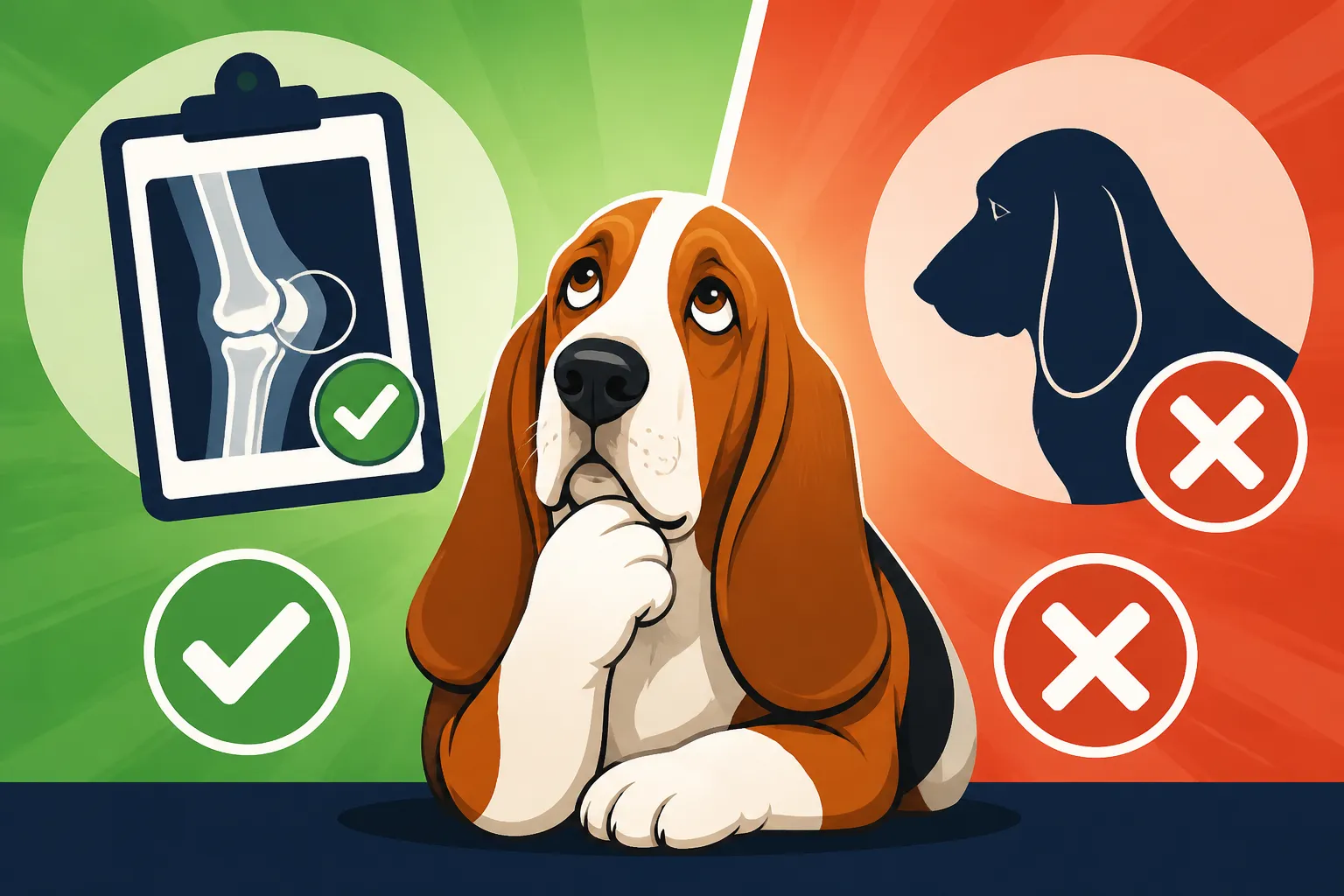
Whether a Basset Hound Breeder Should Show Elbow Scores
It’s a truly frustrating position to be in: you’re looking for a Basset Hound puppy, you know enough to understand that health testing is crucial, but then you encounter breeders who either don't test for everything, or worse, are cagey about sharing the results. It leaves you feeling like you're navigating a minefield, trying to ensure you bring home a healthy companion without feeling like you're grilling someone. This guide aims to clear up the confusion around elbow scores for Basset Hounds and why transparent breeders are so important.
Understanding Elbow Dysplasia in Basset Hounds
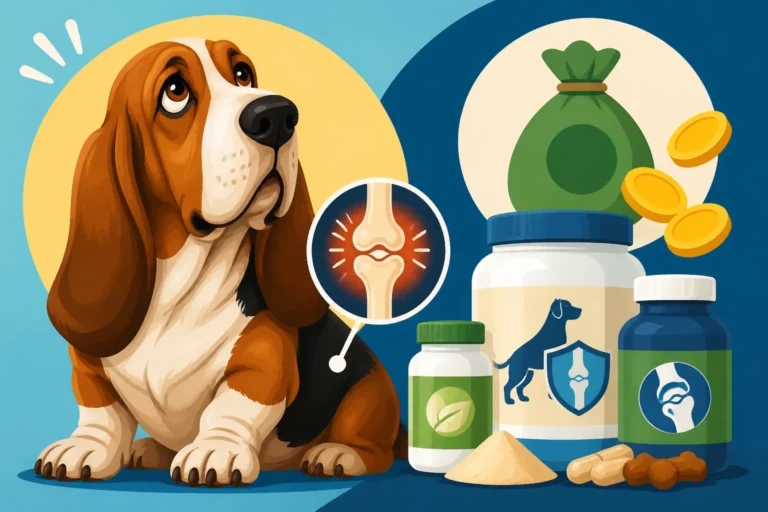
Elbow dysplasia is a term that sounds intimidating, and frankly, for a Basset Hound, it can be a serious issue. Our beloved Basset Hounds, with their unique structure and substantial bone, are unfortunately prone to certain orthopedic challenges. Their sturdy, low-to-the-ground build, while endearing, puts a particular kind of stress on their joints, and the elbows are no exception. This isn't just a minor ache; it can lead to significant pain, lameness, and a reduced quality of life for your floppy-eared friend.
Imagine your Basset Hound, usually so full of life, struggling to get up from their comfortable dog bed, or perhaps limping after a short walk in the park. This is the reality for many Basset Hounds suffering from elbow dysplasia. The condition isn't a single disease but a collection of developmental abnormalities in the elbow joint that cause it to form improperly. These abnormalities can include ununited anconeal process, fragmented coronoid process, osteochondrosis, or incongruity of the joint. All of them lead to instability and degenerative joint disease – essentially, early onset arthritis.
The impact of elbow dysplasia can range from mild, intermittent lameness to severe, debilitating pain, especially as your Basset Hound ages. It affects their ability to play, walk, and even just get comfortable. As a caring owner, witnessing your dog in discomfort is heartbreaking. It’s a health issue that can cast a long shadow over their life, and it's something responsible breeders actively work to minimize through careful breeding practices and health screenings. This is why when you're considering adding a Basset Hound to your family, understanding the risks and what breeders should be doing about them is paramount. Why One Basset Hound in Seven Has Bad Elbows delves deeper into this unfortunate reality.
Why Elbow Scores Are Crucial for Basset Hounds
Given the breed's predisposition to joint issues, elbow scores are not just a nice-to-have; they are a critical piece of information for any prospective Basset Hound owner. These scores provide an objective assessment of the health of a dog's elbow joints, helping to predict the likelihood of passing on these structural weaknesses to their offspring. Without this information, you're essentially buying a puppy blind when it comes to a very real and often painful hereditary condition.
The genetic component of elbow dysplasia means that responsible breeding aims to reduce its prevalence by selecting parents with healthy joints. If a breeder isn't testing, or worse, isn't willing to share those results, it raises a significant red flag. It suggests either ignorance of a major breed health concern or a deliberate attempt to hide potential issues in their breeding stock. Neither scenario bodes well for the long-term health of the puppies they produce. This is why a breeder who volunteers their dogs' elbow scores, rather than making you pull teeth to get them, is demonstrating a commitment to the breed's future and the well-being of their puppies.
Think about it this way: you're investing a significant amount of time, love, and money into your future companion. Wouldn't you want all the available information to make the best decision? Elbow scores empower you to assess a breeder's commitment to health and give you a clearer picture of your puppy's potential orthopedic future. It's a testament to the fact that while a puppy might look healthy on the surface, genetic predispositions can lurk beneath. This emphasis on health screening is part of The Health Tests a Basset Hound Breeder Should Run to ensure responsible breeding.
What an Elbow Score Actually Means
When we talk about elbow scores, we're referring to a standardized system used by veterinary radiologists to evaluate the health of a dog's elbow joints. In many parts of the world, systems like the British Veterinary Association (BVA) or the Orthopedic Foundation for Animals (OFA) in North America provide numerical or descriptive scores based on X-rays of the elbows. These X-rays are usually taken when the dog is at least one or two years old, to allow for full skeletal maturity.
The scoring typically involves assessing various aspects of the elbow joint for signs of abnormalities associated with dysplasia. A score of '0' or 'normal' is what every breeder aims for, indicating healthy, well-formed elbows. As the number increases (e.g., from 1 to 3, or grades 'mild', 'moderate', 'severe'), it indicates a greater degree of dysplasia and a higher risk of passing on the condition. The goal of health screening is not necessarily to breed only perfect dogs – that's often unrealistic in any breed – but to make informed decisions to improve the overall health of subsequent generations.
A breeder sharing these scores is showing transparency and accountability. They're telling you, "These are the objective findings on my breeding dogs' elbows." This allows you to understand the potential genetic background of your puppy. Even a dog with a low, but not perfect, score might be bred under certain circumstances if it has other exceptional qualities and is paired with a perfectly scored mate. The key is knowing the information so that the breeding choice is intentional and aimed at improving the breed's health.
The Transparency of a Responsible Breeder
A truly responsible Basset Hound breeder isn't just someone who loves puppies; they are meticulous stewards of the breed, prioritizing health, temperament, and adherence to the breed standard. Part of this stewardship involves rigorous health testing, and crucially, being completely transparent about the results of those tests. When a breeder should show elbow scores, they're not just providing data; they're demonstrating integrity and a genuine commitment to placing healthy puppies in loving homes.
It’s often said that a good breeder will interview you as much as you interview them, and this goes both ways. You should feel comfortable asking about specific health tests, including elbow scores, and expect clear, open answers. A breeder who deflects, gets defensive, or makes excuses about not testing for certain conditions is often a sign to walk away. They should be proud to share their health clearances and explain why each test is important for the Basset Hound breed.
This transparency extends beyond just showing you a piece of paper. A responsible breeder will be able to explain what the scores mean, discuss the prevalence of elbow dysplasia in Basset Hounds, and outline their strategy for minimizing it in their breeding program. They understand that you, as a potential owner, are looking for peace of mind, and they want to provide it. This level of openness builds trust and helps you feel confident that you're choosing a puppy whose parents have been carefully selected for health. Remember, this isn't just about avoiding vet bills; it's about ensuring your dog lives a long, comfortable, and pain-free life.
What to Ask a Breeder About Elbow Scores
When you're speaking with a prospective Basset Hound breeder, don't be shy about asking direct questions regarding elbow scores. It's your right as a discerning buyer to understand the health background of your potential puppy. Start by asking if their breeding dogs have had their elbows scored. Don't assume they have, even if they say they perform "all health tests." Specificity is key.
If they confirm testing, ask to see the official documentation for both the sire (father) and dam (mother) of the litter. These documents will clearly state the dog's registered name, date of birth, and the elbow score. Many reputable organizations provide online databases where you can verify scores independently, so a breeder should be happy to provide the necessary information for you to do so. A breeder who openly offers to share these results, or even provides a link to their public database listings, is a gold star in the transparency department. For instance, reputable breeders might use a service like Orthopedic Foundation for Animals (OFA) where results are public record if the owner allows.
Beyond just the scores, inquire about the history of elbow dysplasia in their lines. Do they track the health of previous generations? Do they maintain contact with owners of past puppies to gather long-term health data? These questions demonstrate a deeper level of commitment to understanding and improving breed health. A good breeder will have a comprehensive understanding of their lines and be eager to discuss it with you. This conversation is part of ensuring you are fully informed, especially given topics like Whether a Basset Hound Contract Covers Elbows are vital.
Interpreting and Comparing Elbow Scores
So, you've asked the breeder for the elbow scores, and they've provided them. Now what? Understanding the scores themselves is the next step. While different organizations might use slightly different grading systems, the principle remains the same: lower scores are better.
Here’s a simplified breakdown of what you might encounter:
| Scoring System (Example) | Score | Interpretation | Breeding Recommendation (General) |
|---|---|---|---|
| OFA (North America) | Normal | No radiographic evidence of elbow dysplasia. Includes grades Excellent, Good, Fair for hips, but for elbows, it's typically just "normal." | Ideal for breeding. |
| OFA | Grade I | Mild elbow dysplasia. Minimal bone changes or incongruity. Often clinically asymptomatic. | May be considered with caution, ideally paired with a "Normal" mate, and with careful consideration of offspring. Some registries advise against breeding affected dogs. |
| OFA | Grade II | Moderate elbow dysplasia. More significant bone changes, sclerosis, or joint incongruity. Dog may show lameness. | Should generally not be bred. |
| OFA | Grade III | Severe elbow dysplasia. Marked bone changes, severe arthritis, significant incongruity. Dog often shows obvious lameness and pain. | Should not be bred. |
| BVA/KC (UK) | 0/0 | No evidence of elbow disease. Each elbow is scored individually (e.g., left/right). | Ideal for breeding. |
| BVA/KC | 1/1 | Mild changes, likely to be subclinical. | May be considered with caution, especially if only one elbow is affected, and paired with a dog with a 0/0 score. |
| BVA/KC | 2/2 | Moderate changes, may or may not be clinically apparent. | Breeding not recommended. |
| BVA/KC | 3/3 | Severe changes, likely to cause lameness and pain. | Breeding not recommended. |
This table provides a general guideline. A score of 0 or "Normal" is what you want to see for both parents. If a breeder shows you scores of 1 or "mild," they should have a very compelling reason for breeding that dog, and ideally, the other parent should have a perfect score. Anything higher should be a firm no-go for breeding. It's a sign of a truly ethical breeder if they share scores, even if they aren't perfect, and explain their rationale. After all, understanding potential issues can help you prepare for What a Basset Hound's Emergency Surgeries Cost if issues arise later.
Beyond Elbows: A Holistic View of Basset Hound Health
While elbow scores are undeniably important, they are just one piece of the larger puzzle when it comes to the comprehensive health of a Basset Hound. A truly responsible breeder will engage in a suite of health clearances for their breeding stock, addressing other breed-specific predispositions. This holistic approach ensures they are doing everything possible to produce the healthiest puppies.
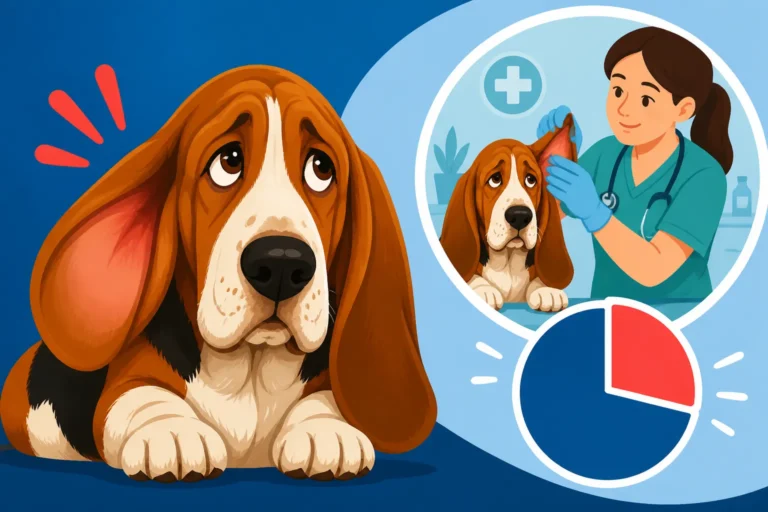
Think about the Basset Hound's long, pendulous ears, which are magnificent but also prone to infections. Or their characteristic droopy eyes, which can sometimes lead to conditions like ectropion. And, of course, their unique spinal structure requires attention. A breeder's commitment to health should encompass all these aspects, not just focusing on one or two. It demonstrates a deep understanding of the breed's vulnerabilities and a proactive stance in mitigating them.
When discussing health with a breeder, therefore, expand your questions beyond just elbows. Ask about genetic testing for other conditions, regular veterinary check-ups, and how they monitor the general well-being of their adult dogs. This comprehensive view gives you the best chance of bringing home a Basset Hound that will thrive, free from as many preventable inherited conditions as possible.
Other Essential Health Clearances for Basset Hounds
Besides elbow scores, there are several other crucial health clearances that a responsible Basset Hound breeder should be performing and showing you. These tests target conditions known to affect the breed, ensuring that potential issues are identified and not passed down.
For instance, hip dysplasia is another significant orthopedic concern, and like elbows, hips can be scored by organizations like OFA or BVA. Whether a Basset Hound Gets Hip Dysplasia is just as important a question as the one about elbows. Then there are eye conditions. Basset Hounds can be prone to various eye issues, including glaucoma and entropion/ectropion. Breeders should have their dogs examined by a certified veterinary ophthalmologist, often referred to as a CERF (Canine Eye Registration Foundation) or ECVO (European College of Veterinary Ophthalmologists) exam. These evaluations help identify hereditary eye diseases before a dog is bred. The Glaucoma a Basset Hound Inherits and Whether a Basset Hound Gets Cherry Eye are conditions worth discussing.
Blood clotting disorders, such as thrombopathia, are also a concern in Basset Hounds. Genetic testing is available for this condition, and a responsible breeder will screen their dogs. What Thrombopathia Means for a Basset Hound is a serious topic that highlights why this specific test is vital. Finally, though not always "tested" in the same way as joints or eyes, a breeder should be actively monitoring for chronic ear issues, skin fold infections, and temperament concerns. They should be able to provide clear documentation or discuss how they address each of these potential health challenges. This multi-faceted approach to health is what truly sets apart an ethical breeder from someone simply breeding for profit.
The Long-Term Impact of Health Testing on Your Puppy's Life
The decision a breeder makes regarding health testing, and particularly showing those elbow scores, has a profound and lasting impact on the life of the puppy you eventually bring home. Imagine the difference between a Basset Hound that can enjoy long, leisurely sniffs in the park without pain, and one that struggles with every step due to debilitating joint disease. This isn't just about avoiding costly vet bills later on – although that is a very real consideration – it's about giving your future companion the best possible start to a healthy, happy life.
When a breeder rigorously tests and transparently shares results, they are actively working to reduce the suffering caused by preventable genetic conditions. This diligence means your puppy has a significantly lower chance of developing severe elbow dysplasia, reducing the likelihood of pain, expensive surgeries, and ongoing medication requirements. These proactive steps can help save you from the emotional and financial burden of managing a chronically ill dog. While no breeder can guarantee a dog will never have any health issue, good health testing provides the best possible odds. It’s peace of mind for you and, more importantly, a gift of good health for your Basset Hound. The cost of insurance from providers like Healthy Paws can also help manage unforeseen health costs, but prevention through ethical breeding is always the first line of defense.
Looking at the broader picture, choosing a puppy from a breeder who shows all their health scores contributes to the overall health and longevity of the Basset Hound breed. You're supporting ethical practices and encouraging a standard of care that benefits all future Basset Hounds. You're investing in a future where these wonderful dogs can live out their The Ten to Twelve Years a Basset Hound Lives with comfort and joy. This mindful approach to selecting a breeder and understanding the implications of health testing ensures you're making an informed decision for both your family and the breed. You might also find great value in products from Chewy or specialized diets from Ollie if your Basset Hound does require specific nutritional support for joint health later in life.
Disclaimer
This article is for general informational purposes only and does not constitute professional advice. Laws, prices and regulations vary by location and change over time. Consult a qualified professional for guidance on your specific situation.