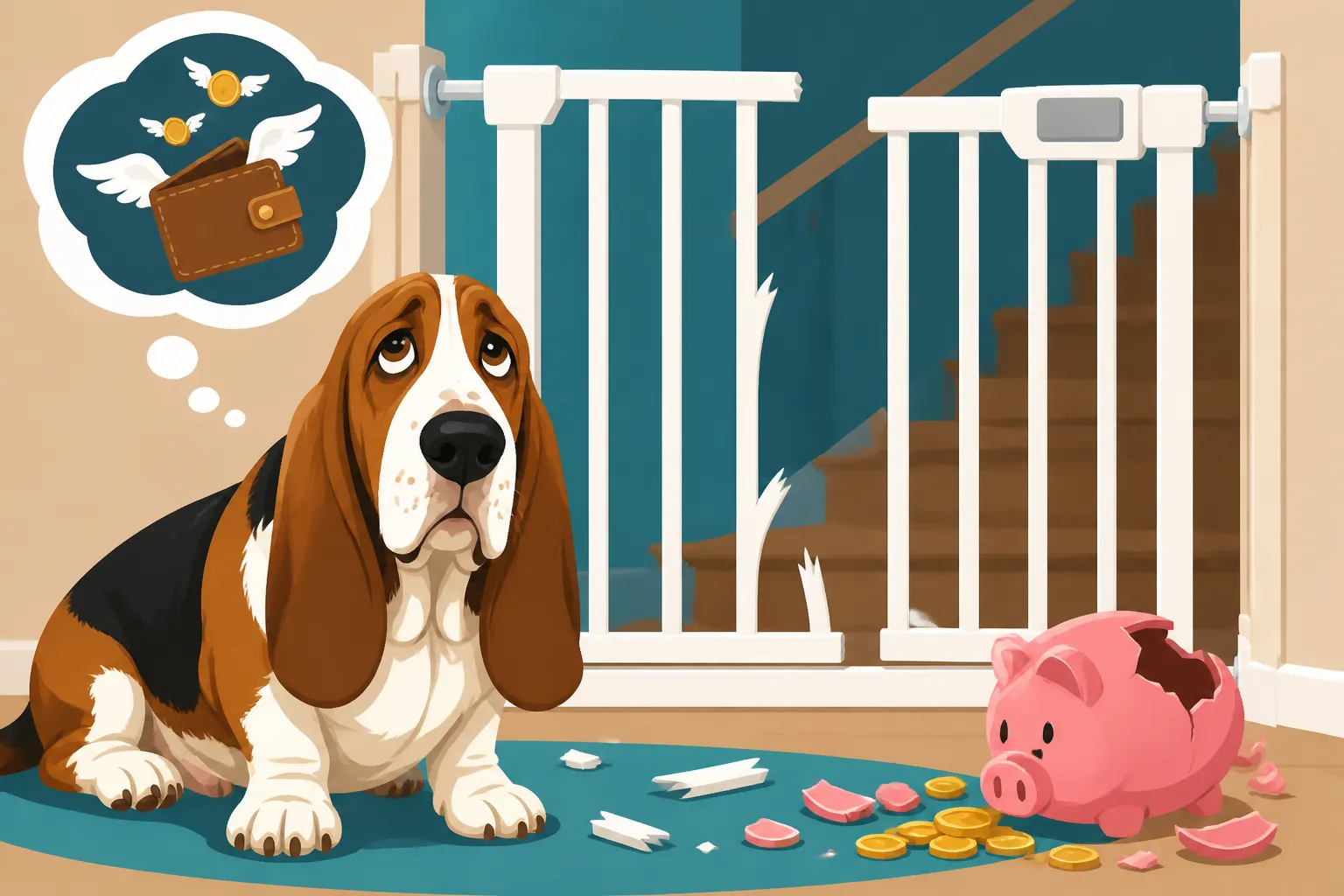
What Baby Gates Cost a Basset Hound Owner
Bringing a Basset Hound into your home is an absolute joy, but also a commitment to understanding their unique needs. One challenge many Basset owners quickly face is managing their curious, low-to-the-ground, scent-driven explorers within the home. Baby gates, often seen as a necessity for toddlers, become an indispensable tool for Basset Hound owners looking to protect their beloved hounds and their homes. This guide will walk you through the various costs associated with baby gates, helping you choose the best and most cost-effective solutions for your Basset.
Why Baby Gates Are an Essential for Basset Hound Owners
Let's be honest, living with a Basset Hound is an adventure! Their long ears, soulful eyes, and incredible noses are endearing, but they also contribute to a unique set of challenges that make baby gates less of a luxury and more of a practical necessity. Many new owners are surprised by how much these gentle giants need specific containment strategies, especially when they're puppies or if they have certain behavioral quirks.
Containing the Curious Basset Nose
A Basset Hound's nose is a marvel, second only to a Bloodhound's in its incredible tracking ability. This means that if there's an interesting smell, your Basset is going to follow it, no matter where it leads. This could be into the kitchen where forbidden snacks might drop, towards a litter box, or even to a tempting scent under a closed door that's just begging to be investigated. A simple "no" often falls on deaf ears when that powerful nose takes over. This isn't stubbornness; it's instinct. Baby gates allow you to create "safe zones" where your Basset can roam freely without encountering tempting smells or hazards, while also blocking off areas that are simply off-limits. They ensure that your Basset isn't following a crumb trail into the pantry or discovering the cat's "treasures." For more about their incredible sense of smell, you might want to read Whether a Basset Hound's Nose Is Second Only to a Bloodhound.
Protecting Their Long Backs and Short Legs
Basset Hounds, with their distinctive long bodies and short, stout legs, are prone to certain musculoskeletal issues, most notably Intervertebral Disc Disease (IVDD). The Back Trouble a Basset Hound Is Built Into is a serious concern. Jumping on and off furniture, or even repeatedly climbing and descending stairs, can put significant strain on their spines. This is where baby gates become critical in preventing access to stairs or to rooms where furniture jumping might occur unsupervised. Many owners find that blocking access to stairs completely is the safest option, and gates are perfect for this.
Imagine your precious Basset puppy, full of youthful energy, attempting to leap from the sofa to the floor. While they might do it countless times without issue, just one awkward landing could lead to a painful and expensive spinal injury. Gates help enforce boundaries that protect them from their own enthusiastic, but sometimes clumsy, attempts to navigate the home. They can also prevent your Basset from getting into areas where they might slip on slick floors, which can also strain their delicate structure.
Managing Separation Anxiety and House Training
While Basset Hounds thrive on companionship, some can develop separation anxiety if left alone for extended periods or if they aren't properly accustomed to being by themselves. Baby gates can be invaluable here, too, by creating a contained, safe space within a larger room where your Basset feels secure without being fully isolated in a crate (though crates also have their place). This can be particularly helpful during the house training phase, allowing you to limit access to certain areas until they're reliably clean.
Moreover, if you're trying to How Long a Basset Hound Puppy Takes to House Train, a gate allows you to keep them in an area with easily cleanable floors, preventing accidents on carpets in other rooms. It helps you manage their environment so that they can succeed. By restricting their roaming space, you increase the likelihood that they'll signal their need to go outside rather than silently sneaking off to a hidden corner of the house. Gates offer a structured approach to fostering independence and good habits.
Exploring Different Types of Baby Gates and Their Price Points
When you start looking for baby gates, you'll quickly discover that there's a huge variety out there, ranging from basic pressure-mounted models to more robust, hardware-mounted options and even stylish freestanding gates. The cost can vary just as widely, depending on material, design, and features. It's not just about stopping a human baby; it's about finding something secure enough for a determined, low-slung, and surprisingly strong Basset Hound.
Pressure-Mounted Gates: Convenient and Cost-Effective
Pressure-mounted gates are often the first type people consider. They're designed to be easy to install and remove, relying on tension against your doorframe or walls. You simply adjust the pressure until the gate is held firmly in place. These are generally the most budget-friendly option, making them attractive for areas where you need temporary containment or don't want to damage walls.
They're great for doorways, hallways, or at the bottom of stairs where you want a quick barrier. However, for a Basset Hound, you need to be realistic about their determined nature. A Basset can be a surprisingly powerful animal, and if they put their weight against a pressure-mounted gate, particularly if it's not installed perfectly or is a flimsier model, it could give way. Always ensure it's securely fitted, and consider the height – some Bassets, especially younger, more agile ones, might attempt to "climb" or push through lower gates. For a Basset, look for sturdier models with metal frames rather than just plastic, as they tend to hold up better to a nudge or two.
Hardware-Mounted Gates: Secure and Durable
Hardware-mounted gates offer the highest level of security because they screw directly into your wall or doorframe. This makes them ideal for the top of stairs, or any area where security is paramount and you absolutely cannot risk the gate failing. While they require a bit more effort to install and will leave small holes (which can typically be patched later), the peace of mind they offer is often worth it, especially with a Basset's robust build.
These gates are built to last and withstand considerable pressure, making them an excellent investment for areas where your Basset needs reliable containment. They are generally more expensive than pressure-mounted options due to their robust construction and installation requirements, but they offer unparalleled stability. If you have a particularly persistent Basset or one known for testing boundaries, a hardware-mounted gate is often the way to go. Consider Whether a Basset Hound Digs Under a Fence as an example of their determination; this applies to gates too.
Freestanding and Extra-Wide Gates: Flexible Solutions
Sometimes, you need to block off a wider opening, like between rooms without a doorframe, or create a larger playpen area within a room. This is where freestanding or extra-wide gates come into their own. Freestanding gates don't attach to walls at all; they stand on their own, often with panels that fold or connect to create a barrier. Extra-wide gates are typically hardware-mounted but come with extension panels to span larger openings.
Freestanding gates offer excellent flexibility, allowing you to reconfigure your space as needed, but they are generally less secure against a strong Basset pushing through. They work best for Bassets that are less inclined to challenge boundaries, or when supervision is readily available. Extra-wide gates, while more expensive due to their size, are fantastic for open-plan living spaces or larger archways. When shopping for these, consider brands that offer sturdy construction. Chewy, for instance, has a good selection of various pet gate types, making it easy to compare options. Always measure your space carefully to ensure a proper fit, as buying extensions separately can add to the overall cost.
Here's a quick comparison of typical baby gate types:
| Gate Type | Installation Method | Security Level | Cost Range | Basset Suitability |
|---|---|---|---|---|
| Pressure-Mounted | Tension against walls | Moderate | Low to Mid | Good for temporary barriers, supervised areas; sturdy models preferred. |
| Hardware-Mounted | Screwed into walls | High | Mid to High | Essential for stairs, highly determined Bassets; permanent solution. |
| Freestanding | Stands on its own | Low to Moderate | Mid to High | Best for low-traffic areas, creating pens, less determined Bassets; easy to move. |
| Extra-Wide | Hardware or pressure | High (HW) | Mid to High | Ideal for large openings, open-plan homes; often comes with extensions. |
What Factors Influence the Cost of Baby Gates for Your Basset Hound?
It’s easy to look at a price tag and wonder why one baby gate costs significantly more than another. For Basset Hound owners, these factors are particularly important because what works for a tiny terrier might not stand up to the robust build and tenacious spirit of a Basset. Understanding these cost drivers will help you make an informed decision and ensure you’re not overpaying for features you don't need, or worse, underpaying for a gate that won't hold up.
Material and Construction Quality
The material a gate is made from is a primary cost factor. Plastic gates are usually the least expensive. They're lightweight and easy to clean, but often less durable and more prone to bending or breaking under a Basset's enthusiastic pushing. Wood gates offer a classic look and can be quite sturdy, especially if made from hardwoods, but they tend to be in the mid to high price range. Metal gates, particularly those made from steel or heavy-gauge aluminum, are typically the most durable and secure, but also come with a higher price tag.
For a Basset Hound, investing in a robust material like metal or solid wood is often a wise choice. Their low center of gravity and surprising strength mean they can exert considerable force. A flimsy plastic gate might seem like a good deal initially, but if it fails, you're back to square one, or worse, dealing with a potential vet bill from an injury. Think of it as a long-term investment in your Basset’s safety and your peace of mind.
Size and Adjustability
The dimensions of the gate – its height and width – significantly impact its cost. Standard baby gates are typically around 24-30 inches tall. However, a determined Basset, especially a younger one, might be able to lean over or even push down on a shorter gate. Many Basset owners opt for taller gates, often marketed as "pet gates" or "extra tall" baby gates, which typically stand 36 inches or more. These provide a better deterrent for a Basset that might consider scaling or vaulting over.
Similarly, the width of your opening matters. A standard doorway might be easily covered by a basic gate, but if you have wider archways, open-plan rooms, or specific areas you need to block, you'll need an extra-wide gate or extension kits. These larger and more versatile options naturally come with a higher price point. Always measure your openings accurately before buying, and factor in the cost of any necessary extensions.
Special Features and Aesthetics
Modern baby gates come with a host of features that can add to their convenience and, consequently, their cost. These include:
- Auto-close mechanisms: Gates that swing shut and lock automatically are fantastic for busy households, preventing you from accidentally leaving a gate open.
- One-handed operation: A godsend when you're carrying laundry, groceries, or perhaps a treat to motivate your Basset.
- Built-in pet doors: Some gates have a smaller opening for cats or smaller pets to pass through, while keeping your Basset contained.
- Wall-saving features: Rubber bumpers or special mounting hardware designed to minimize wall damage.
Beyond functionality, aesthetics play a role. Gates designed to blend seamlessly with home décor, featuring ornate wood, decorative metalwork, or specific finishes, will typically cost more than basic utilitarian models. While a functional gate is paramount, for some owners, a gate that complements their home environment is worth the extra investment. Consider what features will genuinely improve your daily life and Basset management. If you're constantly coming and going, an auto-close feature might be invaluable. If you have a multi-pet household, a small pet door could be a game-changer.
Beyond the Initial Purchase: Hidden Costs and Long-Term Value
When you think about the cost of baby gates, it's easy to just focus on the sticker price. But owning a Basset Hound, like any beloved pet, often comes with an understanding that the initial purchase is just the beginning. There are potential hidden costs and, more importantly, immeasurable long-term values that these gates provide. It’s all part of the big picture of What a Basset Hound Costs a Year to Keep.
Potential for Damage and Replacement Costs
Let's face it, Basset Hounds are dogs, and dogs can be… well, destructive sometimes, especially if they're bored, anxious, or particularly determined. A gate that isn't robust enough might become a chew toy, a scratching post, or simply break under the strain of a persistent Basset trying to "herd" it out of the way. If your Basset chews on a plastic gate, you might need to replace it entirely, adding to your overall costs. Even metal gates can get scratched or dinged.
Choosing a higher quality, more durable gate upfront can often save you money in the long run by avoiding premature replacement. If you have a Basset who loves to chew, opting for a metal gate might be a better investment than a wooden one that could become a splintery mess. Brands like Chewy often carry a variety of durable pet gates designed to withstand more wear and tear, and reading reviews from other large dog owners can give you a good idea of a gate's real-world durability.
Maintenance and Cleaning Considerations
While not a direct purchase cost, the maintenance and cleaning of your gates are part of their ongoing expense. Basset Hounds, with their long ears and low-slung bodies, are often quite messy. They drool, they track in mud, and their curious noses can leave smudges. Your gates will inevitably accumulate dirt, dog hair, and whatever else your Basset brushes against.
Gates with intricate designs or difficult-to-reach crevices can be a pain to clean. Smooth, easily wipeable surfaces, especially on metal or certain plastic models, will save you time and effort. Consider how often you'll need to clean the gates, particularly if they are in high-traffic areas or near where your Basset eats and drinks. This might influence your choice of material and design, indirectly affecting the "cost" in terms of your time and effort. Keeping your Basset clean in general is a task, as outlined in Cleaning the Folds a Basset Hound's Face Is Made Of.
The Priceless Value of Safety and Peace of Mind
Ultimately, the cost of baby gates for your Basset Hound isn't just a monetary figure; it's an investment in their safety and your peace of mind. Preventing access to stairs protects their fragile backs, keeping them out of the kitchen prevents them from counter-surfing (or worse, eating something toxic), and containing them to a safe area can reduce anxiety for both of you when you need to leave them alone. Think about the potential vet bills from an injury or an ingestion incident – these can far outweigh the cost of even the most expensive gate.
Moreover, gates allow you to manage your household dynamics more effectively. They can create a calm space for your Basset when guests are over or when they need quiet time away from children or other pets. Knowing your Basset is safe, contained, and happy, even when you can't have your eyes on them every second, is truly invaluable. It means less stress for you and a safer, more structured environment for your hound, allowing you to focus on the joys of Basset ownership. Investing in health-related precautions, much like considering pet insurance from a provider like Healthy Paws, is simply good planning for a Basset owner. Sometimes, the most important costs aren't reflected in a price tag.
Disclaimer
This article is for general informational purposes only and does not constitute professional advice. Laws, prices and regulations vary by location and change over time. Consult a qualified professional for guidance on your specific situation.