Whether a Basset Hound Can Be Left Alone
One of the most heart-wrenching realities of Basset Hound ownership is the guilt that creeps in when you have to leave your beloved floppy-eared companion home alone. Many of us have experienced that mournful bay as we walk out the door, or returned to find a shredded cushion or an "accident" on the rug, leaving us wondering if our Basset can ever truly cope with being by themselves. This guide is here to shed light on why your Basset Hound might struggle with alone time, how to understand their unique needs, and practical strategies to help them feel more secure when you're not around.
The Basset Hound's Nature: Why Alone Time is Tricky
Let's face it, Basset Hounds are not known for their fierce independence. They were bred for a purpose that involved constant companionship, even if it was with a hunting pack, and their personality often reflects that deep-seated need for connection. Understanding these inherent traits is the first step to helping them adjust to being alone.
Their Pack Mentality and Need for Company
Basset Hounds are, at their core, pack animals. Their lineage as scent hounds means they were traditionally part of a group, working and living alongside other hounds and their human handlers. This isn't a breed that was ever designed to be a solitary guardian; they thrive on interaction and being close to their "pack," which in modern times, means you and your family. When you leave, you're not just going out; you're effectively leaving the pack, and for a Basset, this can be genuinely distressing.
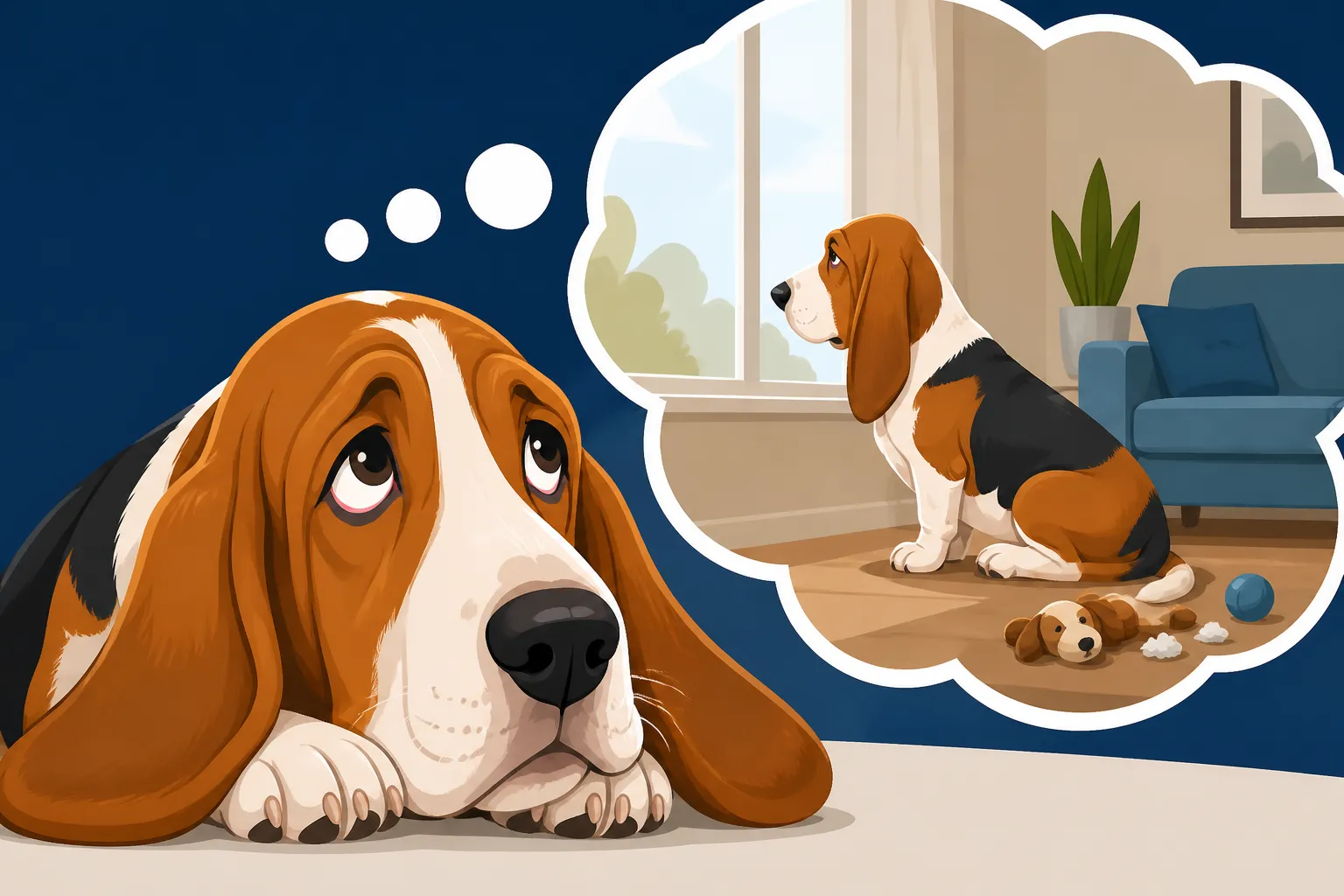
Imagine you're a Basset Hound. One moment you're getting cuddles on the sofa, maybe a gentle ear rub, and the next, your entire world just walks out the door, leaving you in a quiet house. It's not malice or spite that causes them to act out; it's often a profound sense of loss and confusion. They feel lonely, and that feeling can be a powerful motivator for unwanted behaviors. For these highly social creatures, being alone isn't just boring; it can feel fundamentally wrong, triggering ancient instincts to call out for their lost pack or search for comfort in destructive ways.
The Lure of the Scent Trail and Boredom
A Basset Hound's nose is legendary, second only perhaps to a Bloodhound's in its incredible capability. This isn't just a fun fact; it's a driving force behind much of their behavior, especially when bored or anxious. When left alone, a bored Basset's highly developed olfactory senses can kick into overdrive. That faint smell of forgotten crumbs under the couch, the residual scent of a squirrel that ran across the yard hours ago, or even just the interesting aroma of your dirty laundry – all become irresistible puzzles to solve. The Nose That Puts a Basset Hound Second to a Bloodhound is not just for tracking game; it's for exploring everything.
Without proper outlets for this natural drive, a Basset Hound can quickly turn to investigating their home environment with their nose, often leading to digging, chewing, or rummaging through things they shouldn't. This isn't necessarily separation anxiety; it's often pure, unadulterated boredom coupled with an instinct to follow a scent trail wherever it leads, even if that means through your trash can or into the forbidden territory of the pantry. A quiet house can amplify these olfactory temptations, making a discarded tissue or a shoe smell even more intriguing.
Unique Behavioral Quirks When Left Unsupervised
Beyond the universal hound tendencies, Bassets have their own peculiar ways of coping (or not coping) with alone time. The infamous Basset bay is one such quirk. While many dogs bark, a Basset's bay is a deep, resonant, and often heartbreaking sound that carries far. When feeling lonely or anxious, this bay can become persistent, leading to noise complaints from neighbors. The Bay a Basset Hound Uses and the Neighbors Hear is not just a sound; it's a declaration of distress.
Then there's the "Basset sit-down strike." They are known for their strong opinions and an almost comical stubbornness. If they decide they don't want to be left alone, or if they're particularly unhappy about your departure, they might express it through various forms of passive (or not-so-passive) resistance. This could range from refusing to go into their crate, to giving you the most sorrowful, droopy-eyed look you've ever seen, to simply not moving from a spot. While these aren't directly related to what they do when you're gone, they are strong indicators of their emotional state before you leave, which can impact their ability to settle later.
Understanding Separation Anxiety in Basset Hounds
It's easy to label any destructive behavior or vocalization as "separation anxiety," but there's a real difference between a bored or frustrated Basset and one suffering from clinical separation anxiety. Recognizing these nuances is critical for effective intervention.
Distinguishing Normal Anxiety from Clinical Separation Anxiety
Let's be clear: almost every dog, including our stoic Bassets, will experience some level of mild stress or frustration when left alone, especially if they haven't been properly prepared. They might whine a bit, pace, or even chew on a non-approved item occasionally. This is "normal" alone-time behavior, often stemming from boredom or a lack of proper training. It's like a child grumbling about having to do chores – annoying, but not a crisis.
Clinical separation anxiety, however, is a much more intense and debilitating condition. It's characterized by a panic response when the owner leaves, or even just when they perceive signs of impending departure. This isn't just a preference for company; it's a deep-seated fear of abandonment. The behaviors associated with it are typically more severe, consistent, and often destructive, occurring every single time the dog is left alone. It's not just a grumble; it's a full-blown panic attack. Whether a Basset Hound Gets Separation Anxiety is a real concern for many owners.
Common Signs and Symptoms to Watch For
So, what does clinical separation anxiety look like in a Basset Hound? It often manifests as a cluster of behaviors that consistently occur when they are left alone, or even when they anticipate you leaving.
Here are some key indicators:
- Excessive Vocalization: This is classic Basset. Prolonged, incessant barking, howling, or their signature baying that only starts when you leave and continues until you return. It's not just a few barks; it's a sustained cry for attention.
- Destructive Chewing: This isn't just chewing on a toy; it's often directed at exit points (doors, windows), personal items that smell like you (shoes, clothes), or items that seem to hold comfort (bedding, furniture). The destruction can be severe, leading to torn upholstery, clawed doors, or even broken teeth. Whether a Basset Hound Destroys Anything When Bored helps differentiate between simple mischief and true panic.
- House Soiling: Urinating or defecating indoors, even if they are otherwise perfectly house-trained. This isn't about not being able to hold it; it's an involuntary physical response to extreme stress, often happening shortly after you leave.
- Pacing and Restlessness: Constant movement, circling, or frantically searching for you. They can't settle, even if they're exhausted.
- Escape Attempts: Trying to break out of crates, rooms, or even through windows. This can lead to serious injury.
- Excessive Drooling: Many Bassets drool anyway, but excessive, prolonged drooling that creates puddles or soaks their chest when left alone can be a sign of extreme anxiety.
- Depression/Lethargy: After an episode, they might appear withdrawn, reluctant to engage, or even refuse to eat.
It’s important to note that these behaviors typically only happen when you are absent. If your Basset chews things while you're home, or has accidents when you're present, it's more likely a training issue or a health problem rather than separation anxiety.
The Impact of Stress on Their Health and Well-being
Living with chronic stress, whether from true separation anxiety or persistent frustration when left alone, takes a significant toll on a Basset Hound's physical and mental health. Just like in humans, prolonged stress can weaken the immune system, making them more susceptible to illness. You might notice subtle changes in their coat quality, appetite, or even more frequent upset stomachs.
Beyond the physical, the mental toll is immense. A dog constantly in a state of panic or high alert cannot truly rest or feel safe. This can lead to a reduced quality of life, impacting their overall demeanor, their ability to learn, and their bond with you. Imagine feeling that level of anxiety every day; it's not a pleasant existence. It's our responsibility as Basset owners to recognize these signs and seek appropriate help, as ignoring it will only allow the problem to fester and worsen, potentially leading to a lifetime of struggle for our beloved companions.
Strategies for Preparing Your Basset Hound for Alone Time
Helping your Basset Hound cope with alone time is a marathon, not a sprint. It requires patience, consistency, and a clear understanding of gradual training techniques.
Gradual Desensitization and Alone Training
The key to successful alone training is gradual desensitization. This means slowly increasing the amount of time your Basset is comfortable being by themselves, starting with tiny increments. Don't just leave them for an hour; start with seconds.
- Practice Departures: Begin by simply walking to the door, opening it, and immediately closing it again. Don't say goodbye, don't make a fuss. Repeat this several times until your Basset shows no reaction. Then, step outside for literally 5-10 seconds, then come back in. Gradually increase this time, always returning before they start to show signs of distress. If they start to whine or bay, you've gone too far, too fast. Next time, reduce the duration.
- Crate Training (if applicable): For many Bassets, a safe, comfortable crate can become their den. If you plan to use a crate, it must be introduced positively and never used for punishment. Make it their happy place with soft bedding and high-value treats. Whether a Basset Hound needs a crate is an important consideration. Ensure they are comfortable in their crate for short periods while you are still home, before you even attempt leaving them in it alone.
- Varied Departures: Change up your pre-departure routine. Sometimes grab your keys, sometimes don't. Sometimes put on your shoes, sometimes don't. This helps break the association between specific cues and your departure, reducing anticipatory anxiety.
- Reward Calmness: When you return, don't make a huge fuss. Greet them calmly. Wait until they are quiet and settled before giving them attention or praise. This teaches them that calm behavior is what gets rewarded, not frantic greetings.
Consistency is vital. Even on days you don't need to leave, practice these short departure drills to reinforce their comfort with you coming and going.
Establishing a Departure and Arrival Routine
Predictability helps reduce anxiety. While you want to vary some pre-departure cues, having a consistent, calm departure and arrival routine can provide your Basset with a sense of security.
Departure Routine:
- Exercise First: A tired Basset is a good Basset. A brisk walk or a good play session before you leave can help them expend energy and be more inclined to rest while you're gone.
- Potty Break: Always give them a chance to relieve themselves right before you leave. This prevents accidents due to a full bladder, which can be confused with anxiety.
- Special Treat/Toy: Offer a high-value, long-lasting chew or a puzzle toy stuffed with treats right as you're about to leave. This distracts them and creates a positive association with your departure. Think KONGs filled with peanut butter or frozen yogurt. Many excellent options for these can be found on Amazon.
- Calm Goodbye: Resist the urge for dramatic goodbyes. A simple, quiet "I'll be back" is sufficient. Excessive fuss can inadvertently heighten their anxiety.
- White Noise/Music: Leave on a radio, TV, or white noise machine. The background noise can mask outside sounds that might trigger barking and create a sense of presence.
Arrival Routine:
- Calm Entrance: When you come home, resist the urge to immediately engage in an excited greeting, no matter how much you've missed them. Walk in calmly, put down your things.
- Potty Break: Take them out for a potty break as soon as you're settled. This addresses any urgent needs.
- Quiet Greeting: Once they are calm (not jumping or baying), you can offer a quiet, affectionate greeting. Reinforce that calm behavior gets attention.
This structured approach helps your Basset understand what to expect and reduces the uncertainty that often fuels anxiety.
Teaching Independence and Self-Soothing
One of the biggest gifts you can give your Basset Hound is teaching them to be comfortable and content on their own, even when you are home. This fosters independence and self-soothing skills.
- Practice "Alone" Time While Home: Have them settle in their crate or a designated area while you move about the house, without constantly interacting with them. Start with short periods, gradually increasing the duration. This teaches them that being in a different room from you is okay.
- "Go to Your Place" Command: Teach a "go to your mat" or "go to your bed" command. This gives them a clear directive and a designated spot to settle when you need them to be independent. Reward them heavily for staying on their spot calmly.
- Ignore Attention-Seeking Behavior: If your Basset nudges you for attention every time you sit down, try to ignore it when they are being demanding. Reward them when they settle quietly on their own. This helps them learn that they don't always need your direct attention to be happy.
- Offer Engaging Toys: Provide a variety of puzzle toys, chew toys, and snuffle mats that they can engage with independently. This gives them a positive outlet for their energy and mental stimulation without requiring your constant involvement. Giving a Basset Hound's Nose Something to Do is paramount for their mental well-being.
- Enroll in Training: Online training platforms, like those offered by BAXTER & Bella, can provide structured guidance and exercises specifically designed to build a dog's confidence and independence, which directly translates to better coping skills when left alone. Their programs often focus on positive reinforcement, which is ideal for sensitive Bassets.
Creating a Safe and Enriching Environment
A significant part of helping your Basset Hound with alone time involves optimizing their physical environment to keep them safe, comfortable, and mentally stimulated.
The Importance of a Designated Safe Space (Crate or Room)
Every Basset Hound, especially one prone to anxiety or destructive behavior, benefits immensely from having a designated safe space where they can feel secure when left alone. This could be a properly sized crate, a small dog-proofed room, or even a section of the house gated off.
- Crate as a Den: If using a crate, it should be large enough for them to stand, turn around, and lie down comfortably. Cover it with a blanket to create a den-like atmosphere. Place a comfy bed and a familiar blanket inside. The crate should be seen as a retreat, not a prison. Introduce it slowly with positive reinforcement, feeding meals and giving high-value treats inside. Never force them in or use it as punishment.
- Dog-Proofed Room: If a crate isn't feasible or preferred, a small room like a laundry room or kitchen can work. Ensure it's completely dog-proofed: remove anything they could chew, swallow, or knock over. Cover electrical cords, secure trash cans, and remove rugs they might soil or destroy. This minimizes the opportunities for them to get into trouble and keeps them safe.
- Consistent Location: Keep their safe space in a consistent, familiar location. This helps them associate that spot with relaxation and security when you're away.
Regardless of your choice, the goal is to provide a predictable, secure environment where your Basset can feel safe rather than overwhelmed by the entire house.
Mental Stimulation and Enrichment Toys
Basset Hounds might not need miles of running, but their brains are always active, especially their noses. Mental stimulation is just as, if not more, important than physical exercise for preventing boredom-induced destructive behavior when alone.
- Puzzle Toys: These are fantastic for Bassets. Toys that dispense treats as they are manipulated keep their minds engaged and their mouths busy. Look for durable, food-grade rubber toys that can be stuffed with peanut butter, yogurt, or their kibble and then frozen to make the challenge last longer. You can find a wide variety of these on Amazon.
- Chew Toys: Provide a selection of appropriate chew toys. Make sure they are safe, durable, and not easily ingested. Some Bassets are power chewers, so choose toys designed to withstand vigorous chewing. Rotating these toys can keep them interesting.
- Snuffle Mats: These fabric mats with hidden compartments for treats are excellent for engaging a Basset's natural sniffing abilities. It turns mealtime or treat time into a fun mental game.
- Background Noise: As mentioned, leaving on a radio (classical music or talk radio works well), or a white noise machine can provide comforting background sound, mask startling outdoor noises, and reduce feelings of isolation.
- "Found" Treats: Hide a few small, low-calorie treats around their safe space before you leave. This gives them a fun "scavenger hunt" to engage their nose, turning alone time into a positive experience.
The goal is to tire their brain, not just their body, making them more likely to settle down and rest once their "work" is done.
Managing the Environment to Prevent Destruction
Even with the best training, some Bassets might still be prone to destructive behavior when left unsupervised. Environmental management is about setting them up for success by removing temptation and potential hazards.
- Secure All Access Points: Ensure windows are closed and locked, and doors leading to off-limits areas are securely shut. Bassets can be surprisingly adept at nudging doors open.
- Remove Temptations: Before you leave, do a quick sweep of their designated area. Put away shoes, remote controls, books, plants, and anything else that might look like an appealing chew toy. Don't underestimate a bored Basset's creativity.
- Elevate Items: If your Basset is a counter surfer or trash can raider, make sure all food and garbage are completely out of reach. Consider investing in a trash can with a secure lid or placing it inside a cabinet.
- Protect Furniture: If your Basset isn't crated, cover furniture with old sheets or blankets to protect it from drool, fur, or potential chewing.
- Camera Monitoring: A pet camera can be an invaluable tool. It allows you to observe your Basset's behavior in real-time, helping you distinguish between mild boredom and true panic. It also lets you know if your training is working and when you might need to adjust your approach. You can find many affordable and effective pet cameras on Amazon.
- Consistency is Key: Ensure everyone in the household follows the same management rules. A single oversight can undermine weeks of training and confuse your Basset.
By being proactive in managing their environment, you reduce the opportunities for your Basset to practice unwanted behaviors, making it easier for them to learn appropriate ones.
When Professional Help is Needed
There are times when, despite your best efforts, your Basset Hound's struggles with alone time persist or worsen. It's crucial to know when to call in the cavalry.
Recognizing When You've Reached Your Limits
It's okay to admit you need help. Living with a dog suffering from severe separation anxiety or persistent destructive behavior can be incredibly stressful, frustrating, and expensive. If you've diligently applied the strategies mentioned above for several weeks or months, and you're seeing little to no improvement, or if the problem behaviors are becoming more intense or dangerous, it's a clear sign that you've reached the limits of what you can achieve on your own.
Some indicators that it's time for professional intervention include:
- Safety Concerns: Your Basset is injuring themselves trying to escape, or destroying parts of your home that could cause harm (e.g., chewing on electrical wires, ingesting dangerous items).
- Severe Distress: The vocalization, house soiling, or destructive behaviors are constant and intense every time you leave, indicating genuine panic rather than just boredom.
- Your Own Stress Levels: You're constantly anxious about leaving, rushing home, or experiencing significant financial strain from damaged property. Your well-being matters too.
- No Progress: Despite consistent training efforts, there's no reduction in the severity or frequency of the problem behaviors.
Don't feel like a failure for seeking help. It's a sign of a responsible and caring owner who wants the best for their Basset.
The Role of a Certified Professional Dog Trainer or Behaviorist
For any significant behavioral challenge, especially one as complex as separation anxiety, working with a qualified professional is invaluable. Look for a Certified Professional Dog Trainer (CPDT-KA) or a Certified Dog Behavior Consultant (CDBC). Even better, a Veterinary Behaviorist (Dip ACVB) is a veterinarian who specializes in animal behavior, making them uniquely qualified to handle complex cases that might have medical or pharmacological components.
A good professional will:
- Conduct a Thorough Assessment: They'll ask detailed questions about your Basset's history, their daily routine, and the specific behaviors you're seeing. They might even ask for video recordings of your Basset when you're gone.
- Rule Out Medical Issues: They'll ensure there isn't an underlying medical condition contributing to the behavior (e.g., incontinence, pain leading to restlessness).
- Develop a Tailored Plan: They won't offer generic advice. Instead, they'll create a step-by-step modification plan specifically for your Basset, focusing on counter-conditioning and desensitization. This plan will be realistic and manageable for you.
- Provide Ongoing Support: They'll guide you through the process, adjust the plan as needed, and teach you how to read your Basset's body language more effectively.
- Consider Referral: If necessary, they can refer you to a veterinary behaviorist if medication might be beneficial.
Professional guidance provides expertise, objectivity, and a structured approach that can be incredibly difficult to maintain on your own. Resources like BAXTER & Bella also offer structured online courses that can serve as a great foundation or complement professional guidance for many common behavioral issues, including those related to alone time.
Considering Veterinary Consultation for Medication Options
In severe cases of separation anxiety, behavior modification alone may not be enough to help your Basset Hound. The anxiety levels can be so high that they are unable to learn or respond to training. This is where consulting your veterinarian, or better yet, a veterinary behaviorist, becomes crucial to discuss potential medication options.
Medication for separation anxiety is not a "magic pill" that solves the problem overnight. Instead, it works by reducing the dog's overall anxiety levels, bringing them into a state where they are more receptive to learning and behavior modification techniques. Think of it as a tool to help them calm down enough to engage with the training.
Your vet or a veterinary behaviorist might consider:
- Anti-Anxiety Medications: These can help reduce the physiological symptoms of panic, making it easier for your Basset to cope with your absence. They are typically prescribed for a period alongside a rigorous behavior modification program.
- Supplements: Certain supplements, often containing ingredients like L-theanine or alpha-casozepine, might be recommended for milder cases or as an adjunct to medication and training.
- Pheromone Products: Sprays or diffusers containing dog-appeasing pheromones (DAP) can create a comforting atmosphere and might help some dogs feel more secure.
It's vital that medication is always used in conjunction with a behavior modification plan, under the strict guidance of a veterinary professional. This comprehensive approach offers the best chance for your Basset Hound to learn to feel safe and content when they are left alone.
Long-Term Management and Expectations
Helping your Basset Hound with alone time is an ongoing journey. There will be good days and challenging ones, and managing expectations is key to maintaining your own sanity and your Basset's well-being.
Balancing Alone Time with Quality Time
Basset Hounds thrive on companionship, and while training them to cope with alone time is essential, it's equally important to ensure they receive ample quality time with you. They aren't a breed that can simply be left alone for extended periods day after day without consequence.
- Engage When Home: Make the most of your time together. Engage in short, fun training sessions, cuddle on the couch, go for sniff-filled walks, or play with their favorite toys. What a Basset Hound Needs Every Day is more than just food and water; it's social interaction and mental engagement.
- Consistent Schedule: Bassets appreciate routine. A predictable schedule for walks, meals, and play can help them feel more secure, knowing what to expect throughout their day.
- Don't Over-Schedule Alone Time: If you have a Basset Hound who struggles, try to avoid leaving them alone for excessively long periods, especially in the initial stages of training. Consider dog walkers, doggy daycare (if appropriate for their temperament), or having friends/family check in on them if you have a particularly long day away. How Long a Basset Hound Can Be Left Alone should ideally be shorter than for many other breeds, recognizing their social nature.
- Foster Independence, Not Isolation: The goal isn't to make them immune to your presence, but to teach them that your absence is temporary and safe. This balance is crucial for their emotional health.
Remember, Basset Hounds are companion animals. Their deep desire for connection is part of their charm, but it also requires thoughtful management of their alone time.
Adjusting Strategies as Your Basset Hound Ages
A Basset Hound's needs and capabilities change as they age, and your approach to their alone time should evolve accordingly.
- Puppyhood: The first year with a Basset Hound puppy is critical for building a foundation of independence. The First Year With a Basset Hound Puppy involves careful socialization and gradual alone training. Puppies have shorter bladders and less impulse control, so initially, alone times must be very brief. Over-crying in a crate should not be ignored, as it can be a sign of distress, not just stubbornness.
- Adulthood: Adult Bassets often settle into a more predictable routine, and if trained well, can usually manage a few hours alone. However, sudden changes in routine, new environments, or even health issues can sometimes trigger anxiety they previously hadn't shown. Remain vigilant and be prepared to revisit training if needed.
- Senior Years: As Basset Hounds enter their senior years, new challenges can arise. Decreased mobility, vision or hearing loss, and cognitive decline can all contribute to increased anxiety or difficulty coping when left alone. An old Basset Hound that cannot get off the floor might feel particularly vulnerable. They might become more prone to accidents if Whether an Old Basset Hound Becomes Incontinent. Senior dogs might need more frequent potty breaks, softer bedding, or a closer eye kept on their comfort levels. Their tolerance for long periods alone might decrease, requiring adjustments to your schedule or additional support.
Regular vet check-ups are essential throughout their lives to rule out any underlying health issues that might manifest as behavioral changes.
Realistic Expectations for a Basset Hound's Alone Tolerance
Let's be honest: not every Basset Hound will be able to happily spend an entire workday by themselves, even with the best training. It's important to set realistic expectations based on your individual dog's temperament and history.
- Breed Predisposition: Accept that Bassets, by nature, are generally more prone to struggling with alone time than some other breeds. Their strong pack drive and deep vocalizations are hardwired.
- Individual Differences: Just like people, every Basset is an individual. Some might naturally be more independent, while others are incredibly clingy. Observe your own dog and tailor your expectations to them.
- Progress, Not Perfection: The goal isn't necessarily to have a dog that never makes a peep or chews a single thing when you're gone. The goal is to reduce their stress and manage behaviors to an acceptable level where they are safe and relatively comfortable. Celebrate small victories!
- Consider Your Lifestyle: If you have a demanding job that requires you to be away for 9-10 hours every day, a Basset Hound might not be the best fit unless you have robust support systems in place, like a dedicated dog walker, family who can help, or are able to bring your dog to work. Whether a Basset Hound Suits a Full Time Worker is a serious question to ponder.
By understanding your Basset Hound's unique blend of pack mentality, powerful nose, and lovable quirks, you can approach alone time challenges with empathy and a practical plan. It takes effort, but seeing your Basset happy and secure in your absence is incredibly rewarding.
Disclaimer
This article is for general informational purposes only and does not constitute professional advice. Laws, prices and regulations vary by location and change over time. Consult a qualified professional for guidance on your specific situation.