Whether Exercise Quiets a Basset Hound
It's a familiar scenario for many Basset Hound owners: you've got a wonderful, floppy-eared companion, but sometimes that wonderful companion decides the world needs to hear its opinion, loudly. We often think, "More exercise! That'll tire them out and make them quiet!" It's a logical thought, right? This guide is here to unravel the truth behind that assumption, exploring how exercise fits into the bigger picture of quieting your beloved Basset and what else you might need to consider.
The Unique Energy Profile of a Basset Hound
When you first welcome a Basset Hound into your home, or even after years of shared slobbery joy, it’s easy to fall for the myth that they are inherently lazy. They certainly excel at napping in sunbeams, stretching out across the most comfortable sofa, and giving you the soulful "I'm too tired to move" look. This perception can lead us to believe that their bursts of vocalization are simply due to not being tired enough, physically. But the truth about a Basset's energy, and what truly exhausts them, is a little more nuanced than simply clocking steps.
Beyond the 'Lazy Dog' Stereotype
Yes, Basset Hounds are often portrayed as the ultimate couch potatoes, and honestly, many of them are perfectly happy to live up to that reputation for a good portion of the day. You'll see them sprawled out, seemingly doing their best impression of a furry rug. This can be deceptive, though. While they might not be built for marathons or agility courses that demand high-flying leaps, Basset Hounds were originally bred for endurance, specifically for tracking scent over long distances. Their low-slung bodies and powerful noses were designed to follow a trail tirelessly, hour after hour, which requires a specific kind of stamina that isn't always obvious in a domestic setting.
The frustration often comes when you provide what seems like ample physical activity, and yet your Basset still bays at the wind, the mailman, or an invisible dust bunny. This isn't necessarily a sign they're not tired; it's a sign that perhaps you're tiring the wrong parts of them, or that their vocalization stems from something deeper than mere physical energy. They do have reserves of energy, even if it's more about sustained effort than explosive bursts. If this energy isn't channeled appropriately, it can absolutely manifest in ways we find challenging, like persistent vocalizing. Understanding how much exercise a Basset Hound really needs is key to setting realistic expectations.
Physical Exertion vs. Mental Exhaustion
This is where the real lightbulb moment happens for many Basset owners. There's a huge difference between physical exertion and mental exhaustion, especially for a breed like the Basset Hound whose primary function involves intense mental focus – their nose. You could take your Basset for a respectable two-mile walk, and while their legs might be a little tired, their highly active brain, particularly the part dedicated to scent, might still be buzzing with untapped energy.
Imagine trying to quiet a super-smart human by making them run a few laps. Sure, they'd be physically tired, but their mind would still be active, possibly even more frustrated by the lack of mental challenge. It's similar for a Basset. A long stroll might tire their body, but if their incredible sense of smell isn't put to work, if their natural instincts aren't engaged, they can still be mentally restless. This mental restlessness often translates into boredom, which for a Basset, can easily turn into vocalization. They might whine, bay, or howl simply because their magnificent brains aren't being used in the way they are hardwired to function. So, while a walk is good, it's often only half the equation when you're trying to achieve a truly calm, quiet hound.
The Role of Physical Exercise in Managing Vocalization
It's tempting to think of exercise as a magic bullet for a noisy dog. More running, more walks, more chasing – surely that will wear them out and make them too tired to bark or bay, right? For some dogs, and certainly to a degree for Basset Hounds, physical activity does play a part. But it's crucial to understand its limitations and how best to implement it for our unique, low-rider friends.
Burning Off Excess Energy
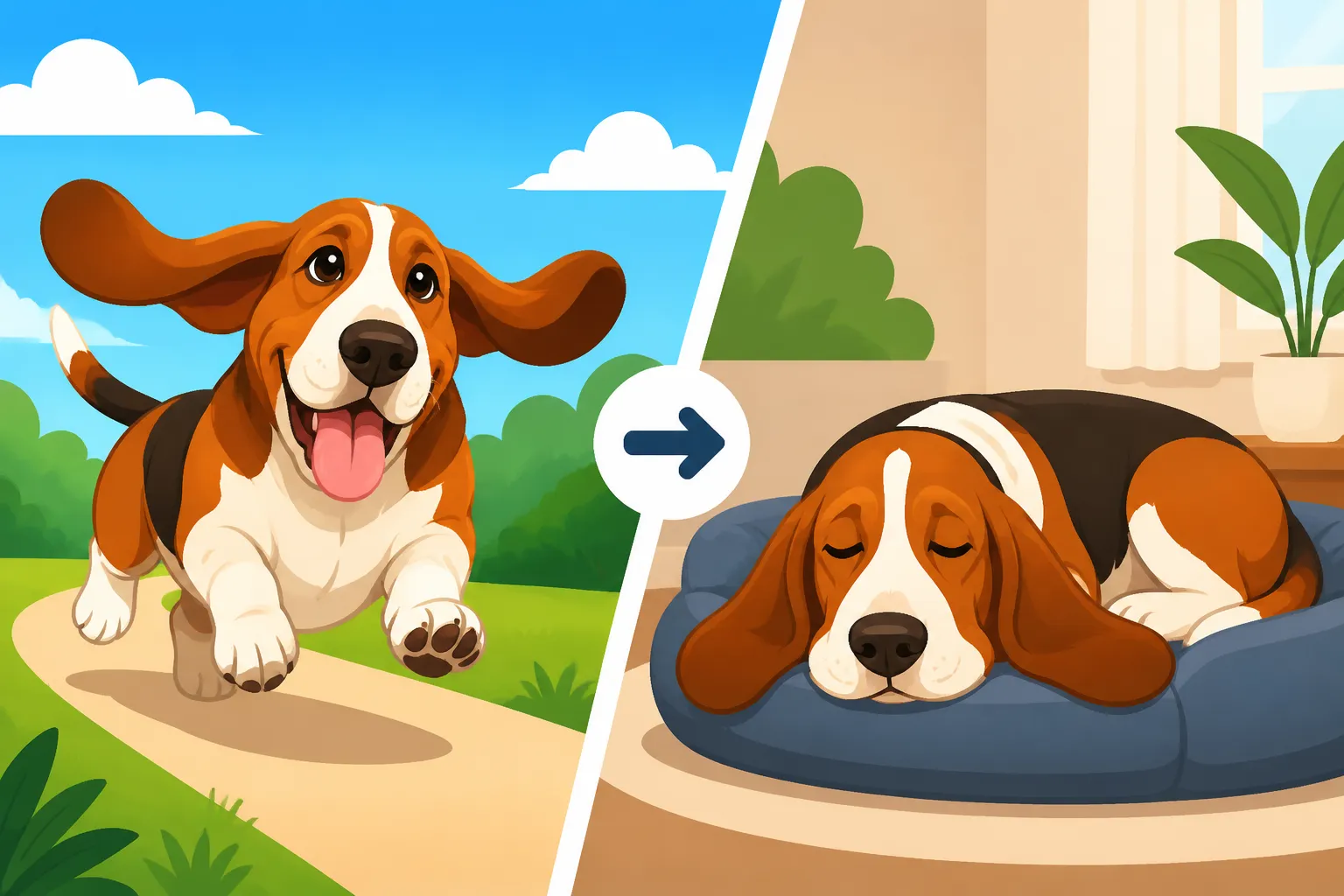
Undoubtedly, a Basset Hound, like any dog, benefits from regular physical activity. If your Basset has been cooped up all day with minimal stimulation, that pent-up energy has to go somewhere. Often, that "somewhere" is through vocalization – whining, incessant baying, or even destructive chewing. A good, moderate walk or some gentle playtime in the yard can absolutely help to burn off this excess physical steam. When they've had a chance to stretch their legs, sniff around a bit, and move their unique bodies, they are often more content to settle down afterwards.
The key here is consistency. A sporadic, intense outing followed by days of inactivity is less effective than a routine of daily, steady exercise. Think of it like a gentle hum that helps keep their internal battery at a comfortable level, rather than letting it overcharge and then trying to drain it all at once. For a Basset, this usually means a couple of leisurely walks a day, allowing plenty of time for sniffing the 'news' along the way. However, it's vital to be mindful of their distinct physique. They aren't built for high-impact activities or long-distance running. Over-exercising a Basset can put undue strain on their joints and backs, potentially leading to pain and more vocalization, not less. Remember, The Basset Hound That Will Not Walk Any Further is not just a stubborn streak; it can sometimes be their body telling you "enough."
When Physical Exercise Isn't Enough
Here's the often frustrating part: you've walked your Basset, they've sniffed every blade of grass, and yet, ten minutes after getting home, they're baying at the delivery truck or howling at a distant siren. Why? Because baying and howling are inherent parts of being a Basset Hound. They are vocal creatures, bred to communicate with their pack (you!) and to alert to interesting scents. It’s their equivalent of a human talking, and you can't simply exercise away someone's ability to speak.
While physical exercise can reduce the amount of undirected, boredom-induced vocalization, it won't erase their fundamental hound nature. A Basset on a strong scent trail will bay with purpose, regardless of how tired they are. A Basset feeling lonely or anxious might howl, even after a good run. This isn't a failure on your part or a sign that they're being "stubborn." It’s just how they're wired. This is often where owners get incredibly disheartened, feeling like they've tried everything. It's important to validate this feeling; it is tough when you put in the effort and the results aren't what you expect. Understanding What a Basset Hound's Bay Sounds Like helps you distinguish between different types of vocalization and address them accordingly.
Maximizing Calm Through Mental Stimulation and Training
Since physical exercise alone won't always quiet a Basset Hound, we need to bring in the big guns: mental stimulation and consistent training. For a breed whose entire existence revolves around its incredibly powerful nose and keen intelligence, engaging their minds is often far more effective than just tiring their bodies. Think of it as satisfying their inner detective.
Unleashing the Power of the Nose
If you want to truly tire out a Basset Hound and encourage a calmer demeanor, put that nose to work! Their olfactory abilities are legendary, second only perhaps to the Bloodhound. This isn't just a cute quirk; it's a deep-seated drive that needs an outlet. Engaging their nose provides incredible mental enrichment, taps into their natural instincts, and gives them a profound sense of purpose. A mentally tired Basset is far more likely to be a quiet Basset.
There are countless ways to do this, ranging from simple home games to structured activities. Start small: hide treats around the house and let them sniff them out. A snuffle mat, easily found on platforms like Amazon, is fantastic for making meal times a stimulating hunt. Instead of just eating from a bowl, they have to use their nose to find individual pieces of kibble. You can also play "find it" in the yard, hiding toys or high-value treats and encouraging them to track. For those looking for more structured fun, consider formal nose work or tracking classes. These activities allow your Basset to use their extraordinary sense of smell in a controlled, rewarding environment. I've seen Bassets who've been "on a mission" for an hour come home and crash for the rest of the afternoon, utterly content and quiet. Giving a Basset Hound's Nose Something to Do isn't just fun; it's essential for their well-being and your peace of mind. It’s truly amazing Whether Nose Work Tires a Basset Hound Out.
Consistent Training and Routine
Beyond nose work, consistent and positive training plays a significant role in fostering a calm household. A Basset Hound that understands boundaries, knows what's expected of them, and has a strong communication channel with their owner is generally a more settled and less randomly vocal dog. They might be perceived as "stubborn," but often it's a lack of clear communication and motivation from our end.
Short, positive reinforcement training sessions throughout the day can be incredibly effective. Bassets are food-motivated (who isn't?), so using high-value treats for rewards works wonders. Focus on basic obedience cues like "sit," "stay," and "come," but also on impulse control exercises like "leave it." Websites and programs like BAXTER & Bella offer excellent online resources for positive, force-free training methods that really click with Bassets. The mental effort involved in learning and responding to cues, even for just 10-15 minutes a day, can be surprisingly tiring for them. Moreover, a predictable routine reduces anxiety. Dogs thrive on knowing what to expect, and a consistent schedule for meals, walks, potty breaks, and training helps create a sense of security, which in turn can lead to less stress-related vocalization. What Actually Motivates a Basset Hound is often a combination of food, praise, and the satisfaction of a job well done.
Identifying and Addressing Specific Vocal Triggers
While exercise and mental stimulation are crucial, sometimes a Basset Hound's vocalizations are triggered by specific situations or feelings. Becoming a detective and understanding why your Basset is making noise is the first step to effectively addressing it. It's not always about excess energy; sometimes it's a call for help, attention, or an urgent broadcast about a perceived threat (or a rogue leaf).
Boredom, Loneliness, and Attention-Seeking
Many Basset Hounds are social creatures at heart, and they don't appreciate being left out or ignored. If your Basset is spending long hours alone, or if they're home with you but not receiving much interaction or enrichment, boredom can quickly set in. A bored Basset is a creative Basset, and often that creativity manifests as vocalization. They might whine persistently, let out mournful howls, or engage in a sustained bay simply to get your attention. It's their way of saying, "Hey! I'm here! Do something with me!"
To counter this, ensure your Basset has appropriate outlets for their energy and attention throughout the day. A rotation of engaging toys can help; some of my favorites are treat-dispensing toys from Amazon that require them to work for their snack. If you're out for long stretches, consider a trusted dog walker or even doggy daycare a few days a week to break up their solitude. When you are home, make time for interactive play, a training session, or a good cuddle on the sofa. Sometimes, their vocalization is a clear plea for companionship. It's important to distinguish between genuine separation anxiety, which might require professional help, and simple loneliness or boredom that can often be alleviated with more engagement. For more insights, check out Whether a Basset Hound Howls When Left.
Environmental Stimuli and Alert Barking
Bassets are hounds, and hounds are designed to alert. This means they're often highly tuned to their environment. The mailman walking past, a squirrel dashing up a tree, a car door slamming down the street, or even an unfamiliar scent wafting through an open window can all trigger a round of impressive baying. They're not being "bad"; they're doing what they were bred to do – telling you, their pack, that something is happening! While we might not always appreciate their urgent broadcasts about every passing leaf, it's their natural instinct.
Managing this often requires a multi-pronged approach. Environmental management can help; keeping curtains closed during peak "trigger" times, or using a white noise machine or soft music to mask external sounds. Training a "quiet" cue can be incredibly useful, though it takes patience and consistency. The idea is to teach them that after one or two alert barks, they get a reward for being quiet on command. You'll never entirely stop a Basset from alerting you to things, but you can definitely manage the duration and intensity of their vocalizations. It’s definitely a factor Whether a Basset Hound Gets Its Owner a Noise Complaint, so learning to manage their responses is key. Consider reading Teaching a Basset Hound a Quiet Cue for practical tips.
When Vocalization Signals Discomfort or Pain
Finally, and perhaps most importantly, it's crucial to consider that a sudden or unusual increase in vocalization might not be behavioral at all, but rather a sign of discomfort or pain. Basset Hounds are stoic dogs, and they often try to hide their pain, but sometimes excessive whining, groaning, or a change in their typical vocal patterns can be the only indication that something is wrong.
Given their unique build, Bassets are prone to certain health issues that can cause pain, such as ear infections (which are notoriously common and uncomfortable), back problems like intervertebral disc disease (IVDD), or arthritis, especially as they age. A Basset silently suffering from a throbbing ear infection might start whining more, or one with a sore back might groan every time they shift position. If your Basset's vocalization suddenly changes, becomes more persistent, or is accompanied by other signs like lethargy, appetite changes, or reluctance to move, a trip to the veterinarian is absolutely essential. Don't just assume it's "just being a Basset." It could be a crucial cry for help. Understanding common issues like The Ear Infections That Never Really Leave a Basset Hound or The Back Trouble a Basset Hound Is Built Into can help you recognize potential signs of discomfort.
Here's a quick comparison of different activities and how they impact a Basset Hound's vocalization:
| Activity Type | Description | Primary Benefit for Quieting Basset Hounds | Limitations for Quieting Basset Hounds |
|---|---|---|---|
| Physical Exercise | Leash walks, yard play, controlled romps. | Burns off pent-up physical energy, leads to napping after. | Doesn't always address mental boredom; inherent breed vocalizations persist; risk of over-exertion. |
| Scent Work | Snuffle mats, hidden treats, tracking games. | Highly mentally stimulating; taps into natural instincts; deeply satisfying. | Requires active owner participation; might not exhaust a physically under-exercised dog. |
| Obedience Training | Short, positive sessions of basic commands/tricks. | Builds focus and impulse control; strengthens bond; mentally engaging. | Not a primary energy burner; needs consistency; might not directly stop alert baying without specific cues. |
| Puzzle Toys | Treat-dispensing toys, KONGs. | Keeps them occupied and mentally engaged; reduces boredom-induced vocalization. | Can be quickly solved by clever Bassets; not a substitute for human interaction or walks. |
In conclusion, while physical exercise plays a role in managing a Basset Hound's overall energy levels and can certainly reduce boredom-induced vocalization, it's not a standalone solution for a noisy Basset. Their vocal nature is deeply ingrained, and often, it's their brilliant noses and keen minds that need the most tiring out. A holistic approach that combines appropriate physical activity with plenty of mental stimulation, consistent positive training, and a keen eye for specific triggers (including potential health issues) is your best bet for fostering a calm, content, and yes, quieter Basset Hound.
Disclaimer
This article is for general informational purposes only and does not constitute professional advice. Laws, prices and regulations vary by location and change over time. Consult a qualified professional for guidance on your specific situation.