Lumps Worth Checking on a Basset Hound
Finding an unexpected lump on your beloved Basset Hound can send a wave of panic through any dog parent. It's a truly unsettling experience, immediately sparking worries about what it could be and what it means for their health. Rest assured, you're not alone in feeling this anxiety. This comprehensive guide is here to walk you through the various types of lumps Basset Hounds commonly develop, help you understand which ones are usually harmless, and most importantly, equip you with the knowledge to recognize when a lump absolutely needs immediate veterinary attention. We'll empower you to be proactive in your Basset's care, turning that initial fear into informed action.
Common Benign Lumps on Basset Hounds
It’s easy to jump to the worst conclusions when you discover a new bump on your Basset, but thankfully, many lumps are entirely benign. Understanding these common culprits can bring a lot of peace of mind, though it never negtates the importance of a vet check.
Fatty Tumors (Lipomas)
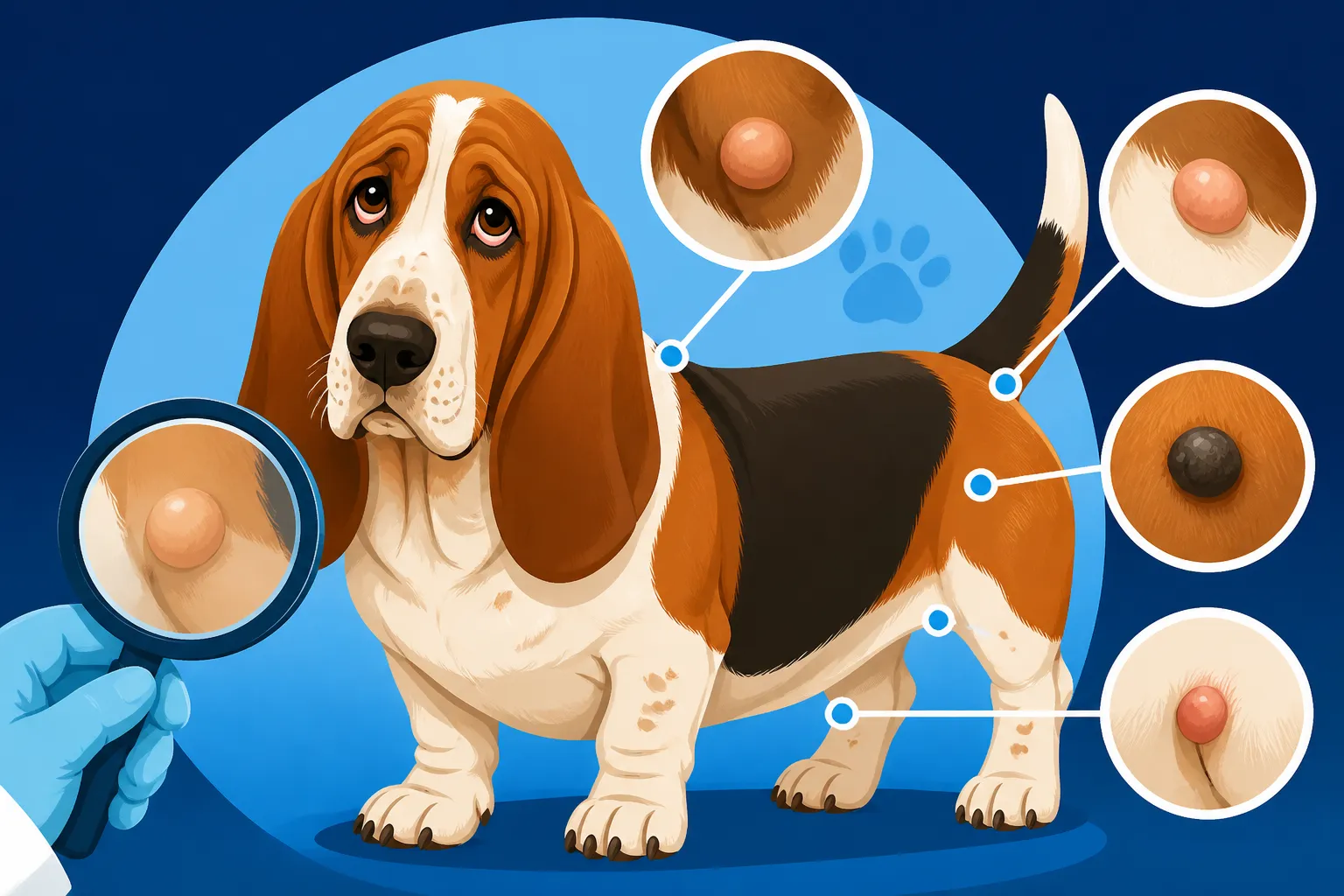
Lipomas are probably the most common type of lump you’ll find on an older Basset Hound, and honestly, they're often the first thing a vet suspects. These are simply benign accumulations of fat cells, nestled just under the skin. They tend to feel soft, somewhat movable, and typically don’t cause any pain or discomfort when you touch them. Think of them like little soft cushions under your dog's skin.
Basset Hounds, especially as they age or if they tend to carry a little extra weight (which, let's be honest, many Bassets are prone to!), seem to have a particular predisposition to developing lipomas. They can pop up anywhere on the body, from the chest and flanks to the legs. While they usually remain small and unobtrusive, some can grow quite large, becoming noticeable bumps that draw attention.
Most lipomas are completely harmless and are often left alone. However, it's wise to monitor them. If a lipoma starts growing rapidly, or if its location — say, in the armpit or groin area — begins to interfere with your Basset's movement or comfort, then your vet might suggest surgical removal. This is usually a straightforward procedure, but keeping an eye on the lump's size and location is key to making that decision.
Sebaceous Cysts
Sebaceous cysts are another fairly common, usually harmless, visitor to a Basset Hound's skin. Imagine a tiny oil gland under the skin that gets a bit clogged, and presto – you have a sebaceous cyst. These typically present as firm, round bumps, often quite small, and they can sometimes feel a bit like a pea or a marble just beneath the surface.
Given a Basset Hound's wonderfully loose skin and all those charming folds, they can be particularly prone to these cysts, especially in areas where skin rubs or moisture might accumulate. Sometimes, these cysts can rupture, releasing a whitish, pasty, or even cottage-cheese-like substance, which can be a bit alarming but isn't usually dangerous unless it leads to infection. This can be especially true in areas prone to The Skin Under a Basset Hound's Folds.
For the most part, sebaceous cysts don't need treatment unless they become infected, inflamed, or bother your Basset. If you notice a cyst that's red, painful, or draining a foul-smelling discharge, it's time for a vet visit. They might need to be lanced, cleaned, or even surgically removed to prevent recurrence or infection. Regular checks of your Basset's skin, especially within those beautiful folds, can help you catch these early.
Warts and Skin Tags
Just like us, Basset Hounds can get warts and skin tags. While they might not be the prettiest things to look at, they are almost always benign. Warts, or papillomas, are caused by a virus and are more commonly seen in younger dogs or those with slightly compromised immune systems. They often have a distinctive cauliflower-like appearance and can appear on the face, eyelids, or inside the mouth.
Skin tags, on the other hand, are simply small, fleshy growths that tend to stick out from the skin. They are extremely common in older dogs and often appear in areas of friction, like the elbows, chest, or around collars and harnesses. They don't have a viral cause and are generally just a part of aging.
Both warts and skin tags are usually harmless. Warts, especially in puppies, often resolve on their own as the dog's immune system matures and fights off the virus. Skin tags rarely cause trouble unless they're in a location where they get constantly snagged or irritated, which can lead to bleeding or discomfort. If a wart or skin tag is bothering your Basset, growing very quickly, or looks unusual, your vet can easily remove it. It's usually a quick procedure, especially if done early before it gets too large.
Lumps That Warrant Immediate Veterinary Attention
While many lumps are nothing to fret over, there are definitely some that are red flags and demand your immediate attention. It’s crucial to know the difference, because with certain types of lumps, early detection can truly be a lifesaver.
Mast Cell Tumors
This is one of the lumps that strikes fear into the hearts of pet owners, and for good reason. Mast cell tumors are a type of malignant cancer that can appear almost anywhere on a Basset Hound's body, and frustratingly, they are master mimickers. They can look and feel just like many benign lumps – a simple skin tag, a fatty tumor, or even an insect bite. They can be soft or firm, raised or flat, small or large, and sometimes even ulcerated. The unpredictability is what makes them so dangerous.
One key characteristic to watch for with mast cell tumors is what vets call "Darier's sign." This means the tumor might change in size, swell, or become red and itchy, often in response to being touched or irritated. These changes happen because mast cells release histamine and other chemicals. If you notice a lump that seems to fluctuate, or if your Basset is scratching or licking a particular spot excessively, get it checked out without delay.
Because they are so tricky to identify by feel or sight alone, any suspicious lump should ideally be biopsied to determine if it's a mast cell tumor. Early diagnosis and treatment are absolutely critical for a good prognosis. Treatment can range from surgical removal to chemotherapy, depending on the tumor's grade and location. Navigating a diagnosis like this can be overwhelming, but having comprehensive pet insurance, perhaps from a provider like Healthy Paws, can certainly alleviate some of the financial stress associated with these unexpected, often costly, treatments.
Lymphoma
Lymphoma is a cancer of the lymphatic system, which is a vital part of your Basset Hound's immune system. Unlike many other lumps that originate in the skin, lymphoma typically presents as enlarged lymph nodes. Lymph nodes are small, bean-shaped glands found throughout the body, acting as filters for harmful substances. When they swell due to cancer, they can feel like firm, non-painful lumps.
The most common places to find these enlarged lymph nodes are under your Basset's jaw (submandibular), in their armpits (axillary), or behind their knees (popliteal). You might be simply petting your dog and suddenly feel a firm, rubbery lump in one of these areas where there wasn't one before. While not necessarily painful to your Basset, their firmness and location are key indicators that something is amiss.
If you discover any firm, enlarged nodes in these areas, it's an urgent matter. A prompt vet visit is essential for diagnosis, which usually involves a fine needle aspirate or biopsy of the affected lymph node. The sooner lymphoma is diagnosed, the sooner treatment options, such as chemotherapy, can be explored. This condition often impacts your Basset's overall health and vitality, and quickly addressing it can significantly improve their quality of life and prognosis.
Abscesses and Infections
Sometimes, a lump isn't a tumor at all, but rather a localized infection that has turned into an abscess. An abscess is essentially a pocket of pus that forms under the skin due to a bacterial infection. These often arise from something seemingly innocuous, like a tiny puncture wound from a thorn, a scratch, or even a bug bite that introduced bacteria. Given a Basset Hound's low-slung body and tendency to explore with their nose to the ground, they can certainly pick up these kinds of minor injuries.
What makes an abscess particularly concerning is how rapidly it can develop and how much discomfort it can cause. Abscesses typically feel warm to the touch, are often very painful for your Basset, and can swell up quickly over a day or two. You might also notice your Basset licking or guarding the area, or they might even develop a fever, appearing lethargic and generally unwell.
Unlike a benign lipoma, which is usually soft and non-painful, an abscess demands immediate veterinary attention. Trying to treat it at home can make things worse. Your vet will likely need to drain the pus, clean the wound thoroughly, and prescribe antibiotics to combat the infection. Don't wait on these; prompt treatment will relieve your Basset's pain and prevent the infection from spreading.
Other Malignant Tumors (Fibrosarcomas, Hemangiosarcomas)
While less common than mast cell tumors or lymphoma, other types of malignant tumors can also appear as lumps on your Basset Hound. Fibrosarcomas, for instance, originate from connective tissue cells and often present as firm, fixed masses that feel like they're attached to the underlying muscle or bone, rather than floating freely under the skin. They can grow slowly or rapidly, and their fixed nature is a significant warning sign.
Hemangiosarcomas are another concerning type of cancer, though they usually affect internal organs like the spleen or heart. However, they can sometimes appear on or under the skin as dark red, black, or bluish lumps, which might bleed. These are aggressive cancers, and any rapidly growing, discolored, or bleeding skin mass needs urgent investigation.
The key with these, and indeed with any lump that seems out of the ordinary, is swift veterinary assessment. Your vet will perform a thorough examination and likely recommend a fine needle aspirate or biopsy to get a definitive diagnosis. Early detection and aggressive treatment are paramount when dealing with these more aggressive forms of cancer. Remember, your vet is your best partner in identifying and managing any suspicious growths.
The Importance of a "Lump Log" and Regular Checks
As a Basset Hound owner, you're their first line of defense. Becoming intimately familiar with your dog's body and keeping a diligent record of any changes is one of the most proactive things you can do for their health.
Performing Regular At-Home Examinations
Think of it as a special bonding time with a purpose. Regular at-home examinations are crucial for early detection. I always recommend doing a "lump check" at least once a week, or even bi-weekly, perhaps during a relaxing grooming session or when you're just enjoying some quiet cuddle time on the couch.
Start from your Basset's nose and work your way down to their tail. Gently but thoroughly run your hands over every inch of their body. Pay close attention to areas like their head and face, under their chin and around their neck (where lymph nodes are), along their chest, under their armpits, along their back and flanks, inside their hind legs, and even down to their paws. Don't forget their belly! Feel for anything new: any bumps, any changes in texture, anything that feels hot or tender. Get used to the normal feel of their body so that anything out of the ordinary immediately stands out. These regular checks also make it easier to spot issues like The Skin Under a Basset Hound's Folds or even gauge if your Basset has put on What Extra Weight Does to a Basset Hound.
Documenting Your Findings
Finding a lump is only the first step; effective monitoring is the next critical one. This is where a "Lump Log" becomes your best friend. A simple notebook, or even a dedicated note on your phone, can be invaluable. For every lump you find, no matter how small or seemingly insignificant, jot down the following:
- Date Found: When you first noticed it.
- Location: Be specific! "Right side of chest, just behind the elbow" is much better than "on his side." You can even draw a little diagram.
- Size: This is hugely important. Use a ruler or calipers to measure the length and width (in centimeters or inches).
- Description: Is it soft, firm, hard? Is it movable or fixed? Is the skin over it normal, red, crusty, or ulcerated? Is it painful when you touch it?
- Changes: Note any subsequent observations, like growth, reduction in size, changes in color, or new tenderness.
Taking a clear photograph of the lump, especially if it's on a visible part of the body, can also be incredibly helpful for comparison over time. This detailed log provides objective data for your veterinarian, which is much more reliable than trying to remember vague details during a stressful vet visit. This kind of thorough documentation can also be very useful if you have pet insurance, like Healthy Paws, as it helps demonstrate consistent care and monitoring, potentially streamlining future claims for diagnostics or treatment.
When to See the Vet – The "Rule of Threes"
It can be tough to decide if a new lump warrants a vet visit right away or if it's something you can simply monitor for a short period. While it's always safest to err on the side of caution and consult your vet for anything new, here’s a simple "Rule of Threes" to help guide your decision-making:
- New: If you've just discovered a lump that wasn't there before, especially if your Basset Hound is older, it's always worth a call to your vet. They might advise monitoring if it seems clearly benign, or they might recommend coming in.
- Growing: Any lump that is rapidly increasing in size needs prompt attention. Growth is often a red flag, regardless of how it feels. A lump that doubles in size in a week, for instance, is far more concerning than one that stays stable for months.
- Changing: If a lump changes in any other way – it becomes painful, red, inflamed, starts to bleed, develops an ulcer, or changes in texture – that's a clear signal it needs to be seen.
Remember, Basset Hounds are prone to various health concerns, from The Ear Infections That Never Really Leave a Basset Hound to The Glaucoma a Basset Hound Inherits. Adding a suspicious lump to the list just means staying vigilant. You know your Basset best, and if something just doesn't feel right, trust your gut. It's far better to have a vet confirm a benign lump than to delay discovering something more serious.
Diagnostic Tools and What to Expect at the Vet
When you bring your Basset Hound to the vet for a lump, they won't just guess what it is. There's a systematic approach to diagnosis, designed to get an accurate answer quickly and efficiently. Knowing what to expect can help ease your mind.
Initial Examination and Fine Needle Aspirate (FNA)
Your vet will start by conducting a thorough physical examination, feeling the lump, assessing its size, texture, mobility (is it free-moving under the skin or fixed to deeper tissues?), and whether it causes your Basset any pain. They'll also check your Basset's overall health and may palpate other lymph nodes. This initial assessment helps them form a preliminary idea of what they're dealing with.
The most common first diagnostic step is often a Fine Needle Aspirate (FNA). This is a quick, minimally invasive procedure where your vet inserts a very fine needle into the lump and withdraws a small sample of cells. It's usually done right in the exam room, often without sedation, as it's typically no more uncomfortable than a routine vaccination. The collected cells are then spread onto a slide and examined under a microscope (cytology).
FNA is incredibly useful because it can often differentiate between benign fatty tumors (lipomas), sebaceous cysts, and some types of inflammatory or infectious processes. It can also frequently identify mast cell tumors or lymphoma, giving a crucial early diagnosis. However, it's not always 100% conclusive; sometimes, the sample might not contain enough diagnostic cells, or the cells might be too ambiguous to provide a definitive answer. In these cases, your vet will recommend further steps.
Biopsy and Histopathology
If an FNA is inconclusive, or if your vet strongly suspects a malignant growth based on the initial examination or FNA results, the next step is typically a biopsy. A biopsy provides a larger tissue sample, allowing for a more thorough examination by a veterinary pathologist (histopathology). This is the gold standard for getting a definitive diagnosis and determining the specific type and grade of cancer, if present.
There are a couple of types of biopsies:
- Incisional Biopsy: This involves removing only a small portion of the lump for analysis. This is often done when the lump is large, or if the vet wants a confirmed diagnosis before planning a more extensive surgery.
- Excisional Biopsy: In this case, the entire lump is surgically removed, along with a margin of healthy tissue around it. This is often preferred if the lump is small and easily accessible, as it can be both diagnostic and curative in one go.
Biopsies usually require general anesthesia, as it's a surgical procedure. The tissue sample is then sent to a specialized laboratory for microscopic examination. The pathologist's report will provide a precise diagnosis, which is absolutely critical for guiding the appropriate treatment plan, whether that involves further surgery, chemotherapy, or radiation.
Further Imaging and Staging (If Cancer Suspected)
If the biopsy confirms a malignant tumor, your vet will likely recommend further diagnostics, often referred to as "staging." Staging aims to determine if the cancer has spread to other parts of your Basset Hound's body. This is a crucial step because it informs the prognosis and helps your vet formulate the most effective treatment strategy.
Common imaging techniques used for cancer staging include:
- X-rays: Thoracic (chest) X-rays are often performed to check for any signs of metastasis (spread) to the lungs, which is a common site for many cancers. Abdominal X-rays might also be taken to look for enlarged organs or other abnormalities.
- Ultrasound: An abdominal ultrasound allows your vet to visualize internal organs like the liver, spleen, and abdominal lymph nodes, checking for signs of cancer spread or primary tumors that might not be palpable.
- CT Scans (Computed Tomography): For more complex cases or specific tumor types, a CT scan provides highly detailed, cross-sectional images of the affected area and surrounding tissues. This can be invaluable for surgical planning or identifying subtle spread.
Blood tests and urinalysis are also typically part of the staging process to assess your Basset's overall health and organ function. The results from these tests help paint a complete picture of the disease, allowing your vet to discuss the best course of action. This is where a robust pet insurance plan, such as one from Healthy Paws, can really make a difference, as these advanced diagnostics and treatments can represent significant What a Basset Hound's Emergency Surgeries Cost. Being prepared financially for these possibilities is part of being a responsible Basset owner, especially considering their The Ten to Twelve Years a Basset Hound Lives lifespan.
Common Lumps and Their Characteristics
To help you distinguish between the various types of lumps you might encounter on your Basset Hound, here's a quick reference table outlining their typical characteristics. Remember, this is for informational purposes only, and any new or changing lump should always be evaluated by a veterinarian.
| Type of Lump | Common Location(s) | Feel / Texture | Growth Rate | Pain / Discomfort | Key Differentiating Factors |
|---|---|---|---|---|---|
| Lipoma (Fatty Tumor) | Trunk, armpits, legs | Soft, movable, non-painful | Slow | Generally none | Feels like a soft, pliable "pillow" under the skin; common in older/overweight dogs. |
| Sebaceous Cyst | Head, neck, back, skin folds | Firm, round, sometimes movable | Slow | Usually none, unless infected | Can rupture and discharge white, pasty material; often in folded skin areas. |
| Wart / Skin Tag | Eyelids, lips, face, areas of friction | Small, fleshy projection (tag); cauliflower-like (wart) | Slow (tag); Variable (wart) | Usually none, unless irritated | Skin tags are pendulous; warts can regress naturally. |
| Abscess | Anywhere, often where an injury occurred | Warm, painful, firm, fluid-filled | Rapid | Significant pain, often with fever | Rapid onset, tender, swelling; often follows injury. |
| Mast Cell Tumor | Anywhere on skin or under skin | Highly variable (soft, firm, raised, flat, ulcerated) | Variable (can be rapid) | Can be itchy, swell intermittently | "Darier's sign" (changes in size, redness with manipulation); highly suspicious. |
| Lymphoma | Under jaw, armpits, behind knees (lymph nodes) | Firm, rubbery, non-painful | Moderate to rapid | Generally none | Systemic signs (lethargy, weight loss) possible; bilateral swelling of nodes. |
| Fibrosarcoma | Limbs, trunk, anywhere | Firm, fixed, often irregular | Moderate to rapid | Variable | Fixed to underlying tissue; generally firm and invasive. |
| Hemangiosarcoma (Cutaneous) | Skin of trunk, limbs | Dark red, black, or bluish, possibly bleeding | Variable, can be rapid | Variable | Often appears discolored; can bleed or ulcerate. |
Disclaimer
The information provided in this article is for educational and informational purposes only, and does not constitute veterinary medical advice. Always consult with a qualified veterinarian for any health concerns or before making any decisions related to your pet's health and treatment. Do not disregard professional veterinary advice or delay seeking it because of something you have read here.