Whether a Basset Hound Gets Entropion
It's heartbreaking to see your beloved Basset Hound squinting, pawing at their eyes, or just looking uncomfortable. Those magnificent, soulful eyes are one of their most defining features, but their unique structure also means they can be susceptible to some really irritating and painful conditions. One such issue that many Basset owners worry about, and for good reason, is entropion. This guide will walk you through what entropion is, why Basset Hounds often deal with it, how to spot the signs, and what you can do to help your floppy-eared friend find relief.
Understanding Entropion in Basset Hounds
Our Bassets are truly special, aren't they? From their incredible noses to those impossibly long ears, they're built unlike almost any other breed. But sometimes, these very characteristics that make them unique can also predispose them to certain health challenges. Entropion is one of those conditions that seems to crop up more frequently in breeds with specific facial conformations, and our Basset Hounds are definitely on that list.
What Exactly is Entropion?
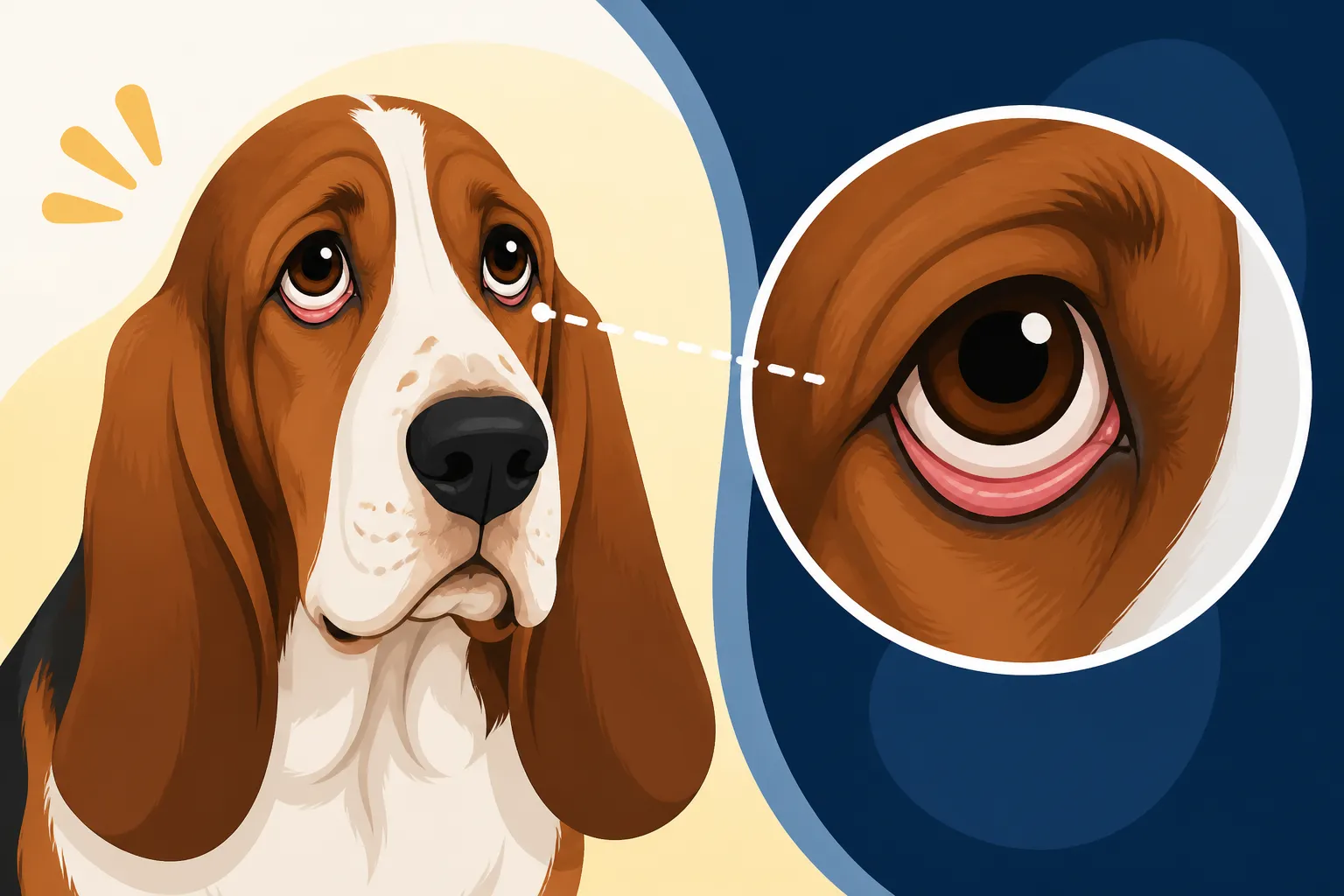
At its simplest, entropion is an eyelid abnormality where the eyelid margin, or a portion of it, rolls inward towards the eyeball. Think of it like your own eyelid turning in, so your eyelashes are constantly rubbing against your eye's delicate surface. For a Basset Hound, this isn't just a minor annoyance; it’s a source of constant irritation and pain. The hair on the skin of the eyelid, and sometimes even the eyelashes themselves, rub against the cornea (the clear front surface of the eye) and the conjunctiva (the lining of the eyelids and the white part of the eye). This constant friction can lead to a whole host of secondary problems, from minor inflammation to severe corneal damage. It’s definitely not something to ignore, as the discomfort can significantly impact your Basset's quality of life.
Why Basset Hounds Are Prone to Entropion
The Basset Hound’s distinctive appearance, while charming, is also the primary reason they are more susceptible to entropion. Their breed standard often calls for a significant amount of loose skin, particularly around the head and face, and those wonderfully droopy eyelids. This excessive facial skin, combined with a deep-set eye, means the lower eyelid can easily sag and roll inward.
It's often a hereditary condition, meaning it's passed down through generations. If a Basset's parents or grandparents had entropion, there's a higher chance their puppies will too. It’s also often exasperated by the growth process. Sometimes, puppies can show temporary entropion as they grow, and their facial structure is still developing. However, for many Bassets, it’s a structural issue that persists or worsens as they mature. The heavy brow and skin folds can also sometimes push the upper eyelid inward, though it's more commonly seen in the lower lid. You might have also heard about the opposite condition, Whether a Basset Hound Gets Ectropion, where the eyelid rolls outward, exposing the delicate inner tissue. While ectropion is also common in Bassets, entropion is often more painful due to the constant rubbing.
The Difference Between Entropion and Ectropion
It's easy to get these two terms confused, especially since Basset Hounds can exhibit characteristics of both. Ectropion, as mentioned, is when the eyelid rolls outward, exposing the pink conjunctiva. This gives dogs that classic "sad" or "droopy-eyed" look, and while it can lead to dryness, irritation from environmental factors, and recurrent conjunctivitis, it typically doesn't cause the painful corneal scratching that entropion does. Many Bassets have a degree of ectropion as part of their breed standard – that lovely loose skin and "haw" showing in the lower lid.
Entropion, on the other hand, is the inward rolling. Imagine a perfectly normal eyelid, then visualize it tucking under itself. The critical difference is the direction of the roll and the direct impact on the cornea. With entropion, the physical contact of hair against the eye is what causes the most damage and discomfort. It's possible for a Basset to have both conditions, sometimes affecting different parts of the same eye, or one eye might have entropion while the other has ectropion, making accurate diagnosis from your vet absolutely crucial.
Recognizing the Signs and Symptoms
As Basset Hound owners, we spend a lot of time observing our furry family members. Their quirks and expressions are part of their charm. But when something is off, especially with their eyes, it's vital to know what to look for. Recognizing the early signs of entropion can make a huge difference in preventing long-term damage and getting your Basset comfortable again.
Early Warning Signs to Watch For
The signs of entropion can range from subtle to overtly painful. If you notice any of these, it’s time to call your vet.
- Excessive Tearing (Epiphora): This is often one of the first and most noticeable signs. The constant irritation from the inward-turned lid stimulates tear production. You might see wetness or tear staining around the eye, particularly on the fur below the eye.
- Squinting or Holding the Eye Shut (Blepharospasm): Your Basset might try to relieve the discomfort by partially or fully closing the affected eye. This is a clear indicator of pain or irritation.
- Redness and Inflammation: The conjunctiva (the pink tissue around the eye) will likely appear red and inflamed due to the rubbing. This can sometimes be mistaken for an allergy or a simple infection.
- Mucoid or Purulent Discharge: As the irritation progresses, secondary bacterial infections can occur, leading to a thick, yellowish, or greenish discharge from the eye.
- Pawing at the Eye or Rubbing Face: Your Basset will instinctively try to relieve the itch or pain, often by pawing at the affected eye or rubbing their face against furniture or the floor. Be careful, as this can worsen the irritation.
- Sensitivity to Light (Photophobia): Dogs with eye pain often become sensitive to bright light, preferring dimmer environments.
- Cloudiness or Ulcers on the Cornea: This is a more severe sign, indicating that the constant rubbing has damaged the clear surface of the eye. Corneal ulcers are incredibly painful and can lead to vision impairment if not treated promptly. You might even observe some of The First Signs of Glaucoma in a Basset Hound if the corneal damage is significant enough to affect internal eye pressure.
- Reluctance to Open Eyes Fully: A Basset with entropion might seem hesitant or uncomfortable opening their eyes wide, especially when waking up or after a nap.
Keep a close eye on your Basset. Any persistent changes in their eye appearance or behavior warrant a vet visit. Remember, Whether a Basset Hound's Red Eye Is an Emergency is often yes, especially when accompanied by other signs of pain.
What Your Vet Will Look For
When you bring your Basset to the vet with suspected entropion, they'll perform a thorough ophthalmic examination. They're not just glancing at the eye; they're looking for specific clues.
First, they'll observe your Basset's overall demeanor and how they hold their head and eyes. Then, they'll gently examine the eyelids themselves, checking for the inward roll and assessing the degree of the condition. They'll look at the conjunctiva for redness and swelling, and they'll pay close attention to the cornea.
A common diagnostic tool is a fluorescein stain test. A special orange dye is applied to the eye. If there's any damage to the cornea, like an abrasion or ulcer, the dye will stick to it and glow bright green under a blue light. This quickly tells the vet if the entropion has already caused physical damage to the eye. They may also use an ophthalmoscope to look inside the eye and check for other issues. They’ll also check tear production, as some Bassets with entropion might also have insufficient tear production, which complicates things. It’s a comprehensive check because sometimes other issues, like What Open Angle Glaucoma Does to a Basset Hound, can present with similar symptoms, and accurate diagnosis is key.
The Impact on Your Basset Hound's Comfort and Vision
It's easy to underestimate the impact of entropion on a dog's life. Imagine having a hair constantly poking your eye, magnified by every blink. It’s incredibly uncomfortable and painful. Left untreated, entropion can lead to significant, chronic issues:
- Chronic Pain: This is the most immediate and pervasive impact. Your Basset lives in a state of constant irritation, which can make them withdrawn, less playful, and generally unhappy.
- Corneal Ulcers: The repeated rubbing of hair against the cornea can cause abrasions that develop into painful ulcers. These ulcers are open sores on the eye and can become infected. Deep or infected ulcers are a serious emergency and can lead to permanent scarring or even rupture of the eyeball.
- Pigmentary Keratitis: Chronic irritation can also cause black pigment to migrate across the cornea, gradually obstructing vision. This is often irreversible.
- Vision Loss: Severe corneal scarring, repeated ulcers, or a ruptured globe can all lead to partial or complete vision loss in the affected eye. This is a devastating outcome that can often be prevented with timely intervention.
- Secondary Infections: The constant moisture and irritation create a perfect breeding ground for bacteria, leading to recurrent eye infections that require antibiotics.
No Basset Hound should have to live with this level of discomfort. Addressing entropion promptly is crucial not only for their immediate relief but also for preserving their long-term vision and overall well-being. Whether Glaucoma Hurts a Basset Hound is a definite yes, and entropion can be just as painful, if not more so, in its active irritation.
Treatment Options for Entropion
Once your vet has confirmed entropion, discussing the best course of action is the next step. For Basset Hounds, who often have a significant conformation component to their entropion, permanent solutions are usually preferred.
Non-Surgical Approaches Temporary Relief
While surgery is typically the definitive treatment for entropion in Basset Hounds, there are a few non-surgical options that can provide temporary relief, especially for puppies or while waiting for surgery.
- Lubricating Eye Drops or Ointments: These can help create a barrier between the irritating hairs and the cornea, reducing friction and soothing the eye. They provide symptomatic relief but don't correct the underlying anatomical problem. You might find yourself using drops constantly, and while they can offer some respite, they're not a fix for a structural issue.
- Topical Antibiotics/Anti-inflammatories: If a secondary infection or severe inflammation is present, your vet might prescribe antibiotic eye drops or ointments, sometimes combined with a steroid to reduce swelling. These treat the consequences of entropion, not the entropion itself.
- Eyelid Tacking (for puppies): In young puppies where entropion is present but the facial structure is still developing, a vet might perform a temporary procedure called eyelid tacking. This involves placing sutures in the eyelid to gently pull it outward, preventing it from rolling in. The sutures are left in for a few weeks and then removed. The hope is that by the time the sutures are removed, the puppy has grown enough that the eyelid naturally sits in the correct position. This is often successful for mild, temporary cases, but many Basset puppies, due to their inherent skin laxity, will require permanent correction later on. For most adult Bassets, these non-surgical methods are merely a Band-Aid.
The Surgical Solution: Eyelid Correction
For most Basset Hounds with true entropion, surgery is the gold standard for long-term relief. This procedure is called blepharoplasty, and its goal is to permanently correct the inward roll of the eyelid.
The surgery involves carefully removing a small, crescent-shaped piece of skin and muscle from the affected eyelid, then stitching the remaining edges together. This tightens the eyelid and pulls it into an outward or neutral position, preventing it from rolling inward. It’s a delicate procedure that requires precision to avoid over-correction (leading to ectropion) or under-correction (meaning the entropion returns). An experienced veterinary ophthalmologist or a general practice vet comfortable with ophthalmic surgery typically performs it.
The success rate for entropion surgery is generally very high. Most dogs experience immediate relief from pain and irritation. While the idea of surgery can be daunting, especially when thinking about your Basset’s precious eyes, it’s often the kindest and most effective solution. Many owners report a dramatic improvement in their dog's comfort and demeanor post-surgery. Considering the potential costs, it’s worth noting that a good pet insurance plan, like those offered by Healthy Paws, can be incredibly beneficial for covering a significant portion of the expense for procedures like this. Having coverage for unforeseen medical conditions can provide immense peace of mind.
Post-Operative Care and Recovery
After entropion surgery, your Basset will need some special care to ensure a smooth recovery and the best possible outcome.
- Elizabethan Collar (Cone of Shame): This is non-negotiable! Your Basset will need to wear an E-collar for about 10-14 days to prevent them from rubbing, scratching, or pawing at their surgical site. Even though they might protest, it’s crucial to protect the delicate sutures.
- Medication: Your vet will likely prescribe oral pain medication to keep your Basset comfortable, along with oral antibiotics to prevent infection. You'll also typically have topical antibiotic eye drops or ointment to apply to the eye itself, sometimes several times a day.
- Activity Restrictions: Your Basset will need to avoid strenuous activity, rough play, and anything that could cause them to bump their head or get dirt in their eyes. Leash walks are fine, but no off-leash running or jumping onto furniture for a couple of weeks. Remember that Whether a Basset Hound Should Jump Off Furniture is a bad idea even without surgery due to back issues.
- Keeping the Area Clean: Gently cleaning any discharge around the eyes with a warm, damp cloth (not rubbing directly on the sutures) can help prevent crusting and keep your Basset more comfortable.
- Follow-Up Appointments: You’ll have follow-up appointments with your vet to check the healing progress and remove sutures, usually around 10-14 days post-op. It’s important to attend these appointments so your vet can monitor for any complications.
Recovery is generally straightforward, and most Bassets bounce back quickly once the initial discomfort of surgery subsides. The long-term relief from chronic eye pain is well worth the temporary inconvenience of the E-collar and restricted activity.
Preventing Entropion and Managing Risks
While some Basset Hounds are simply predisposed to entropion due to their genetics and breed characteristics, there are steps owners and breeders can take to minimize risks and manage the condition effectively.
The Role of Responsible Breeding
This is perhaps the most significant factor in preventing hereditary conditions like entropion. Responsible breeders prioritize the health and welfare of their dogs above all else.
- Health Screening: Reputable Basset Hound breeders will screen their breeding stock for various inherited conditions. For eyes, this includes ophthalmological exams by a certified veterinary ophthalmologist. Dogs with moderate to severe entropion should ideally not be bred. It’s worth asking breeders, "Whether a Basset Hound's Eyes Should Be Screened Before Breeding". While there isn't a simple genetic test for entropion yet, careful examination of parents and previous litters can indicate risk.
- Avoiding Exaggerated Features: Breeders who strive for extreme facial characteristics, such as excessively loose skin or overly droopy eyelids, may inadvertently increase the risk of entropion (and ectropion). A balance between breed type and functional health is crucial.
- Transparency: A responsible breeder will be open and honest about any health issues in their lines, including entropion, and should be able to provide health clearances for their breeding dogs.
Choosing a puppy from a breeder who genuinely cares about these aspects can significantly reduce the likelihood of your Basset developing severe entropion.
Regular Eye Checks and Hygiene
Even if your Basset Hound comes from excellent lines, regular checks and good hygiene are important for preventing irritation and catching any issues early.
- Daily Visual Inspection: Take a minute each day to look at your Basset's eyes. Are they clear? Is there any redness or discharge? Is there excessive tearing? Do the eyelids sit correctly? This simple habit can help you spot problems before they escalate.
- Gentle Cleaning: If you notice any discharge, gently wipe it away with a soft, damp cloth. Always wipe away from the eye, and use a fresh part of the cloth for each eye to prevent cross-contamination if one eye is infected. Keeping the fur around the eyes clean and dry can help prevent skin irritation and secondary issues.
- Regular Vet Check-ups: Your veterinarian should always check your Basset's eyes during their annual examinations. Don't hesitate to point out any concerns you have. Asking your vet "Whether a Basset Hound Needs a Yearly Eye Pressure Check" can also be a good idea, as early detection of any eye issues, including glaucoma, is always best.
- Protective Measures: If your Basset is prone to outdoor irritants or has very sensitive eyes, discuss with your vet whether dog goggles are appropriate during specific activities, like running through tall grass or on windy days.
Proper hygiene and vigilant observation are crucial, especially considering Whether a Basset Hound's Droopy Eyelids Cause Trouble beyond just entropion.
Financial Considerations and Pet Insurance
Let's be realistic – veterinary care, especially specialized procedures like eye surgery, can be expensive. The cost of diagnosing entropion, along with potential medications, surgical correction, and post-operative care, can add up quickly.
- Diagnosis Costs: Initial vet visits, fluorescein stains, and possibly referral to an ophthalmologist can incur costs before treatment even begins.
- Surgical Costs: Entropion surgery can range from several hundred to a few thousand dollars, depending on the severity, whether one or both eyes are affected, and the geographical location and experience of the vet. What Glaucoma Surgery Costs a Basset Hound Owner can give you an idea of the upper range for specialized eye surgeries.
- Ongoing Medication/Care: Even after surgery, some Bassets might require ongoing lubricating drops or need treatment for secondary infections if they recur.
This is where pet insurance, like Healthy Paws, really shines. Many comprehensive pet insurance policies cover unexpected illnesses and accidents, and surgical correction for conditions like entropion typically falls under this umbrella. Having insurance means you can make decisions based on what’s best for your Basset’s health, rather than being solely driven by financial constraints. It's smart to consider "Insuring a Basset Hound Against Eyes, Ears and Backs" from the moment you bring your puppy home, as pre-existing conditions are usually not covered. Healthy Paws, for example, is known for its comprehensive coverage that can help with the costs of such significant veterinary expenses. Ultimately, being prepared for these possibilities is part of being a responsible Basset Hound parent.
Entropion Management Overview
Here’s a quick overview of what to remember about entropion in Basset Hounds:
| Aspect | Description |
|---|---|
| What It Is | Eyelid rolls inward, causing hair to rub against the cornea. |
| Why Bassets Get It | Inherited condition common in breeds with loose facial skin and droopy eyelids. Exaggerated features can increase risk. |
| Common Symptoms | Excessive tearing, squinting, redness, discharge, pawing at eyes, light sensitivity, cloudy cornea/ulcers. |
| Diagnosis | Veterinary ophthalmic exam, fluorescein stain test to check for corneal damage. |
| Non-Surgical Relief | Lubricating drops, antibiotics for infection, temporary eyelid tacking in puppies. Offers temporary relief but usually not a permanent fix for adult Bassets. |
| Surgical Treatment | Blepharoplasty (eyelid correction surgery) to remove excess skin and reposition the eyelid. High success rate for permanent correction. |
| Post-Op Care | Elizabethan collar, pain meds, antibiotics, eye drops, restricted activity, follow-up vet visits. |
| Prevention/Risk Mgmt | Choose responsible breeders who screen breeding stock, perform daily eye checks, practice gentle eye hygiene, and maintain regular vet visits. Consider pet insurance (e.g., Healthy Paws) for financial preparedness. Early detection of issues like Whether a Basset Hound's Eyes Water is key. |
| Impact If Untreated | Chronic pain, recurrent infections, corneal ulcers, pigmentary keratitis, and potential permanent vision loss. |
Disclaimer
The information provided in this article is for general informational purposes only and is not a substitute for professional veterinary advice. Always consult with a qualified veterinarian for any health concerns or before making any decisions related to your pet's health and treatment.