Whether a Basset Hound Is Related to the Beagle
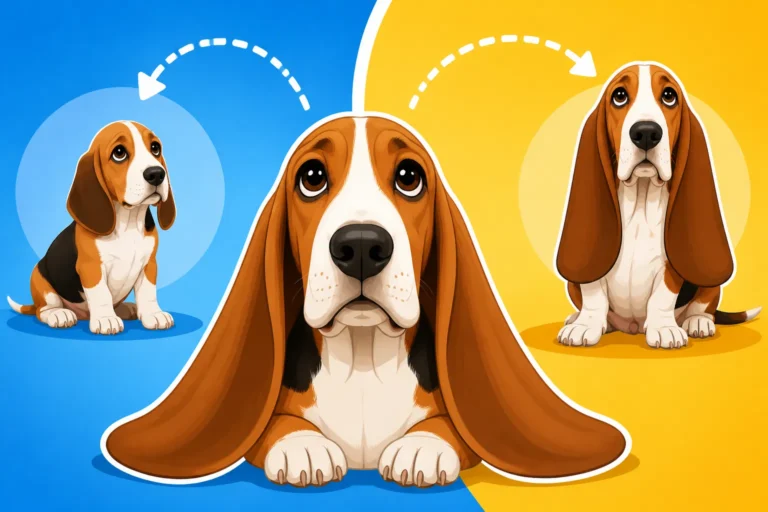
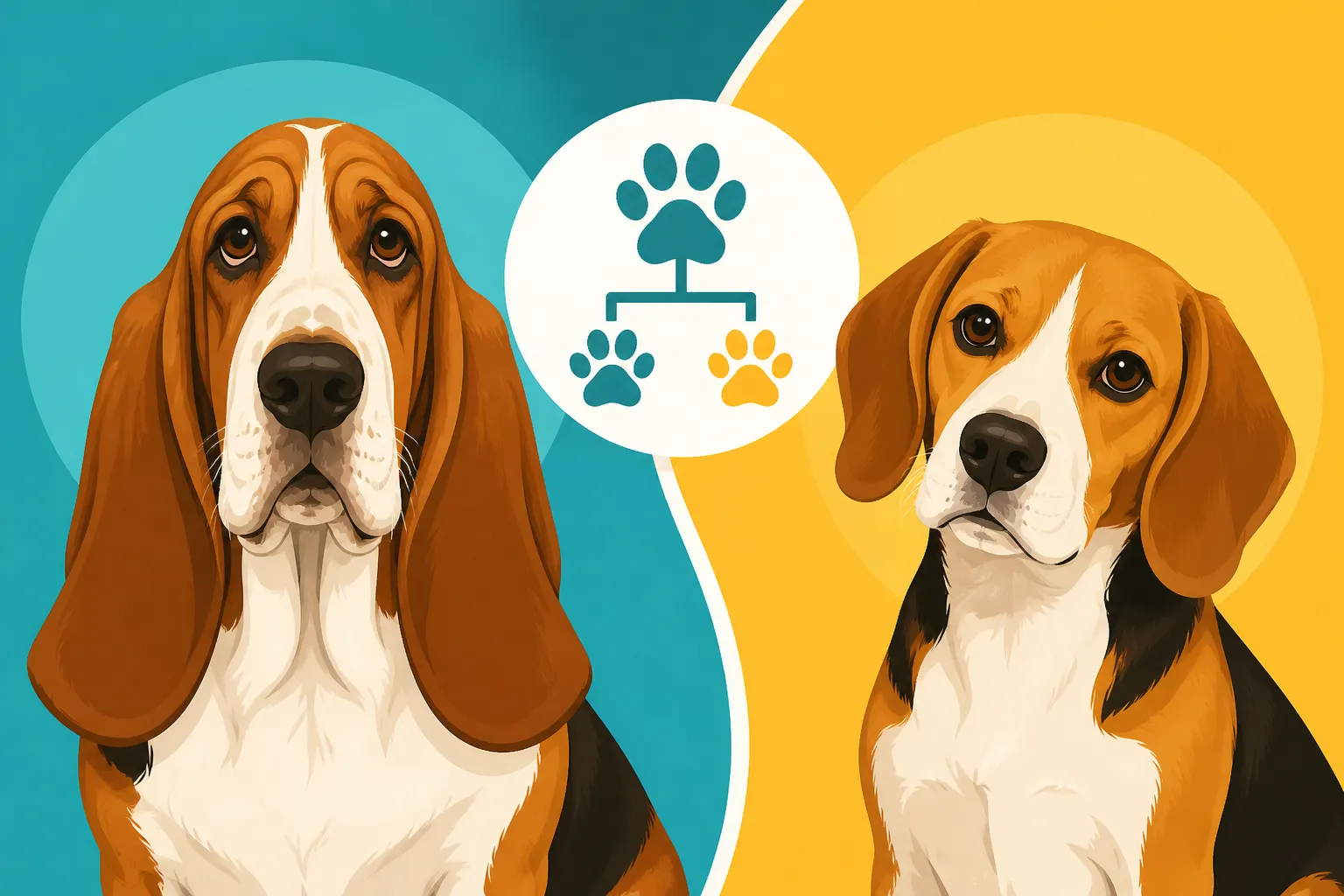
If you have heard that Basset Hounds and Beagles are related, the short answer is yes—but not in the simple sense that one breed came directly from the other. They are both scent hounds with shared ancestry and similar hunting instincts, yet each developed its own build, working style, and personality. Here’s how their connection works, and what it means for dog owners.
How Basset Hounds and Beagles Are Related
They belong to the same broad family of scent hounds
Basset Hounds and Beagles are both scent hounds: dogs developed to follow an animal’s trail by smell. Their connection is best understood as a shared place in the hound family, not as a direct parent-and-offspring relationship. They have common roots among European hunting hounds, but the precise details of early breed development are not documented clearly enough to draw a simple family tree.
Both breeds were shaped around practical hunting needs. A hound that could keep working with its nose down, follow a trail, and communicate with its voice was useful to hunters. Those shared jobs help explain why a Basset and a Beagle can seem alike in certain ways, even though they are distinct breeds.
Their noses can also make everyday life look familiar to owners of either breed. A Beagle may become absorbed in an interesting scent on a walk; a Basset may do the same, sometimes at an unhurried pace. Neither behavior means the dog is being deliberately difficult. Scent hounds have been selectively bred to focus on trails, so their attention can shift quickly when an appealing smell turns up. For more on the breed comparison, see The Basset Hound Against the Beagle.
Shared ancestry does not mean one breed came from the other
It’s tempting to imagine that the Basset Hound is simply a short-legged Beagle, or that Beagles descended from Bassets. That is too neat a description. The breeds have their own histories and distinctive characteristics. The Basset’s low, heavy build and loose skin are not just a Beagle’s features made smaller or lower to the ground.
The word basset comes from the French bas, meaning low. The term was used for low-set hounds, and the Basset Hound developed in France as a particular kind of scent hound. Beagles have their own history as small hunting hounds, especially associated with pursuing hare and rabbit. Their histories overlap in the wider world of European hunting dogs, but overlap alone does not prove that one breed directly produced the other. You can explore the Basset’s background in Where the First Basset Hounds Came From.
Breed names and family groupings can be confusing because they describe different things. A kennel club may group dogs by their traditional work or breed type, while a historical relationship concerns how populations of dogs developed over generations. Two breeds can belong to the same broad hound group, share older ancestors, and have similar jobs without being the same breed or close modern relatives.
What the Two Breeds Have in Common
Both were developed to work by scent
The most meaningful similarity is their nose-led approach to the world. Bassets and Beagles can be highly motivated by smells, and both have been used for hunting small game. When a dog follows a scent, it may pull toward a verge, pause to investigate a patch of grass, or seem not to hear a familiar cue. A secure lead and a safe, enclosed area are sensible for either breed, especially where roads, wildlife, or open gates are nearby.
Their hunting roles were not identical in every place or period, and working styles can vary between individual dogs. Still, both breeds have a strong association with tracking game. If you’re wondering about the Basset’s traditional quarry, Whether a Basset Hound Was Bred for Rabbit or Deer offers more detail.
Owners sometimes assume that one breed must automatically have a better nose than the other. In practice, scenting ability is not a simple contest. Training, experience, motivation, the conditions of a trail, and the individual dog all matter. A Beagle may be quicker and more energetic in a particular exercise, while a Basset may work steadily in a different setting. The comparison is explored further in Whether a Basset Hound Tracks Better Than a Beagle.
Both can be vocal and persistent
Scent hounds often use their voices while working, and some bring that vocal habit home. A bay or howl can be surprising if you expected a quiet companion, particularly when a dog catches a scent outside or is left alone and unsettled. The volume and frequency vary between dogs, but neither breed should be chosen on the assumption that a hound will never make itself heard.
Persistence is another trait that can be mistaken for stubbornness. A dog that keeps returning to an interesting scent is responding to a powerful form of motivation. Training can help build useful habits, but it does not erase the instincts that selective breeding encouraged. Short, rewarding practice and a reliable physical setup are more realistic than expecting perfect recall around every distraction.
That difference matters in daily routines. A Beagle might cover ground briskly, while a Basset may move at a slower pace, but either dog can be determined once engaged with a trail. Read Whether a Basset Hound Is Slower Than a Beagle for a closer look at pace and movement.
How Basset Hounds Differ From Beagles
Their bodies reflect different breed histories
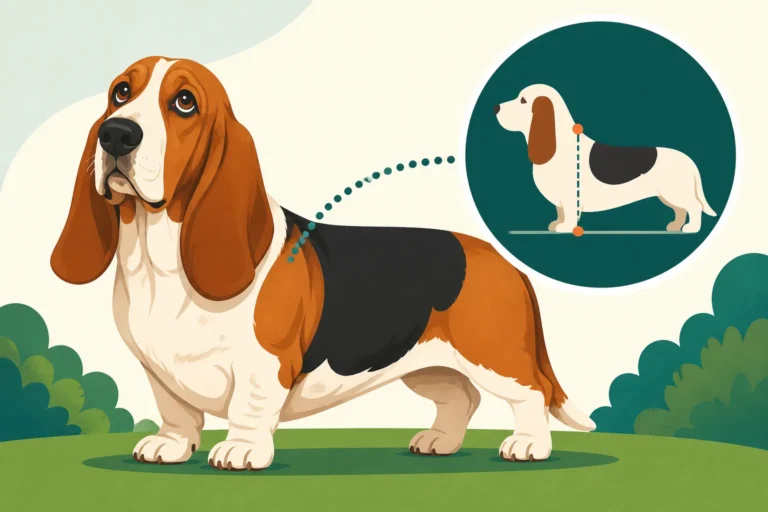
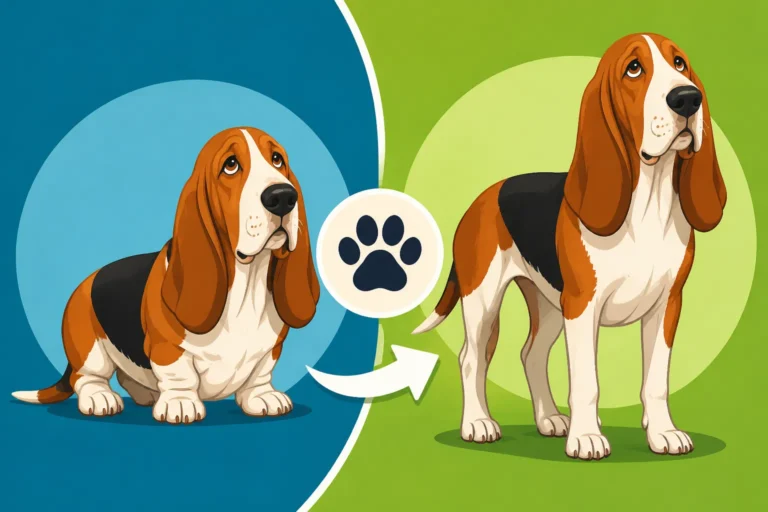
The Basset Hound is low-set, long-bodied, and substantially built, with short legs and a heavy frame. A Beagle is also a compact scent hound, but generally has a more balanced, athletic outline and longer legs in proportion to its body. Those differences influence how the dogs move and what owners should consider when choosing exercise, equipment, and home arrangements.
The Basset’s short legs are a defining feature, not a sign that it is a Beagle with an unusual coat or a smaller version of another breed. Its characteristic shape developed through selection over generations. For a deeper explanation of that body type, see Why a Basset Hound's Legs Are So Short. The breeds’ different proportions are one reason their shared hound ancestry should not be confused with breed identity.
The Basset’s long ears and loose skin also contribute to its recognizable appearance. These traits are often discussed in connection with scenting, though the central point for an owner is simple: they are part of the Basset’s breed type and bring practical care considerations. Beagles have long ears too, but the look and proportions differ. More on this feature is covered in Why a Basset Hound's Ears Help It Smell.
They are not interchangeable in pace or care
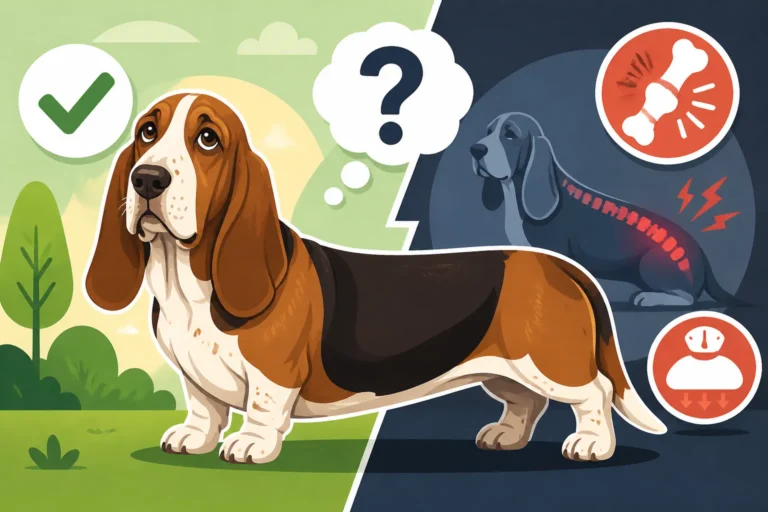
A family choosing between the breeds should think beyond their shared love of scent. A Beagle’s more athletic build may suit a household looking for a brisker walking companion, while a Basset’s low, heavy structure calls for thoughtful handling and care. That does not make one breed universally easier. Individual energy levels, training, health, and temperament matter, and both breeds need routine exercise and mental stimulation.
Their care needs also differ in some practical ways. The Basset’s long ears need regular attention, and its back and joints benefit from sensible weight management and avoiding repeated high-impact jumping. Beagles need attention to their ears and weight too, but the details and risk factors are not identical. A new owner should learn the needs of the particular breed rather than assuming that advice for one hound automatically fits the other.
Shopping for routine supplies is a separate question from breed history. For example, if you are putting together a scent-enrichment activity, a retailer such as Chewy may offer toys and feeders to compare; choose based on the dog’s size, chewing habits, and safety rather than breed label alone. For a broader family comparison, see Basset Hound or Beagle for a Family.
What the Relationship Means for Owners
Similar instincts call for similar safety habits
Whether you bring home a Basset Hound or a Beagle, plan for a dog that may prioritize a trail over a verbal cue. Practice recall in low-distraction settings, reward the dog generously for checking in, and use a leash or long line in places where running off would be dangerous. A fenced area can provide room to explore while reducing the risk of a scent-led dash.
Management is not a failure of training. It is a way to keep the dog safe while working with instincts that have been reinforced over generations. A dog may respond beautifully in the living room and still struggle to disengage from a rabbit scent outdoors. That gap is normal enough to plan around, not a reason to rely on an unreliable off-leash recall.
Scent games can provide a constructive outlet. Hide a few pieces of the dog’s regular food around a room or use a suitable puzzle toy, starting with an easy search and gradually making it more challenging. Chewy is one place owners may browse for enrichment supplies, but the simplest games often require little more than supervision and safe hiding spots. Keep small objects, unsafe foods, and anything the dog might swallow out of reach.
Choose the individual dog, not just the family resemblance
A shared hound background does not guarantee the same personality. Two Beagles can differ markedly in energy and sociability, just as two Basset Hounds can have different confidence levels, activity needs, and comfort with handling. If you are choosing a dog, ask about the individual’s behavior at home, response to other animals, tolerance for being alone, and any health or care needs.
Meet the dog when possible and pay attention to ordinary details: Does it settle after activity? How does it respond to a lead? Can you handle its ears and paws without distress? For a puppy, ask the breeder about the parents’ temperaments and the puppies’ early social experiences. For an adopted dog, request whatever history and veterinary records are available and allow time for the dog to adjust.
Routine supplies should fit the dog in front of you. A comfortable harness, lead, grooming tools, and food puzzle are chosen by fit and function, not simply because a dog is a Beagle or a Basset. Chewy may be one option for comparing everyday pet supplies, while a veterinarian or qualified trainer can help with questions about health, equipment fit, and safe activity. The key point is that shared ancestry explains some broad similarities; it does not replace getting to know the individual dog.
Disclaimer
This article is for general informational purposes only and does not constitute professional advice. Laws, prices and regulations vary by location and change over time. Consult a qualified professional for guidance on your specific situation.