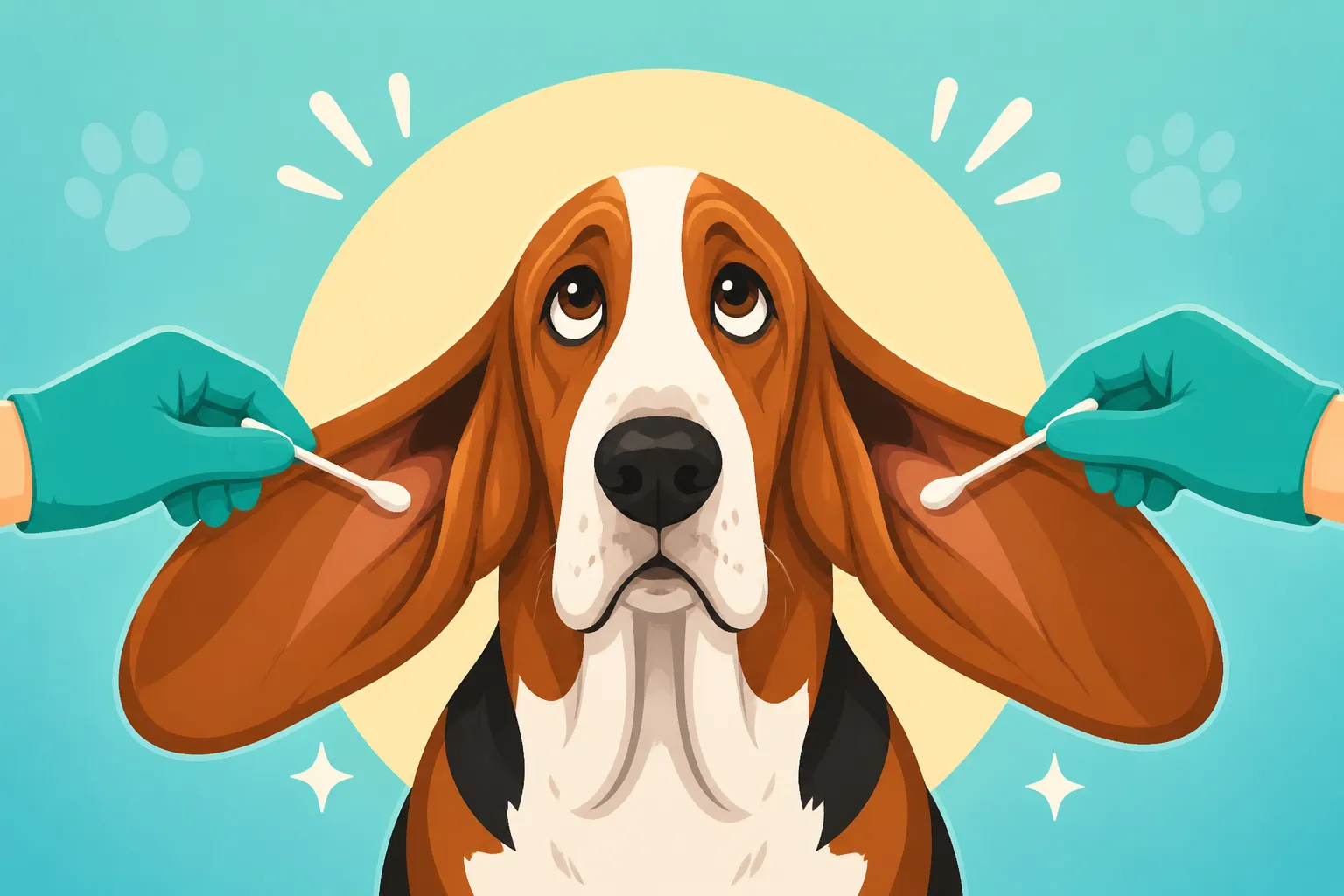
Whether a Basset Hound Needs Two Ear Cleaners at Once
It's a common frustration for Basset Hound parents: you dutifully clean those magnificent, floppy ears, you use the cleaner your vet recommended, and yet, the gunk, the smell, or the head shaking persists. You start to wonder if you're missing something, if one product is really enough for such a complex, infection-prone ear. This guide will dive deep into why sometimes, a multi-pronged approach with different ear cleaners might be exactly what your Basset Hound needs to finally find relief and prevent recurring ear woes.
Understanding the Basset Hound's Unique Ear Challenge
Let's be honest, those long, velvety ears are a Basset Hound's most iconic feature, but they're also a constant source of worry and, often, discomfort for our furry friends. It's not just a superficial issue; their ear anatomy is practically designed to trap trouble.
The Anatomy of a Basset's Ear
Imagine trying to keep a long, dark, moist tunnel clean and airy. That's essentially what your Basset Hound's ear canal is like. Unlike dogs with prick ears that allow for good air circulation, the Basset's heavy, pendulous ear flaps cover the ear canal completely. This creates a warm, humid environment that's a perfect breeding ground for all sorts of microscopic invaders.
The ear canal itself isn't a straight shot. It's L-shaped, with a vertical and horizontal section, making it incredibly difficult for debris, moisture, and even ear cleaner to escape naturally. Gravity works against us here, pulling everything deeper into that dark, winding passage. Furthermore, many Basset Hounds have quite a bit of hair growing within that canal, adding another layer where wax, dead skin, and moisture can get trapped. All these factors combined make ear infections a top-of-mind concern for any Basset owner. It's no wonder many owners feel like they're in a constant battle against ear gunk, and the frustration is absolutely valid. This inherent predisposition is why topics like Whether Every Basset Hound Gets Ear Infections are so common.
The Common Culprits
So, what exactly sets up shop in these cozy, moist ear canals? Most commonly, we're dealing with yeast or bacteria, often both.
- Yeast (Malassezia): This fungal organism is a normal resident of dog skin and ears, but in the right conditions (warm, moist, lack of airflow), it can overgrow. A yeast infection often presents with a distinctive sweet or sometimes sour, musty smell, dark brown discharge that looks like coffee grounds, and intense itchiness. Your Basset might be scratching relentlessly or shaking its head so hard you worry it'll fly off. You might also notice redness and thickening of the ear flap itself.
- Bacteria: Bacterial infections can range from mild to severe. They often produce a yellow, greenish, or pus-like discharge, and the odor can be quite foul. Depending on the type of bacteria, the ear might be incredibly painful to the touch. Sometimes, even though you clean regularly, if the infection is persistent, you might wonder Whether a Basset Hound's Ear Infection Ever Clears. Identifying whether it's yeast or bacteria (or both) is crucial because different types of cleaners and medications are needed to effectively combat them. Sometimes, your vet might even recommend taking a swab to look under a microscope, a process often referred to as an "ear culture," to pinpoint the exact culprit.
When One Cleaner Isn't Enough: The Rationale Behind Multiple Products
It seems counterintuitive, right? Surely one good ear cleaner should do the trick. But for a Basset Hound, whose ears are almost purpose-built for trouble, a single product often falls short. The goal of ear care isn't just to clean but to treat existing problems and prevent future ones, which are distinct, albeit related, objectives.
Addressing Different Pathogens
Think of it like this: you wouldn't use a general antiseptic wipe to treat a specific bacterial infection on your own skin without knowing what you're fighting. The same logic applies to your Basset Hound's ears. Different active ingredients target different types of organisms.
- Anti-Yeast Ingredients: Cleaners designed to combat yeast often contain ingredients like ketoconazole, miconazole, or boric acid, which alter the pH of the ear canal to create an inhospitable environment for yeast. If your Basset has that tell-tale sweet, yeasty smell and dark gunk, a cleaner specifically formulated for yeast is your best bet.
- Anti-Bacterial Ingredients: For bacterial infections, ingredients such as chlorhexidine gluconate, povidone-iodine, or sometimes even topical antibiotics (prescribed by your vet) are necessary. These work to kill off the specific bacteria that are causing the problem. Using a cleaner with a strong antibacterial agent when you're dealing with a nasty bacterial infection can make a huge difference in clearing it up and preventing it from worsening.
- Combined Attack: Often, Basset Hounds suffer from mixed infections – a lovely cocktail of both yeast and bacteria thriving together. In these scenarios, a single cleaner that only targets one type of pathogen won't be fully effective. This is where a vet might prescribe a medicated cleaner that contains both antifungal and antibacterial components, or suggest using two different types of non-medicated cleaners in rotation or conjunction. Your vet might even identify Whether Yeast or Bacteria Is in a Basset Hound's Ear through a quick in-office test.
Beyond Antiseptic: The Role of Drying and Maintenance Cleaners
Cleaning isn't just about killing germs; it's about maintaining a healthy environment. And for Basset Hounds, that often means addressing moisture. Their ears are notorious for staying damp, a prime reason why infections keep coming back.
- Drying Agents: After a bath, a swim, or even just in humid weather, your Basset's deep ear canals can hold onto moisture. This dampness encourages yeast and bacteria to flourish. Cleaners with drying agents, such as salicylic acid, lactic acid, or even simple alcohol (in appropriate, diluted forms recommended by a vet), help to evaporate excess moisture and dry out the ear canal. These are particularly useful as a preventive measure, especially if your Basset loves to splash in puddles or has a habit of getting its ears wet during Whether a Basset Hound's Ears Should Be Dried After Swimming.
- Maintenance Cleaners: Once an active infection is cleared, the job isn't done. Ongoing maintenance is key to preventing recurrence. Gentle, pH-balanced maintenance cleaners – often containing soothing agents like aloe vera or witch hazel – can be used regularly to remove wax, debris, and to keep the ear canal clean without being overly harsh. These aren't meant to treat active infections but to prevent them by keeping the ear in good condition. Think of it as daily hygiene for those floppy ears. Without consistent maintenance, many Basset Hounds will indeed need Whether a Basset Hound Needs Ear Drops for Life to manage chronic issues. A well-stocked pet supply store like Chewy offers a wide array of ear cleaners for different needs, making it easier to find various types recommended by your vet.
Navigating the World of Ear Cleaners: Types and Their Uses
Walking down the pet aisle or browsing online, you'll see a dizzying array of ear cleaners. Knowing what each type is designed for can help you, in consultation with your vet, choose the right combination for your Basset.
Antiseptic/Medicated Cleaners
These are your heavy-hitters, often brought in when there's an active infection or a strong suspicion of one. They contain specific ingredients to kill or inhibit microbial growth.
- Chlorhexidine Gluconate: This is a very common and effective antiseptic that works against both bacteria and yeast. It's often found in medicated ear flushes and shampoos. It works by disrupting the cell walls of microorganisms. However, it can sometimes be irritating if used too frequently or in too high a concentration, especially in already inflamed ears. Your vet will advise on the appropriate strength and frequency.
- Ketoconazole/Miconazole: These are powerful antifungal agents specifically targeting yeast. If your Basset's ear issue is primarily yeasty, a cleaner with one of these ingredients will be prescribed. They're excellent at getting rid of that sticky, dark, yeasty buildup.
- Povidone-Iodine: Another broad-spectrum antiseptic, less common in over-the-counter ear cleaners but sometimes used in veterinary-grade solutions. It's effective against a wide range of bacteria, viruses, and fungi.
- Gentian Violet/Malic Acid/Boric Acid Combinations: Many medicated solutions combine these ingredients for a multi-pronged attack. Boric acid, for example, is mildly antiseptic and helps to acidify the ear canal, making it less hospitable for pathogens. Malic acid also aids in this acidification and can help break down wax. These combinations can be very effective for persistent, mixed infections.
Drying/Acidifying Cleaners
These cleaners are your preventative heroes, especially if your Basset Hound is prone to recurring moisture-related issues. They aim to create an environment where pathogens can't thrive.
- Salicylic Acid: Often found in acne treatments for humans, salicylic acid helps to exfoliate dead skin cells and can be mildly drying and keratolytic (breaks down keratin). In ear cleaners, it helps to remove debris and dry out the canal.
- Boric Acid: Beyond its mild antiseptic properties, boric acid is a fantastic acidifying agent. By lowering the pH of the ear canal, it creates an acidic environment that inhibits the growth of bacteria and yeast. This is often a go-to for maintenance once an infection is cleared, particularly for Bassets that seem to always have a touch of dampness in their ears.
- Isopropyl Alcohol (in dilute forms): While alcohol can be drying, it should be used with caution and only if specifically recommended by a vet, as it can be irritating to inflamed ears. It's more commonly found in post-swim ear solutions for immediate drying.
- Aloe Vera/Witch Hazel (with drying agents): Some cleaners combine soothing agents with mild drying properties. These can be good for ears that are almost healthy but need a little extra help staying dry and calm. When you're constantly fighting off issues, preventing The Ear Infections That Never Really Leave a Basset Hound becomes paramount.
Gentle Maintenance Cleaners
These are the unsung heroes of daily or weekly ear care, designed for routine cleaning and preventing buildup in healthy ears. They often focus on gentle wax removal and general hygiene.
- pH-Balanced Solutions: These cleaners aim to maintain the natural, slightly acidic pH balance of a healthy ear, which discourages microbial growth. They usually contain mild detergents or emulsifiers to break down wax.
- Natural Extracts (Aloe Vera, Chamomile): Many maintenance cleaners include soothing ingredients to reduce irritation and keep the delicate skin of the ear canal healthy. They are designed for regular use, especially as part of a routine schedule like How Often a Basset Hound's Ears Must Be Cleaned.
- Ceruminolytics: These are ingredients specifically designed to dissolve ear wax. Over-the-counter options might contain docusate sodium or carbamide peroxide. These are incredibly helpful for Bassets who produce a lot of waxy buildup, making it easier to flush out debris before it becomes a problem. These often don't have strong antiseptic properties but prepare the ear for other treatments or simply keep it clear.
- Squalene: An oil that helps to break down and remove excess wax, often found in formulations designed for very waxy ears.
Different types of ear cleaners often work synergistically. You might use a strong ceruminolytic to break up stubborn wax, followed by an antiseptic flush to kill active pathogens, and then switch to a drying agent for maintenance. This is why having more than one type on hand, or a clear strategy, is so important.
Practical Strategies for Using Multiple Cleaners
Okay, so the idea of using multiple cleaners makes sense, but how do you actually implement it without turning ear cleaning into a confusing, chaotic ordeal for both you and your Basset? The key is professional guidance and a consistent routine.
The Vet's Guidance is Key
Let me emphasize this: you absolutely must consult your veterinarian before starting any multi-cleaner regimen. They are the experts who can properly diagnose the type of infection, if any, and recommend the most effective and safest products. What works for one Basset's yeasty ears might be completely wrong for another's bacterial infection or irritated canals.
Your vet might perform an otoscopic exam to look deep into the ear, checking for ruptured eardrums, foreign bodies, or severe inflammation. They might also take a swab for cytology or culture, which tells them exactly what kind of bacteria or yeast they're up against. This diagnostic step is invaluable. Trying to guess and treat with multiple cleaners on your own could lead to irritation, making the problem worse, or even delaying proper treatment for a serious issue. They'll also be able to tell you What Basset Hounds Are Most Often Treated For, and ear issues are almost always near the top of the list.
Rotational Schedules vs. Concurrent Use
Once your vet has given you the green light and possibly prescribed specific products, you'll need a plan for how to use them.
- Rotational Schedules: This is a common approach for Bassets prone to recurring infections. For example, your vet might suggest using a strong antiseptic/antifungal cleaner for a few days or weeks to clear an active infection, and then switching to a drying or maintenance cleaner for regular preventative use. Or, you might alternate between a drying cleaner and a gentle, moisturizing maintenance cleaner to prevent both excessive dryness and excessive moisture. This can be particularly useful if you're dealing with chronic issues like ear canals that never dry.
- Example Scenario: During an active yeast flare-up, your vet might prescribe a medicated cleaner like MalAcetic or a similar chlorhexidine/ketoconazole solution for two weeks. Once the infection is under control and the symptoms subside, they might recommend switching to an acidic drying agent like Epi-Otic Advanced or a similar product a few times a week as a preventative measure. This allows you to aggressively treat when needed and then maintain ear health.
- Concurrent Use (with caution): In some specific cases, a vet might recommend using two different cleaners almost simultaneously, but this is less common and usually involves specific timing. For instance, you might use a wax-dissolving solution (ceruminolytic) first to break up heavy debris, wait 10-15 minutes, and then follow with a medicated flush to get the active ingredients deeper into a cleaner canal. This approach is highly specific and must be done under strict veterinary guidance to avoid irritation or drug interactions.
- Example Scenario: If your Basset has extremely waxy ears alongside an infection, your vet might suggest using a product like a ceruminolytic solution to soften and loosen the wax initially. After letting it sit for the recommended time (e.g., 15 minutes), you would then use a cotton ball to gently wipe out loosened debris, and then apply a prescribed medicated ear cleaner to treat the underlying infection. The idea is that the medicated cleaner can penetrate more effectively once the wax barrier is reduced. Always check if the products are compatible and won't neutralize each other.
Here's a quick overview of cleaner types and their general applications:
| Cleaner Type | Primary Function | Key Ingredients (Examples) | When to Use |
|---|---|---|---|
| Antiseptic/Medicated | Kills bacteria, yeast, or both | Chlorhexidine, Ketoconazole, Boric Acid, Malic Acid | During active infection (diagnosed by vet) |
| Drying/Acidifying | Reduces moisture, lowers pH to inhibit growth | Salicylic Acid, Boric Acid, Lactic Acid | After swimming, baths, in humid weather; for chronic moisture/yeast prevention |
| Wax Dissolving (Ceruminolytic) | Breaks down and loosens excessive ear wax | Docusate Sodium, Carbamide Peroxide, Squalene | For very waxy ears; prior to other treatments if wax buildup is severe |
| Gentle Maintenance | Routine cleaning, removes debris, soothes | Aloe Vera, Witch Hazel, Mild Detergents | Regular upkeep in healthy ears; after infection clears for prevention |
Application Techniques for Success
Using any ear cleaner, let alone multiple ones, requires a gentle but thorough approach. Your Basset Hound's ears are sensitive, and making the experience as positive as possible will pay dividends in cooperation. You can find many products from a range of brands on sites like Chewy that are effective and gentle.
- Warm the Cleaner (Optional but Recommended): Cold liquid in the ear can be startling and uncomfortable. Gently warm the bottle in your hands or a bowl of warm water for a few minutes before use.
- Gather Your Supplies: Have cotton balls or gauze pads, treats (very important!), and a towel ready. This also includes any prescribed ear drops or medications your Basset Hound might be on, like those mentioned in What Glaucoma Drops Cost a Basset Hound Owner Monthly, though for eyes rather than ears.
- Position Your Basset: A relaxed Basset makes for easier ear cleaning. Have them sit or lie down. You might need a second person to help gently steady them and offer praise or treats. Make sure you've also introduced your Basset to the idea of Teaching a Basset Hound to Have Its Ears Handled from an early age.
- Administer the Cleaner: Hold the ear flap up and squirt the recommended amount of cleaner directly into the ear canal until it's full, but not overflowing aggressively. Don't worry about hitting the eardrum; the L-shape of the canal prevents direct contact.
- Massage the Base of the Ear: This is crucial! Gently massage the base of the ear for 20-30 seconds. You should hear a squishy sound as the cleaner moves around and breaks up debris. This action helps the cleaner reach all parts of the canal.
- Allow Head Shaking: Step back and let your Basset shake its head vigorously. This helps dislodge and bring up debris and excess liquid. Be prepared for some splatter – that's why you have the towel!
- Wipe the Visible Areas: Using a cotton ball or gauze, gently wipe out any visible discharge, wax, or debris from the outer ear and the entrance to the ear canal. Never use cotton swabs inside the ear canal, as this can push debris deeper or even damage the eardrum.
- Repeat if Necessary: If the ear is very dirty, you might need to repeat the flushing and wiping process until the cotton comes out relatively clean.
- Reward Heavily: Always follow up with lots of praise and high-value treats. You want your Basset to associate ear cleaning with positive experiences. Good quality treats from brands like Ollie or even just pieces of their regular kibble from Chewy can work wonders.
- Timing for Multiple Cleaners: If using two cleaners, apply the first, allow it to work (as per vet instructions), then wipe and proceed with the second. For example, a ceruminolytic first, then a medicated cleaner. Or, if on a rotational schedule, use one type for certain days of the week, and another type on other days. Your vet will provide specific instructions for your dog.
Remember, patience and consistency are your best tools when it comes to Basset Hound ear care. It's a commitment, but one that will keep your beloved hound comfortable and happy. Protecting their health, including those delicate ears, is why many owners consider pet insurance from providers like Healthy Paws.
When a Simple Clean Won't Cut It: Addressing Underlying Issues
Sometimes, no matter how many cleaners you try, or how diligently you follow your vet's instructions, those ear infections just keep coming back. It’s incredibly frustrating and disheartening to feel like you’re doing everything right, but your Basset Hound is still suffering. When this happens, it's often a sign that there's a deeper, underlying issue at play that needs to be addressed, rather than just endlessly flushing the ears.
Allergies: The Hidden Culprit
One of the most common reasons for chronic, recurring ear infections in Basset Hounds is allergies. Just like people, dogs can be allergic to things in their environment (pollen, dust mites, mold) or ingredients in their food. When a Basset Hound has allergies, one of the primary ways it manifests is through inflammation in the skin, and guess what? The lining of the ear canal is skin!
- Environmental Allergies (Atopy): If your Basset's ears flare up seasonally, or if they have other allergy symptoms like itchy skin, paw licking, or recurrent skin infections, environmental allergies might be the cause. The inflammation caused by allergies makes the ear canal warm, moist, and itchy, creating the perfect storm for secondary yeast and bacterial infections. Even Whether a Basset Hound Licks Its Paws can be a clue.
- Food Allergies: Less common than environmental allergies, but still a significant factor. Certain proteins in their diet (chicken, beef, dairy are common culprits) can trigger an allergic response. If your Basset has chronic ear issues year-round, regardless of season, and possibly gastrointestinal upset, food allergies should be investigated.
- Diagnosis and Management: Diagnosing allergies can be a lengthy process involving elimination diets, allergy testing (blood tests or intradermal skin tests), and careful observation. Management often includes medications to control inflammation (antihistamines, steroids, Apoquel, Cytopoint), dietary changes, and sometimes immunotherapy (allergy shots). Simply treating the ear infections topically without addressing the underlying allergy is like bailing water from a leaky boat without patching the hole – the problem will just keep recurring.
Thyroid Issues: A Systemic Link
Hypothyroidism, an underactive thyroid gland, is surprisingly common in Basset Hounds and can contribute to chronic skin and ear problems. The thyroid gland produces hormones that regulate metabolism, and when these are out of whack, it can affect skin health, coat quality, and the immune system.
- Symptoms: Beyond recurrent ear infections, a hypothyroid Basset might show signs like weight gain (even with a normal diet, a topic often discussed in Whether a Neutered Basset Hound Gains Weight), lethargy, a dull or sparse coat, and skin thickening or dryness.
- Diagnosis and Treatment: Hypothyroidism is diagnosed with a simple blood test. If confirmed, it's easily managed with daily thyroid hormone supplementation. Once the thyroid levels are balanced, you'll often see a dramatic improvement in skin and ear health, reducing the frequency and severity of infections. It's truly amazing how addressing a systemic issue can clear up seemingly localized problems.
Structural Issues and Polyps
While less common than allergies, sometimes a Basset Hound's ear issues are compounded by structural abnormalities or growths within the ear canal.
- Stenosis: Chronic inflammation can lead to the thickening and narrowing of the ear canal, a condition called stenosis. This makes cleaning incredibly difficult, further traps debris, and perpetuates the cycle of infection. In severe cases, where the canal has almost closed, surgery like a Total Ear Canal Ablation (TECA) might be considered, as explored in What a Total Ear Canal Ablation Costs on a Basset Hound.
- Polyps or Tumors: Occasionally, benign polyps or even cancerous tumors can grow within the ear canal. These growths can block airflow, trap debris, and cause chronic irritation and secondary infections. They can also be painful.
- Diagnosis and Treatment: Your vet will often detect these during a thorough otoscopic exam. If a growth is suspected, sedation might be needed for a closer look, and a biopsy might be required for diagnosis. Treatment depends on the nature of the growth but can range from surgical removal to medication.
When your Basset Hound's ears just won't get better, despite your best efforts with cleaning, it's a huge sign to dig deeper with your veterinarian. Exploring allergies, thyroid function, and structural issues can lead to the root cause, providing lasting relief for your hound and saving you from endless frustration and vet visits for superficial treatments. Early and thorough investigation is key to preventing long-term suffering and potential complications like hearing loss or severe pain.
Disclaimer
This article is for general informational purposes only and does not constitute professional advice. Laws, prices and regulations vary by location and change over time. Consult a qualified professional for guidance on your specific situation.