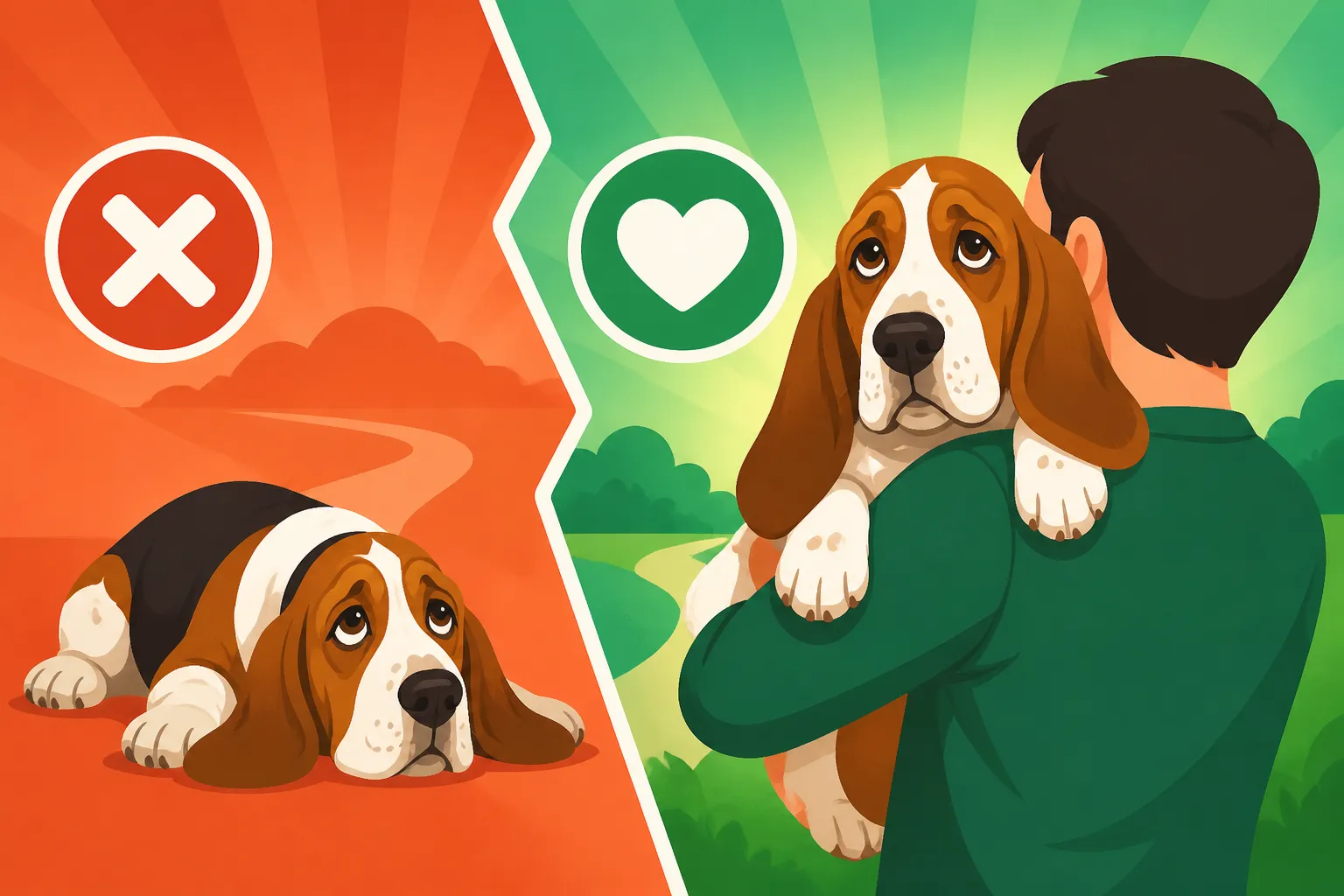
Whether a Basset Hound Should Be Carried Home
It's a scene many Basset Hound owners know all too well: you're out for a lovely walk, enjoying the fresh air, and suddenly, your beloved hound plants all four paws on the pavement, stares off into the distance, and absolutely refuses to move another inch. It's frustrating, often embarrassing, and leaves you wondering, "Do I just pick them up and carry them home?" This guide dives deep into why your Basset might decide to stage a mid-walk protest and whether giving in to the urge to carry them is actually doing more harm than good, offering practical solutions to get those short legs moving again.
Understanding the Basset Hound's Reluctance to Walk
Before we can even consider carrying them, it's crucial to understand why your Basset Hound might suddenly turn into a furry, immovable statue. It's rarely out of pure spite, though it can certainly feel that way when you're standing there holding a leash to a dog that seems to have suddenly grown roots.
The Basset Hound's Scent-Driven World
The Basset Hound lives by its nose. This isn't just a cute saying; it's a fundamental truth about their existence. With one of the most powerful noses in the canine kingdom, second only perhaps to the Bloodhound, every walk is an olfactory adventure. They don't just smell the ground beneath them; they're piecing together a complex tapestry of scents from hours, or even days, ago.
When your Basset suddenly halts mid-stride, it's often because they've hit a "scent jackpot." To them, that faint whiff of rabbit from yesterday's excursion or the faint trace of a neighbor's cat is far more compelling than your urgent tug on the leash or your pleas to "come on, boy!" They can become so engrossed in deciphering these scent messages that their ears effectively switch off, and your voice simply doesn't register. This isn't stubbornness in the human sense; it's a deeply ingrained instinct taking over, compelling them to follow that trail wherever it leads, even if it's just a few tantalizing inches under a bush. For them, ignoring that call to the wild is like trying to ignore a really good book when you're halfway through a gripping chapter. Their entire focus narrows to that scent, and the rest of the world fades away. This deep dive into scent exploration is why a Basset Hound will often pull hard on the leash, or become utterly unresponsive, when they are hot on a trail. We've talked before about Why a Basset Hound Stops Hearing You When It Smells Something.
Physical Limitations and Comfort
While their dedication to scent is powerful, sometimes your Basset's reluctance to move isn has a more physical root. Their unique conformation, with those short, stout legs, long heavy body, and low-slung chest, isn't built for endurance running or prolonged strenuous activity. Think about it: they're essentially a large dog on very short legs. This means their body has to work harder to cover the same ground as a leggy Labrador.
Consider the potential for discomfort. Basset Hounds are prone to certain orthopedic issues, like Elbow Dysplasia in a Basset Hound and Intervertebral Disc Disease in a Basset Hound due to their distinctive skeletal structure. Arthritis can set in surprisingly early in their joints. If your Basset is stopping frequently, especially if accompanied by a slight limp, stiffness, or hesitation, it's vital to rule out pain. What might look like "being lazy" could actually be your dog trying to tell you, "My back hurts," or "My joints are aching." They are masters of stoicism, but even a Basset has its limits. Regularly assessing their movement and discussing any changes with your vet is crucial, particularly as they age.
Training and Motivation Challenges
Ah, the Basset Hound's reputation for being "stubborn." It's a stereotype that many owners can confirm with a wry smile and a knowing nod. They're not unintelligent; far from it. Bassets are incredibly smart, but they have a very clear idea of what's in it for them. Their primary motivators aren't usually a desire to please their human, but rather food, comfort, and following their nose. This means conventional obedience training methods, which often rely on a dog's desire for approval, might not be as effective with a Basset.
When they decide a walk is over, or that a particular spot deserves prolonged investigation, they can be remarkably resistant to persuasion. Yelling, tugging, or coaxing often falls on deaf ears or simply reinforces their resolve to stay put. Understanding What Actually Motivates a Basset Hound is key here. If they're not getting a sufficiently high-value reward for moving, or if the scent they're on is more rewarding than anything you're offering, they will simply choose the more appealing option. This can make walks a frustrating battle of wills, especially when you're trying to get them to just keep going a little further.
The Ramifications of Physically Carrying Your Basset Hound
It's tempting, isn't it? When your Basset has decided to become one with the sidewalk, and you're miles from home, the easiest solution might seem to be scooping them up and carrying them. But this seemingly innocuous act can have several negative consequences that are worth considering.
Reinforcing Undesirable Behavior
Dogs are creatures of habit and learn through association. If every time your Basset stops dead in their tracks, you eventually pick them up and carry them, what have you taught them? You've inadvertently taught them that stopping the walk results in a magical, effortless ride home. It's a powerful reinforcement, especially if they're tired, sore, or simply not enjoying that particular stretch of pavement.
This can quickly become a cycle. The more you carry them, the more they learn that stopping works. You might find that the incidents of them refusing to walk increase in frequency and intensity. They might start doing it closer to home, or even demand to be carried after only a short distance. This isn't them being 'naughty'; it's them being smart and adapting to what they've learned about how to get what they want – or how to avoid what they don't want. Breaking this learned behavior pattern once it's established can be much harder than preventing it in the first place, turning your once pleasant strolls into a regular test of endurance for you.
Potential for Injury to Both Dog and Owner
Let's be brutally honest: Basset Hounds are surprisingly heavy for their stature. That dense bone and solid muscle pack a considerable punch. Lifting a Basset, especially an adult one, can put a significant strain on your back, shoulders, and arms. If you're not careful, or if your dog struggles, you could easily injure yourself.
More importantly, there's a serious risk of injury to your Basset Hound. Their long backs are delicate and prone to issues like intervertebral disc disease. Lifting them improperly, especially by grabbing them around the chest or under the armpits, can put immense pressure on their spine. A sudden twist or struggle while being held can exacerbate existing back problems or even cause a new injury. They also have a lot of loose skin, which can make them feel slippery when lifting. Imagine the consequences if you were to drop them, particularly on a hard surface. It's not a risk worth taking unless absolutely necessary. Learning How to Lift a Basset Hound Safely is paramount if carrying becomes unavoidable.
Undermining Training Efforts
If you're investing time and effort into teaching your Basset proper leash manners, a reliable "let's go" cue, or even just encouraging them to move forward without constant pulling, carrying them can completely derail those efforts. Every time you pick them up, you're essentially telling them that the rules of walking don't always apply.
Consistency is the bedrock of effective dog training, especially with a breed as discerning as the Basset Hound. If one moment you're trying to motivate them with treats and praise to walk, and the next you're physically transporting them, it creates confusion. They won't understand why sometimes they're expected to walk and sometimes they get a free ride. This inconsistency can slow down progress, make future training sessions more challenging, and ultimately, prolong the time it takes for your Basset to become a reliable walking companion. For many Basset owners, the phrase "whether a Basset Hound refuses to move" is a daily reality, and carrying them can unfortunately entrench this habit.
Strategies for Encouraging a Basset Hound to Keep Moving
So, if carrying them home isn't the ideal solution, what can you do when your Basset decides to go on strike? The good news is, there are plenty of positive and effective strategies to encourage them to keep those short legs moving.
High-Value Rewards and Positive Reinforcement
This is where the Basset Hound's love of food truly becomes your superpower. Forget bland kibble; when you need to break a "paws-down" protest, you need the big guns. Think tiny pieces of cooked chicken, cheese, hot dogs, or liverwurst. These are "high-value" treats because your Basset finds them irresistibly delicious and motivating.
When your Basset halts, get down to their level, show them the treat, and use an enthusiastic, upbeat tone to entice them forward. Take a step or two back and reward them immediately when they take even one step towards you. Gradually increase the distance, always rewarding generously for forward momentum. The key is to make moving more rewarding than standing still or sniffing. Consistency is vital here. Carry these treats on every walk. Brands like Amazon offer great little treat pouches that clip to your belt, making them easily accessible. Over time, your Basset will associate moving forward with delicious rewards, and their willingness to walk will increase.
Short, Varied Walks and Scent Breaks
Remember, Basset Hounds aren't built for marathons. Trying to force them on excessively long walks, especially when they're not conditioned for it, is a recipe for a mid-walk refusal. Instead, focus on quality over quantity. Keep walks relatively short, perhaps 15-30 minutes, especially when first building stamina or if they are prone to joint issues. We've often discussed How Far a Basset Hound Should Walk.
Varying your routes can also do wonders. A new sniff-scape can re-engage their incredible nose and make the walk feel like a fresh adventure. Instead of rushing them past every interesting smell, build in designated "sniffing breaks." Allow them a few minutes to truly investigate a particularly enticing patch of grass or a lamppost. This fulfills their instinctual need to track and explore with their nose, which can make them more amenable to moving on when you ask. Think of it as intellectual stimulation for their brilliant sniffer. A mentally satisfied Basset is often a more cooperative Basset.
Harnesses and Leash Control
The right equipment can make a world of difference. A standard neck collar can put pressure on your Basset's delicate throat and spine, especially if they're pulling or if you need to give a gentle correction. This discomfort can contribute to their reluctance to walk.
Instead, invest in a well-fitting, comfortable harness. Front-clip harnesses are particularly effective for Basset Hounds who pull, as they redirect the dog's momentum back towards you, discouraging pulling without causing discomfort or strain on their neck. Look for harnesses with good padding and adjustable straps to ensure a snug, non-chafing fit. You can find a wide variety of excellent options on Amazon. When using the leash, avoid harsh jerking. Instead, apply gentle, consistent pressure, wait for them to respond by taking a step, and then immediately release the pressure as a reward. This teaches them that yielding to leash pressure makes the discomfort go away. This gentle approach combined with positive reinforcement is far more effective than trying to muscle a Basset Hound, especially considering Whether a Basset Hound Pulls Hard for Its Size.
When Carrying Becomes Necessary: Practical Considerations
Despite your best efforts with training and motivation, there will inevitably be times when carrying your Basset Hound home becomes the only safe or sensible option. This isn't about giving up on training, but about prioritizing their safety and well-being, or your own.
Emergency Situations and Medical Needs
There's a vast difference between a Basset Hound refusing to budge because they've found an interesting scent or they're just feeling lazy, and a Basset Hound who can't move. Emergency situations or sudden medical issues are unequivocally times when you should pick up your dog.
Look for clear signs of distress: a sudden, pronounced limp, yelping when they move, obvious pain, sudden weakness, disorientation, vomiting, or extreme lethargy. If they suddenly collapse or seem unable to bear weight, do not hesitate. In these scenarios, their "stubbornness" is actually a cry for help. It could be an acute injury, a sudden flair-up of an underlying condition like The Back Trouble a Basset Hound Is Built Into, or something more serious. In such cases, carefully lifting them and getting them to the vet immediately is paramount. Always trust your gut instinct; if something feels truly wrong, it probably is.
Safe Lifting Techniques
Because of their unique build – long back, heavy chest, short legs – lifting a Basset Hound requires a specific technique to prevent injury to their spine. Never lift them by their front legs or by grabbing their scruff.
Here’s a general approach:
- Bend your knees: Not your back! Get low to the ground next to your Basset.
- One arm under the chest: Place one arm firmly under their chest, just behind their front legs.
- Other arm under the hindquarters: Place your other arm under their rump, supporting their back legs.
- Keep back straight, lift with legs: In one smooth motion, lift them close to your body, keeping their spine as straight and supported as possible. Distribute their weight evenly across your arms.
- Hold securely: Keep them tucked close to your body to prevent struggling or accidental drops.
Practice this technique at home with treats so they associate being lifted with positive experiences. This will make it less stressful for both of you if you ever need to do it in an emergency. Remember, we covered How to Lift a Basset Hound Safely in more detail previously.
Tools and Aids for Assisting a Reluctant Walker
Sometimes, carrying isn't feasible or safe, but you still need to transport your Basset. This is where specialized tools and aids can be incredibly useful.
- Portable Ramps: If your Basset struggles with stairs, jumping into the car, or even getting onto the sofa, a portable ramp can be a lifesaver. These can be folded up and stored in your car for unexpected needs. If your Basset is refusing to walk back to the car, and you have a ramp with you, it can make getting them back into the vehicle much easier on their joints and your back. Many robust and sturdy options are available on Amazon. What a Ramp for a Basset Hound Costs is a good investment to consider, especially as they age.
- Dog Strollers/Carts: For older Bassets with significant mobility issues, or during recovery from surgery, a dog stroller or cart can allow them to still enjoy the outdoors with you without having to bear their own weight. This might seem a bit over-the-top for some, but for a dog who craves being outside and sniffing, it can be a huge quality-of-life improvement.
- Support Harnesses/Slings: If your Basset has hind leg weakness or back pain but can still partially walk, a rear-support harness or sling can help you support their weight while they move their front legs. This takes some of the strain off their compromised areas and off your back.
These aids aren't about avoiding training but are practical solutions for Bassets with genuine physical limitations, ensuring they can still partake in activities safely and comfortably.
Preventing the "Stop and Drop" Habit
The best defense is a good offense, right? Preventing your Basset Hound from developing the habit of refusing to walk is far easier than trying to break it once it's entrenched. This involves a combination of consistent training, managing their environment, and staying on top of their health.
Proactive Training from Puppyhood
The foundation for good walking habits is laid in puppyhood. Start leash training early, making it a positive experience right from the start. Use a comfortable harness, positive reinforcement, and high-value treats to teach them that walking nicely on a leash is rewarding.
Teach essential cues like "come," "let's go," and "wait" with enthusiasm. Enroll in a puppy class, or consider an online training program like BAXTER & Bella, which offers comprehensive resources and support for new puppy owners. Their structured approach can help you establish good habits and communication from the get-go. Consistent practice in varied environments, gradually introducing distractions, will help your Basset learn to focus on you even when tempting scents are nearby. This early intervention is crucial for a breed that can develop strong opinions quickly. Remember, The First Year With a Basset Hound Puppy is formative for establishing good habits.
Managing Environmental Distractions
Since a Basset's nose is their guiding star, controlling their environment, especially during early training, can set them up for success. Start walks in quieter areas with fewer overwhelming scents. This allows them to focus on you and the task of walking, rather than being constantly pulled in different directions by their powerful nose.
As they become more proficient, gradually introduce them to busier or more scent-rich environments. Use a long line in a securely fenced area or a very open park (if permitted and safe) to allow them some freedom to explore scents while still being under your control and practicing recall. Whether a Long Line Is Enough for a Basset Hound depends on the specific dog and environment, but it's an excellent training tool. If you know a particular spot is a "scent magnet" that causes them to completely shut down, try to walk a different route, or be extra prepared with your highest-value treats to guide them through. Sometimes, simply avoiding known triggers is the most practical solution.
Understanding Underlying Health Concerns
We touched on this earlier, but it's worth reiterating: regular veterinary check-ups are non-negotiable for a Basset Hound. Their unique conformation makes them susceptible to certain health issues that can manifest as reluctance to move. Don't assume "stubbornness" is always the culprit.
Discuss any changes in their walking habits, energy levels, or any signs of stiffness or pain with your vet. They can screen for conditions like arthritis, disc disease, or other joint problems that might be causing discomfort. Maintaining a healthy weight is also paramount. An overweight Basset Hound puts extra strain on their already delicate joints and long back, making movement more difficult and painful. Keeping a Basset Hound at Its Correct Weight is one of the most important things you can do for their long-term health and mobility. If your vet confirms an underlying health issue, they can recommend pain management strategies, supplements, or physical therapy, which can make a world of difference in your Basset's willingness and ability to walk. Sometimes, understanding Whether a Basset Hound Is Lazy or Sore can change your entire approach to their exercise routine.
| Scenario | Recommended Action | Pros | Cons |
|---|---|---|---|
| Sudden Stop, Head Down, Sniffing | Use high-value treats, positive reinforcement, and a "let's go" cue. | Reinforces good walking habits, mentally stimulating for the dog. | Requires patience, treats must be highly motivating. |
| Planted Paws, Appears Tired/Uncomfortable | Assess for physical pain (limp, stiffness). Offer rest, then use gentle encouragement. Consider a shorter route. | Addresses potential discomfort, builds trust. | May still require coaxing, might not be enough if severe pain. |
| Sudden Collapse, Injury, or Acute Illness | Immediately and carefully lift the dog, support their back, and transport to the vet. | Prioritizes immediate safety and medical attention. | Risk of injury to owner or dog if not lifted properly. |
| Long Walk, Dog is Genuinely Exhausted | Offer a rest break. If still unwilling/unable, use a portable aid (stroller, ramp for car). | Prevents overexertion, provides a safe alternative to forced walking. | Requires foresight (carrying aids), can be bulky. |
| Frequent Stops, Appears to be a Learned Habit | Re-evaluate training, increase high-value rewards, shorten walks, vary routes. Avoid carrying if possible. | Breaks the learned behavior, encourages independent walking. | Requires consistent effort and can be frustrating in the short term. |
Disclaimer
This article is for general informational purposes only and does not constitute professional advice. Laws, prices and regulations vary by location and change over time. Consult a qualified professional for guidance on your specific situation.