Whether a Basset Hound Should Do Barn Hunt
Many Basset Hound owners find themselves in a bit of a pickle: you know your floppy-eared companion has an incredible nose, possibly one of the best in the dog world, but harnessing that power can feel like trying to herd cats. It's frustrating when they seem to "tune out" during walks, nose glued to the ground, ignoring your desperate calls. You want to engage that brilliant sniffer, give them a job they were born to do, but traditional dog sports might seem like they're built for more agile, high-energy breeds. This guide is all about exploring Barn Hunt, a fantastic sport that not only taps into your Basset's natural abilities but often turns their perceived "stubbornness" into a superpower, offering a rewarding outlet for their incredible scenting prowess.
Understanding Your Basset Hound's Instincts for Scent Work
Let's be real, owning a Basset Hound is a journey into the world of scent. Their entire being is pretty much a highly specialized scent-detecting machine. It’s not just a cute quirk; it’s a deeply ingrained instinct that has been honed over centuries.
The Basset's Unrivaled Nose
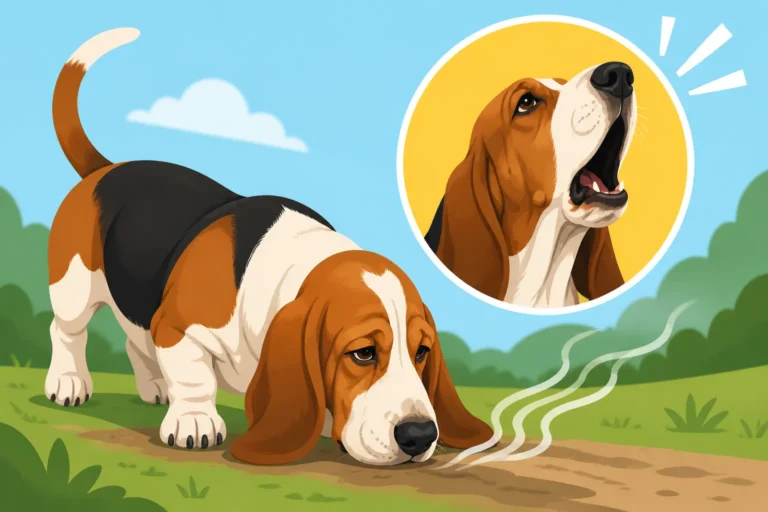
When we talk about a Basset Hound's nose, we're not just saying it's "good." We're talking about a olfactory superpower, often considered second only to the Bloodhound. Imagine seeing the world in smells – that's your Basset's daily reality. Their physical characteristics, from those impossibly long, velvety ears to the substantial dewlap beneath their chin, aren't just for show. Those long ears act like brooms, sweeping scent particles upwards towards their nostrils, creating a swirling eddy of odors right where they need it. It’s like they have built-in scent locators! The loose skin around their face and neck, known as the dewlap, also helps to trap and concentrate scent, holding it closer to their nose for longer, allowing for meticulous analysis. When a Basset trails, their nose is literally glued to the ground, processing every molecule of information. This isn't just a casual sniff; it's an intense, focused investigation. They were originally bred to track small game like rabbits and hares through dense undergrowth, and their low stature allowed them to follow a scent trail where larger hounds might struggle. All of these traits combine to make them incredibly efficient and thorough scent workers, a trait that makes them naturals for activities like Barn Hunt. If you've ever wondered about their incredible abilities, you might enjoy reading The Nose That Puts a Basset Hound Second to a Bloodhound or Whether a Basset Hound's Ears Sweep Scent Upward and Whether a Basset Hound's Dewlap Holds Scent.
"Stubbornness" vs. Single-Mindedness
Ah, the classic Basset "stubbornness." Every Basset owner has a story, don't they? You're on a walk, Fido catches a whiff of something utterly fascinating – perhaps a squirrel that scampered by hours ago, or a particularly pungent patch of grass – and suddenly, your perfectly trained companion transforms into a deaf, immovable object. It's easy to get frustrated and label them as stubborn or disobedient. However, it's more accurate to see this as extreme single-mindedness. When a Basset Hound is on a scent, their brain is literally overwhelmed with information. It's not that they're actively choosing to ignore you; it's that their highly specialized olfactory system has taken over, prioritizing that scent trail above all else. Their genetic wiring is screaming "FOLLOW THE SCENT!" and your voice, even if it's offering the most delicious treat, becomes background noise. Understanding this distinction is crucial, because it means we're not trying to break their instinct, but rather redirect and channel it into an acceptable, fun, and safe activity. This powerful focus, which can be a nuisance on a leash, is precisely what makes them phenomenal candidates for scent-based sports. Instead of fighting against that incredible drive, Barn Hunt gives them a safe and structured environment to fully immerse themselves in their natural calling. This perspective can really change your approach; it’s not that Whether a Basset Hound Chooses Not to Obey but rather Why a Basset Hound Stops Hearing You When It Smells Something.
What is Barn Hunt and Why it Suits a Basset Hound
Barn Hunt is an exciting, fast-growing dog sport that taps into a dog's natural hunting instincts. It's all about finding rats, safely enclosed in aerated tubes, hidden within a maze of straw bales. And guess what? It's like it was designed with Basset Hounds in mind!
The Basics of Barn Hunt
Imagine a barn, or an arena, filled with straw bales stacked to create a maze, tunnels, and elevated platforms. Somewhere within this straw-filled wonderland are PVC tubes, each containing a small rat. Don't worry, the rats are completely safe and unharmed, living comfortably in sturdy, well-ventilated tubes, and they are typically handled by experienced rat owners who ensure their well-being. The goal for your dog is to sniff out these "live" rats and signal their presence to you. This might involve scratching at the bale, pawing at the tube, or giving a clear "alert" signal that your handler (you!) learns to recognize. Beyond finding the rats, there are other elements too: dogs often need to climb onto a bale, and sometimes navigate a tunnel. There are different levels of competition, starting with novice (one rat, simpler setup) and progressing to more complex challenges with more rats and decoys (empty tubes or tubes with rat litter, but no live rat) to discern. It's a fantastic mental and physical workout, rewarding focus, discrimination, and teamwork between dog and handler.
How Barn Hunt Leverages Basset Strengths
Now, let's talk about why your Basset Hound, in particular, is poised to absolutely shine in Barn Hunt. First and foremost, it’s all about the nose. Their unparalleled olfactory ability means they can easily distinguish the scent of a live rat from decoys. While other breeds might rely on speed or a more generalized search, the Basset's methodical, nose-to-the-ground trailing style is perfectly suited to systematically clearing a maze for scent. They are built low to the ground, which can actually be an advantage in the tight confines and tunnels often found in Barn Hunt setups. They don't need to jump high; they need to get low. Their sturdy build, while not always conducive to lightning-fast turns, gives them stability as they navigate the straw. The "climb" element, which might seem daunting for a Basset, is usually an achievable single bale climb, often supported by lower bales or ramps, and many clubs are accustomed to helping bassets with this. Finally, their legendary appetite for food rewards makes them incredibly motivated. A high-value treat, like a piece of cheese or cooked chicken, can be an extremely powerful motivator to focus and perform. This isn't just a game; for a Basset, it's a profound, instinctual experience where all their natural talents are appreciated and rewarded. This is truly an activity where Whether a Basset Hound Trails With Its Nose on the Ground becomes an asset!
Overcoming Typical Basset Challenges in Sport
It's true that Basset Hounds aren't typically seen on the agility course, vaulting over jumps or weaving through poles at top speed. Their unique conformation, with those short legs and long back, isn't designed for explosive sprints or tight turns. This is where Barn Hunt truly shines as a suitable sport. It doesn't demand speed, grace, or high-impact maneuvers. Instead, it values persistence, thoroughness, and an exceptional nose. While there's a "climb" element, it's usually just one bale high, and it's designed to be accessible. Many Bassets, with a little encouragement and practice, can manage this without undue stress on their joints. The key is methodical searching, which is what Bassets do best. They take their time, they are meticulous, and they won't give up until they've fully investigated every scent. The tunnels are also generally low to the ground, perfectly accommodating their low-slung bodies. The focus isn't on how fast they find the rat, but if they find it and how clearly they communicate that find. This means your Basset can compete and excel based on its natural talents, rather than being forced into a sport that goes against its physical design.
Getting Started with Barn Hunt and Your Basset
So, you’re intrigued? Wonderful! Getting involved in Barn Hunt with your Basset is an incredibly rewarding journey. It’s an activity that truly celebrates their unique nature.
Finding a Barn Hunt Club and Initial Training
The first step is to find a local Barn Hunt association or club that offers classes. A quick online search for "Barn Hunt near me" or "dog scent work classes [your city]" should yield some options. Look for beginner or "Introduction to Barn Hunt" classes. These are specifically designed to introduce both you and your dog to the sport in a low-pressure, fun environment. The instructors are typically fantastic and experienced, understanding that not every dog is a Border Collie. They'll teach you how to read your Basset's subtle signals when they find a rat, how to navigate the course, and how to encourage them effectively. Many clubs also offer "fun runs" or practice sessions where you can get your Basset comfortable with the environment before committing to a full class. Remember, positive reinforcement is key – lots of praise, happy encouragement, and those irresistible high-value treats we talked about. Even before you hit the barn, having a good foundation in basic obedience and engagement with you will be beneficial. Resources like BAXTER & Bella offer excellent online programs for building that fundamental bond and teaching cues that can translate well to any dog sport, including scent work. What Training Classes Cost a Basset Hound Owner is a consideration, but the enrichment gained is often priceless.
Essential Gear and Safety Considerations
When getting started with Barn Hunt, you don't need a lot of specialized gear, but what you do use should prioritize your Basset's comfort and safety.
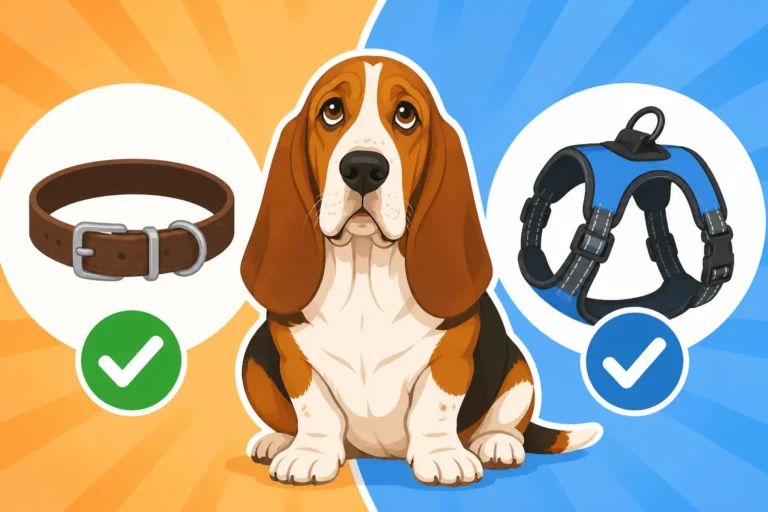
First, a good harness is absolutely crucial. A Basset Hound, with its deep chest and relatively narrow head, can be a master escape artist from a traditional collar, especially when a tantalizing scent pulls them. A well-fitting, comfortable harness ensures they stay secure and that pressure is distributed evenly across their chest, not their neck. You want something that allows full range of motion without chafing those sensitive elbows or shoulders. Check out options on Amazon for durable and comfortable harnesses. Paired with a sturdy leash, this setup gives you good control without restricting your Basset's ability to sniff.
Second, high-value treats are your secret weapon. Think beyond basic kibble. Small pieces of cheese, cooked chicken, hot dogs, or liverwurst are often irresistible and will keep your Basset motivated throughout the search.
Finally, remember the paramount importance of rat safety. Responsible Barn Hunt organizations use specially designed, aerated tubes that protect the rats from any harm. These tubes are sturdy, escape-proof, and ensure the rats are comfortable and safe at all times. Always make sure you're participating with a reputable club that prioritizes animal welfare. Your dog's natural drive is to find the rat, not harm it. For more on appropriate walking gear, you might find Which Harness Suits a Basset Hound and Whether a Basset Hound Pulls Hard for Its Size helpful reads.
Progression and Enjoyment
One of the most beautiful aspects of Barn Hunt for Basset Hounds isn't necessarily about winning ribbons (though that's a fun bonus!). It's about witnessing your dog truly come alive, fully engaged in an activity that speaks to their very core. As you progress through the levels – Novice, Open, Senior, Master – the challenges increase, but so does your Basset's confidence and skill. You'll start to see them develop a clear "alert" signal, whether it's a frantic pawing at the bale, a quiet head turn, or an intense stare. You’ll also learn to trust your Basset's nose, even when you can't see or smell anything. This shared experience builds an incredible bond and deepens your understanding of your dog. Many Basset owners find that their dogs, once perceived as "lazy" or "uninterested" in other activities, transform into eager, focused athletes in the barn. It's a fantastic mental workout that can truly tire out a Basset Hound in a way that a casual walk sometimes can't. There's immense satisfaction in watching them use their natural gifts to solve a puzzle. This mental stimulation can be incredibly beneficial for their overall well-being, proving that Whether Nose Work Tires a Basset Hound Out is a resounding yes! It’s also fascinating to see how they can apply their abilities, almost like Whether a Basset Hound Makes a Detection Dog in a fun setting.
Potential Drawbacks and Realistic Expectations
While Barn Hunt is a fantastic sport for many Bassets, it's important to approach it with realistic expectations and an awareness of potential challenges specific to the breed.
Physical Limitations and Accommodations
Let's be honest, our Bassets are built for comfort, not speed. Their unique conformation, with a long, heavy body supported by relatively short, bowed legs, means certain movements can be more challenging. While the "climb" in Barn Hunt is typically just one bale high, some Bassets, especially older ones or those with pre-existing conditions like Arthritis in a Basset Hound at Seven or The Back Trouble a Basset Hound Is Built Into, might find even this modest climb difficult. It’s crucial to observe your dog for any signs of discomfort or strain. Reputable Barn Hunt clubs are often very understanding and will sometimes offer accommodations, such as providing a ramp or lower bales for the climb. It’s important to communicate with the instructor about your Basset’s physical capabilities. Don't push them if they're struggling or showing pain. The goal is enjoyment and enrichment, not injury. If the climb is truly an issue, there are other scent sports, like nose work or tracking, that keep all four paws on the ground. Always prioritize your Basset's well-being over competition.
Time and Financial Commitment
Like any dog sport or hobby, Barn Hunt does require a commitment of both time and money. Initial "Introduction to Barn Hunt" classes will have a fee, and then there are likely ongoing class fees or "fun run" costs. If you decide to compete, there will be entry fees for trials. Travel to and from the venue can also add up, especially if the closest club is a bit of a drive. You might also find yourself investing in higher-quality treats, a specific training pouch, or even an upgraded harness for comfort and performance. While it's generally less expensive than some other dog sports that require specialized equipment or extensive travel, it's not a free activity. It's wise to research the costs in your local area before diving in. However, many Basset owners find the investment well worth it for the sheer joy and fulfillment it brings their dog, and the bond it strengthens between them. It’s not just an expense; it’s an investment in your dog’s happiness and mental stimulation.
Barn Hunt for Basset Hounds: A Quick Look
Here's a straightforward overview of why Barn Hunt often clicks for our low-riding, scent-obsessed companions:
| Feature | Basset Hound Strengths in Barn Hunt | Potential Challenges / Considerations |
|---|---|---|
| Scenting Ability | Unrivaled nose, exceptional discrimination of odors. | Can become overly fixated, requiring handler focus to guide. |
| Physical Build | Low to the ground, excellent for navigating tight spaces and tunnels. | "Climb" element requires observation for joint strain; not built for speed. |
| Temperament | Methodical, persistent, driven by scent; food motivated. | Can appear "stubborn" if not properly motivated or engaged. |
| Engagement | Provides mental stimulation, builds confidence, fulfills natural drive. | Requires handler commitment to regular practice and positive reinforcement. |
| Accessibility | Most clubs accommodate various breeds; low impact for many Bassets. | Finding a local club and making the time commitment. |
Disclaimer
This article is for general informational purposes only and does not constitute professional advice. Laws, prices and regulations vary by location and change over time. Consult a qualified professional for guidance on your specific situation.