Whether Drying a Basset Hound Matters
Oh, the sheer joy (and sometimes dread!) of bath time with a Basset Hound! Or even just a rainy walk that turns their beautiful, long ears and deep wrinkles into a soggy, dripping mess. You might think, "They're dogs, they shake, they'll dry themselves, right?" But for our beloved Bassets, a proper, thorough dry isn't just about avoiding wet paw prints on the clean floor; it's a critical component of their health and comfort. This guide is all about why drying your Basset Hound really, truly matters, and how to do it right to keep them happy, healthy, and smelling fresh.
Why a Thorough Dry is Non-Negotiable for Basset Hounds
It's tempting to let a Basset Hound air dry, especially if they’ve only gotten a little damp. But the truth is, their unique anatomy—all those glorious wrinkles, rolls, and incredibly long ears—makes them exceptionally prone to harboring moisture. This isn't just a minor inconvenience; it's a direct invitation for a host of uncomfortable and potentially serious health issues that no Basset owner wants to deal with.
The Hidden Dangers of Damp Skin and Folds
Let's be real, those adorable loose folds of skin on a Basset Hound’s face, neck, and body are part of their charm. But beneath that cute exterior lies a prime environment for trouble if they stay damp. These skin folds, especially around their jowls, neck, and even under their chest, create warm, dark, and moist pockets where bacteria and yeast absolutely thrive. Imagine wearing damp clothes all day – it's uncomfortable, and eventually, your skin would get irritated and break down. It's much the same for our Bassets, but amplified by their natural architecture.
When moisture gets trapped, it quickly leads to a condition commonly known as skin fold dermatitis, or pyoderma. This is essentially a skin infection that manifests as redness, irritation, itching, and a really unpleasant odor. It can be incredibly uncomfortable for your dog, leading to constant scratching, rubbing, and licking, which only exacerbates the problem. I’ve seen Bassets literally rub their faces raw trying to get relief from itchy, damp folds. It's a vicious cycle that can quickly escalate from a mild irritation to a full-blown infection requiring veterinary intervention, including antibiotics or medicated shampoos and wipes. This is exactly why diligently drying these areas is paramount. The Skin Under a Basset Hound's Folds is naturally prone to issues, and dampness makes it so much worse. You really don't want to find yourself dealing with Skin Fold Infections on a Basset Hound if you can prevent them.
Protecting Those Precious Pendulous Ears
A Basset Hound's ears are legendary – long, velvety, and perfect for sweeping up scents. But those magnificent ears are also a major vulnerability when it comes to moisture. Because they hang so low and are so heavy, they naturally restrict airflow to the ear canal, creating a warm, humid environment. Now, add water to that mix – from a bath, a swim, or even just humidity in the air – and you've created the perfect breeding ground for ear infections.
A damp ear canal can quickly become home to yeast or bacteria, leading to otitis externa, which is a fancy way of saying an inflamed and infected outer ear canal. You'll notice signs like head shaking, scratching at the ears, redness, a foul odor, or a waxy discharge. It's heartbreaking to see your Basset in distress, and these infections are notoriously stubborn to clear up. Many Basset owners know the struggle of The Ear Infections That Never Really Leave a Basset Hound. It feels like a constant battle, and often, it all starts with inadequate drying. Because Why a Basset Hound's Ear Canal Never Dries on its own, your intervention is absolutely necessary to prevent chronic issues.
Essential Tools and Techniques for Effective Basset Hound Drying
Drying your Basset isn't just about getting the surface hair dry; it's about reaching deep into their coat, under their folds, and down into those ear canals. Luckily, with the right tools and a little patience, you can make the drying process much more efficient and effective, turning it from a chore into a beneficial part of your routine.
Towel Drying: The First Line of Defense
Before you reach for any fancy equipment, good old-fashioned towel drying is your first and most crucial step. Forget rubbing vigorously, which can tangle their short coat and irritate their skin. Instead, focus on blotting and squeezing.
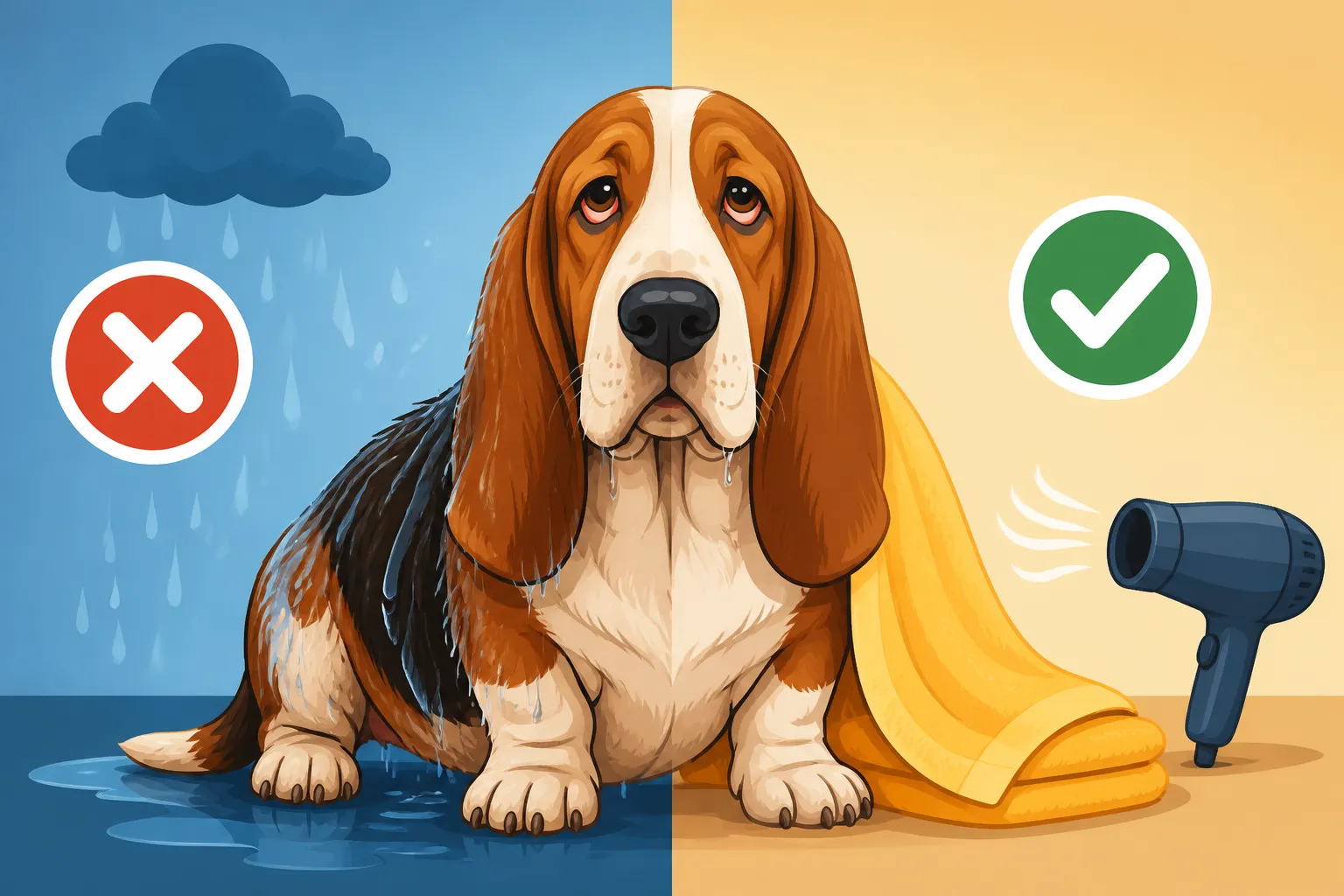
Invest in several super-absorbent microfiber towels. These are far more effective at wicking away moisture than regular cotton towels, and you can find excellent multi-packs on Amazon or Chewy. Start by gently squeezing excess water from their ears and legs. Then, firmly blot their body, pressing the towel against their fur to soak up as much water as possible. Pay special attention to their underside, their chest, and any visible skin folds. You'll be surprised how much water these towels can hold. Don't be shy about using multiple towels until your Basset feels damp, not dripping wet. This initial towel dry removes the bulk of the water, significantly cutting down on drying time and minimizing the amount of standing water that could lead to issues.
The Power of Forced Air and Low-Heat Dryers
While towel drying is great for the initial soak-up, it often isn't enough to get a Basset Hound truly dry, especially in their deepest folds and ear canals. This is where a pet-specific force dryer or a low-heat blow dryer comes in incredibly handy. Never use a human blow dryer on a hot setting, as it can easily overheat your dog's skin, leading to burns or discomfort. Look for dryers designed for pets, which typically have cooler temperature settings and powerful airflow.
A force dryer works by blowing a strong stream of air that pushes water off the coat rather than relying solely on heat. This is fantastic for getting under the dense fur and into those challenging areas. Hold the dryer a safe distance from your dog's skin and keep the air moving constantly to avoid concentrating heat in one spot. Start on a low setting to get your Basset accustomed to the sound and sensation, offering plenty of treats and praise. Focus the airflow on their body, legs, tail, and crucially, around and into their ear flaps (being careful not to blow directly into the ear canal, but rather around the opening to encourage airflow and dry the flap itself). For the deepest folds, gently stretch the skin to expose the damp areas and direct the air there. This step is a game-changer for preventing yeast and bacterial growth.
Here's a quick comparison of popular drying methods:
| Method | Pros | Cons | Best For |
|---|---|---|---|
| Air Drying | No effort required, natural | High risk of skin/ear infections, takes a very long time | Minimal dampness in warm, low-humidity climates |
| Towel Drying | Simple, low cost, non-threatening | Not fully effective, can miss deep folds, may mat fur if rubbed | Initial water removal, quick touch-ups |
| Human Blow Dryer | Readily available | High risk of overheating/burning, noisy, can be uncomfortable | Emergency spot drying only, with extreme caution |
| Pet Force Dryer | Highly effective, fast, dries deep | Can be noisy, requires training/acclimation, initial cost | Thorough drying, preventing skin/ear issues |
| Dog-Specific Dryer | Safer heat settings, quieter than force dryer | Slower than a force dryer, still requires training/acclimation | Gentle, thorough drying for less tolerant dogs |
Mastering the Art of Drying a Basset Hound's Problem Areas
While you're drying your Basset, some areas demand extra special attention. These are the spots where moisture loves to hide, and where the most common Basset Hound health issues can take root if not properly addressed.
Conquering the Folds: Face, Neck, and Chest
The extensive folds on a Basset Hound's face, neck, and chest are truly characteristic of the breed, but they are also notorious moisture traps. After a bath, or even after they’ve had a good drink of water and sloshed it around, these areas can remain damp for hours.
To properly dry these folds, you’ll need a soft, absorbent towel and your fingers. Gently pull back each fold around their muzzle, under their chin, and along their neck. Use the corner of a towel or a soft, dry cloth to dab deeply into each crevice. Don't just wipe the surface; you need to ensure the skin between the folds is dry. You might find that for face folds, a gentle dog-specific wipe can be helpful, especially to cleanse and dry them between baths. Which Wipes Suit a Basset Hound's Face Folds are formulated to be gentle and effective. Once you've blotted away the bulk of the moisture, use a low-heat pet dryer, if your Basset tolerates it, to gently blow air into the opened folds, ensuring every nook and cranny is thoroughly dry. It takes patience, but preventing Whether a Basset Hound Gets Yeast Between Its Folds is absolutely worth the effort. Always ensure Whether a Basset Hound's Folds Need Drying After Cleaning or getting wet.
Ears, Paws, and Belly: No Spot Left Damp
These often-overlooked areas are just as crucial as the prominent folds. The ears, in particular, are a constant concern for Basset Hound owners.
For the ears, after towel blotting the outer ear flap, gently lift the ear and use a cotton ball or a soft, dry cloth to carefully wipe the visible parts of the inner ear flap. You want to ensure the opening of the ear canal is dry, but never insert anything deep into the canal. A pet-specific ear drying solution can also be used, which helps evaporate moisture. Make sure your Basset has already had their ears cleaned, and refer to How to Clean a Basset Hound's Ears Properly for comprehensive ear care. Once they're clean and any solution has been applied, gentle airflow from a low-heat dryer around the base and opening of the ear can work wonders. Some owners even gently pin their Basset's ears up for a short period after drying to maximize air circulation. You can check out tips like Whether a Basset Hound's Ears Should Be Pinned Up to Dry. Remember, Whether a Basset Hound's Ears Should Be Dried After a Bath is not just a suggestion, it's a necessity.
Paws are another magnet for moisture, especially after walks on wet grass or pavement. Water trapped between their paw pads and toes can lead to irritation, yeast infections, and discomfort. After every wet outing, thoroughly dry each paw, paying close attention to the spaces between the pads and digits. Similarly, a Basset Hound’s low-slung belly and chest can often drag through wet grass or puddles. Make sure to lift them gently and towel dry their entire underside.
When and How Often Drying Becomes Crucial
It's not just about what happens after bath time. Your Basset Hound's daily life involves potential moisture exposure that warrants proactive drying. Understanding these moments can make all the difference in maintaining their health and happiness.
Post-Bath Routine: More Than Just a Quick Shake
This is perhaps the most obvious time to dry your Basset, but also the time where shortcuts are most tempting. After a luxurious bath with a good quality shampoo (perhaps one from Ollie that supports skin health, or a medicated one if prescribed by your vet), your Basset Hound is saturated. Allowing them to simply shake off and air dry is, frankly, asking for trouble.
A thorough post-bath drying routine should be as much a part of the bathing process as the washing itself. It's an investment in their health. The aim isn't just surface dryness; it's getting them dry down to the skin. This means dedicating at least 15-30 minutes, depending on their coat thickness and cooperation, to toweling and then using a dryer. Imagine the warm, moist environment under their folds and within their long ears. If left to linger, this dampness immediately kickstarts the conditions for bacterial and yeast overgrowth. Think of it as preventative medicine. By drying completely, you’re actively reducing the risk of painful ear infections and irritating skin conditions, saving you (and your Basset) potential discomfort and vet visits for issues like What a Basset Hound's Skin Fold Infection Costs to Treat.
Rainy Days and Puddle Jumping: Beyond the Bathtub
Basset Hounds, with their incredible noses, aren't deterred by a little rain or a muddy puddle. In fact, many relish the opportunity to explore a damp, scent-rich environment. But every adventure in wet weather means a potential for dampness lingering on their coat, ears, and belly.
It’s crucial to treat every significant wet exposure like a mini-bath when it comes to drying. If your Basset comes in from a rainy walk, don't just give them a cursory towel rub and call it a day. Their ears will be soaked. Their belly will likely be damp where it brushed against wet grass, and their folds will certainly have collected moisture. Keep a dedicated "wet weather" towel by the door, and perhaps even a dog-specific drying robe (you can find these on Chewy). Focus on toweling their entire body, paying particular attention to their legs, underside, and most importantly, their ears. Even if their body seems fine, those long ears will hold moisture. Drying them diligently after every wet outing will prevent the accumulation of moisture that leads to ear infections. A quick dry with a low-heat dryer around their ears and folds can make all the difference, ensuring they stay comfortable and healthy, no matter how many puddles they investigated.
Drying your Basset Hound isn't just about convenience; it's a fundamental part of responsible Basset ownership. Those adorable features that make them so unique are also their Achilles' heel when it comes to moisture. By understanding the risks and adopting thorough drying practices, you're not just preventing smelly situations; you're actively safeguarding your beloved hound's comfort and long-term health. Make drying a ritual, and your Basset (and your nose) will thank you for it!
Disclaimer
This article is for general informational purposes only and does not constitute professional advice. Laws, prices and regulations vary by location and change over time. Consult a qualified professional for guidance on your specific situation.