Who Saint Hubert Was Patron Saint Of
When you look at your Basset Hound, perhaps curled up on the sofa or sniffing every blade of grass with intense focus, you might appreciate their history without truly understanding the depth of their lineage. Many Basset owners know their beloved companions have roots in ancient European hunting traditions and even monastic life, but the figure of Saint Hubert often remains a bit of a mystery. This guide aims to pull back the curtain on this legendary saint, exploring who he was, why he's so closely tied to hunting and hounds, and how his story intertwines with the very essence of breeds like our Bassets.
The Legendary Life of Saint Hubert: From Hunter to Holy Man
The story of Saint Hubert is a captivating tale, deeply rooted in the traditions of medieval Europe and the world of hunting. It's a narrative that speaks to profound transformation and ultimately, to the respect for nature and animals that many hound owners still hold dear. Understanding who he was isn't just a historical exercise; it's about appreciating the cultural tapestry from which our Bassets emerged.
A Life Before Conversion: Hubert's Noble Beginnings
Hubert was born into nobility, likely in what is now modern-day France, in the mid-7th century. He was a man of high standing, a powerful lord with a passion for hunting that consumed much of his life. For Hubert, the thrill of the chase wasn't just a pastime; it was an obsession, often pursued with a disregard for the sacredness of the Sabbath or the spiritual implications of his relentless pursuit of game. He lived the life of a typical nobleman of his era, enjoying earthly pleasures and the excitement of the hunt above all else. His companions would have been loyal hounds, trained for tracking and pursuit, though perhaps not yet the distinctive low-slung, long-eared creatures we recognize as Bassets today.
Imagine the grand hunting parties, the clamor of hooves, the baying of hounds across vast forests. This was Hubert's world. He was known for his skill and prowess, his determination to track and catch his quarry. It's easy to picture him, much like modern hunting enthusiasts still do, preparing his dogs, checking their gear, and setting out at dawn. His focus was entirely on the sport, with little thought for anything beyond the immediate gratification of the hunt. This era of his life is crucial because it sets the stage for the dramatic shift that would define his legacy.
His early life really highlights the societal norms of the time, where hunting wasn't just a sport but a significant part of a nobleman's identity, providing food, furs, and a display of power. It's a far cry from casually browsing for dog supplies on Chewy, but the underlying devotion to dogs and the hunt has a common thread. The sheer scale and relentless nature of his hunting, however, began to set him apart, leading to the pivotal event that would change everything.
The Vision That Changed Everything: The Stag with the Crucifix
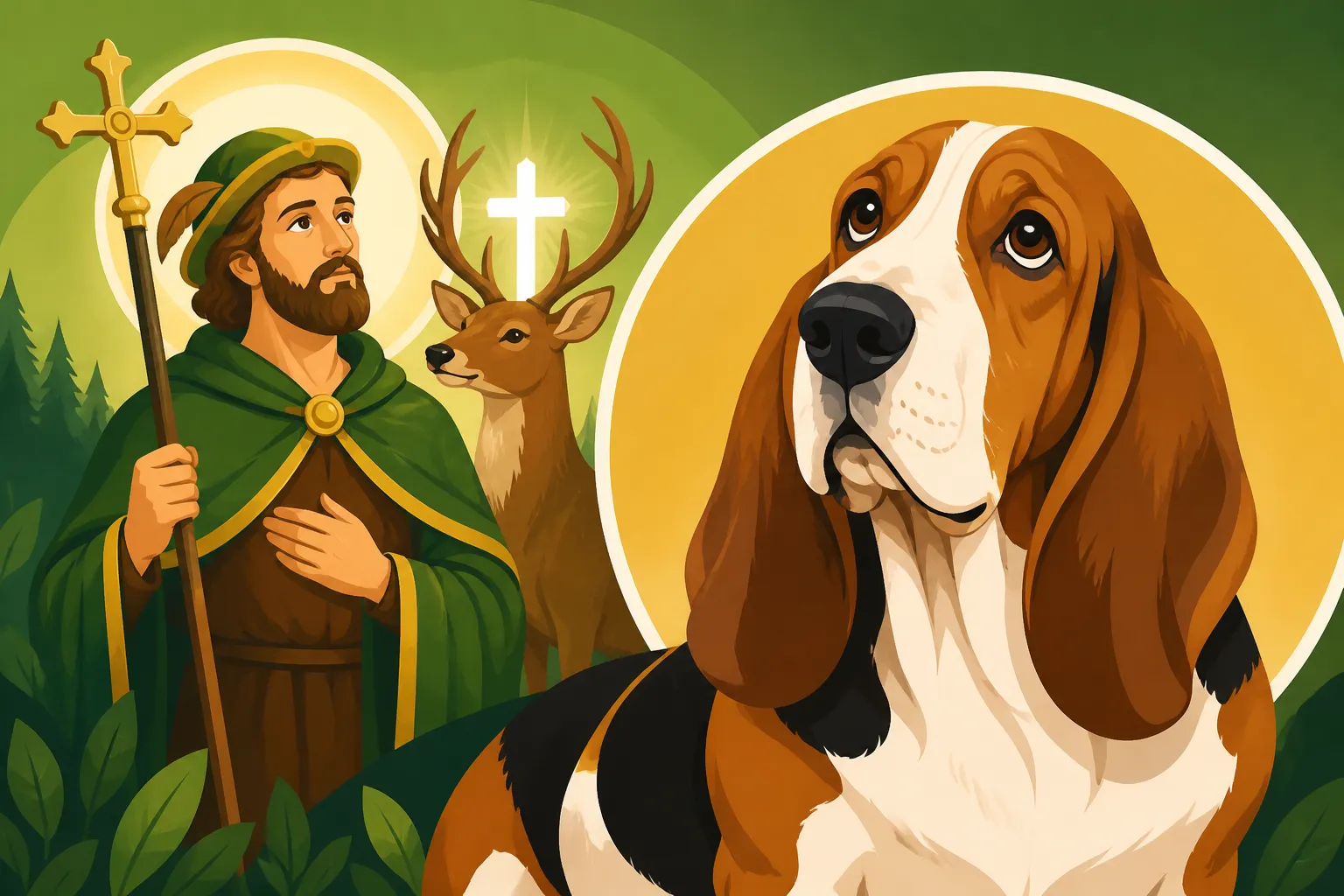
The most famous part of Saint Hubert's legend revolves around a profound spiritual encounter. It's said that on a Good Friday, while most people were observing the solemn religious holiday, Hubert was out hunting in the Ardennes Forest. This was characteristic of his life before his conversion – ignoring religious observance in favor of his passion. During this hunt, he encountered a magnificent stag. As he prepared to make the kill, the stag turned, and between its antlers, he saw a glowing crucifix.
Accompanying this awe-inspiring vision, a voice spoke to him, urging him to turn from his worldly pursuits and seek God. This moment was a complete turning point. The vision profoundly impacted Hubert, leading him to abandon his life as a secular hunter. He interpreted this divine intervention as a direct call to a spiritual path, a realization that his relentless pursuit of earthly game was overshadowing a deeper, more meaningful purpose. This isn't just a charming anecdote; it's the core of his transformation and the reason he became such an important figure for so many.
The sudden, dramatic nature of this conversion, moving from a life of intense, almost heedless hunting to one of profound spirituality, underscores the power of the legend. It's a story that resonates with themes of redemption, transformation, and finding a deeper calling, which is why it has endured for centuries. This event is what truly cemented his place in history and set him on the path to sainthood, marking him as a patron not just of hunters, but of a more ethical and mindful approach to their ancient craft.
Saint Hubert: Patron of Hunters and the Canine World
Hubert's dramatic conversion didn't just transform his personal life; it transformed his legacy, making him the venerated patron of hunters, foresters, and ultimately, dogs. This patronage isn't just a title; it reflects a deep respect for the ethical treatment of animals and the spiritual dimension of the natural world, a sentiment many Basset Hound owners still share today.
From Hunter to Bishop: A New Path
Following his vision, Hubert renounced his nobility and inheritance, seeking spiritual guidance from Saint Lambert, the Bishop of Maastricht. He dedicated himself wholeheartedly to a life of piety and service. When Saint Lambert was martyred, Hubert succeeded him as Bishop, eventually moving the see to Liège (in modern-day Belgium). As Bishop, he became known for his tireless work in evangelizing the Ardennes region, which was still largely pagan, and for his compassion.
His past life as a hunter gave him a unique perspective. He understood the allure of the wilderness and the hunt, allowing him to connect with people on their own terms. He didn't just preach; he lived a life of devotion that inspired others. His transformation meant he carried a deep respect for the wild and its creatures, advocating for more humane and ethical hunting practices. This wasn't about stopping hunting altogether, but about tempering the pursuit with respect and responsibility, a far cry from the unbridled chase of his youth. His influence was felt throughout the region, not just in spiritual matters, but in fostering a greater sense of stewardship over the natural world.
This commitment to ethical hunting, even while embracing a religious life, is a testament to the enduring appeal of his story. He wasn't just a saint for hunters, but a model for how to engage with the natural world responsibly. This shift from pure pursuit to mindful stewardship is a significant part of his enduring appeal, creating a bridge between the physical act of hunting and its spiritual implications.
The Scope of His Patronage and Enduring Influence
Saint Hubert's patronage extends beyond just hunters. He is also the patron of archers, foresters, trappers, and butchers, essentially anyone whose livelihood or passion connects them to animals and the wild. More broadly, he is invoked against rabies and hydrophobia, due to a later legend concerning a miraculous cure, and is often seen as a protector of dogs. This makes him a particularly relevant figure for anyone who cares deeply about canine welfare, from those who own hunting breeds to those who simply cherish their companion dogs.
His feast day, November 3rd, is still observed in many parts of Europe with traditional "Blessing of the Hounds" ceremonies. These events often involve elaborate processions and services where hunting dogs are blessed, a direct continuation of Hubert's legacy. This tradition beautifully illustrates the reverence for the dogs themselves, acknowledging their role as loyal companions and working animals. It's a powerful reminder of the deep historical and cultural ties between humans and hounds, and how this connection was elevated to a spiritual level. Many a Basset Hound, whether a modern pet or a working dog, has unknowingly carried this long, storied tradition in their very genes. Whether a Basset Hound Still Hunts is a question deeply intertwined with this historical and cultural context.
It's a wonderful tradition that connects modern dog owners to centuries of history, reinforcing the bond we share with our canine friends. While we might order our favorite dog treats and toys from Chewy today, the spiritual recognition of a dog's place in our lives, exemplified by Saint Hubert, remains a timeless truth. The concept of a patron saint for animals and those who interact with them underscores a historical understanding of our shared existence with the natural world, a concept that continues to resonate.
Connecting Saint Hubert to the Basset Hound's Ancestry
So, how does this 7th-century bishop, famed for his hunting prowess and spiritual conversion, directly relate to our beloved Basset Hounds? The connection is profound, tracing back to the very monastic orders that sought to preserve and refine the noble hunting hounds of the era, laying the groundwork for many of today's scent hound breeds.
The Abbey Hounds and the Saint Hubert Hound
Following Saint Hubert's death, the monastic order he was associated with, particularly the Benedictine Abbey of Saint-Hubert in the Ardennes, continued his legacy by maintaining and breeding exceptional scent hounds. These dogs became known as the "Saint Hubert Hounds," revered for their incredible noses, stamina, and deep, resonant voices. The Abbey Hounds a Basset Hound Descends From were meticulously bred by monks who, unlike the general populace, had the resources and dedication to preserve specific bloodlines and traits. These weren't dogs bred purely for speed, but for methodical, persistent trailing, a trait crucial for tracking game over long distances, often in dense forest.
The Saint Hubert Hounds were large, powerful dogs, very similar to what we know today as the Bloodhound. In fact, Whether the Bloodhound Came From the Same Abbey is a question often answered with a resounding "yes." These magnificent animals were highly prized and gifted to royalty and nobility across Europe, spreading their genes and influence far and wide. The monks focused on temperament, trainability, and an unparalleled sense of smell, ensuring that these dogs were not only effective hunters but also manageable companions. This careful breeding and record-keeping were instrumental in establishing consistent canine characteristics that would later diverge into various specialized breeds.
This monastic influence meant that the development of these hounds was more structured and intentional than haphazard breeding. The monks understood the value of these dogs, both for their practical hunting abilities and as symbols of a respected tradition. This dedication to preserving a superior scent hound line directly impacted the eventual emergence of breeds like the Basset, proving that selective breeding for specific traits has a long and noble history.
The Evolution Towards the Basset Type
Over centuries, from these original Saint Hubert Hounds, various regional types of hunting dogs emerged, each adapted to different terrains and hunting styles. The term "Basset" itself is French, derived from "bas," meaning "low" or "dwarf." This tells us a lot: these were dogs specifically bred for their short legs. What Bas Means in French is critical to understanding the breed's very name. While the larger Saint Hubert Hounds were perfect for hunters on horseback covering vast territories, there was a growing need for a dog that could be followed on foot, through thick underbrush, and at a slower, more deliberate pace.
This is where the Basset type began to take shape. Shorter-legged variations of the larger hounds were selectively bred. These dogs retained the incredible scenting ability and distinctive bay of their ancestors but were built closer to the ground. This meant they could penetrate dense thickets where a horse couldn't go, and their slower pace allowed hunters to follow on foot, making the sport accessible to a wider range of people, not just the mounted aristocracy. Why French Hunters Wanted a Slow Hound was a practical consideration, ensuring the hunter could keep up with their quarry and their dog.
The development of the Basset wasn't a singular event but a gradual process of refinement, selecting for specific traits that made them ideal for hunting small game like rabbits and hares in particular environments. Their long, drooping ears, which many Basset owners marvel at, were thought to help sweep scent towards their powerful noses, enhancing their tracking ability. The Twelve Inch Ears a Basset Hound Was Given on Purpose are a direct example of this specialized breeding. This evolutionary path, from the grand Saint Hubert Hound to the distinctive low-slung Basset, underscores a continuous lineage rooted in an ancient and venerated hunting tradition, a tradition that Saint Hubert's legacy helped to inspire and perpetuate.
Saint Hubert's Legacy in Modern Hound Culture
Even in our modern world, far removed from medieval forests and monastic kennels, the spirit of Saint Hubert lives on, particularly within the passionate community of hound owners. His influence is woven into the very fabric of how we perceive hunting, respect animals, and cherish the unique traits of breeds like the Basset Hound.
Ethical Hunting and Animal Stewardship
Saint Hubert's story is a powerful reminder that hunting, when done ethically, can be a respectful interaction with nature rather than a mere conquest. His conversion emphasized compassion and responsibility, values that resonate strongly with conservation efforts and the humane treatment of animals today. For many modern hunters, particularly those who work with scent hounds, the tradition is deeply spiritual, a way to connect with ancestral practices and the wilderness. It’s not just about the kill, but about the chase, the bond with the dogs, and the profound respect for the game itself.
This ethical framework encourages hunters to understand and respect wildlife populations, habitat conservation, and the laws governing the sport. It's about being a steward of the land and its creatures, a direct reflection of the lessons learned from Hubert's transformation. Even if you're not a hunter, the idea of responsible pet ownership, providing for our animals' needs (from healthy food to a cozy bed from Chewy), and appreciating their natural instincts, echoes this broader philosophy of stewardship. The reverence for the keen senses and unwavering dedication of hounds, passed down through generations, is a living tribute to Hubert's legacy.
Moreover, the emphasis on a humane approach extends to how we train and work with our dogs. Positive reinforcement, understanding a dog's natural drives, and fostering a strong, respectful bond are modern reflections of a philosophy rooted in appreciating animals for who they are and what they contribute. Whether a Basset Hound Can Do Tracking Trials shows how these innate abilities are celebrated in non-hunting contexts today.
The Hound Community and Historical Pride
The legacy of Saint Hubert also fosters a strong sense of pride and community among hound owners. Whether you're involved in field trials, conformation shows, or simply enjoy long walks with your Basset, there's an unspoken connection to this rich history. Breed clubs and enthusiasts often celebrate the historical origins of their dogs, recognizing the centuries of selective breeding and dedication that went into creating their particular breed.
For Basset Hounds, this connection is particularly palpable. Their unique physique—those incredibly long ears, the loose skin, the deep bay—are all remnants of their ancestors who were literally born to track. When you hear that characteristic bay, you're hearing an echo of hounds that pursued game through ancient European forests, guided by their lineage directly back to the Saint Hubert Hounds. Whether a Basset Hound's Ears Sweep Scent Upward and Whether a Basset Hound Trails With Its Nose on the Ground highlight these ancient traits.
This shared heritage creates a bond among owners, a recognition that they are part of a continuous story stretching back over a thousand years. It’s a wonderful reminder that our dogs are more than just pets; they are living links to history, embodying traditions and legends. Knowing the story of Saint Hubert adds another layer of appreciation to every sniff, every bay, and every affectionate flop of those long, velvety ears. It's a connection that deepens the joy of owning such a historically significant and uniquely charming breed.
| Aspect of Saint Hubert's Story | Before Conversion | After Conversion & Legacy |
|---|---|---|
| Primary Focus | Passionate Hunting | Spiritual Life, Evangelism |
| Relationship with Nature | Exploitation, Pursuit | Respect, Stewardship, Conservation |
| View of Animals | Game to be Caught | Creatures to be Respected |
| Social Standing | Nobleman, Lord | Bishop, Saint |
| Hunting Practice | Relentless, Obsessive | Ethical, Mindful, Respectful |
| Influence on Hounds | Used for Sport | Preserved & Refined through Monasteries |
Disclaimer
This article is for general informational purposes only and does not constitute professional advice. Laws, prices and regulations vary by location and change over time. Consult a qualified professional for guidance on your specific situation.