Whether Weighing a Basset Hound Monthly Helps
It’s a frustrating reality for many Basset Hound owners: you look at your beloved, low-slung companion, and you wonder if they're "just big-boned" or if that extra roundness is actually a problem. Their unique physique, with all that lovely loose skin and substantial build, can make it incredibly difficult to tell just by looking or even by feeling, leading to a lot of guesswork about their ideal weight. This guide is here to shed some light on why regular, consistent weighing, especially on a monthly basis, isn't just a good idea for your Basset Hound, but a truly vital tool in safeguarding their health and quality of life.
The Unique Challenges of Basset Hound Weight Management
Managing a Basset Hound's weight is often a more complex dance than it might seem, and it's not just about their love of food (though that's certainly a big part of it!). Their distinctive body shape and inherent breed characteristics present a specific set of challenges that can make weight gain insidious and difficult to spot.
Their Unique Physique: More Than "Just Built That Way"
One of the most common refrains among Basset Hound owners, often said with a sigh and a loving pat, is that their dog is "just built that way." And yes, Basset Hounds are built uniquely – stocky, heavy-boned, with ample loose skin, especially around the neck and chest. But this very physique can mask weight gain incredibly well. Unlike a leaner breed where an extra pound or two might be immediately visible around the waist, a Basset's substantial frame and layers of skin can hide those creeping ounces, or even pounds, until they become a significant health issue.
It’s easy to be fooled. That lovely dewlap and the folds around their face and neck? They can make it hard to visually assess their body condition. You might think you're feeling for ribs under a bit of padding, when in reality, there's quite a bit more cushion than there should be. This is why solely relying on visual cues or a casual pat can lead to overlooking gradual weight gain. A Basset Hound might look perfectly normal, or even "athletic" by Basset standards, while actually carrying extra weight that puts strain on their joints and internal organs. The loose skin also makes it tricky to feel for those tell-tale ribs that indicate a healthy weight, as described in Feeling for a Basset Hound's Ribs Under Loose Skin.
The Insatiable Appetite
Let's be honest, Basset Hounds live to eat. It's a truth universally acknowledged in the Basset world. They are driven by their incredible noses, and that drive extends to anything edible, or even anything that might be edible. This makes feeding a Basset Hound a constant negotiation and temptation. They'll give you those soulful eyes, perform the most dramatic sighs, and generally act as if they haven't seen a meal in weeks, even moments after cleaning their bowl.
This profound love of food, combined with a remarkable ability to beg convincingly, means it's incredibly easy for owners to overfeed them, often without even realizing it. A little extra kibble here, a few more treats there, and those calories add up alarmingly quickly. It’s not just main meals either; counter-surfing, scavenging, and clever manipulation for scraps can all contribute to an expanding waistline. Many owners struggle with Whether a Basset Hound Ever Feels Full, and it certainly feels like they don't! This constant desire for food means owners need to be particularly diligent about portion control and resist those pleading eyes.
Low Energy, High Impact
Despite their working hound heritage, many Basset Hounds in family homes are not exactly known for their boundless energy or marathon running capabilities. While they absolutely need regular exercise to stay healthy and mentally stimulated, they are often content with shorter, sniff-filled walks rather than intense cardio sessions. Their conformation, with those short legs and long backs, isn't built for high-impact activities. This lower overall activity level means that even a moderate intake of calories can easily lead to weight gain if not carefully balanced.
Compounding this is the fact that carrying extra weight further exacerbates their natural inclination towards lower activity. An overweight Basset Hound is more likely to be uncomfortable, experience joint pain, or simply be less inclined to move, creating a vicious cycle. Getting Weight Off a Basset Hound That Will Not Exercise becomes a serious challenge, as their physical limitations are magnified by excess weight. Their distinctive body, while charming, is also predisposed to certain orthopedic issues, and additional weight places undue stress on their already vulnerable joints and spine, making conditions like intervertebral disc disease or elbow dysplasia even more likely to manifest or worsen.
The Indisputable Benefits of Monthly Weigh-Ins
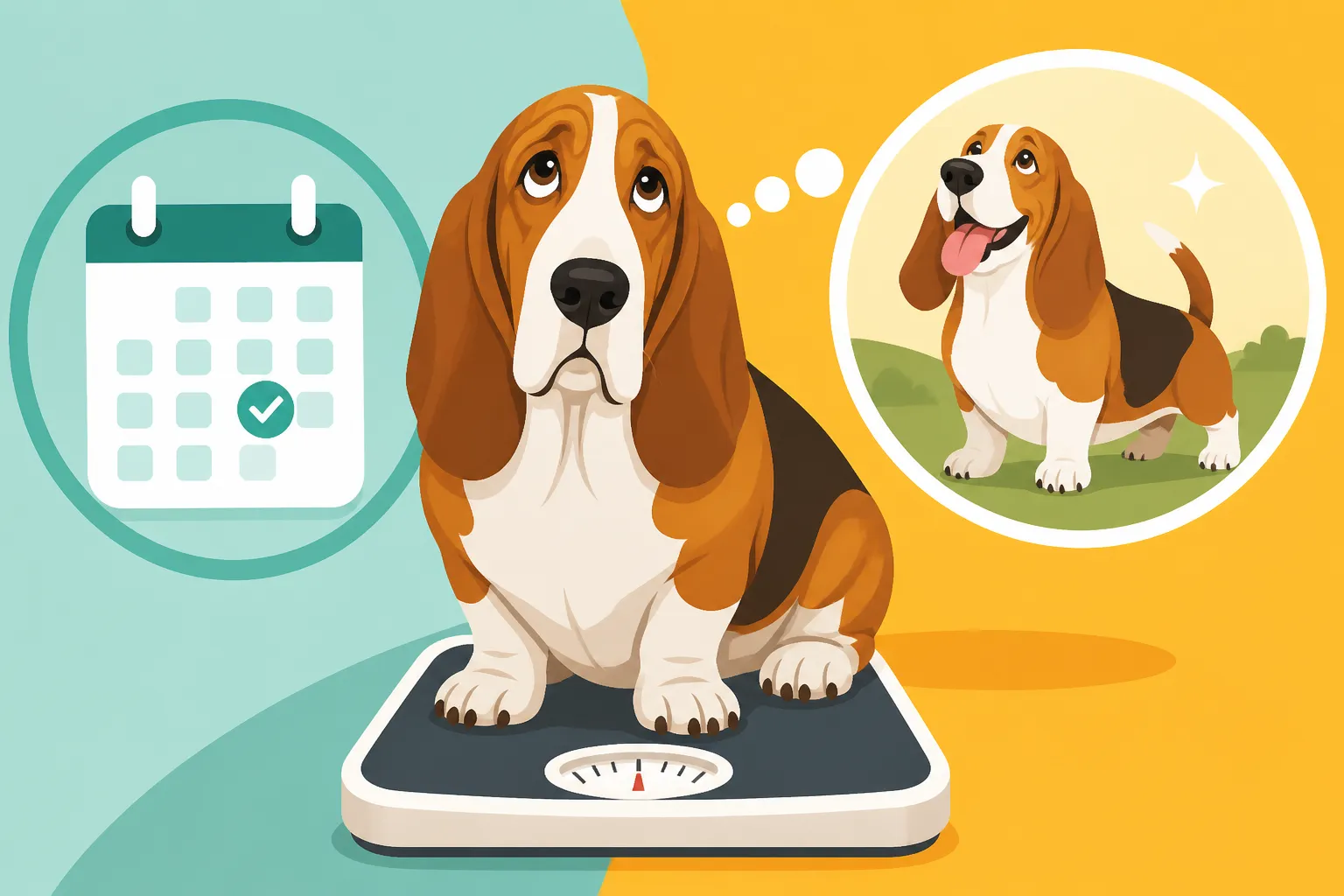
Given the stealthy nature of Basset Hound weight gain and their predisposition to health issues exacerbated by extra pounds, regular weighing isn't just helpful – it's an absolutely essential practice. Monthly weigh-ins provide concrete data that guesswork simply can't match, offering a clear picture of your Basset's health trend.
Early Detection of Problems
The most significant benefit of regular weigh-ins is the power of early detection. Because their body shape can hide those extra pounds so well, a consistent weight history acts as your early warning system. Imagine your Basset has been holding steady at a healthy weight for months. Suddenly, over a period of a few weeks, the scale shows a consistent upward creep of even a pound or two. On a Basset, this might not be visually noticeable at all. However, that data point immediately tells you something is changing.
This early detection allows you to intervene before a few unnoticed pounds turn into five, ten, or even more. A slight gain might prompt you to re-evaluate portion sizes, increase walk times by a few minutes, or switch to a lower-calorie treat. Conversely, an unexpected drop in weight can be an indicator of underlying health issues that aren't yet presenting obvious symptoms, prompting an earlier veterinary visit. Catching these shifts early can prevent minor issues from becoming major health crises, potentially saving your Basset from discomfort and you from significant vet bills down the line. It's a proactive step in managing their long-term health, directly impacting their overall The Ten to Twelve Years a Basset Hound Lives.
Accurate Food Portions and Adjustments
Knowing your Basset Hound's precise weight is fundamental to feeding them correctly. Every bag of dog food, whether it's standard kibble or a specialized formula like those offered by Ollie, provides feeding guidelines based on weight. If you're simply guessing your dog's weight, you're guessing at their food intake, and that's a recipe for either underfeeding (less common with Bassets!) or, more often, overfeeding.
Monthly weigh-ins allow you to adjust their food portions with precision. If the scale indicates a slight gain, you can accurately reduce their daily caloric intake by adjusting their measured meals. If they're holding steady, you know you're on the right track. This data-driven approach removes the guesswork from feeding and empowers you to make informed decisions about their diet. For example, if you're trying to achieve Keeping a Basset Hound at Its Correct Weight, knowing the exact number on the scale helps you implement changes and track their effectiveness. You can buy specialized measuring cups or even a digital food scale (easily found on Amazon) to ensure accuracy with every meal, rather than relying on inconsistent scoops.
Motivation and Accountability for Owners
Let's face it, maintaining a healthy weight for any pet takes discipline, especially with a Basset Hound and their endearing, yet manipulative, charm. Monthly weigh-ins provide crucial motivation and a tangible sense of accountability for you, the owner. Seeing that number on the scale provides objective feedback. A successful weigh-in (maintaining a healthy weight or showing progress towards a goal) can be incredibly encouraging. It validates your efforts and reinforces good habits.
Conversely, an unexpected weight gain can be a powerful wake-up call. It forces you to honestly assess if you've been a little too generous with treats, if walks have become too infrequent, or if their food portions have crept up. This objective data removes any room for denial or rationalization. It’s hard to argue with a number staring you in the face. This regular checkpoint keeps you engaged in your Basset's weight management journey, helping you to stay consistent and proactive rather than letting things slide. It's a simple, yet powerful, ritual that keeps your Basset's health at the forefront of your mind.
Practical Steps for Weighing Your Basset Hound Effectively
So, you're convinced that monthly weigh-ins are essential. Great! But how do you actually do it reliably when your Basset Hound is more interested in sniffing the scale than standing still on it? With a little patience and the right technique, it's absolutely manageable.
Methods for Different Sizes
The best way to weigh your Basset Hound might depend on their size and your resources.
- For puppies or smaller adult Bassets: A standard human bathroom scale can work. The easiest method is to weigh yourself first, note the number, then pick up your Basset and weigh yourself holding them. Subtract your weight from the combined weight, and voila, you have your Basset's weight. This is a simple, no-fuss method for dogs who are easily lifted.
- For larger or less cooperative adult Bassets: The "hold and weigh" method might not be feasible or safe. In this case, a dedicated pet scale is an excellent investment. You can find sturdy, large-platform pet scales on online retailers like Chewy or Amazon. These are designed for pets, often have non-slip surfaces, and can handle a Basset's weight comfortably. If a pet scale isn't an option at home, your veterinarian's office will always have one. Many vets are happy for you to pop in for a quick weigh-in between appointments, especially if you call ahead. Some pet supply stores also offer scales for customer use. This is particularly useful as your Basset grows; what works for a puppy won't work for a full-grown adult Basset, who can weigh as much as a medium-sized Labrador. How Much a Basset Hound Should Weigh is a good article to reference for target weights.
Consistency is Key
Whatever method you choose, consistency is paramount. To get the most accurate and useful data, try to establish a routine:
- Same Time of Day: Weigh your Basset Hound at roughly the same time each month. First thing in the morning, before breakfast and after their morning potty break, is often ideal. This minimizes variables like a full stomach or bladder, which can slightly affect the reading.
- Same Scale: If possible, use the same scale every time. Different scales can have slight calibration differences. If you're switching between your home scale and the vet's scale, note that down.
- Same Conditions: Try to keep other conditions consistent. For example, if you weigh them without a harness, always weigh them without a harness. This meticulous approach helps ensure that any changes you see are genuine fluctuations in your Basset's body weight, not just measurement anomalies.
Record Keeping
Collecting the data is only half the battle; recording it diligently is what makes it truly powerful. Don't just rely on your memory!
- Simple Log: Keep a simple logbook, a note on your phone, or a spreadsheet. Include the date, your Basset's weight, and any relevant notes (e.g., "after vet visit," "new food introduced," "increased walks").
- Visual Chart: Some owners find a visual chart or graph helpful to see trends over time. This makes it easy to spot upward or downward curves in weight. You can even use apps designed for pet health tracking, many of which can be downloaded on your smartphone.
Here's an example of a simple weight tracking log you could use:
| Date | Weight (lbs) | Notes |
|---|---|---|
| Jan 15, 20XX | 62.5 | Started new year's diet! |
| Feb 15, 20XX | 62.0 | Holding steady, feeling good. |
| Mar 15, 20XX | 62.1 | Puppy class started, more activity. |
| Apr 15, 20XX | 63.5 | Spring treats snuck in, need to be firm. |
| May 15, 20XX | 63.0 | Back on track after treat reduction. |
This kind of record allows you to see the big picture and identify patterns. It's an invaluable resource for discussing your Basset's health with your vet and making informed decisions about their care.
Interpreting Weight Changes and Taking Action
Getting those numbers is just the first step. The real benefit comes from understanding what those numbers mean and how to act on them. A monthly weigh-in isn't just a number; it's a conversation starter about your Basset's health.
Understanding Normal Fluctuations vs. Trends
It's completely normal for a Basset Hound's weight to fluctuate slightly day-to-day or even week-to-week, just like ours does. A half-pound up or down is usually nothing to worry about. What you're really looking for are trends.
- A consistent upward trend: This is your primary warning sign. If your Basset's weight is steadily increasing over two or three consecutive months, even by small increments, it's time to take action. This suggests their current caloric intake exceeds their energy expenditure, leading to gradual weight gain. This is exactly what you want to catch early, before it progresses into significant obesity, which can lead to serious health issues like The Back Trouble a Basset Hound Is Built Into or exacerbate problems like Arthritis in a Basset Hound at Seven.
- A consistent downward trend: While less common for Bassets who love their food, a noticeable and consistent drop in weight over several months, especially if unexplained by a recent diet change, warrants attention. This could be a sign of an underlying medical condition, dental issues making eating painful, or changes in metabolism.
- Stable weight within a healthy range: This is the goal! If your Basset is maintaining a healthy weight as confirmed by both the scale and a vet's assessment of their body condition score, you're doing a fantastic job.
Remember, the goal isn't just any weight, but a healthy weight. You can consult Signs a Basset Hound Is Carrying Too Much Weight to help you visually confirm what the scale is telling you.
When to Adjust Diet and Exercise
If your monthly weigh-ins reveal a consistent upward trend, it's time for some adjustments. Start by looking at the most obvious culprits:
- Dietary Adjustments:
- Measure precisely: Stop guessing! Use a dedicated measuring cup or a kitchen scale (again, easily found on Amazon or Chewy) to ensure you're feeding the exact amount recommended.
- Reduce portions: Slightly reduce their daily kibble portion. Even a 10-15% reduction can make a difference over time.
- Re-evaluate treats: Treats are often hidden calorie bombs. Opt for low-calorie options, use vegetables like carrots or green beans, or simply reduce the quantity. If you're using training treats, consider subtracting those calories from their main meal.
- Consider weight management food: If you're struggling, a vet-recommended weight control formula might be necessary. Brands like Purina Pro Plan or Royal Canin offer specific options, and many can be purchased through retailers like Chewy. These foods are formulated to be lower in calories but still filling. You can also explore fresh food options like Ollie, which often have clearer ingredient lists and portion control guidance. Whether a Weight Control Food Costs More for a Basset Hound is a good point of reference here.
- Exercise Adjustments:
- Increase duration: Add a few extra minutes to each walk, or an additional short walk during the day.
- Increase intensity (gently): If appropriate for your Basset's age and health, try to incorporate a slightly brisker pace for part of the walk, or engage in more active play in the yard.
- Mental stimulation: Don't forget nose work! Scent games and puzzle toys can burn mental energy and provide activity without high physical impact.
The key is gradual, sustainable changes. Rapid weight loss isn't healthy for dogs. Aim for a steady, slow reduction, often around 1-2% of their body weight per month. This slow and steady approach is much more likely to yield lasting results.
When to Call the Vet
While monthly weigh-ins empower you to manage many aspects of your Basset's weight at home, there are definitely times when a call to the veterinarian is crucial:
- Significant or rapid weight gain: If your Basset has gained a significant amount of weight quickly, especially if their diet and exercise haven't changed, it's a good idea to consult your vet. This could indicate an underlying medical issue, such as hypothyroidism (which is not uncommon in Basset Hounds) or other metabolic disorders.
- Unexplained weight loss: Any consistent, unexplained weight loss should always prompt a vet visit. This can be a symptom of a wide range of conditions, from dental disease to more serious internal illnesses.
- Difficulty losing weight despite efforts: If you've been diligently adjusting diet and exercise for several months and your Basset is still not losing weight, or is even continuing to gain, your vet can offer professional guidance. They might recommend specific prescription diets, conduct blood tests to rule out medical causes, or refer you to a veterinary nutritionist.
- Concerns about body condition: If you're unsure whether your Basset Hound is at a healthy weight, or if you're struggling to properly assess their body condition despite the numbers, a vet visit for a professional assessment is always a good idea. They can help you determine How Much a Basset Hound Should Weigh and develop a tailored plan.
Your veterinarian is your most valuable partner in your Basset Hound's health journey. Don't hesitate to reach out to them when you have questions or concerns about their weight. Monthly weigh-ins provide the objective data that makes those conversations far more productive and targeted, ensuring your Basset Hound lives the longest, healthiest, and happiest life possible.
Disclaimer
This article is for general informational purposes only and does not constitute professional advice. Laws, prices and regulations vary by location and change over time. Consult a qualified professional for guidance on your specific situation.