Whether Rugs Help a Basset Hound’s Footing
If you're a Basset Hound owner, you've probably witnessed that heartbreaking, somewhat comical, but ultimately concerning moment: your beloved, long-bodied companion trying to navigate a slick kitchen floor or a gleaming hardwood hallway, only for their short, stout legs to splay out from under them. It's not just a funny stumble; these slips and slides are genuinely tough on their unique anatomy and can lead to serious long-term issues. This guide is all about tackling that exact problem, exploring why slippery floors are such a menace for Basset Hounds and how strategically placed rugs can be a game-changer for their safety, comfort, and overall well-being.
The Anatomy of a Slip: Why Basset Hounds and Smooth Floors Don't Mix
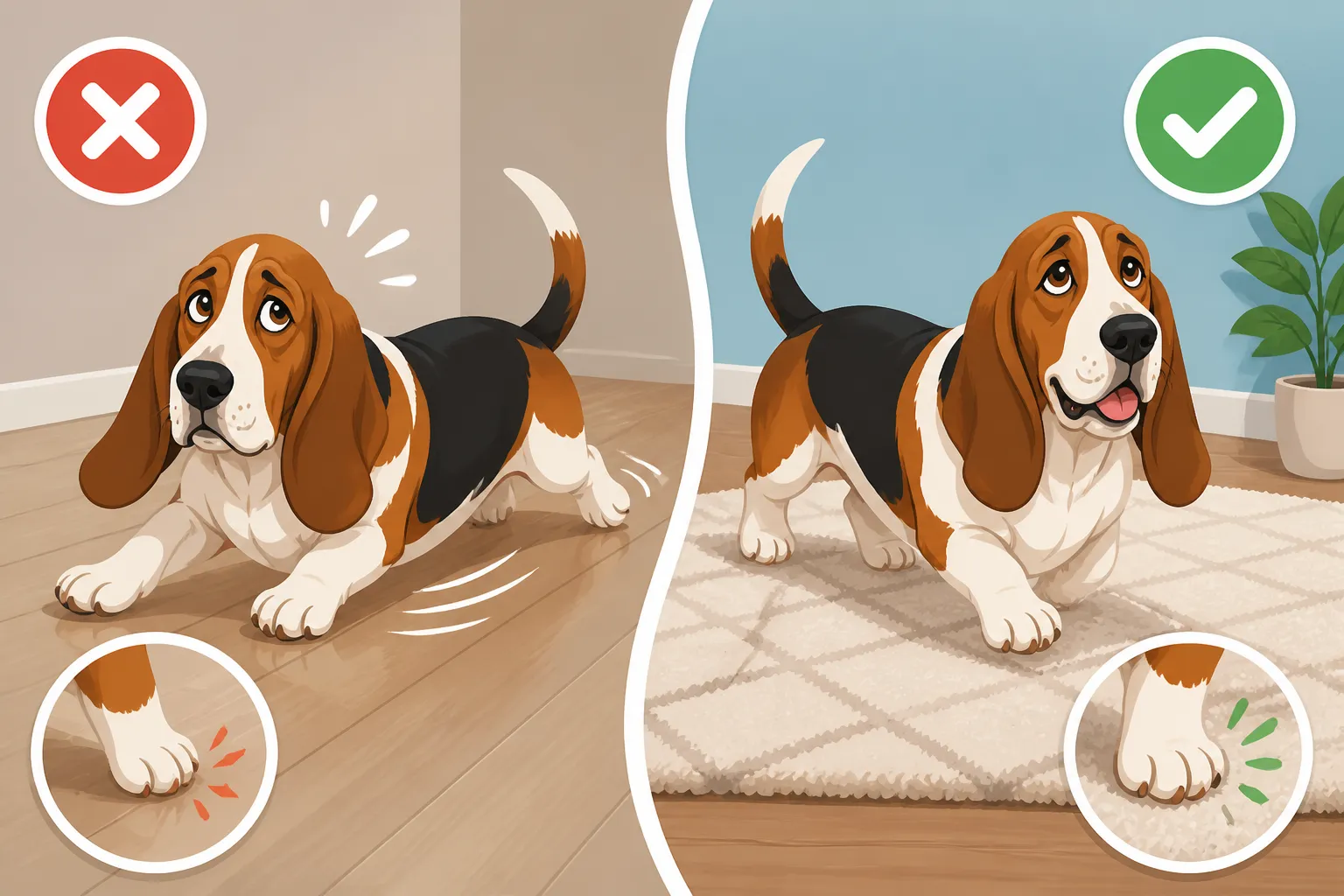
Let's be real, Basset Hounds are built for scent work, not for Olympic ice skating. Their distinctive physique, while endearing, is actually a huge disadvantage on smooth surfaces. When you combine their low-slung, heavy bodies with those surprisingly short legs, you get a dog that struggles significantly to maintain traction. Their center of gravity is low, which might sound stable, but when their short limbs can't get a good grip, that heavy body has nowhere to go but down, often with a jarring impact.
Imagine trying to walk across a polished floor with your feet tied together at the ankles, and then add a heavy backpack. That's a bit like what a Basset Hound experiences. Their natural gait, a sort of ponderous waddle, relies on solid, reliable ground to keep them upright. On a slick surface, their paw pads, which offer some natural grip, simply aren't enough to counteract the momentum of their substantial build. They often start moving cautiously, muscles tensing, which only makes them more rigid and prone to sudden, uncontrolled slips.
It's not just about the occasional fall, either. The constant struggle to stay upright can lead to an underlying anxiety. You might notice your Basset Hound hesitating at the edge of a tiled area, or opting for a circuitous route along the carpeted perimeter of a room. This isn't stubbornness; it's a learned response to discomfort and potential injury. They're trying to protect themselves, but the mental stress of navigating their own home can really diminish their quality of life. We want our dogs to feel confident and secure in every corner of their domain, not wary.
Beyond the Tumble: The Silent Toll of Slippery Surfaces on Basset Hounds
While the immediate slip is often the most visible problem, the chronic stress of walking on slick floors takes a hidden toll on a Basset Hound's health. Their unique body structure, with that long back and those bowed front legs, makes them particularly vulnerable to certain orthopedic issues that are only exacerbated by instability.
Firstly, acute injuries are a real and present danger. A sudden slip can lead to muscle strains, ligament sprains, or even fractures. Think about a Basset trying to round a corner too quickly on a slippery kitchen floor. Their hind legs might shoot out, twisting their hips or straining their back. A front leg might buckle, putting immense pressure on their elbows and shoulders. These aren't minor incidents; they can result in painful vet visits, weeks of restricted activity, and medication. The fear of these falls can also make them hesitant, leading to a sedentary lifestyle that then contributes to other health issues like weight gain.
More insidiously, poor footing significantly worsens chronic conditions common in the breed. Basset Hounds are, unfortunately, predisposed to issues like Intervertebral Disc Disease in a Basset Hound, which affects their long, delicate spines. Every jar, every twist, every sudden slip puts undue stress on those intervertebral discs. It's like constantly bumping your car against a curb; eventually, something is going to break down. Similarly, conditions like Elbow Dysplasia in a Basset Hound and Arthritis in a Basset Hound at Seven are already a concern for many Bassets. Slippery floors force their joints to work harder, grinding and compensating in unnatural ways, accelerating the progression of degenerative joint disease. They need stable ground to distribute their weight evenly and move fluidly.
Beyond the physical, there's a significant psychological impact. A dog that constantly feels unstable can become withdrawn, less active, and generally anxious. They might avoid rooms with slippery floors, leading to isolation. This isn't just about physical pain; it's about their mental well-being and confidence. They can become stressed and less engaged with their family and surroundings, which is truly heartbreaking for such a naturally jovial breed. Their home should be a sanctuary, not a hazard course.
Rolling Out the Welcome Mat: How Rugs Transform Your Basset Hound's World
Bringing rugs into your home might seem like a simple change, but for a Basset Hound, it's nothing short of revolutionary. Imagine the relief they feel, suddenly able to move with confidence, plant their paws firmly, and enjoy their space without the constant fear of a wipeout. It really does make an enormous difference in their daily lives.
The most obvious benefit, of course, is the increased traction. A rug, even a thin one, provides a textured surface that their paw pads can grip onto. This immediate stability allows them to walk, run (yes, Bassets can 'run' in their own special way!), and play without their legs sliding out from under them. This confidence boost is palpable; you'll likely see them move more freely, perhaps even exploring areas of the house they previously avoided. It’s not just about preventing falls, but about promoting natural movement and encouraging them to be more active, which is crucial for maintaining a healthy weight and overall fitness. When they can move without fear, they will move more.
Beyond traction, rugs offer a much-needed layer of cushioning. Let's face it, Basset Hounds are heavy for their size, and every step, especially on a hard floor, sends a jolt up their short legs and into their joints and spine. Rugs absorb some of that impact, reducing the wear and tear on their elbows, hips, and backs. This is particularly vital for older Bassets who may already be struggling with The Old Basset Hound That Cannot Get Off the Floor due to existing arthritis or disc issues. A soft landing can also minimize the severity of any accidental tumbles, turning a potentially dangerous fall into a less impactful mishap. Think of it as a giant, soft safety net woven into your home.
Strategically placing rugs can also help you define safe pathways and zones within your home. You can create a "rug highway" that allows your Basset to travel from the living room to the kitchen without ever touching a slick patch. This provides them with clear, secure routes and reduces the mental load of constantly assessing the terrain. If your Basset likes to jump on and off furniture (despite our best efforts to use things like Whether a Basset Hound Should Use a Ramp), placing a rug directly underneath their favorite sofa or bed can provide a safe landing spot, cushioning the impact on their joints. It’s about creating an environment that supports their unique needs, transforming a challenging space into a comfortable and accessible one.
Crafting a Paw-Friendly Home: Choosing and Placing the Right Rugs
Okay, so you're convinced. Rugs are in! But not just any rug will do. To truly create a safe and comfortable environment for your Basset Hound, you need to be a little strategic in your choices and placement. It’s about finding the right balance between practicality, safety, and fitting into your home’s aesthetic.
When it comes to selecting rugs, the first and most crucial feature is a non-slip backing. A rug that slides just as easily as the floor beneath it is not only useless but can actually create a new tripping hazard for both you and your Basset. Look for rugs with rubber, silicone, or latex backings. If your dream rug doesn't have one, invest in a high-quality non-slip rug pad. These pads aren't just for grip; they also add an extra layer of cushioning, which is a double win for those precious Basset Hound joints. Brands like Mohawk Home or Ruggable offer options that are designed with excellent grip, and you can find a vast selection of these on sites like Amazon or specialized home goods stores.
Consider the pile height. While a plush, deep-pile rug might sound heavenly, it can sometimes be difficult for Bassets to walk on, particularly if it's too soft or shifty. A low-to-medium pile rug often provides the best balance of traction and stability, allowing their paws to get a good grip without sinking in too much. You also want to think about durability and ease of cleaning, because let's face it, Bassets can be messy, whether it's tracking in mud on their long ears or leaving a little drool here and there. Washable rugs are a fantastic innovation for pet owners, making maintenance a breeze. Chewy often carries a selection of pet-friendly rugs and mats designed with these considerations in mind.
Placement is key. Focus on high-traffic areas where your Basset moves most frequently: hallways, paths between rooms, the floor space around their food and water bowls, and any spot where they jump on or off furniture. Don't forget transition zones, like where carpet meets tile, which can be tricky spots. If you have large open areas of hard flooring, consider a few strategically placed area rugs to break up the slippery expanse and create stepping stone safe zones. For areas where your Basset might sprawl out and nap, an orthopedic bed placed on a rug can offer the ultimate comfort and support, especially for older dogs with conditions like The Back Trouble a Basset Hound Is Built Into.
Here's a quick comparison of common flooring options and how they stack up for a Basset Hound:
| Flooring Type | Basset Hound Friendliness | Pros for Bassets | Cons for Bassets |
|---|---|---|---|
| Hardwood/Laminate | Low | Easy to clean, durable | Very slippery, no impact absorption, aggravates joints |
| Tile | Low | Very durable, good for cooling in summer | Very slippery, cold, hard on joints |
| Carpet (Wall-to-Wall) | High | Excellent traction, good impact absorption, comfortable | Can be harder to clean, traps pet hair/dander |
| Area Rugs (with non-slip pad) | High | Excellent traction, good cushioning, customizable, washable options | Requires careful placement, can be a tripping hazard if not secured |
| Rubber Mats | High | Excellent grip, waterproof, good for high-mess areas (kitchen) | Not aesthetically pleasing for all areas, can be thin |
Remember, your Basset Hound relies on you to make their world safe and comfortable. Investing in good quality, well-placed rugs is not just a decorative choice; it's a fundamental part of their care that can vastly improve their mobility, prevent pain, and ensure they live a happier, more confident life in your home.
Disclaimer
This article is for general informational purposes only and does not constitute professional advice. Laws, prices and regulations vary by location and change over time. Consult a qualified professional for guidance on your specific situation.