The Abbey Hounds a Basset Hound Descends From
Have you ever gazed into the soulful, droopy eyes of a Basset Hound and wondered about the rich history behind that utterly unique face? It’s easy to see them as delightful, lumbering clowns of the canine world, but their story is far grander and more ancient than many realize. This guide will take you on a journey back through centuries, tracing the fascinating lineage of the Basset Hound to its remarkable origins as the revered "Abbey Hounds" of European monastic orders.
The Monastic Roots of a Noble Nose
When we talk about the Basset Hound, we’re not just talking about a cute dog; we're talking about a living piece of history. Its deep origins are intertwined with the very fabric of European aristocracy and religious institutions, particularly a lineage of dedicated scent hounds nurtured in tranquil monastic settings. This isn't just a quaint tale; it speaks to the foundational purpose and incredible nose of these dogs.
Saint Hubert and His Legendary Hounds
Our journey begins, quite fittingly, with a legend – that of Saint Hubert. You might know him as the patron saint of hunters, mathematicians, opticians, and metallurgists, but for dog lovers, his name is synonymous with a powerful line of scent hounds. Legend has it that Hubert, a passionate hunter, had a profound spiritual experience while pursuing a stag with a crucifix between its antlers. This led him to renounce his worldly life and eventually become the Bishop of Liège, dedicating his life to God. His story is deeply embedded in the history of hunting dogs.
The hounds associated with Saint Hubert were renowned across Europe for their incredible scenting abilities, stamina, and stoicism. These were not mere pets; they were essential tools for tracking game, often over vast, difficult terrains, and their perseverance was legendary. Imagine a hunt in ancient forests, where technology was non-existent, and a good hound was worth its weight in gold. These dogs were critical for survival and sport alike. The dogs, known as St. Hubert Hounds, were large, powerful animals, often dark-coated, with deep voices and an unwavering commitment to a trail, echoing the tireless pursuit attributed to their namesake saint. You can delve deeper into his role in canine history by reading Who Saint Hubert Was.
The Abbey of Saint Hubert and its Canine Legacy
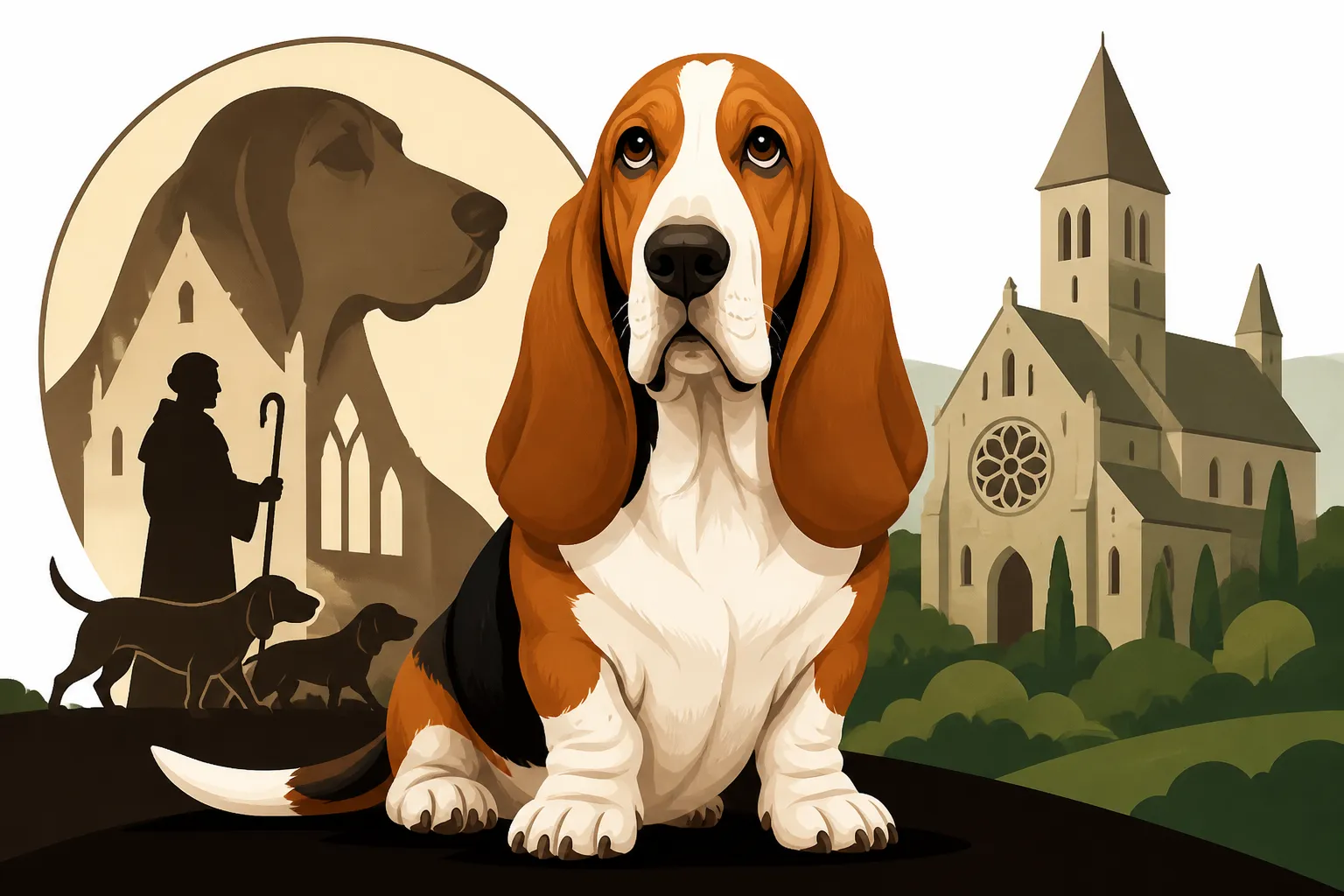
Following Saint Hubert's death, his legacy, including his passion for hounds, was carried on by the monastic community at the Abbey of Saint Hubert in the Ardennes forest region, which is now part of Belgium. This abbey became a crucial center for the development and preservation of these remarkable hunting dogs. Far from being a mere kennel, the abbey functioned as a living repository of valuable genetics and a training ground for these specialized hounds.
Within the tranquil yet purposeful walls of the monastery, the monks had a unique opportunity to selectively breed their hounds. Unlike secular breeders who might have faced immediate economic pressures or warfare, the monastic setting provided stability and continuity. Their breeding goals were precise: to produce hounds with unparalleled scenting abilities, unwavering persistence on a trail, and a calm, tractable temperament, suited for the demanding work of tracking. The monks weren't necessarily looking for speed or flash, but for methodical efficiency and reliability. They understood that a hound that could consistently follow a cold trail for hours was invaluable. This careful stewardship at The Ardennes Abbey That Bred the First Hounds cemented the reputation of these "Abbey Hounds" as the finest scent trackers in Europe, a reputation that would influence many hound breeds, including our beloved Basset.
From Royal Parks to French Countryside: The Evolution of "Bas" Hounds
The direct descendants of these noble St. Hubert Hounds began to spread throughout Europe, particularly in France. While the original St. Hubert Hounds were large and powerful, practical considerations led to the development of a distinctly different, yet equally capable, variety: the "bas" hound. This shift wasn't a random mutation; it was a deliberate evolution driven by the changing needs of hunters.
The Rise of Short-Legged Hounds for Foot Hunters
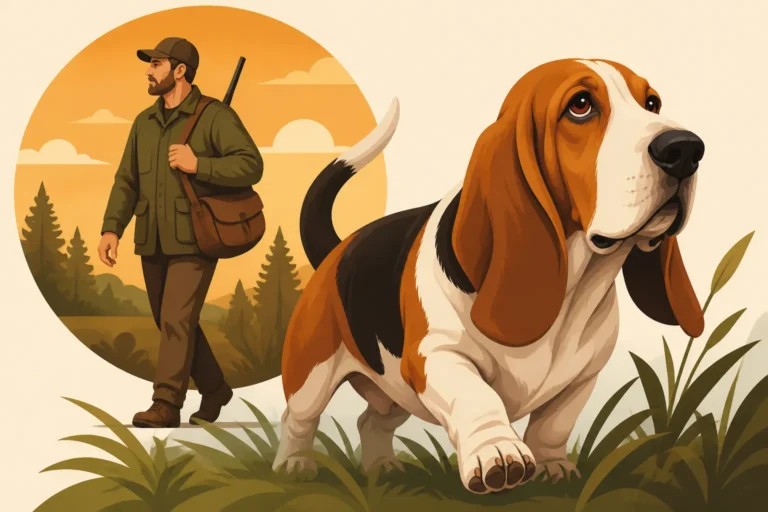
In medieval and Renaissance France, hunting was a vital part of life, both for sustenance and sport. However, not everyone hunted from horseback with a retinue of swift, long-legged hounds. For many, particularly those who hunted on foot, or in dense undergrowth where faster dogs would easily outpace their human companions, a different type of hound was needed. Enter the "bas" or "low" hound. These dogs, selectively bred for shorter legs, could work more closely with hunters on foot, navigating difficult terrain and maintaining a slower, more deliberate pace.
Imagine a hunter traversing thickets and brambles, trying to keep up with a speedy greyhound-like dog. It would be impossible. But a short-legged hound, with its nose glued to the ground, could methodically unravel a scent trail, allowing the hunter to follow at a comfortable walking pace. This was particularly advantageous for tracking smaller game like rabbits and hares, which could easily disappear into dense cover. The short legs also kept the dog's nose closer to the ground, potentially enhancing their ability to pick up subtle scent particles. This wasn't about creating a "cuter" dog; it was about optimizing a hunting tool for a very specific, practical purpose. Thus, the term "Basset" wasn't originally a breed name, but rather a descriptor for any short-legged hound. You might be interested in Where the First Basset Hounds Came From to understand the geographical spread.
Differentiation and Early Breed Types
As these short-legged hounds proliferated across different regions of France, local preferences and specific hunting conditions led to the emergence of various distinct types of "Bassets." These early variations were not yet formalized breeds as we understand them today, but rather recognizable regional strains, each with subtle differences in build, coat, and specific hunting aptitudes. Think of them as different tools for slightly different jobs within the same broad category.
For instance, the Basset d'Artois was known for its robust build and powerful voice, while the Basset Normand, a close ancestor of our modern Basset Hound, was often characterized by its slightly longer body and more exaggerated ears. Some might have been heavier-boned, others lighter. These distinctions often reflected the local game, terrain, and the specific hunting methods favored in each area. Breeders at the time, often local landowners or rural communities, were unknowingly laying the groundwork for the modern Basset Hound by selecting for traits that would become iconic. They sought dogs that not only excelled in scenting but also possessed the characteristic deep "bay" that allowed hunters to follow their progress even when out of sight. These distinct early types highlight the rich diversity within the "bas" hound category before the eventual standardization of the Basset Hound breed.
The Bloodhound Connection: Tracing the Ancestral Line
It's impossible to discuss the Basset Hound's ancestry without shining a spotlight on its larger, more imposing cousin: the Bloodhound. The connection isn't just superficial; it's deeply rooted in shared genetic history and common ancestral stock, providing the Basset with its most remarkable trait – an unparalleled nose.
Shared Heritage with the Majestic Bloodhound
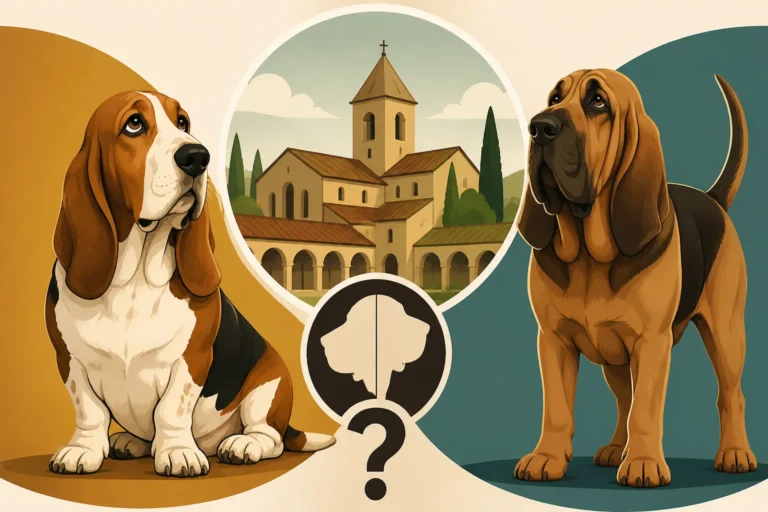
The Basset Hound is not just "related" to the Bloodhound; it is widely considered a direct descendant, essentially a dwarf version of the ancient St. Hubert Hound from which the Bloodhound also sprang. This means they share a common genetic blueprint for those extraordinary scenting abilities. The Bloodhound, with its massive size, deeply wrinkled face, and long, pendulous ears, is often referred to as the purest modern descendant of the St. Hubert Hound. When you look at a Basset Hound, you can see echoes of the Bloodhound: the loose skin, the mournful, deep-set eyes, and, of course, those magnificent long ears that help funnel scent directly to their powerful noses.
These shared traits aren't accidental. They were purposefully cultivated over centuries to create the ultimate scenting machine. The Basset inherited the Bloodhound's unparalleled olfactory receptors, its methodical trailing style, and its deep, resonant bay. While a Bloodhound might tackle a lost person or large game, the Basset applies the same genetic gifts to smaller quarry. It's a testament to the effectiveness of these ancestral characteristics that they were retained and even emphasized in the smaller version. For a fascinating dive into their shared genetics, consider reading Whether a Basset Hound is a Bloodhound Mutation. You'll see how slight genetic variations can lead to such different, yet equally impressive, breeds.
Purposeful Breeding for Distinct Characteristics
The transition from the larger St. Hubert Hound/Bloodhound type to the Basset Hound wasn't random; it was a deliberate and sustained effort by breeders to isolate and emphasize specific traits. The primary characteristic, of course, was the significantly shortened leg length. This trait, known as achondroplasia (a form of dwarfism), was present in some St. Hubert Hounds, and rather than being considered a flaw, it was actively selected for.
Imagine a world where slower, more manageable hounds were needed for hunting on foot. Breeders would meticulously select those puppies in a litter that exhibited the shortest legs, pairing them with similar individuals. Over generations, this careful selection solidified the characteristic low-slung body and short, sturdy legs we recognize today. But it wasn't just about the legs. This selective breeding also often led to the exaggeration of other "houndy" features: the longer, more pendulous ears became more pronounced, as did the loose skin and dewlaps that are believed to help trap and concentrate scent. The deep, mournful bay was also cherished. While we might ask Whether Short Legs Were Bred For or Just Kept, historical evidence points to a definite, purposeful selection driven by hunting utility. This rigorous breeding program, though perhaps informal by modern standards, was incredibly effective at crafting a dog perfectly suited to its unique niche.
Crossing the Channel: The Basset Hound in Britain
While the Basset Hound's roots are undeniably French, its refinement and eventual rise to international prominence owe much to its journey across the English Channel. Britain played a pivotal role in standardizing the breed and introducing it to a wider audience.
Introduction to British Nobility
The first Basset Hounds made their way to Britain in the mid-19th century, brought over from France by various enthusiasts, often members of the aristocracy. It's easy to imagine these unique-looking hounds catching the eye of English gentry who were always keen on new and interesting additions to their kennels. One of the earliest and most significant imports was a pair named Basset and Belle, brought by Lord Galway in 1866. This introduction marked the beginning of the Basset Hound's establishment on British soil.
Initially, these imports were likely admired as curiosities or used in limited hunting capacities, but their distinctive appearance and amiable temperament soon won over more hearts. They quickly became a fashionable breed among the upper classes, admired for their unique charm and the novelty of their "French" origins. The British had a long-standing tradition of developing and refining dog breeds, and the Basset Hound proved to be an exciting new canvas. The arrival of these hounds wasn't just a simple transfer; it was the spark that ignited the breed's future, as you can read more about in When the Basset Hound Reached Britain.
Development of the Modern Basset Hound Standard
Once established in Britain, the Basset Hound underwent a period of significant development and standardization. British breeders, known for their meticulous approach to dog breeding, began to consolidate the various French types into a more consistent form. They favored certain traits, often emphasizing the exaggerated features that would become characteristic of the modern Basset Hound: the extreme length of ear, the deep wrinkles, and the low-slung body.
This era saw the formation of the first Basset Hound clubs, such as the Basset Hound Club of England, which was founded in 1884. These clubs were instrumental in defining the breed standard – a detailed description of the ideal Basset Hound, covering everything from ear length and eye shape to gait and temperament. This standardization helped to create a uniform type, ensuring that Basset Hounds, regardless of their specific lineage, would conform to a recognizable ideal. While this process helped solidify the breed's appearance, it also led to some subtle divergences from their French counterparts. The British version often leaned towards a heavier, more substantial dog with more dramatic features. This era of refinement truly sculpted the Basset Hound into the iconic image we recognize today, setting the stage for its global appeal. You might find it interesting to explore Whether British and American Basset Hounds Differ to see how breeding lines further diversified.
The Basset Hound's Journey to America and Beyond
The appeal of the Basset Hound wasn't limited to European shores. Its unique looks, charming personality, and impressive scenting abilities soon caught the attention of enthusiasts across the Atlantic, leading to its widespread popularity in North America.
Early American Enthusiasts and Imports
The Basset Hound first arrived in the United States in the late 19th century, much like its introduction to Britain, primarily through imports by affluent individuals and dedicated breeders. One of the earliest records dates back to the 1880s, with General George Washington Lafayette, a descendent of the famous Marquis de Lafayette, reportedly importing a pair of Basset Hounds. This early interest helped establish the breed on American soil, albeit on a small scale initially.
These early American Basset Hounds were often cherished for both their hunting prowess and their unusual appearance. They quickly garnered a small but dedicated following among hunters and dog fanciers who appreciated their unique tracking ability and docile nature. Establishing a new breed in a vast country like the United States presented its own set of challenges, from finding suitable breeding stock to educating the public about these distinctive hounds. However, the breed's inherent charm and usefulness meant that its numbers slowly but steadily grew. You can learn more about these pioneering efforts in When the Basset Hound Reached America.
Recognition and Public Awareness
The Basset Hound's trajectory in America took a significant leap with its official recognition by the American Kennel Club (AKC). The AKC formally recognized the breed in 1885, providing a crucial framework for its development, exhibition, and record-keeping within the United States. This recognition meant Basset Hounds could compete in dog shows, which significantly increased their visibility and appeal among the general public.
However, it wasn't just kennel club recognition that propelled the Basset Hound into the American consciousness. The mid-20th century saw the breed achieve widespread fame through popular culture. Perhaps most famously, a famous shoe brand's advertising campaigns prominently featured Basset Hounds, transforming them into household names and symbols of comfort and laid-back charm. This exposure rocketed the breed into an iconic status, making it instantly recognizable even to those unfamiliar with dog breeds. Whether a Shoe Advertisement Made the Basset Hound Famous details this fascinating period. Their mournful expressions and endearing clumsiness resonated deeply with the American public, solidifying their place not just as hunting dogs, but as beloved companions. This surge in popularity meant that many families, looking for a loyal and gentle dog, turned to the Basset Hound, further cementing its global footprint. Even today, you can find a huge variety of Basset Hound specific products on platforms like Chewy, a testament to their enduring popularity.
The Enduring Legacy of the Abbey Hounds
From their monastic origins to their modern-day status as beloved family pets, the Basset Hound carries an undeniable legacy. Every characteristic, from their incredible nose to their unique vocalizations, can be traced back to the purposeful breeding of those ancient Abbey Hounds.
Preserving Instinct and Temperament
Despite generations of selective breeding and changes in their primary role from dedicated hunters to cherished companions, Basset Hounds remarkably retain much of their ancestral instinct and temperament. The most prominent of these is, without a doubt, their incredible nose. The Basset Hound's olfactory capabilities are legendary, often touted as second only to the Bloodhound. This isn't just a fun fact; it's a deep-seated instinct to follow a scent, an instinct that can, at times, override all other commands and distractions. If a Basset Hound catches a compelling scent, the world around them might as well cease to exist. You can read more about this incredible ability in The Nose That Puts a Basset Hound Second to a Bloodhound.
Alongside their scenting prowess, Basset Hounds also carry the distinctive voice of their ancestors: the deep, resonant bay. This characteristic sound was crucial for ancient hunters, allowing them to track their hounds through dense forests when out of sight. Today, while perhaps less practical for modern owners living in suburban neighborhoods, it remains a powerful link to their hunting heritage. The Bay a Basset Hound Uses and the Neighbors Hear is a vivid description of this very specific trait. While their hunting drive remains strong, the Basset's calm, amiable, and often stubborn demeanor is also a direct callback to their origins. The monastic environment that fostered them likely also valued a dog that was steady, gentle, and capable of long periods of quiet work, traits that perfectly describe the modern Basset. They are wonderfully tolerant and patient dogs, often making them excellent family pets, even if they occasionally need a firm, gentle reminder to come back from an intriguing smell. Many Basset owners today still enjoy seeing their hounds engage with scent work games or enrichment items available from retailers like Chewy.
Modern Basset Hound and the Future of the Breed
Today's Basset Hound is a magnificent blend of ancient instinct and modern companionship. However, this journey hasn't been without its challenges. The very features that make the Basset Hound so unique – their long ears, droopy eyes, loose skin, and short legs – can also predispose them to certain health issues. Responsible breeders and enthusiasts are constantly working to balance the preservation of classic breed characteristics with an emphasis on health and welfare.
There's ongoing discussion, for instance, about whether the breed has been bred to be too low, or if certain exaggerated features cause discomfort or health problems. Whether the Basset Hound Has Been Bred Too Low delves into this important topic. Ethical breeding practices focus on health testing and striving for moderation within the breed standard to ensure that Basset Hounds can live long, comfortable lives. The breed clubs continue to play a vital role in guiding these efforts, ensuring that future generations of Basset Hounds embody the best qualities of their ancestors while minimizing potential vulnerabilities.
The Basset Hound’s enduring popularity, from show rings to family sofas, is a testament to its unique charm, unwavering loyalty, and the incredible legacy of those original Abbey Hounds. Whether tracing a scent in a field or simply snoring contentedly on a rug, the Basset Hound remains a living connection to centuries of history, a dog bred for purpose and now cherished for its heart. Finding products and information from reliable sources, such as Chewy, can help you provide the best care for your Basset Hound, ensuring their comfort and health for years to come.
Disclaimer
This article is for general informational purposes only and does not constitute professional advice. Laws, prices and regulations vary by location and change over time. Consult a qualified professional for guidance on your specific situation.