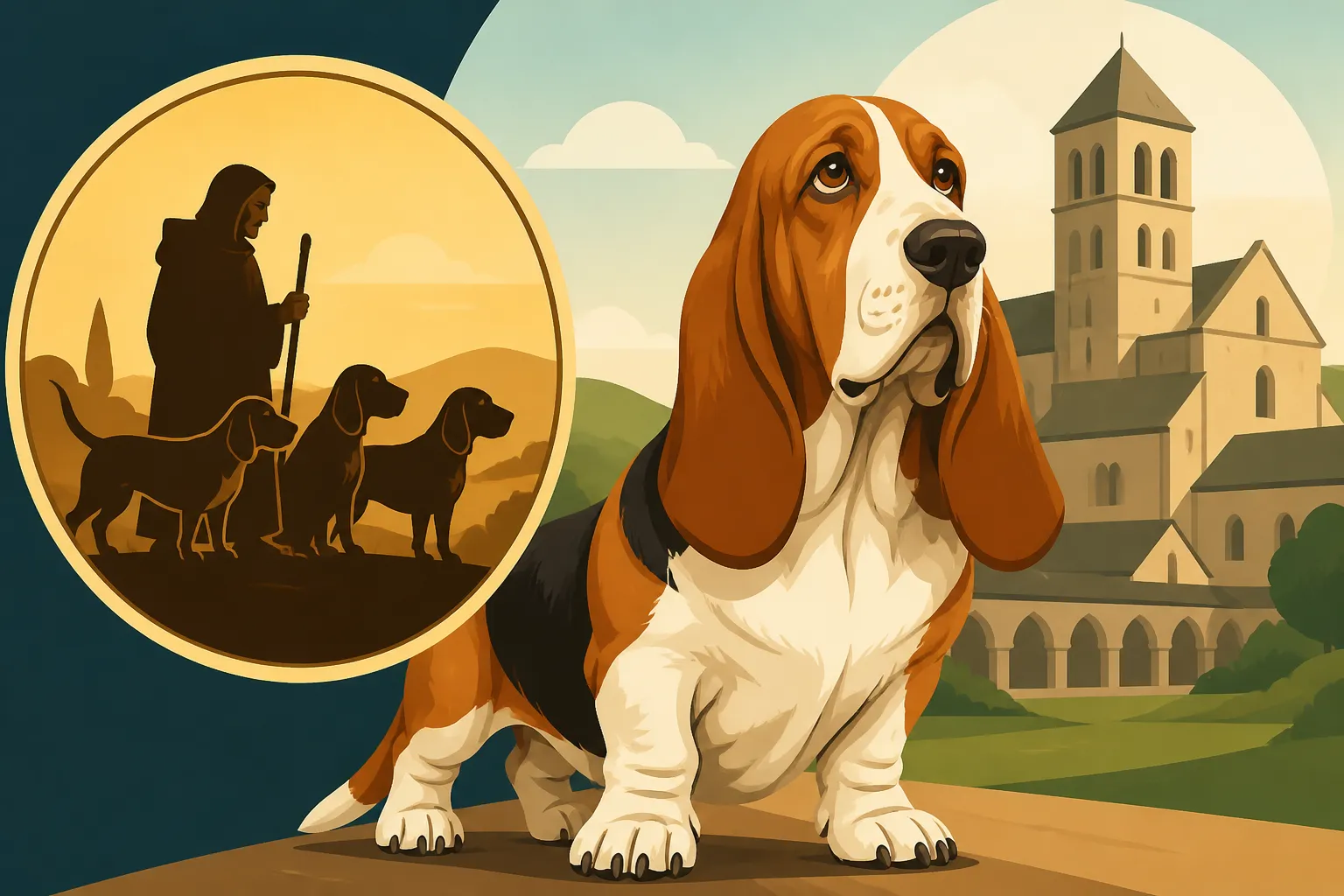
The Year the Abbey Hounds Are First Recorded
It’s easy to look at our beloved Basset Hounds, with their impossibly long ears and soulful eyes, and think they must be a relatively modern creation, a dog bred purely for our companionship. But the truth is, the lineage of these incredible scent hounds stretches back centuries, intertwined with the history of hunting, nobility, and even religious institutions. For many of us Basset owners, understanding where these unique dogs came from helps us appreciate their instincts, their quirks, and their unparalleled noses even more. This guide will take you on a journey back in time to explore the very earliest records of the "Abbey Hounds" and how these foundational dogs shaped the Basset Hounds we adore today.
Setting the Scene: Europe's Early Monasteries and Hunting Traditions
To truly understand the origins of our Basset Hounds, we need to travel to medieval Europe, a time when hunting was not just a sport for the elite, but a vital activity for sustenance and social standing. Dogs, particularly those with keen noses and relentless tracking abilities, were prized possessions.
The Role of Monasteries in Medieval Animal Husbandry
It might seem a little surprising at first, but monasteries played a profoundly important role in the development and preservation of various animal breeds, including hunting hounds. Far from being isolated havens of quiet contemplation, these institutions were often self-sufficient, highly organized centers of agriculture, craft, and sometimes, even selective breeding. Monks were literate, meticulous record-keepers, and had the resources and consistent environment necessary for such endeavors. They weren't just praying and tilling fields; they were also carefully cultivating lineages of animals.
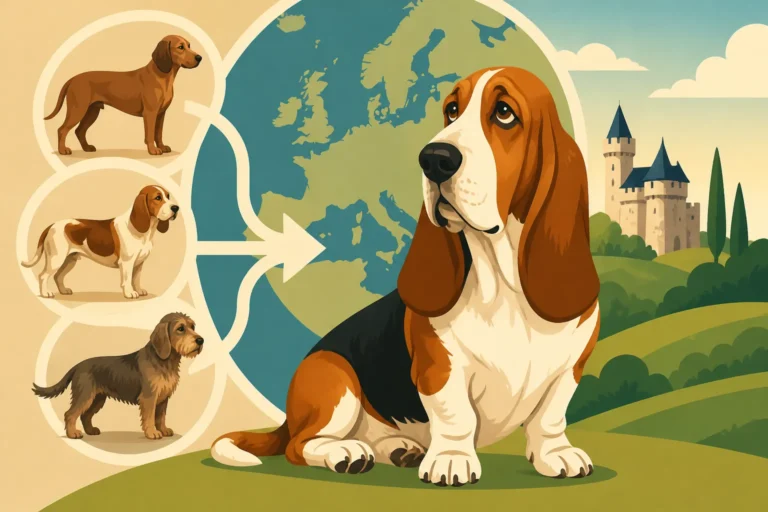
Imagine the sprawling grounds of an ancient abbey, perhaps tucked away in a verdant valley in what is now Belgium or France. These religious orders often possessed vast tracts of land, including forests teeming with game. Hunting was a necessity to provide food for the monastic community, but it also became a refined pursuit, especially as noble patrons often gifted or entrusted their finest hounds to the care of the monks. This exchange helped concentrate some of the best hunting stock within the monastic walls. Unlike individual hunters who might breed opportunistically, monastic communities had the stability and long-term vision to engage in more deliberate breeding programs, often focusing on specific traits that made a hound exceptional in the field. This careful husbandry was crucial in developing what we would later recognize as distinct types of hounds. They weren't just keeping dogs; they were actively working to refine their hunting capabilities.
The Importance of Scent Hounds in Medieval Hunting
In an age before firearms, the success of a hunt relied heavily on the skill of the hounds. Scent hounds, with their extraordinary ability to follow a trail for miles, were invaluable. They could pick up the faint scent of deer, wild boar, or even smaller game like rabbits, and follow it relentlessly, often pushing the quarry towards the waiting hunters. This wasn't just about catching dinner; it was a highly ritualized activity, steeped in tradition and social hierarchy. A good pack of hounds was a symbol of wealth and power, and their performance in the field was a matter of great pride.
The terrain in many parts of Europe, particularly the dense forests of the Ardennes region, could be challenging. Undergrowth was thick, visibility was often poor, and animals could easily disappear. This is where the particular attributes of a low-slung, deliberate scent hound truly shone. While faster hounds might lose a trail or outrun the hunters on foot, a dog that could meticulously follow a cold scent, without getting ahead of the hunting party, was prized. The goal wasn't always a swift kill, but often a methodical pursuit that could last for hours, engaging the hunters in the chase. The development of breeds like the Basset Hound was a direct response to these specific hunting conditions and preferences. It wasn't about speed, it was about persistence and an unwavering nose, a trait that continues to define our Bassets today.
Pinpointing the Abbey Hounds: Unraveling the Basset Hound's Ancestry
So, when exactly do these "Abbey Hounds" make their grand entrance into the historical record? The story is a fascinating blend of legend and documented history, deeply rooted in the traditions of European hound breeding.
The Legend of Saint Hubert and His Hounds
Any discussion of the Basset Hound's ancient lineage invariably leads back to Who Saint Hubert Was. Born an aristocrat in the 7th century, Hubert was initially a fervent hunter. Legend has it that on a Good Friday, while hunting, he encountered a magnificent stag with a crucifix between its antlers. This vision led to his spiritual conversion, and he eventually became Bishop of Liège and is now revered as the patron saint of hunters. The hounds associated with him are known as "St. Hubert Hounds."
These were large, dark, deep-chested scent hounds, renowned for their incredible noses and stamina. They were meticulously bred at the Abbey of Saint-Hubert in the Ardennes forest, a region famous for its dense woodlands and rich hunting grounds. These original St. Hubert Hounds are considered direct ancestors not only of the Basset Hound but also of the Bloodhound. The monks at The Ardennes Abbey That Bred the First Hounds continued to breed these dogs for centuries, maintaining their purity and exceptional scenting abilities. They were even gifted to European royalty, spreading their esteemed genetics far and wide. The meticulousness of the monastic breeding program meant that their characteristics were carefully preserved, laying the groundwork for many modern scent hound breeds. This focus on scenting ability above all else is a powerful thread connecting these ancient hounds to the Bassets we know.
The First Written Mentions and Visual Depictions
While the St. Hubert Hounds existed for centuries, the term "basset" — derived from the French word "bas," meaning "low" or "dwarf," which gives us What Bas Means in French — began to appear in texts around the 16th century. This wasn't initially a specific breed name, but rather a descriptor for any short-legged hound.
The first clear written record of a "basset" type hound being specifically documented, rather than just alluded to, often points to an account by Jacques du Fouilloux in his comprehensive hunting manual, La Vénerie, published in 1585. Du Fouilloux, a French nobleman and experienced hunter, described various types of hounds used for hunting different game. He detailed short-legged hounds employed to flush badgers and foxes from their dens, and to track hares and rabbits. He categorized them by coat type and origin, clearly distinguishing these low-to-the-ground dogs from their longer-legged counterparts. This is where we truly see the emergence of what would become the Basset Hound. These aren't just vague references; these are specific descriptions of dogs with short legs, long bodies, and formidable scenting skills, clearly indicating a purpose-bred animal.
Visual depictions also emerge around this period. You can find illustrations in these historical hunting texts showing hounds with the distinctive characteristics that would eventually coalesce into the Basset Hound breed: long, heavy bodies, short legs, and those wonderfully expressive faces. These early records confirm that the concept of a specialized, low-slung scent hound, bred for specific hunting tasks, was firmly established by the late 16th century. It’s truly amazing to think that the same fundamental design for a dog, meant to follow a scent with its nose to the ground, has endured for over 400 years.
| Aspect of Early Basset Hounds | Description in the 16th Century | Connection to Modern Basset Hounds |
|---|---|---|
| Leg Length | Described as "bas" or "dwarf" | Characteristic short, sturdy legs |
| Primary Use | Hunting small game (badgers, hares, rabbits), flushing from cover | Strong hunting instinct, keen nose |
| Scenting Ability | Highly valued for tracking prowess | Second only to a Bloodhound, relentless on a trail |
| Temperament | Persistent, methodical, not overly fast | Deliberate, sometimes "stubborn," but driven by scent |
| Ear Length | Often depicted with long ears, though perhaps not as exaggerated as today | Signature long, pendulous ears |
The Characteristics of These Early "Basset" Type Hounds
These early "Abbey Hounds" and their direct descendants weren't just any short dogs; they possessed specific traits that made them uniquely suited for the hunting needs of the time, many of which still define the Basset Hound today.
The Practicality of a Low-Slung Hound
Why would anyone deliberately breed a dog with such short legs? It might seem counterintuitive if you're thinking about a fast, agile hunter. However, the short stature of these hounds was precisely their greatest asset in certain types of hunting. Why French Hunters Wanted a Slow Hound is a key piece of the puzzle. Imagine hunting in dense underbrush or thickets where taller dogs would struggle to navigate or simply overshoot the scent. A low-slung hound could push its way through dense cover, its body close to the ground, keeping its nose firmly on the trail without lifting its head.
Furthermore, medieval hunters, especially those on foot, couldn't keep up with a speedy dog. A slower, more methodical hound allowed the human hunters to follow the chase at a manageable pace. This was particularly true for trailing animals like rabbits or hares, where a steady, unwavering pursuit was more effective than a quick dash that could scatter the quarry and lose the scent entirely. The Basset type hound, therefore, became an indispensable tool for hunting specific types of game in particular environments. Its unique build was a deliberate design, not an accidental mutation. The low center of gravity also gave them incredible stability, allowing them to traverse difficult terrain without losing balance or their focus on the scent.
Their Unmistakable Scenting Prowess
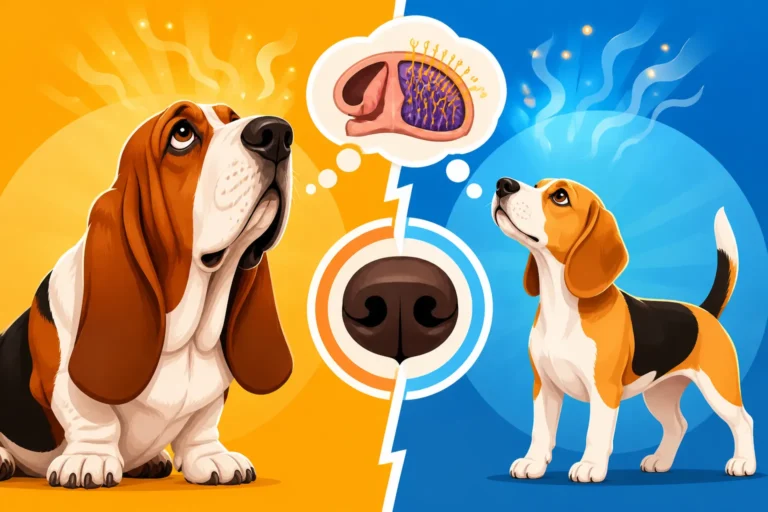
The most defining characteristic of these "Abbey Hounds" and all their descendants, including our modern Bassets, was and remains their absolutely phenomenal sense of smell. These were dogs bred for their nose, above all else. The Nose That Puts a Basset Hound Second to a Bloodhound is a testament to this incredible faculty. Their long, heavy ears, which often drag on the ground as they track, are not just for show; they actually help to sweep scent particles upwards towards their nostrils, effectively creating a "scent tunnel." This is why you see so much emphasis on The Twelve Inch Ears a Basset Hound Was Given on Purpose in breed standards and discussions.
Their loose skin, particularly the abundant dewlap around their neck and throat, also plays a role in trapping scent, helping them to focus on a particular trail without interference from other odors. These physical adaptations, combined with an unparalleled number of olfactory receptors, meant that these early hounds could follow a trail hours, even days, old. They were relentless, focused, and virtually unstoppable once they picked up a scent. This genetic gift means that even today, a casual walk with a Basset Hound often turns into an intensive scent-tracking expedition for them, much to the exasperation (or amusement) of their owners. It's not stubbornness; it's a deep-seated instinct passed down through generations.
The Evolution from Abbey Hound to Modern Basset Hound
From these early monastic hounds, a distinct line emerged, leading directly to the Basset Hounds we know and love today. It wasn't a straight path, but a fascinating journey of selective breeding and adaptation.
How the Breed Developed Over Centuries
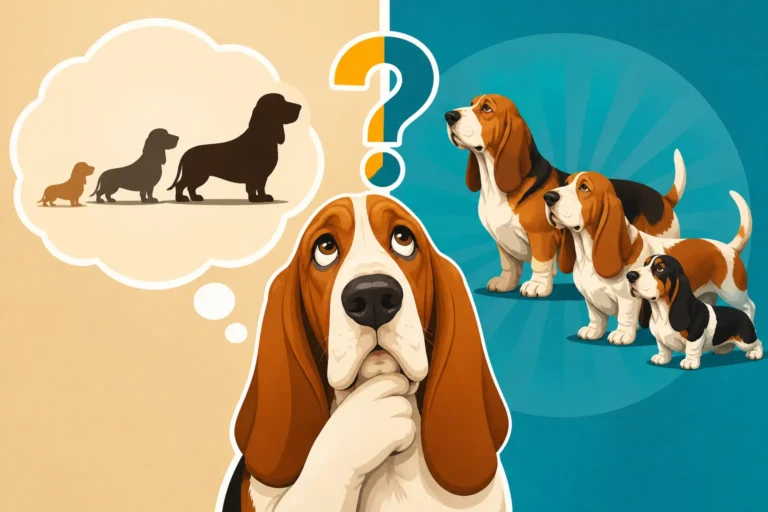
Following du Fouilloux's descriptions, various types of "basset" hounds continued to be bred across France. It's worth noting that for a long time, "basset" referred more to a type of dog (short-legged) rather than a singular, standardized breed. Different regions had their own localized varieties, often named after their area of origin or the specific game they hunted. For instance, the Basset Artésien Normand, a close cousin, is still recognized today.
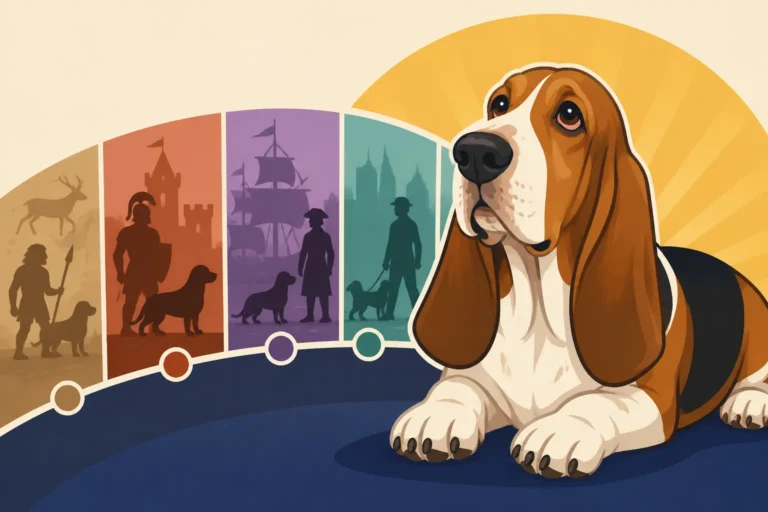
Over time, particularly in the 19th century, more focused breeding efforts began to refine these various "basset" types into what would become the modern Basset Hound. Breeders started to emphasize certain physical traits, such as the distinctively heavy bone, the very long, low-set ears, and the mournful expression, alongside the continued focus on scenting ability. It wasn't always a smooth process; some argue that aspects of their physical form, like excessive skin or eye issues, have been exaggerated. But the core purpose — a supreme scent hound — remained. These hounds gained popularity beyond France, with some being imported to England and America in the mid to late 1800s, quickly captivating dog enthusiasts with their unique charm. The story of their development is a testament to how specific purposes can shape a breed over hundreds of years. You might wonder Whether the Basset Hound Was an Accident; in truth, their physical traits were largely a deliberate cultivation to achieve maximum effectiveness as scent hunters.
Connecting the Past to Our Floppy-Eared Friends Today
So, how do those ancient Abbey Hounds connect to the Basset sleeping on your couch or sniffing every blade of grass in your yard? The connection is direct and profound. The St. Hubert Hounds provided the genetic foundation for the incredible noses, the deep baying voices, and the relentless tracking drive that are hallmarks of the Basset Hound. The "basset" types described by du Fouilloux formalized the idea of a short-legged scent hound. Every time your Basset ignores your recall because its nose is glued to a particularly interesting scent, you're witnessing hundreds of years of selective breeding at work. It's not just a cute quirk; it's their purpose.
Modern Basset Hounds retain all the core characteristics that made their ancestors so effective: the low-slung body for ground-scenting, the long ears for scent-gathering, and that unparalleled nose. While today many Bassets are beloved companions rather than active hunters, their instincts are very much alive. That’s why enriching their lives with scent work or even just letting them follow their nose on a long lead is so fulfilling for them. It honors their ancient heritage. While you might pick up your favorite Basset supplies from a brand like Chewy, remember that the dog those supplies are for has a lineage that predates many of the comforts we enjoy today. Understanding this history gives us a deeper appreciation for these magnificent, sometimes perplexing, but always endearing dogs. While we might fret about What a Basset Hound Costs a Year to Keep or What Actually Motivates a Basset Hound, their fundamental nature as a superb scent hound has remained constant through the centuries.
Disclaimer
This article is for general informational purposes only and does not constitute professional advice. Laws, prices and regulations vary by location and change over time. Consult a qualified professional for guidance on your specific situation.