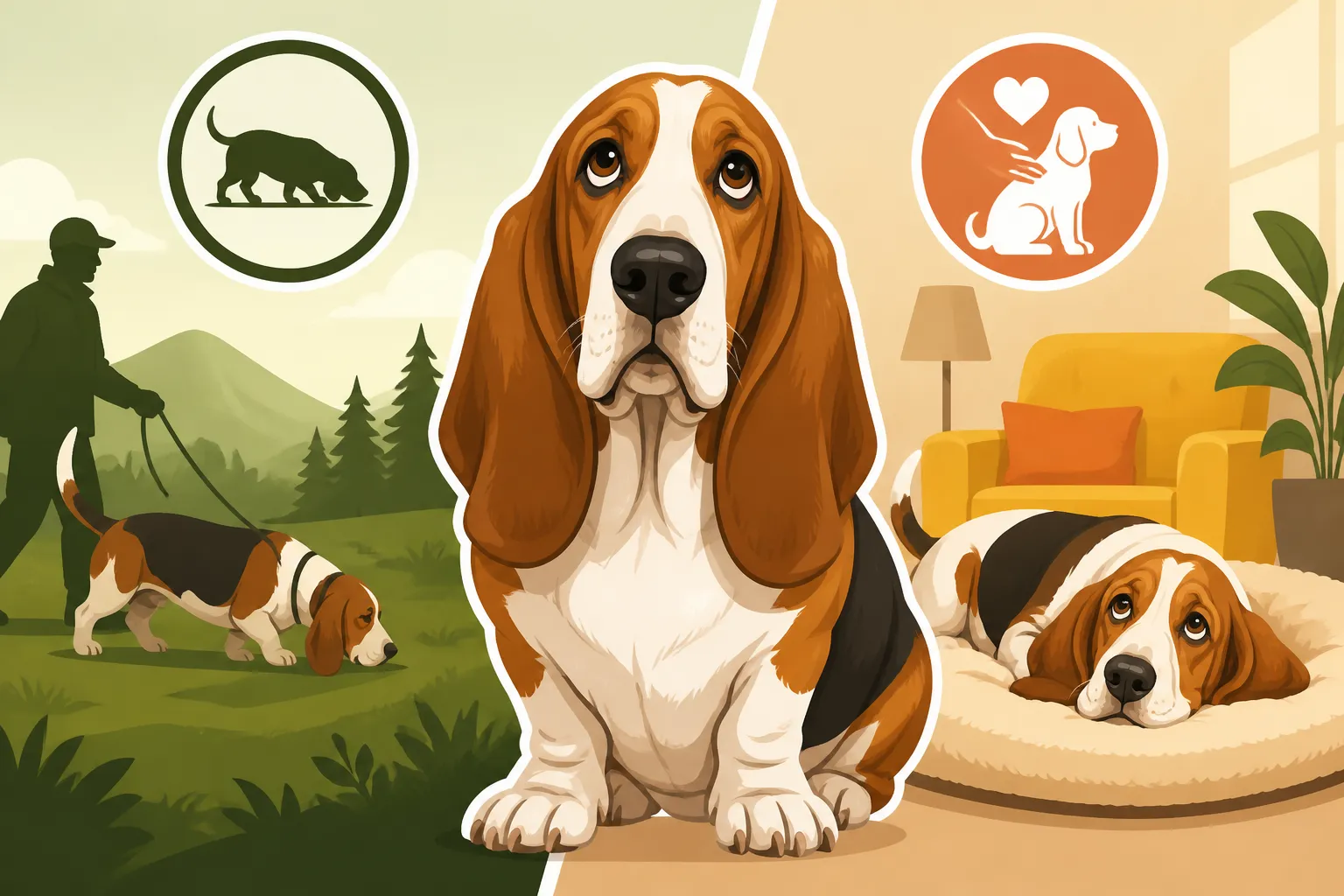
Whether the Basset Hound Is a Hound or a Companion Now
A Basset Hound can spend an afternoon following a scent with the focus of a working dog, then curl up beside you like a devoted couch companion. That mix can be confusing if you expect “pet dog” to mean easy recall or little interest in the world outside your home. Here’s what the breed’s hound heritage means in everyday life—and what has, and hasn’t, changed.
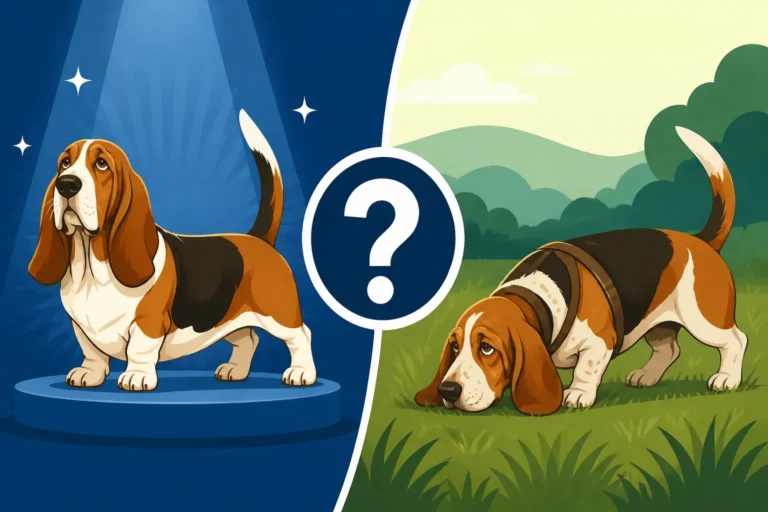
The Basset Hound is still a hound by heritage and classification
The breed was developed to follow a scent
Basset Hounds were bred as scent hounds: dogs that use their noses to follow an animal’s trail. Their low build suited hunters on foot, who could keep pace with a slower-moving hound rather than follow fast-running dogs on horseback. Working in a pack, Bassets could track game through brush and uneven ground while their distinctive bay helped people hear where the dogs were.
That history is not just an old story attached to a modern-looking pet. It helps explain why many Basset Hounds become absorbed in a smell, why food can be a powerful motivator, and why a promising trail may compete with your voice. The breed’s physical shape and scenting ability developed in service of a job. For more on the historical purpose behind that pace, see Why a Hunter on Foot Wanted a Slow Hound.
The Basset Hound is still recognized as a hound in major kennel-club classifications. The American Kennel Club places the breed in its Hound Group, while the Fédération Cynologique Internationale groups it with scent hounds and related breeds. Those categories describe the breed’s history and type; they don’t mean every individual Basset Hound is a trained hunting dog.
“Companion” describes the role many Bassets have today
Many Basset Hounds now live as family pets rather than working members of a hunting pack. They share homes, take neighborhood walks, and spend much of their time close to their people. In that sense, they are companions—just as dogs from many working and sporting backgrounds are companions today.
But companion is a description of a dog’s place in a household, not a promise that its instincts have disappeared. A Basset who has never hunted may still slow down to investigate a track, follow a scent along a fence line, or become less responsive when something interesting catches its nose. That’s not necessarily defiance. It may be a normal expression of the sensory skills the breed was developed to use.
| Question | Hound heritage | Companion life today |
|---|---|---|
| What does the label describe? | The breed’s history, purpose, and scent-hound type | The dog’s role in a household |
| What may you notice? | Strong interest in smells, tracking, and vocalizing | Affection, shared routines, and life as a family pet |
| Does one cancel out the other? | No | A Basset can be both a hound and a companion |
| What helps owners? | Safe management and nose-based activities | Patient training, enrichment, and realistic expectations |
How hound instincts show up in an ordinary home
A scent can become more interesting than a familiar cue
You might call your Basset from the garden and see those long ears barely twitch while the nose stays fixed to a trail. It can feel personal, especially after practicing recall at home. But a command learned in a quiet room may not yet be reliable beside a fresh rabbit trail, a dropped sandwich, or a scent left by another dog.
This is one reason to keep a Basset Hound on a leash or a secure long line outside fenced areas. A dog following its nose may drift farther than you expect, and coming when called can be difficult when the scent is highly rewarding. Training still matters, but it should be paired with sensible safety arrangements—not treated as a guarantee that the dog will always disengage. Read Why a Basset Hound Ignores You on a Scent and Whether a Basset Hound Should Ever Be Off Leash for more on those common frustrations.
When practicing, start in a low-distraction space and reward your dog for turning back to you. Gradually add mild distractions, then more challenging environments while keeping the dog safely attached to a leash. If your Basset becomes absorbed in a scent, calmly create distance from it rather than repeatedly shouting the cue. Repetition without a chance of success can make both of you frustrated.
The nose needs an outlet, not just a walk
A walk gives a Basset exercise, but it also offers something especially valuable to a scent hound: time to investigate. A brisk march around the block may not be as satisfying as a slower walk with safe sniffing breaks. You can also make nose work part of the day at home by hiding a few pieces of the dog’s measured food around a room, scattering kibble across a snuffle mat, or asking the dog to search for a familiar toy.
Keep the activity easy at first. Let your dog see you hide a treat, then gradually make the hiding spots more challenging. For example, you might place a piece of kibble beside a chair leg before moving it behind a cushion. Use part of the regular meal where possible, so enrichment doesn’t quietly add extra calories. If you’re looking for a snuffle mat or food puzzle, Chewy is one retailer owners may browse; choose a size and design that suits your dog and supervise the first sessions.
A few short sniffing games can fit into an ordinary day, even when the weather makes a long walk uncomfortable. For more ideas, see Giving a Basset Hound's Nose Something to Do. If your dog seems uninterested in a game, try a simpler search or a more appealing reward rather than assuming the breed is lazy or incapable of learning.
What makes a Basset Hound a good companion—and what takes work
The affectionate side is real, but so is the hound side
Basset Hounds are often described as easygoing and sociable, and many enjoy being near their people. A dog may follow you from room to room, settle at your feet, and happily join a quiet household routine. That companionship can be lovely, particularly for someone who wants a dog with a steady presence rather than an all-day running partner.
Still, living with a Basset Hound often means adapting to the dog’s particular needs. A determined nose can make walks meander. A bay may carry farther than you expect in a quiet neighborhood. Food motivation can help with training, but it also means unattended snacks and bins may attract attention. These aren’t reasons to avoid the breed; they’re practical realities to consider before bringing one home. The Household a Basset Hound Actually Fits explores the kind of home and routine that may suit the breed.
Training tends to go better when it is rewarding, consistent, and broken into manageable sessions. A Basset that pauses or seems to ignore a cue may need a clearer reward, less distraction, or more practice—not a harsher correction. The breed’s independent streak can be mistaken for stubbornness, so it helps to ask what the dog is responding to and whether the cue has been learned in that setting. See Whether a Basset Hound Is Stubborn or Just Not Interested for a closer look.
A companion still needs safe boundaries
A fenced yard, secure doors, and reliable leash habits matter because a Basset may follow a scent beyond the boundary of a familiar space. Check that gates close properly and that there are no gaps a curious dog can squeeze through. On walks, use well-fitted equipment and keep a close eye on the lead when passing open areas, busy roads, or places with tempting wildlife smells.
At home, give the dog a comfortable place to rest and regular opportunities for gentle activity and sniffing. Avoid relying on a yard alone to meet every need: outdoor space does not replace interaction, training, or walks. If you provide toys or enrichment items, supervise their use and remove anything that becomes damaged. Chewy may be one place to look for basic dog supplies such as leads or puzzle toys, but the key is choosing equipment that fits your dog and using it safely.
Think through the practical side before deciding the breed is right for you. Can you keep your dog leashed where recall is uncertain? Are you comfortable with a dog who may take a while to move on from an interesting smell? Can your household manage the noise and daily care? These questions matter more than whether the dog is called a hound or a companion. For a broader checklist, see Whether a Basset Hound Suits a First Time Owner.
So, is a Basset Hound a hound or a companion now?
The honest answer is both
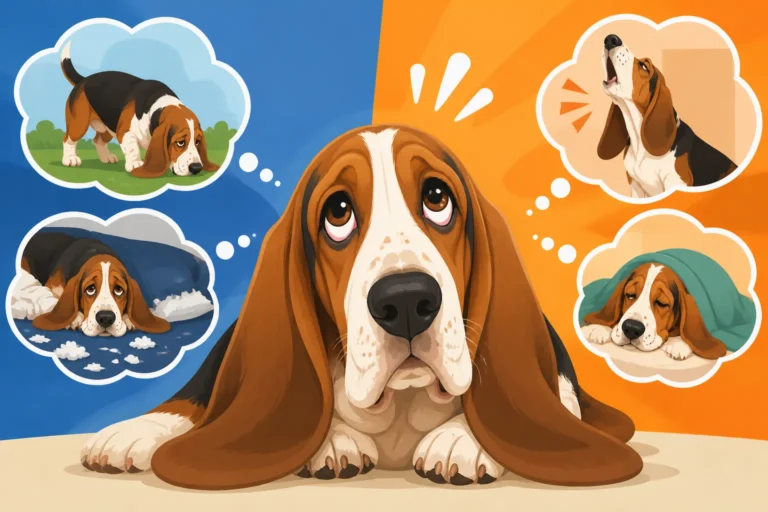
“Hound” refers to the Basset Hound’s breed history, physical type, and place in dog classifications. “Companion” refers to how many Basset Hounds live today: as members of a family rather than working dogs. Those descriptions fit together without contradiction. A Basset can be a cherished pet and still have the instincts and preferences of a scent hound.
That distinction can make everyday life easier to understand. If your dog gets captivated by a scent, the behavior has a breed-related explanation, even though you’ll still need to manage it. If your dog enjoys searching for hidden food, you can treat that interest as useful enrichment. If recall falters outdoors, you can build training gradually while keeping the dog safely on lead.
Match your expectations to the dog in front of you
No breed description predicts every individual. One Basset may be especially persistent about following smells; another may be more content to nap after a stroll. Age, health, training, experience, and the surrounding environment all influence behavior. Pay attention to what your own dog enjoys, what makes them lose focus, and what helps them settle.
The most realistic expectation is not that a companion Basset will behave like a dog without hound instincts. It’s that you can build a good life together by making room for those instincts while setting kind, consistent limits. Offer safe sniffing opportunities, reward attention, manage outdoor access, and don’t treat an unreliable recall as a safe reason to unclip the leash. Chewy and other pet retailers can help owners find enrichment supplies, but no toy replaces supervised activity and time spent learning what your dog needs.
A Basset Hound is not an either-or choice: the breed remains a hound, and many individual dogs are companions in the fullest sense. Understanding both sides helps set fair expectations—for you and for the dog sharing your home.
Disclaimer
This article is for general informational purposes only and does not constitute professional advice. Laws, prices and regulations vary by location and change over time. Consult a qualified professional for guidance on your specific situation.