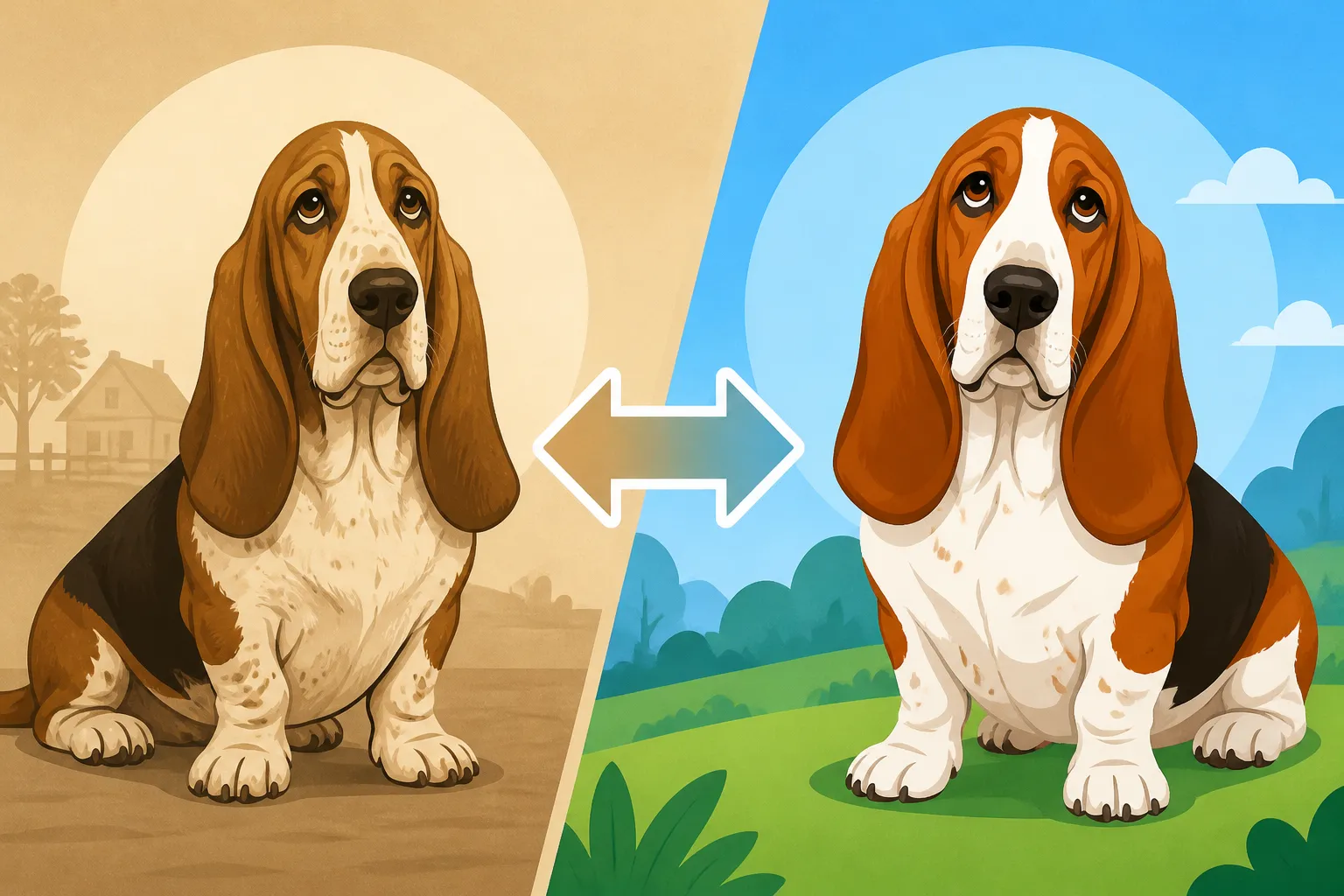
Whether the Basset Hound’s Look Has Changed in a Century
A Basset Hound in an old family photograph may look familiar, yet noticeably different from the dog beside you today. The breed’s long ears and low outline have endured, while body weight, skin, and overall presentation can vary across generations and breeding lines. This guide explains what has changed, what has stayed recognizable, and how to compare historical images without mistaking fashion or photography for a breed-wide transformation.
The Basset Hound’s familiar outline has deep roots
The defining features were already there
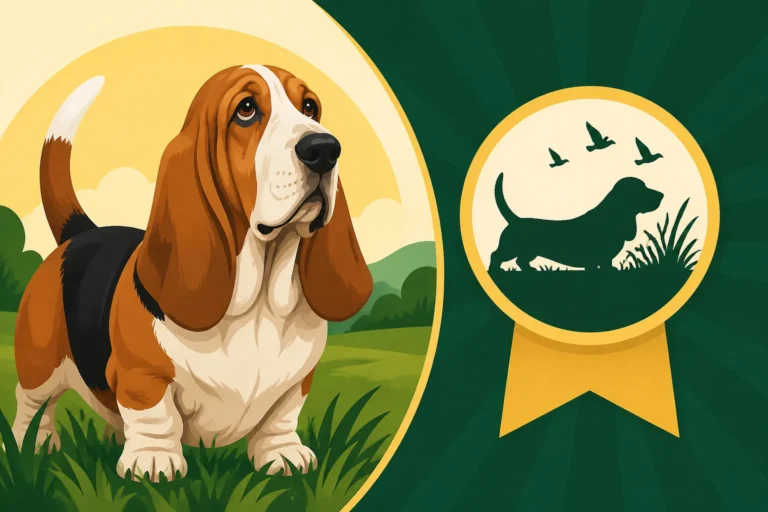
The Basset Hound’s basic shape is not a recent invention. Long, low-set ears, short legs, a substantial body, loose skin, and a scent-hound head are features associated with the breed’s development in France. The word “basset” itself refers to being low, and that low profile helped hunters follow a hound on foot rather than keep pace with a faster dog on horseback.
Those features still make a Basset Hound easy to recognize in old photographs and artwork. Even when an image is grainy or the dog’s coat pattern is hard to see, its short legs, long back, hanging ears, and heavy-boned appearance tend to stand out. The details of the build may differ, but the overall silhouette remains familiar.
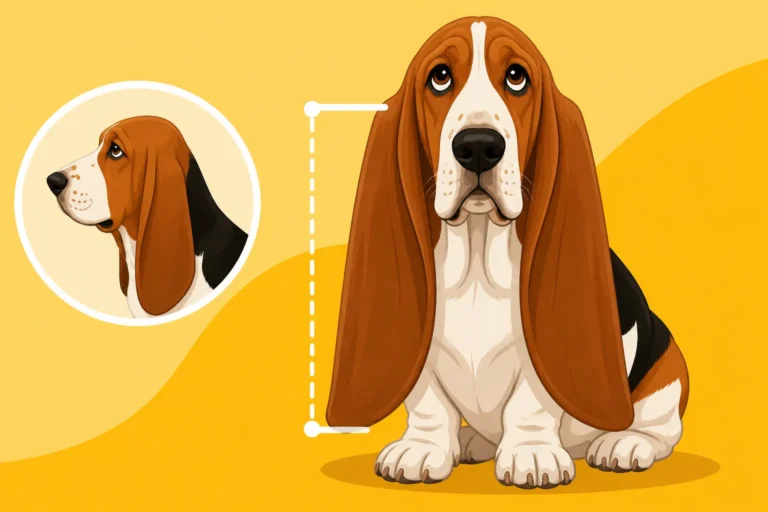
The ears and loose skin also have a practical history connected to scent work. A Basset Hound was bred to follow a trail close to the ground, and its head and skin folds contribute to the breed’s distinctive appearance. For more on the historical and functional role of those ears, read The Twelve Inch Ears a Basset Hound Was Given on Purpose.
The breed developed across regions and breeding lines
The Basset Hound did not arrive at its modern appearance through one single, uniform breeding tradition. Hounds were developed and bred in different places, and British and American breeding histories contributed to the dogs people recognize today. Local preferences, the work expected of the dogs, and the priorities of individual breeders all influenced the appearance of particular lines.
That history helps explain why two Basset Hounds can look quite different without either being unusual for the breed. One might appear more athletic and lighter in the body; another might have a broader chest, heavier bone, and more pronounced loose skin. Differences among show and hunting lines are one reason that a century-old photograph should not be treated as a perfect template for every modern dog. The article The Split Between Show and Hunting Basset Hounds explores those different priorities.
Breeding has also never meant that every dog in a generation looks exactly like an idealized illustration. Individual dogs vary in size, proportions, coat, and expression. When comparing images, it helps to keep the distinction between the breed’s characteristic outline and the range of real dogs within the breed in mind.
What looks different in Basset Hounds today
Some modern dogs appear heavier and more substantial
A common impression when comparing older pictures with some modern show photographs is that today’s Basset Hound looks heavier. In some lines, the dog may appear broader through the body, more heavily boned, or lower and closer to the ground. A deeper chest and fuller body can also make the legs look shorter, even when the difference is partly an effect of posture or camera angle.
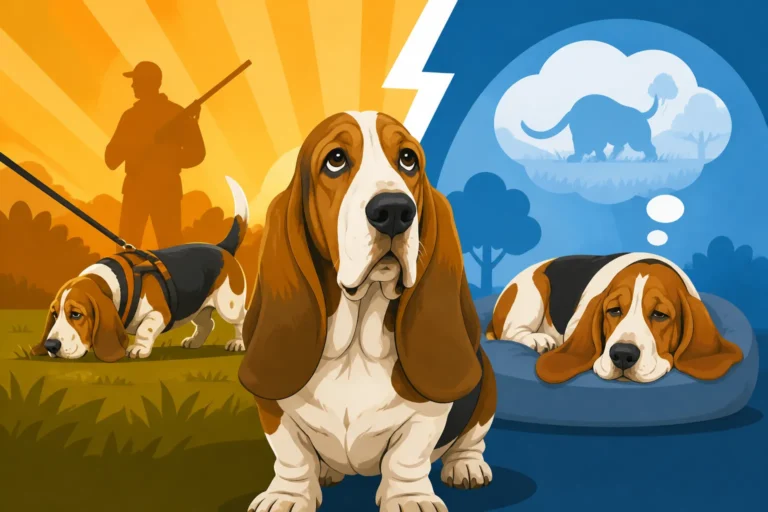
That impression is not the same as saying all Basset Hounds have changed in the same way. A working or field-bred dog may look leaner and more mobile than a show-bred dog, while dogs within either category can still vary. The comparison Whether Show and Field Basset Hounds Differ can help explain why a picture of a leaner hound may not match a modern show-ring example.
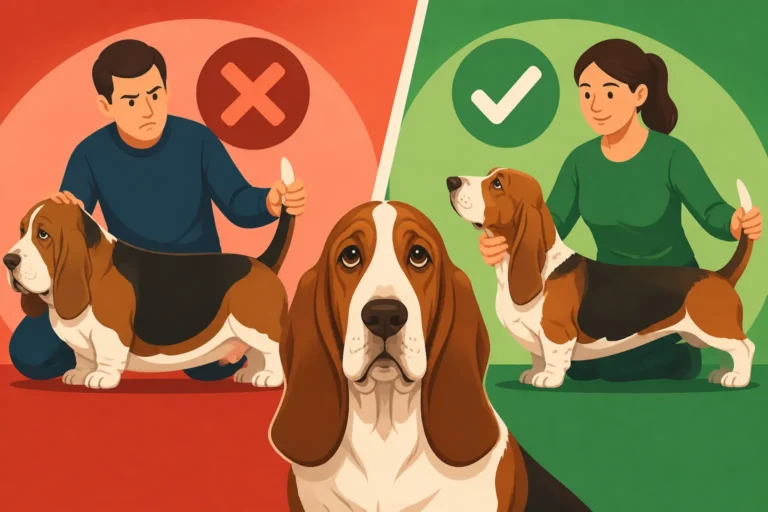
It is also worth separating a naturally substantial build from excess weight. Basset Hounds are sturdy, heavy-boned dogs, but a rounded waist or difficulty moving comfortably can reflect more than breed type. Comparing body condition is more useful than deciding that a dog is “correct” simply because it looks like a photograph from a particular era. Why a Basset Hound Weighs as Much as a Labrador discusses the breed’s surprising heft in more detail.
Skin, ears, and expression can look more pronounced
Loose skin, hanging ears, and soft facial expression are part of the Basset Hound’s familiar appearance. In some modern dogs, these features may look especially prominent: the ears seem longer, the skin folds deeper, or the lower eyelids more droopy. In other dogs, those traits are present but less dramatic.
A photograph can exaggerate these differences. A dog photographed with its head lowered may show more skin folds than one standing alert. Ears spread across the ground can look longer than ears hanging naturally beside the face. Shadows, lens angle, grooming, and the dog’s posture can all affect how much loose skin or facial detail you see.
There is a meaningful difference between a recognizable breed feature and an extreme that causes discomfort or health problems. The question is not simply whether a dog has loose skin, but whether its eyes, skin, movement, and daily comfort are affected. You can explore the welfare discussion in Whether the Basset Hound Has Been Bred Too Low and Whether a Basset Hound's Body Length Is a Welfare Problem.
| Feature | Often noticeable in older images | What may stand out in some modern images | What to keep in mind |
|---|---|---|---|
| Overall outline | Low, long-bodied scent hound | Sometimes a more substantial, close-to-the-ground appearance | Lines and individual dogs vary |
| Body | Sturdy, with a deep chest | May look broader or heavier in some examples | Weight and bone structure are not the same thing |
| Ears | Long and hanging | Can look especially prominent depending on pose | Camera angle and ear position affect appearance |
| Skin | Loose skin and a hound-like face | Folds may look more pronounced in some dogs | More folds are not automatically better |
| Movement | A dog built for steady scenting work | May appear less athletic in posed show images | A still photograph cannot show movement or stamina |
The breed is not simply “shorter now”
It is tempting to look at a low-slung modern Basset Hound and conclude that the breed has just been made shorter over time. That explanation is too simple. The breed’s low stature is longstanding, and a dog’s apparent height can be influenced by body proportions, weight, stance, and the perspective of the photograph.
The relationship between a dog’s height and body length also matters. A Basset Hound can look especially low when its legs are partly obscured by grass, when it is standing on uneven ground, or when the camera is held above it. A side-on photograph taken at the dog’s level gives a more useful view of proportions than a portrait from above.
There is ongoing discussion among owners, breeders, and judges about whether some examples have become exaggerated in particular traits. That discussion should not be reduced to a claim that every modern Basset Hound is less sound than its ancestors. A careful comparison considers the individual dog’s health and function, not appearance alone. Whether Breeders Are Correcting the Basset Hound looks at the question of how breeding choices may address concerns.
Why old photographs can give a misleading comparison
Photography changes how a dog appears
A century’s worth of photographs is not a consistent visual record. Older images may be posed studio portraits, formal kennel photographs, or illustrations based on an artist’s interpretation. Modern images often include close-up portraits, show-ring poses, and phone photographs taken from above. Each format can make the same general build look different.
A low camera angle can make a Basset Hound appear taller or more imposing. A high angle may emphasize the dog’s back and make the legs seem shorter. A seated dog can look compact; a dog stretched out on a walk can look longer. Black-and-white photography can also hide coat details and soften the contrast between the dog’s outline and its surroundings.
When comparing pictures, look for repeated features rather than one striking image. Several side-on views of adult dogs are more useful than a single puppy portrait or a photograph of a dog sitting awkwardly. If possible, compare dogs at similar ages and in similar positions, and notice whether the image shows a working dog, a family pet, or a show exhibit.
Show-ring presentation and field work reward different impressions
A show photograph is usually meant to display a dog’s outline and features. A field photograph may show a dog moving, scenting, or resting after work. These settings naturally draw attention to different qualities. The show image emphasizes how the dog looks while standing; the field image may give a better sense of how readily it moves and uses its body.
This does not mean that every show Basset Hound is overly heavy or that every field dog is lean and athletic. Those are broad impressions, not rules. But it does explain why the same breed can seem to have changed dramatically when the comparison is between a posed modern dog and an older photograph of a working hound.
British and American lines may also differ in typical presentation and breeding history. A person comparing images from different countries might mistake regional variation for change over time. The article Whether British and American Basset Hounds Differ offers more context for that comparison, while Whether Judges Reward Extreme Basset Hounds addresses concerns about how appearance can influence selection.
How to judge whether the look has really changed
Compare a set of traits, not just one feature
A fair comparison starts with a checklist: body proportions, leg length relative to the body, chest depth, weight, ear length and position, skin folds, head shape, and movement. No single trait tells the whole story. For instance, a broad chest may make a dog look heavier, while a particular stance may make its legs appear shorter.
If the comparison is about health as well as appearance, photographs have limits. They cannot reliably show whether a dog has pain, can exercise comfortably, has recurring skin irritation, or moves freely over varied ground. A breed’s silhouette may raise a question worth investigating, but it cannot provide a diagnosis or prove that a dog’s conformation is causing harm.
It is helpful to ask what the images actually show. Are the dogs the same age? Are they standing naturally? Is the older image a drawing rather than a photograph? Are the dogs from comparable breeding lines? These small checks prevent a dramatic-looking side-by-side comparison from becoming a sweeping claim about the entire breed.
Look for soundness alongside familiar breed character
A healthy Basset Hound should be more than a recognizable outline. Comfort, functional movement, clear eyes, healthy skin, and the ability to take part in ordinary activities matter as much as the familiar ears and low build. A dog can have classic Basset features without having the most extreme version of each one.
For anyone choosing a puppy, photographs of relatives can offer clues, but they should not replace questions about health and temperament. Ask what the breeder prioritizes, whether adult dogs move comfortably, and how the dogs are cared for. It can also be useful to learn which health checks are relevant to the breed through The Health Tests a Basset Hound Breeder Should Run.
So, has the Basset Hound’s look changed in a century? The fairest answer is that its recognizable foundation has endured, while the appearance of individual dogs—and some show and regional lines—has shifted in emphasis. Some modern examples may look heavier or more exaggerated than older working dogs, but photographs alone cannot prove a uniform transformation. The best comparison balances history, breeding purpose, individual variation, and the dog’s real-world comfort.
Disclaimer
This article is for general informational purposes only and does not constitute professional advice. Laws, prices and regulations vary by location and change over time. Consult a qualified professional for guidance on your specific situation.