Whether a Basset Hound Needs a Groomer at All
It’s a common misconception, especially for first-time Basset Hound owners, to look at that short, sleek coat and think, "Oh, easy! This dog won't need much grooming at all." The reality, however, is often a swift, drooly, and sometimes smelly awakening. While Basset Hounds might not need fancy haircuts or intricate styling, their unique anatomy demands a regular, often intensive, grooming regimen that goes far beyond a simple brush and bath. This guide will walk you through the true grooming needs of a Basset Hound and help you decide whether you can tackle it all yourself or if a professional groomer is a worthwhile investment.
The Basset Hound's Unique Grooming Needs Beyond Just a "Wash and Go"
Let's be honest, those adorable, soulful eyes, that long, low body, and those impossibly long ears are what draw many of us to Basset Hounds. But every one of those endearing features also comes with its own specific grooming challenge. It's not about vanity; it's about health and comfort. Neglecting these areas can lead to serious, painful, and expensive problems down the line.
Those Infamous Ears: A Constant Battle Against Dirt and Infection
Ah, the Basset Hound's ears. They are magnificent, aren't they? Long, velvety, and they drag through pretty much everything. And that's precisely where the trouble starts. Their sheer length, combined with the heavy leathery nature of the ear flap, creates a warm, moist, and poorly ventilated environment perfect for bacteria and yeast to thrive. It’s like a tiny, damp greenhouse just waiting for an infection to bloom. You might find yourself locked into The Twice Weekly Ear Ritual a Basset Hound Owner Signs Up For just to keep things at bay.
These ears are truly a marvel of scent collection, but they're also notorious dirt magnets. They sweep up dust, debris, food particles, and even water from drinking bowls. All of this gets trapped inside, contributing to the perfect storm for infections. It's not just the external dirt; the structure of the inner ear canal itself can be problematic. Many Basset Hounds have ear canals that are particularly narrow and can struggle to dry out properly, creating an ongoing dampness. This predisposition means regular, thorough cleaning isn't a luxury; it's a critical part of preventing painful ear infections that can quickly spiral out of control. Without consistent care, you might wonder whether a Basset Hound's ear canal ever dries – and often, it feels like it doesn't!
The Wrinkles and Folds: Hidden Havens for Trouble
Beyond the ears, a Basset Hound's charmingly wrinkled face and abundant loose skin are another major grooming consideration. They have jowls for days, prominent dewlaps, and sometimes even deep folds around their eyes and neck. While these give them their distinguished look, they also create crevices that trap moisture, food, dirt, and skin oils. These warm, dark, and often moist areas are prime breeding grounds for yeast and bacterial infections, similar to what happens in their ears.
Imagine trying to keep a tiny, perpetually damp canyon clean and dry. That's essentially what you're doing with a Basset's skin folds. If left unattended, these areas can become red, irritated, itchy, and downright painful. They can develop what are often called "hot spots" or skin fold dermatitis, which can smell pretty unpleasant and require veterinary attention. Learning how to properly clean Cleaning the Folds a Basset Hound's Face Is Made Of is a skill every Basset owner quickly develops. It's not just about wiping them; it’s about making sure they are thoroughly dried afterward to prevent moisture from lingering and causing new problems. These Skin Fold Infections on a Basset Hound are a common ailment and require diligence to prevent.
Drool, Dirt, and Debris: Keeping That Short Coat Truly Clean
You might think a short-haired dog means less shedding and easier cleaning. While a Basset Hound's coat is indeed short and dense, they are far from "shed-free." In fact, they shed quite a bit, consistently, year-round. Those short, stiff hairs can weave themselves into carpets, upholstery, and clothing with remarkable tenacity. Regular brushing isn't just for bonding; it's essential for managing shedding and distributing natural skin oils, which helps keep their coat healthy and minimizes that distinctive "houndy" odor.
Then there's the drool. Oh, the drool. Basset Hounds are champion droolers, especially after drinking or when excited by food. This isn't just a charming quirk; it means their jowls and the area around their mouth are constantly damp, and that moisture can spread to their chest and front legs. This dampness, combined with whatever they’ve been snuffling through, means their coat can quickly become soiled. And let's not forget their low-slung bodies, which are perfect for sweeping up every bit of dust, mud, and fallen leaf on your walks. All of these factors contribute to that characteristic "Basset smell." If you're wondering Whether a Basset Hound Smells Because of Its Skin, the answer is often yes, and it’s due to a combination of their natural oils, skin folds, and tendency to collect outdoor detritus. Regular bathing, more frequent than many short-coated breeds, becomes a necessity to keep them clean and smelling their best, and to manage the amount of hair you find around your home. Understanding How Much a Basset Hound Sheds can prepare you for the amount of brushing needed.
Essential Grooming Tasks You Can (Mostly) Do Yourself
The good news is that many of a Basset Hound's core grooming needs can be handled right at home with a bit of patience, the right tools, and a consistent routine. It's all about making it a positive experience for your hound, starting from puppyhood if possible.
Mastering the At-Home Ear Cleaning Routine
This is perhaps the most critical at-home grooming task for a Basset Hound. You'll need a good quality, vet-approved ear cleaner. Many owners find a product recommended by their veterinarian to be best, as some ears can be quite sensitive. Look for cleansers that are designed to dry the ear canal and dissolve wax without irritating the delicate skin. Brands like Zymox or Epi-Otic are often mentioned, but always check with your vet for their specific recommendation.
The process usually involves gently squirting a generous amount of cleaner into the ear canal until it's full. Then, massage the base of the ear for about 30 seconds to help break up any debris and allow the cleaner to work its way down. You'll hear a satisfying squishing sound. After that, let your Basset shake their head – prepare for some spray! Finally, take a cotton ball or a soft cloth and gently wipe out any visible dirt and excess cleaner from the folds of the outer ear and just inside the canal opening. Never use cotton swabs deep inside the ear canal, as this can push debris further in or damage the eardrum. Consistency is key, often two to three times a week, especially if your Basset is prone to infections or loves to explore damp environments. It takes time and positive reinforcement to get them to tolerate it, but it’s entirely possible to learn Teaching a Basset Hound to Tolerate Ear Cleaning.
Tackling Those Nails: A Crucial but Often Dreaded Task
Long nails aren't just an aesthetic issue; they can seriously impact a Basset Hound's comfort and mobility. Because of their short legs and long bodies, uneven or overgrown nails can change their foot posture, leading to strain on their joints and back, which are already vulnerable areas for the breed. If you're not careful, those nails can even grow so long that they curl under and pierce the paw pads, causing extreme pain and infection.
Nail trimming can be a battle, but it's a battle worth fighting. You can use traditional clippers or a dremel-style grinder, which some owners find less intimidating. Introduce the tools slowly, with lots of treats and praise. Start by just touching their paws and the tools, gradually working up to actually trimming. The goal is to trim back to the quick – the blood supply and nerve ending within the nail – without cutting it, which can be painful and cause bleeding. If you're unsure, ask your vet or groomer to demonstrate. Regular, small trims are far better than infrequent, drastic ones. Most Basset Hounds need their nails trimmed every 2-4 weeks. Neglecting this task can lead to issues with their gait and overall comfort, especially as they get older. Knowing How Often a Basset Hound's Nails Need Cutting is vital for their long-term health.
Brushing and Bathing: Making It a Bonding Experience (Eventually)
Even with a short coat, regular brushing is a must for Basset Hounds. It helps remove loose hair, distributes natural oils to keep their skin and coat healthy, and allows you to check for any skin irritations or lumps in their abundant folds. A rubber curry brush or a shedding blade works wonders for removing dead hair from their dense, smooth coat. Aim for a few times a week, or even daily during heavy shedding periods.
Bathing frequency will depend on your Basset's lifestyle and how quickly they acquire "that" smell. Some Basset owners find themselves bathing their hounds every few weeks, while others can stretch it to once a month or every other month. Always use a dog-specific shampoo, preferably one designed for sensitive skin if your Basset is prone to irritation. After shampooing, rinse thoroughly – any residue left behind can cause itching and skin problems. And here’s the critical part: dry them completely. Pay extra attention to all those glorious wrinkles and folds, ensuring no moisture is trapped. A damp Basset is a breeding ground for yeast and an invitation for that strong hound odor to intensify. You can use a towel or a dog-specific hairdryer on a low, cool setting.
When a Professional Groomer Becomes Your Best Friend
While many daily and weekly grooming tasks can be managed at home, there are definitely times when enlisting the help of a professional groomer isn't just a luxury, but a necessity. Don't feel guilty about it; sometimes, it's simply the best choice for both you and your Basset.
Overcoming Resistance: When Your Basset Just Won't Cooperate
Let's face it, Basset Hounds are known for their independent, sometimes stubborn streak. What you might lovingly call "independent thinking," a groomer might call "a challenge." Some Bassets simply do not enjoy grooming. They might tolerate it from their beloved owner but put up a significant fuss, especially with ear cleaning or nail trims. This resistance isn't just annoying; it can be stressful for the dog and potentially dangerous for you if they struggle and you accidentally cut a quick or cause an injury.
Professional groomers have seen it all. They have specialized tables, restraints (used gently and safely), and techniques to handle even the most reluctant Basset. Their experience means they can often complete tasks more quickly and efficiently, reducing the overall stress for your dog. They are also adept at recognizing signs of discomfort or pain that might be contributing to your Basset's resistance. In extreme cases, where fear or pain makes grooming impossible, your vet might even suggest a light sedative for professional grooming sessions, working in conjunction with a trusted groomer. It's about safety and ensuring your Basset gets the care they need without undue trauma.
Tackling Advanced Needs: Anal Glands, Matted Folds, and More
There are some grooming tasks that are best left to professionals. Anal gland expression, for instance, is often part of a full-service groomer's repertoire. While not every Basset Hound needs this done regularly, some can struggle with naturally expressing their glands, leading to discomfort, scooting, or even impaction. A groomer is trained to do this safely and hygienically.
Furthermore, if ear cleaning or skin fold care has been neglected, those areas can become severely matted with discharge, infected, or simply too sore for you to handle. A professional groomer can carefully and gently clean these areas, sometimes requiring special medicated shampoos or treatments. They can also spot subtle signs of skin issues, lumps, or infections that might be hiding under all that loose skin or within their fur. They have the tools and the expertise to handle these situations, often preventing a small problem from escalating into a major veterinary emergency. If issues do escalate, knowing you have pet insurance like Healthy Paws can certainly ease the financial burden of unexpected vet visits for severe skin or ear infections resulting from neglected grooming.
Peace of Mind and Time-Saving: The Real Value Proposition
Consider the time commitment involved in thoroughly grooming a Basset Hound. The twice-weekly ear cleaning, daily fold checks, regular brushing, nail trims, and baths add up. For busy individuals or families, finding the time and energy to keep up with this demanding schedule can be tough. A professional groomer takes that burden off your shoulders, giving you back precious time and providing the peace of mind that your Basset is receiving expert care.
Beyond time, there's the benefit of specialized equipment. Groomers have high-velocity dryers that can thoroughly dry a Basset's thick coat and deep folds much more effectively than a standard household dryer. They have a range of shampoos and conditioners, often medicated or hypoallergenic, to address specific skin and coat concerns. They also have sharp, well-maintained clippers and grinders for nails, ensuring a precise and quick job. The cost of owning a Basset Hound is more than just food and toys; it includes consistent care. Remember to factor this into What a Basset Hound Costs a Year to Keep. Many Basset owners find that a hybrid approach—doing daily maintenance at home and scheduling professional grooms for the more challenging or less frequent tasks—is the perfect balance.
Integrating Grooming into Your Basset Hound's Overall Care
Grooming isn't just about making your Basset Hound look and smell nice (though that's a definite bonus!). It's a fundamental part of their health and well-being, an opportunity for early detection, and an ongoing financial consideration.
The Link Between Grooming and Health: More Than Just Looking Pretty
Regular grooming is your first line of defense in monitoring your Basset Hound's health. During brushing, bathing, and ear cleaning, you're constantly touching and examining your dog. This close contact allows you to notice changes that might otherwise go unnoticed. Are there new lumps or bumps? Is a skin fold unusually red or inflamed? Are their ears warmer than usual or emitting a foul odor? Is a paw pad cracked or sore? These observations can prompt an early vet visit, potentially catching issues like skin fold infections, ear mites, or even tumors when they are easier to treat.
A well-groomed Basset is generally a healthier Basset. Clean ears are less likely to get infected. Dry skin folds are less prone to dermatitis. Properly trimmed nails prevent orthopedic problems. Beyond the immediate care, what you feed your Basset Hound can also play a role in their skin and coat health. High-quality food can support a healthy skin barrier and coat, potentially reducing issues. Exploring options from reputable pet suppliers like Chewy for specialized diets or considering fresh food options like Ollie could be beneficial for their overall health, including their skin and coat. What they eat can greatly influence the quality of their coat and skin health, impacting their grooming needs.
Budgeting for Grooming: An Unavoidable Expense
Whether you opt for a DIY approach or professional grooming, there will be costs involved. If you do it yourself, you'll need to invest in quality supplies: ear cleaner, cotton balls, dog-specific shampoo and conditioner, brushes, nail clippers or a grinder, and plenty of treats for positive reinforcement. These upfront costs can seem like a lot, but they're typically a one-time or infrequent purchase. However, the ongoing cost of consumables like ear cleaner and shampoo can add up over time.
If you choose professional grooming, you'll pay for each session. The exact cost will vary by location and the services included. Some owners opt for full-service grooms every 6-8 weeks, while others might go for monthly nail trims and an occasional full bath. This is a recurring expense that needs to be factored into your overall budget for your Basset Hound. It’s important to see grooming not as an optional extra, but as a core component of responsible Basset ownership, much like feeding them or budgeting for What a Basset Hound's Eye Care Costs or What Basset Hounds Are Most Often Treated For.
Making Informed Choices: DIY vs. Professional vs. Hybrid
Deciding whether a Basset Hound needs a groomer isn't a simple yes or no; it's about finding the right balance for your lifestyle, your budget, and your individual dog's needs.
Here’s a quick overview to help you weigh your options:
| Aspect | DIY Grooming | Professional Grooming | Hybrid Approach |
|---|---|---|---|
| Cost | Lower ongoing cost (supplies) | Higher per-session cost | Moderate; balances supply cost with service fees |
| Time | High time commitment for owner | Low time commitment for owner | Moderate; owner handles daily, pro handles complex |
| Expertise | Requires owner to learn and practice | Professional expertise and experience | Owner handles basics, pro handles tricky parts |
| Equipment | Basic home tools required | Specialized tools and facilities | Owner uses basic tools, pro uses specialized |
| Dog's Temperament | Best for calm, cooperative dogs | Best for resistant, fearful, or difficult dogs | Adaptable to dog's temperament |
| Convenience | Flexible scheduling at home | Requires booking appointments | Best of both worlds |
| Health Monitoring | Owner monitors during home sessions | Groomer also acts as an extra pair of eyes for issues | Regular monitoring by both owner and groomer |
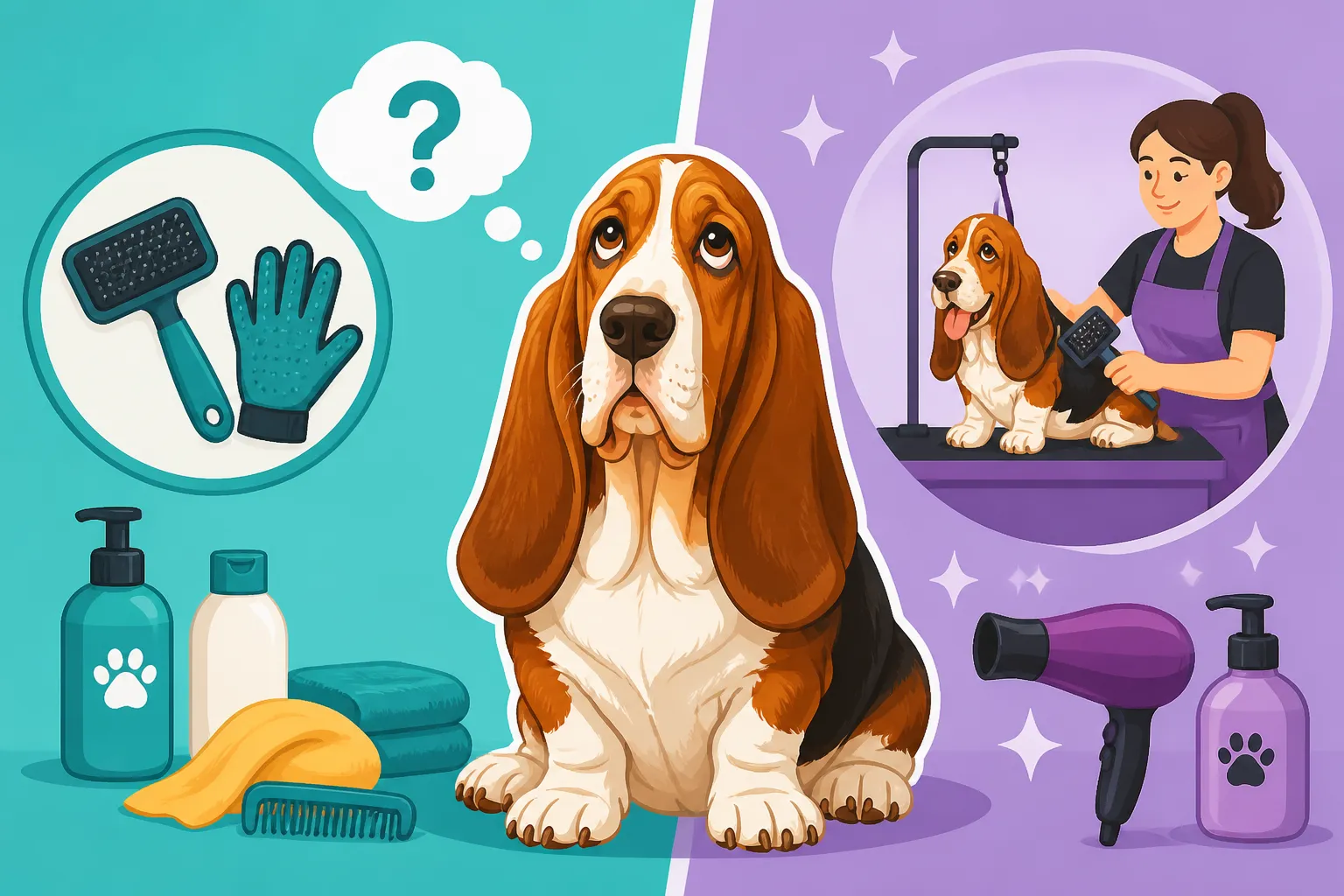
Ultimately, there's no single "right" answer. Many Basset owners successfully manage all their grooming needs at home, finding it a rewarding bonding experience. Others, due to time constraints, physical limitations, or a particularly challenging Basset, find professional groomers to be indispensable. And a significant number find a hybrid approach to be the most effective, handling daily brushing and simple clean-ups while entrusting the tougher jobs like thorough bathing, anal gland expression, or difficult nail trims to a professional. The most important thing is that your Basset Hound receives consistent, thorough grooming care to keep them healthy, comfortable, and happy.
Disclaimer
This article is for general informational purposes only and does not constitute professional advice. Laws, prices and regulations vary by location and change over time. Consult a qualified professional for guidance on your specific situation.