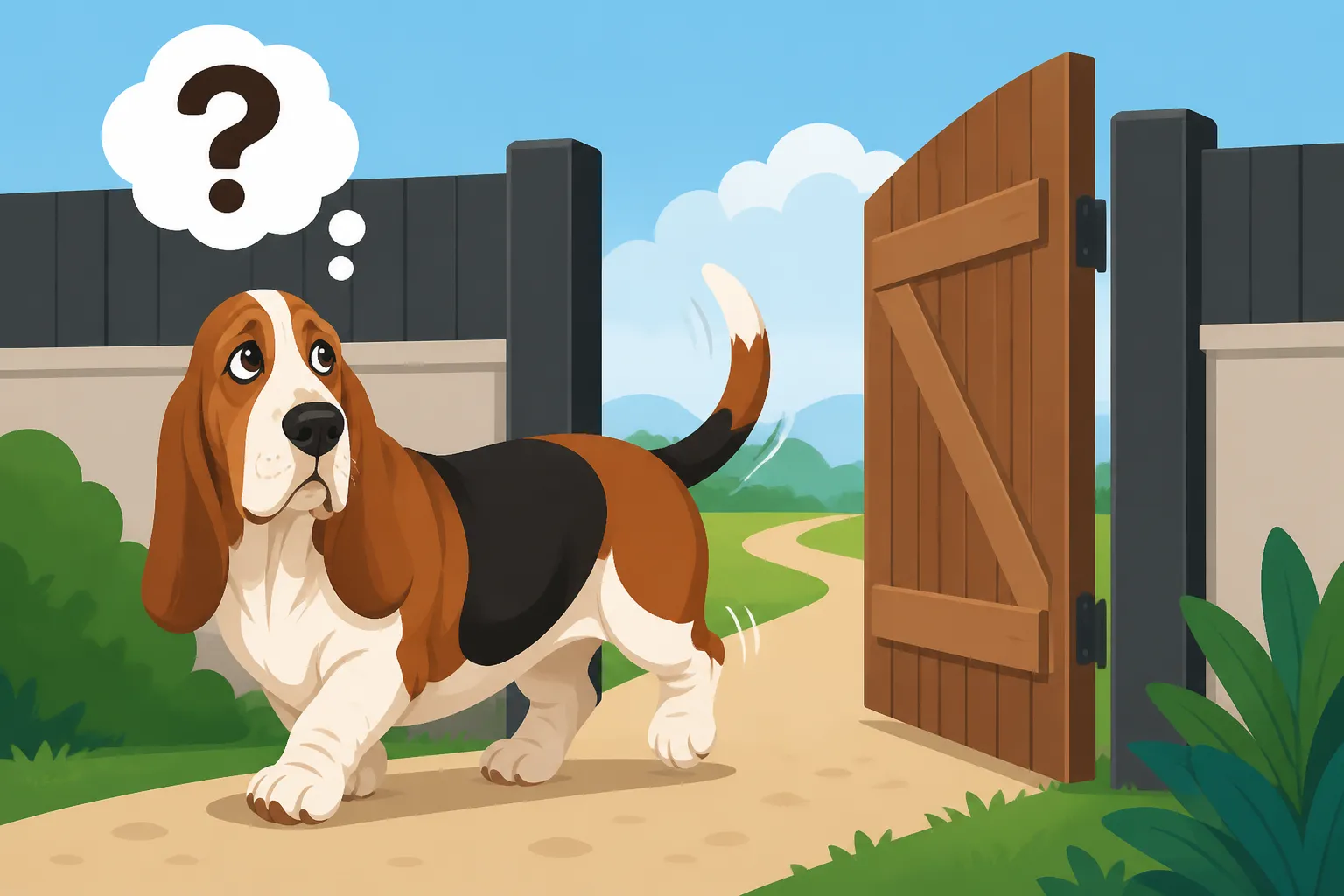
Whether a Basset Hound Wanders if the Gate Opens
Oh, the age-old Basset Hound dilemma! You know the feeling: you step outside for a second, the gate swings open just a crack, and your floppy-eared friend has vanished, nose to the ground, utterly oblivious to your panicked calls. It's a universal Basset owner's fear, and it stems from a deep-seated instinct that's both charming and incredibly frustrating. This guide is all about diving into why our Bassets seem to sprout wings the moment a boundary is breached and, more importantly, how we can create a safer, more secure world for these lovable, scent-driven escape artists.
The Basset Hound's Instinctive Drive to Explore
Let's be real, your Basset isn't being "naughty" when they bolt through an open gate. They're simply being the dog they were bred to be, following an ancient instinct that dictates their every move when a captivating scent is in the air. It's a hardwired drive, and understanding it is the first step to managing it.
The Irresistible Call of Scent
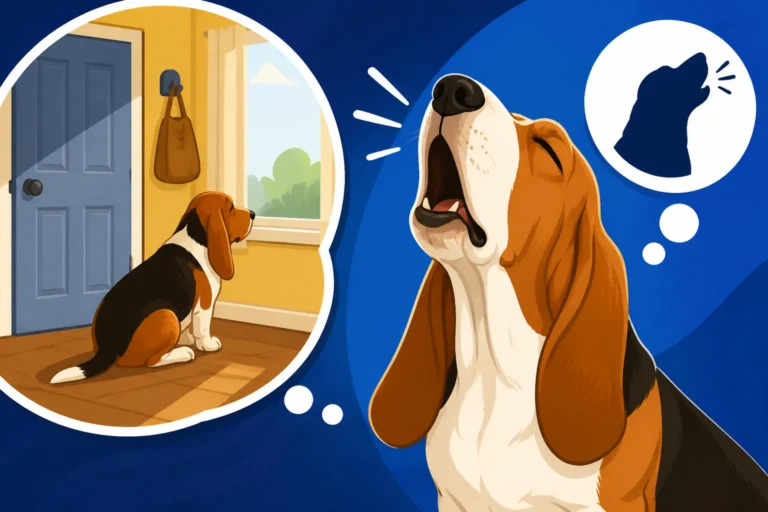
Imagine a world where every single odor tells a story, a detailed narrative of who passed by, when, and where they were going. That's your Basset Hound's world. Their nose is not just good; it's a super-sniffer, often described as second only to a Bloodhound's. Every whiff is an adventure, a puzzle waiting to be solved, a trail demanding to be followed. When a gate opens, it's not an opportunity for freedom in the human sense; it's an open invitation to explore an olfactory wonderland previously inaccessible. The scent of a rabbit that crossed the street an hour ago, the faint trace of a neighbor's dog on the sidewalk, or even just the subtle shift in air currents carrying new smells from afar – these are irresistible. Their long, pendulous ears actually help by sweeping scents upwards towards their nostrils, further enhancing this incredible sensory experience. It's not about defying you; it's about answering a primal summons.
This profound connection to scent means that an open gate is less a "breach" and more a "portal." While you might be thinking about the dangers of cars or getting lost, your Basset is thinking, "Oh, what's that glorious smell over there? I simply must investigate!" This drive is so powerful that it overrides almost everything else in their world. You can shout their name, wave a treat, or even do a little dance, but if they're locked onto a scent, they are effectively deaf and blind to your pleas. It's a testament to the sheer power of their primary sense and highlights why traditional recall training faces such unique challenges with this breed.
Tunnel Vision on a Trail
When a Basset Hound picks up a strong scent, they enter a state of complete focus. We often call it "nose blindness" or "selective hearing," but it's more profound than that. It's a kind of sensory tunnel vision where the world shrinks down to just the trail beneath their nose. The sounds of traffic, the calls of their owner, the boundaries of the yard – all fade into an irrelevant background hum. They become singularly dedicated to following that scent to its conclusion, whatever and wherever that may be. This isn't stubbornness in the way we usually perceive it; it's an absolute dedication to their calling.
This intensity makes them remarkably resilient to distractions that would deter other breeds. A sudden loud noise might make another dog jump, but a Basset on a hot trail might barely register it. Their focus is so profound that they can cover significant distances without even realizing it, driven purely by the chemical cues in the air. This single-mindedness is what made them such effective hunting dogs for centuries, allowing them to patiently unravel complex scent trails. For a modern pet owner, however, it means that a momentarily open gate can lead to a long and worrying search. Their world is literally beneath their feet, and the perceived safety of familiar surroundings quickly gives way to the unknown pull of an intriguing odor.
The History of the Hunt
To truly grasp why a Basset Hound bolts, you have to look back at their origins. These dogs weren't bred to fetch slippers or perform agility courses. They were meticulously developed in France centuries ago as slow-moving, low-to-the-ground scent hounds, specifically designed to track game (like rabbits and pheasants) while hunters followed on foot. Their unique physique—those short legs, heavy bones, and long, dragging ears—was purposeful, all geared towards keeping their nose glued to the ground, picking up every subtle nuance of a scent trail. The Abbey Hounds a Basset Hound Descends From tells us about their ancient lineage.
Their job wasn't to chase down prey quickly or return to the hunter on command the moment they found something. Their job was to persist on the trail, often baying to alert the hunters to their progress. That instinct to stick to a scent, to push forward, to follow wherever the trail leads, is still profoundly embedded in every Basset Hound today. So, when your gate opens and they catch a whiff of something interesting, they're not just running away; they're enacting thousands of years of selective breeding, becoming the dedicated hunter they were always meant to be. This historical context helps explain why asking a Basset to ignore a compelling scent is akin to asking a bird not to fly.
Understanding the "Wanderer" Mentality
It's tempting to think our Basset Hounds are just being defiant when they make a break for it. But their "wanderer" mentality is a complex interplay of instinct, perception, and a healthy dose of independent thought. It's not personal, it's just Basset.
Independence vs. Disobedience
The line between independence and disobedience can feel blurry when your Basset is trotting off with a swagger, seemingly ignoring your frantic calls. However, for a Basset, it's rarely a deliberate act of defiance. It's more about their strong sense of self and their primary driver: their nose. Bassets are intelligent, but their intelligence is often applied to solving scent puzzles rather than mastering obedience commands in the traditional sense. They are perfectly capable of understanding commands, but whether they choose to prioritize that command over the enthralling scent of a distant squirrel is another matter entirely. Whether a Basset Hound Is Stubborn or Just Not Interested often comes down to this choice.
This independent streak means they don't always look to you for direction in the same way a Border Collie might. While loyal and affectionate, they were bred to work independently, relying on their own keen senses to navigate the world. When a gate opens, they see an opportunity to engage their most powerful sense and fulfill their inner hound, not an order from you to stay put. This isn't to say they can't be trained, but it requires an approach that respects their inherent nature and finds ways to make your commands more rewarding than the world's scents, at least in crucial moments. It's a constant negotiation, not a straightforward command-and-obey relationship.
Prioritizing the Nose Over All Else
For a Basset Hound, their nose isn't just a part of their face; it's their entire worldview. It's how they understand their environment, how they communicate, and how they experience joy. When a gate opens, and a fresh breeze carries tantalizing new smells, their brain essentially lights up like a Christmas tree. Every other sensory input, including your voice, can be severely diminished. It's not that they don't hear you; it's that the scent information is so overwhelming and compelling that it eclipses everything else. This intense sensory input creates a profound disconnect between the Basset's immediate experience and your attempts to intervene.
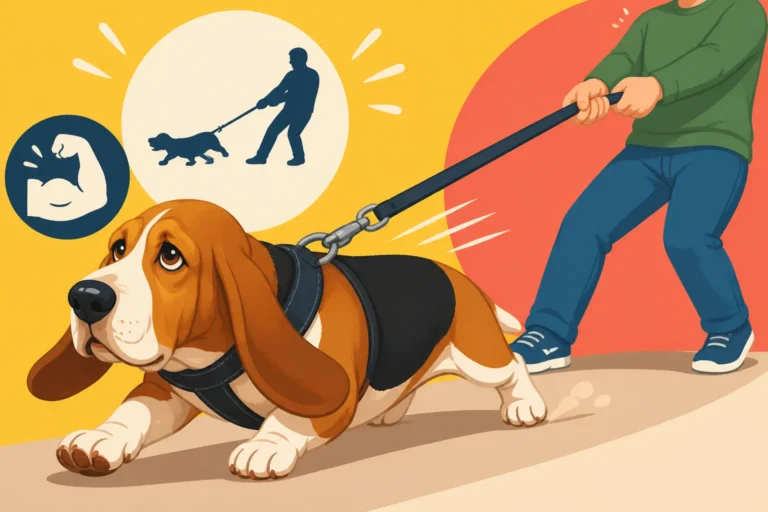
This prioritization is why chasing after a bolting Basset is often futile and can even be dangerous, as it might just encourage them to move faster. Their decision-making process in that moment is almost entirely governed by their olfactory system, not by learned social cues or a desire to please. To them, the world outside the gate holds a wealth of information, a sensory feast they simply cannot resist. Understanding that their nose is the boss helps us adjust our expectations and, more importantly, put in place robust preventative measures that don't rely solely on their willingness to listen when their instincts are screaming otherwise. Why a Basset Hound Stops Hearing You When It Smells Something perfectly encapsulates this phenomenon.
The Illusion of Freedom
When a Basset Hound slips through an open gate, they aren't necessarily seeking "freedom" in the human sense of escaping captivity. From their perspective, they are merely expanding their territory of investigation. The world is full of interesting things to smell, and if a path opens up, why not explore it? They don't typically plot escape routes or yearn for a life without rules; they simply respond to opportunities presented by their environment.
This means they might not wander far if there isn't a strong scent trail to follow, or they might get utterly lost if one draws them miles away. They don't consciously navigate back home using landmarks or a sense of direction like some breeds. Their internal compass is scent-driven. If the scent disappears, or a new, stronger one emerges, their course can change on a dime. This makes their wandering unpredictable and underlines the danger of allowing them unsupervised access to an unsecured area. For them, it's not a risky adventure; it's just a regular Tuesday, expanded by new odors.
Preventative Measures for a Secure Environment
Knowing why your Basset Houdini makes a break for it is crucial, but prevention is truly the best medicine. Since their instinct to follow a scent is so strong, it’s up to us to create an environment where they simply can’t act on that urge unsupervised.
Fortifying Fences and Gates
Your fence isn't just a visual barrier; for a Basset, it's a challenge to be respected. And if your Basset is like mine, "respected" often means "tested thoroughly." Basset Hounds are surprisingly adept at finding weaknesses. Because they are low to the ground, their primary escape routes often involve digging under fences or squeezing through surprisingly small gaps. They might not be champion jumpers, but don't underestimate their ability to push, wriggle, or even burrow. How High a Fence a Basset Hound Needs is often less important than how secure the bottom of that fence is.
Start by regularly inspecting your entire perimeter. Look for loose boards, gaps where the fence meets the ground, or areas where the soil has eroded. Reinforce the base of your fence by burying chicken wire horizontally about a foot deep and bending it outwards, creating an L-shaped barrier that discourages digging. For gates, invest in sturdy, self-latching hardware that can't be easily nudged open by a curious nose or paw. Consider adding a second latch or a simple carabiner as a backup, particularly for high-traffic gates. The goal is to make it genuinely impossible for them to open it, even accidentally. Remember, their perseverance on a scent trail extends to getting to that scent trail.
Essential Safety Gear and Tracking
Even with the most secure yard, accidents happen. A delivery person might forget to latch the gate, or a child might inadvertently leave it ajar. This is where backup safety measures become absolute lifesavers. A well-fitting collar with up-to-date ID tags is non-negotiable. Even better, a harness specifically designed for hounds, which has a secure fit and prevents them from backing out, provides an extra layer of security. Always ensure their microchip information is current and registered to you.
Beyond traditional ID, modern technology offers fantastic solutions. GPS trackers for dogs have become increasingly reliable and affordable, giving you peace of mind if the unthinkable happens. These devices attach to their collar or harness and allow you to track their location in real-time via a smartphone app. Many Basset owners swear by them, especially those whose hounds have a history of following their noses into uncharted territory. You can find a wide variety of such trackers on platforms like Amazon, offering different features and subscription plans to suit your needs. Whether a Basset Hound Should Wear a Tracker is a resounding yes in many households.
The Importance of a Double Barrier
One of the most effective strategies for preventing Basset escapes is implementing a "double barrier" system, especially for entry and exit points. This means having two distinct gates or doors that must be passed through before your Basset can access the outside world. Think of it like an airlock. For example, if you have a gate leading to your backyard, consider adding a second, perhaps smaller, barrier like a baby gate or a sturdy piece of fencing inside the main gate.
When you open the first gate, your Basset is still contained by the second. You can then close the first gate before opening the second, ensuring they can't slip out. This is particularly useful for homes where the yard leads directly to a street or another unsecured area. The same principle applies to your front door if your Basset has access to that area. A secure dog gate or baby gate placed a few feet inside the front door can create a buffer zone, preventing them from making a dash for it when you open the door to greet a visitor or grab the mail. This simple but effective strategy accounts for human error and gives you precious extra seconds to react.
Training Strategies for Off-Leash Safety (and Realistic Expectations)
While prevention is key, training still plays a vital role. However, with a Basset Hound, it's essential to temper expectations, especially concerning off-leash reliability. Their nose is a formidable opponent to even the best-trained recall.
Building a Reliable Recall (with caveats)
Teaching a recall to a Basset Hound is an exercise in patience, consistency, and realistic assessment. Can a Basset Hound learn to come when called? Absolutely! Can they do it 100% of the time, off-leash, in a field full of rabbit scents? That's a much tougher ask, and for many, it's simply not a realistic expectation. Their inherent drive to follow scent will almost always trump any command, no matter how well-practiced. The Recall a Basset Hound Will Never Reliably Give You often refers to this reality.
The key to any success lies in making the recall incredibly rewarding. Use high-value treats (like small pieces of cooked chicken or cheese), enthusiastic praise, and playful interaction every single time they come. Practice in low-distraction environments first, gradually increasing the challenge. Always use a long line in unsecured areas to practice, giving them the illusion of freedom while maintaining control. Brands like Amazon offer a wide array of durable long lines that can be indispensable for this type of training. Think of recall not as a foolproof safety net, but as a crucial tool for minor distractions or within a securely fenced area. It's about building a positive association, not overriding an instinct.
"Leave It" and "Stay" in High-Distraction Settings
Commands like "Leave It" and "Stay" can be incredibly useful tools, even for our scent-obsessed Bassets. While they might not stop your hound mid-chase from a full sprint, they can be effective in preventing them from starting to investigate a compelling scent or from slipping out a partially open door. The challenge, again, is distraction.
Start training these commands indoors, where you control the environment. Gradually introduce mild distractions, always rewarding heavily for success. For "Leave It," place a low-value treat on the floor, cover it with your hand, and say "Leave It." When your Basset looks away, even for a second, reward them with a different, higher-value treat. Over time, build up to higher-value distractions and eventually practice outdoors on a leash. "Stay" should also be proofed against distractions. The goal is to build a habit of checking in with you before fully committing to a scent. While these commands might not prevent every single potential wander, they can certainly buy you precious seconds and reduce the likelihood of accidental escapes.
The Role of Scent Work in Containment Training
This might sound counterintuitive: encouraging a Basset's scent drive to help contain them. But channeling their natural instincts into structured, acceptable activities can actually be a fantastic way to manage their urge to wander. Think of it as giving their nose a "job" that satisfies their instincts in a safe, controlled environment.
Scent work, often called nose work, teaches your Basset to find specific odors. This activity provides immense mental stimulation, which can be just as tiring, if not more so, than physical exercise for a Basset. By engaging their powerful nose in a game where you direct the search and you provide the reward, you reinforce the idea that working with you can be incredibly satisfying. This strengthens your bond and can make them more attentive to you in general. Many online training platforms, such as BAXTER & Bella, offer excellent resources and structured courses on teaching your dog scent work from beginner levels. It gives them an outlet for their primary drive, making them less likely to feel the need to fulfill that drive by escaping through the nearest open gate. Whether Nose Work Tires a Basset Hound Out is a definite yes, and a tired Basset is a less adventurous Basset!
What to Do If Your Basset Hound Does Wander
Despite all your best efforts, the inevitable can happen. A gate is left open, a momentary lapse, and your Basset is gone. Panic is a natural reaction, but having a clear plan can significantly increase the chances of a happy reunion.
Immediate Steps for a Lost Hound
If you realize your Basset has wandered, resist the urge to immediately run after them, especially if they're already out of sight. Remember, chasing often makes Bassets (and many dogs) run further, interpreting it as a game or a threat. Instead, here's a calm, systematic approach:
- Call Their Name Calmly and Enticingly: Get down low, clap your hands, and use a happy, inviting voice. If you have a squeaky toy or a crinkly treat bag, use it. Bassets are food motivated, so a distinct sound associated with treats might cut through the scent fog.
- Go to the Point of Escape: Many dogs, when they realize they're lost or the scent trail ends, will try to retrace their steps or wait near where they last saw you. Leave an item with your scent (like a t-shirt) and their bed or a favorite toy at the point they went missing, along with some water.
- Alert Neighbors Immediately: Time is of the essence. Call, text, or knock on neighbors' doors. Describe your Basset and ask them to check their yards, especially if they have gates. Share a clear photo if possible.
- Don't Give Up Too Soon: Bassets are determined. They can cover surprisingly long distances. Remain calm and systematic in your search.
Utilizing Community and Technology
Once the immediate area has been checked, it's time to broaden your search and leverage your community and technology.
- Social Media: Post clear photos and details on local lost pet groups on Facebook, Nextdoor, and other community forums. Include the last known location, your contact information, and any distinguishing features. Ask people to share.
- Local Shelters and Animal Control: Immediately contact all local animal shelters, humane societies, and animal control agencies. Provide them with a description and photo. Visit them in person if possible, as descriptions can sometimes be misinterpreted. Repeat this daily or every other day, as new animals arrive constantly.
- Flyers: Create simple, eye-catching flyers with a large photo, "LOST DOG" in bold, your phone number, and brief description. Post them at intersections, community boards, and local veterinary clinics. Offer a small, modest reward to incentivize reporting, but avoid a large one that might attract scams.
- Microchip Company: Confirm your microchip information is up-to-date. If your Basset is found and scanned, this is the quickest way to reunite.
- GPS Tracker: If your Basset was wearing a GPS tracker (and we hope they were!), this is the time to activate it and follow their movements. Many trackers offer real-time updates that can guide you directly to their location.
This combined approach increases your visibility and creates a network of eyes and ears looking out for your lost friend. Whether a Lost Basset Hound Comes Home often depends on these proactive measures.
Learning from the Incident
Finding your Basset again is an immense relief, but it’s also a crucial learning opportunity. Take some time to honestly assess what happened and identify any vulnerabilities in your containment strategy.
- Review the Escape Route: How did they get out? Was it a gate left ajar? A loose fence board? A gap they dug under? Pinpointing the exact method of escape is vital.
- Fortify Further: Once you know the weakness, reinforce it immediately and then double-check other areas. If a gate was the culprit, invest in more robust latching mechanisms or add a second barrier. If they dug, extend your underground barrier.
- Refine Training: Consider whether the incident highlights specific training gaps. Perhaps more focused recall work in a fenced area or improved "Leave It" around doors is needed.
- Re-evaluate Safety Gear: Was their collar secure? Were their tags legible? Did the microchip information need updating? If you didn't have a GPS tracker, now might be the time to invest in one. They offer an invaluable safety net.
Every incident, though stressful, offers valuable insights into your Basset’s behavior and the effectiveness of your preventative measures. Use it to make your home and routine even safer, ensuring that your beloved Basset Hound remains a cherished member of your family and not an accidental adventurer on the loose.
Table: Comparing Containment Methods for Basset Hounds
Here's a quick look at common containment methods and their suitability for our scent-driven Basset Hounds:
| Containment Method | Pros | Cons | Basset Hound Suitability |
|---|---|---|---|
| Physical Fence (6ft) | Strongest physical barrier, visual deterrent. | Costly to install, requires regular maintenance, can be jumped by determined Bassets (rare). | High. Best primary defense, but requires vigilant inspection for digging spots and secure gate latches. |
| Physical Fence (Lower) | More affordable, less obstructive. | Easier to clear for some dogs, less privacy. | Moderate-High. Bassets typically don't jump high, but low fences are more susceptible to digging under. Needs reinforcement. |
| Invisible/Electronic Fence | No visual barrier, relatively easy to install, adjustable boundaries. | Relies on pain/aversion, Bassets can "run through" the shock for a strong scent, no physical barrier. | Low. Whether an Invisible Fence Holds a Basset Hound is often a no. Their scent drive often overrides the deterrent. |
| Long Line/Tie-Out | Allows freedom of movement while leashed, good for training. | Requires constant supervision, risk of tangling/injury, not a permanent solution. | Moderate. Excellent for supervised outdoor time and recall training. Never leave unsupervised. Whether a Long Line Is Enough for a Basset Hound only if you're holding it! |
| Indoor Crating/Gating | Secure containment indoors, good for house training and safety. | Restrictive, requires proper training to avoid aversion, not for prolonged periods. | High. Essential for managing access to doors/gates and for safety when you can't supervise directly. |
| Double Barrier System | Redundancy against human error, extra layer of security. | Requires extra space/installation, can be cumbersome. | Very High. Crucial for high-traffic entry/exit points, creating an "airlock" effect. |
| GPS Tracker | Real-time location tracking, peace of mind. | Not a containment method, relies on battery life and signal, subscription fees. | Very High. Essential backup for when (not if) an escape happens. Complements physical barriers. |
Disclaimer
This article is for general informational purposes only and does not constitute professional advice. Laws, prices and regulations vary by location and change over time. Consult a qualified professional for guidance on your specific situation.