Whether a Basset Hound’s Dewlap Holds Scent
It’s a truly fascinating thing, isn't it? When you look at a Basset Hound, with all those glorious wrinkles, that deep chest, and those unbelievably long ears, it’s only natural to wonder how every part of them contributes to their legendary nose. Many of us have heard the idea that a Basset Hound’s dewlap — that wonderfully loose skin under their chin and neck — somehow acts as a scent trap, holding onto delicious smells for them to follow. While it’s a romantic image, the reality of how a Basset Hound uses its unique anatomy to become a scent-tracking superstar is a bit more nuanced and, if you ask me, even more brilliant. This guide will delve into the incredible world of Basset Hound scenting, exploring the true function of their distinctive features, including the dewlap, and how they all work in concert to make these hounds masters of the trail.
Understanding the Basset Hound's Scenting Superpowers
Let's start by appreciating just how incredible a Basset Hound's nose truly is. We talk a lot about their long ears and low stature, but at the heart of their tracking ability is an olfactory system that puts most other breeds, and certainly humans, to shame. Understanding this foundation helps us then look at how their unique physical traits enhance this already powerful sense.
The Basset's Nose: A Masterpiece of Olfaction
Imagine being able to detect individual scent molecules from a strawberry in a field of thousands of other flowers. That's a bit like what a Basset Hound's nose can do, but with far more complexity and purpose. Inside that rather large, moist nose are millions upon millions of scent receptors, far more than humans possess. These receptors are spread across a vast surface area of bony scrolls called turbinates, which are covered in specialized olfactory epithelium. When air is inhaled, it swirls through these turbinates, allowing scent particles ample opportunity to bind with the receptors. It’s not just the number of receptors, though; it’s also the sheer volume of scent information their brains can process. Their olfactory bulb, the part of the brain dedicated to processing smells, is disproportionately large compared to their overall brain size, meaning they literally "see" the world through scent in a way we can barely comprehend. This incredible internal machinery is the true engine of their scenting prowess. The Nose That Puts a Basset Hound Second to a Bloodhound is no exaggeration.
Furthermore, a Basset Hound's nose is designed for continuous, detailed scent acquisition. Unlike dogs that lift their heads to catch airborne scent, a Basset keeps its nose firmly planted on the ground. This position allows for constant sampling of the scent trail. The moistness of their nose also plays a crucial role; scent particles adhere better to a damp surface, which then transfers these particles to the receptors more efficiently. Their nostrils are also designed to allow air to flow in for scent detection and out through slits at the sides, meaning they can continue sniffing without exhaled air disrupting the incoming scent trail, creating a truly uninterrupted scent picture of the world below them.
How Scent Works for a Basset Hound
For a Basset Hound, scent isn't just a smell; it's a rich tapestry of information, a story unfolding in molecules. They primarily excel at ground-trailing, following the microscopic bits of skin cells, oils, and other detritus left behind by a person or animal as they move. This is different from air-scenting, where a dog might catch a whiff of scent carried on the breeze. While Bassets can air-scent to some degree, their anatomy is perfectly engineered for keeping their nose glued to the ground, meticulously working out a trail.
When a Basset Hound follows a trail, they're not just picking up one distinct smell. They are interpreting a complex cocktail of decaying organic matter, footfall impressions, and ground disturbance. They can distinguish between individual scents even in a highly commingled environment, like a park where dozens of dogs have walked. This ability allows them to follow one specific target, ignoring all the others. Think of it like a highly sensitive, specialized filter that can isolate a single frequency from a cacophony of radio waves. Their determination is legendary; once they lock onto a scent, the outside world often fades away, which is why whether a Basset Hound ignores you on a scent is a very real concern for owners. Their whole world shrinks to the trail beneath their nose.
The Role of the Dewlap and Loose Skin in Scenting
Now, let's get to the star of our show – that magnificent dewlap. It's often misunderstood, but its function, along with the other loose skin on a Basset Hound, is a testament to selective breeding for a specific, highly effective purpose.
The Dewlap's Purpose: Not a Scent Trap, but a Scent Funnel
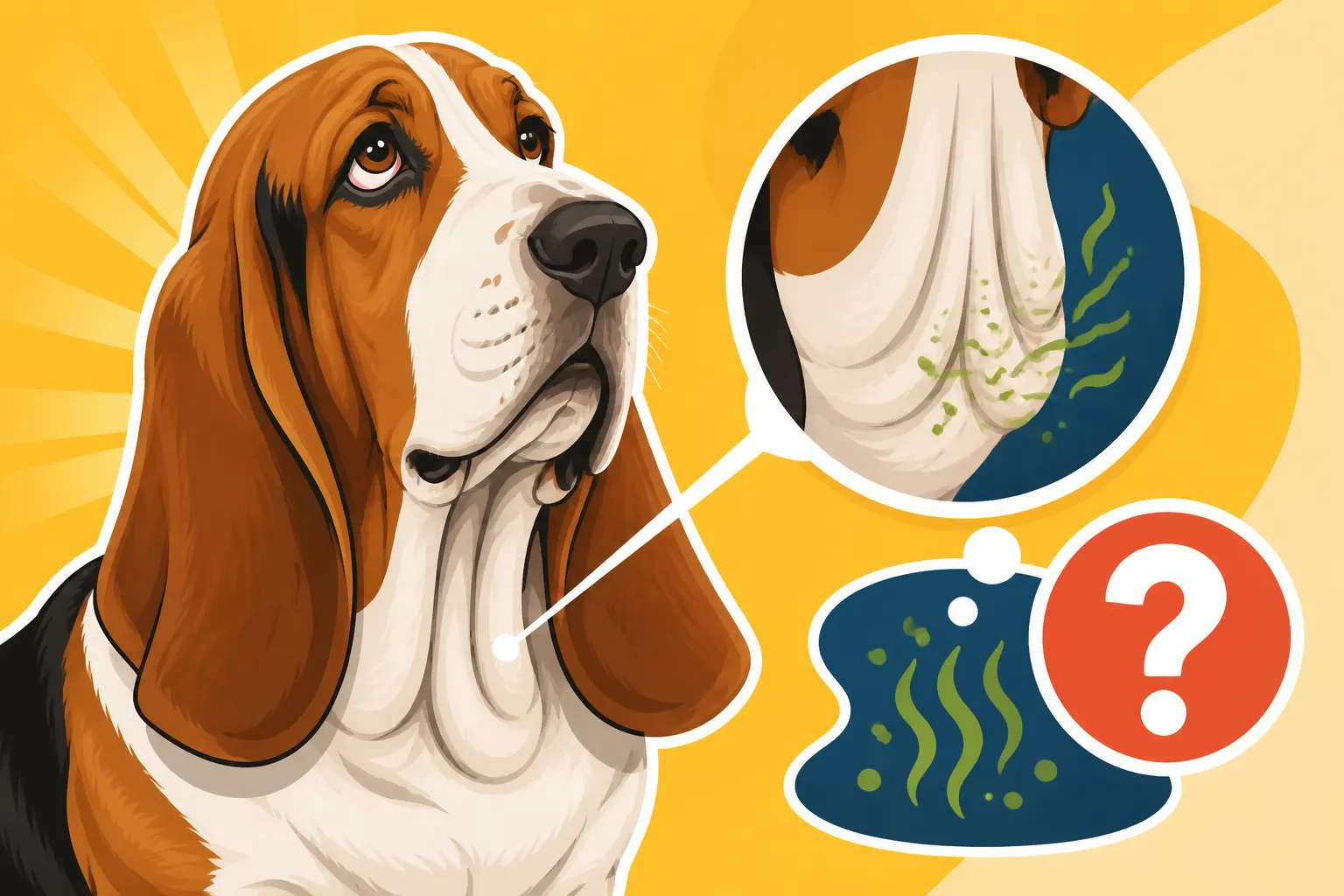
Contrary to the idea that the dewlap holds scent, its true genius lies in its ability to channel and concentrate scent towards the nose. Imagine a delicate cloud of scent particles hovering just above the ground. As the Basset Hound moves with its head low, that expansive dewlap, along with the wrinkles around its muzzle and throat, gently sweeps the ground. This action subtly disturbs the air and any scent molecules present, pushing them upwards and inwards, directly into the path of the nostrils.
Think of it less like a sponge soaking up liquid, and more like a plow guiding soil, or a funnel directing liquid into a narrow opening. The deep folds and loose skin create miniature "walls" that minimize dispersion of scent molecules into the surrounding air. Instead, they encourage these precious particles to linger and rise into the Basset's highly sensitive nose. It's a marvel of bio-engineering, really, ensuring that the maximum possible amount of scent is presented to the olfactory receptors with every breath. This means they're not carrying scent on their skin, but rather manipulating their environment to optimize detection by their nose.
Sweeping the Ground: Ears and Dewlap Working Together
It's not just the dewlap in isolation; it’s a symphony of Basset Hound anatomy. The incredibly long, pendulous ears, often reaching twelve inches or more, hang low and wide. As the Basset moves, these ears swing and drag along the ground, performing a similar function to the dewlap. They act as natural brooms, gently stirring up scent particles from the ground and funneling them towards the Basset's nose. This creates a kind of "scent tunnel" around the hound's head, ensuring that the scent trail they are following is constantly being pushed directly to their primary sensory organ. Whether a Basset Hound's Ears Stir Scent Toward Its Nose is a key piece of the puzzle.
When you see a Basset Hound with its nose down, methodically working a trail, observe how the dewlap, the jowls, and those long ears all seem to frame its head, keeping its sniffing zone concentrated. This ensemble of loose skin and magnificent ears works together to prevent scent from dissipating too quickly into the wider environment. It keeps the scent concentrated in a localized bubble around the nose, making it easier for the Basset to process and differentiate faint traces, especially over long distances or challenging terrain. This combination allows them to follow trails that might be hours or even days old, a feat few other breeds can match.
Beyond the Dewlap: Other Physical Adaptations for Scenting
While the dewlap and ears are undeniably striking features that aid in scenting, the Basset Hound's entire physical conformation is a masterclass in specialized design for ground-trailing. Every aspect of their build contributes to their legendary ability to follow a scent with unwavering focus.
The Long, Low Body: Keeping Close to the Trail
Have you ever watched a Basset Hound move? Their low-slung body, with those short, stout legs, is not an accident of nature; it's a deliberate design for keeping their nose as close to the ground as possible. This isn't just about convenience; it's about optimizing scent detection. The closer their nose is to the source of the scent, the more concentrated the scent molecules will be, and the easier it is for them to follow the trail without interruption.
This body structure means less effort is expended lifting and lowering their head, allowing for sustained, continuous sniffing. Imagine trying to follow a faint line on the ground while standing upright versus crouching down. The low center of gravity and long body allow them to move steadily and deliberately, maintaining constant contact with the scent layer. This physical attribute, combined with their strong bone structure, means they can traverse various terrains—from dense undergrowth to rocky paths—while keeping their nose precisely where it needs to be. This is also why Whether a Basset Hound's Low Height Helps It Trail is a resounding yes; it's fundamental to their success.
Ear Design: More Than Just Decoration
Those iconic long ears, which can sometimes get in the way of dinner or water, are far from merely ornamental. Beyond sweeping scent towards the nose, they serve another vital function: trapping sound. A Basset Hound's large, heavy ears hang close to their head, effectively blocking out extraneous noises and helping them to focus intensely on the subtle sounds of the environment that might be related to their quarry.
But more importantly for scent, their vast surface area helps to contain the scent plume. By acting as a barrier, the ears minimize the airflow around the nose, reducing the scattering of scent molecules. This creates a sort of localized microclimate where the scent is concentrated, giving the Basset's nose every possible advantage. It's like wearing blinkers to stay focused, but for scent instead of sight. This design helps explain why Whether Long Ears Are Why a Basset Hound's Ears Infect is often discussed – while it helps them track, it also creates an environment prone to moisture and warmth, making regular ear care a critical part of owning a Basset. These ears are a double-edged sword: a magnificent scenting tool, but one that demands dedication from their human companions.
Maximizing Your Basset's Natural Scenting Abilities
Knowing how your Basset's unique anatomy aids their incredible sense of smell can help you understand them better and provide enrichment that truly speaks to their natural instincts. It's about working with their design, not against it.
Embracing Their Instincts: Scent Work and Enrichment
Given their profound natural talent, engaging your Basset Hound in scent work is one of the most fulfilling activities you can do together. This isn't just about keeping them busy; it's about fulfilling their innate drive and providing mental stimulation that can tire them out as effectively as physical exercise. Simple games like hiding treats around the house, encouraging them to find specific items, or even structured nose work classes can bring immense joy to a Basset. You can find a wide array of [snuffle mats or puzzle toys on Amazon] that are perfect for beginners, making it easy to start exploring their scenting world from the comfort of your home.
For those looking to go deeper, enrolling in a tracking or scent detection class can be incredibly rewarding. These activities allow your Basset to use their abilities in a focused, purposeful way, reinforcing their natural instincts in a controlled environment. If you're new to dog training or want to refine your techniques, resources from places like BAXTER & Bella offer excellent guidance on positive reinforcement and engagement strategies that are perfectly suited for channeling a Basset's drive into productive activities. Such training can also help strengthen your bond, as you learn to communicate effectively and trust your dog's amazing nose. Whether Nose Work Tires a Basset Hound Out is absolutely true, and it's a fantastic way to keep them happy and engaged.
Care for Optimal Scenting (and Health)
While the dewlap and other loose skin are fantastic for scenting, they also require diligent care to prevent health issues that could indirectly impact your Basset's overall well-being and, by extension, their ability to focus on scent. Those deep folds around their muzzle, neck, and eyes can trap moisture, food particles, and debris, creating a breeding ground for bacteria and yeast. This can lead to skin fold infections, which are not only uncomfortable but can also produce odors that interfere with their own delicate sense of smell.
Regular cleaning of these areas with a soft cloth or a veterinarian-recommended gentle wipe is essential. Pay particular attention to cleaning the folds a Basset Hound's face is made of daily, especially after meals, to prevent irritation and infection. Maintaining good hygiene ensures that their natural scenting tools are always in top condition and free from competing, unpleasant odors that could distract them. After all, a healthy, comfortable hound is a happy hound, and a happy hound is one that can fully engage its incredible nose in all its glory.
| Feature | Primary Scenting Role | Secondary Benefits/Considerations |
|---|---|---|
| Nose Structure | Primary receptor for scent molecules. | Differentiates complex smells, processes vast amounts of info. |
| Low Stature | Keeps nose consistently on ground. | Reduces effort, maintains focus on ground trails. |
| Long Ears | Sweeps scent towards the nose. | Blocks peripheral sounds, creates "scent tunnel," requires care. |
| Loose Skin (Dewlap, Jowls) | Channels and concentrates scent molecules. | Minimizes scent dispersion, requires regular cleaning to prevent infection. |
| Moist Nose | Helps scent particles adhere. | Maximizes particle transfer to receptors. |
Understanding that the dewlap doesn't actively hold scent but rather assists the nose in gathering it is key to appreciating the masterful design of the Basset Hound. Every wrinkle, every droop, every inch of those long ears contributes to making them one of the most formidable scent hounds in the canine world. It's a testament to centuries of breeding that has honed their unique anatomy into a perfect instrument for following a trail, one molecule at a time. So next time you see that glorious dewlap, know it's not just for show – it's part of a brilliant biological system that makes your Basset a true scenting champion.
Disclaimer
This article is for general informational purposes only and does not constitute professional advice. Laws, prices and regulations vary by location and change over time. Consult a qualified professional for guidance on your specific situation.