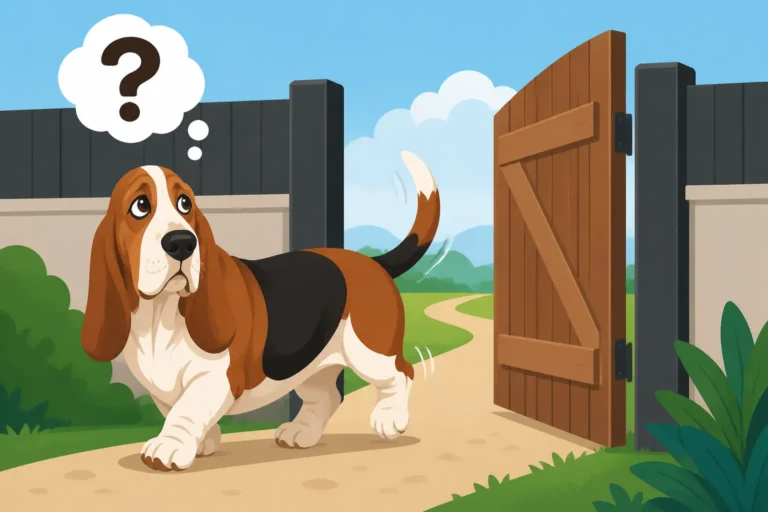
Whether a Basset Hound Goes Deaf on Purpose
It’s a frustration almost every Basset Hound owner knows intimately: you call their name, they look right at you, a moment of connection… and then their nose drops to the ground, a scent trail grabs their attention, and suddenly, you may as well be speaking to a brick wall. It feels like they’ve gone completely deaf on purpose, doesn’t it? This guide will dive deep into why your Basset Hound seems to have selective hearing when a good smell is involved, differentiating it from actual hearing loss, and offering strategies to work with, rather than against, their incredible natural instincts.
The All-Consuming World of Scent for a Basset Hound
If you've ever felt like your Basset Hound lives in a different sensory world, you're not wrong. Their world is dominated by scent, a rich, complex tapestry of odors that we humans can only begin to imagine. For a Basset, a good scent isn't just interesting; it's an irresistible narrative, a compelling mystery that demands to be unraveled, and every other input often fades into the background.
Why Their Nose Rules Everything
Let's be honest, your Basset's nose isn't just a nose; it's a super-powered olfactory organ designed over centuries for one purpose: to follow a trail. They were bred to hunt, specifically to track game like rabbits and deer slowly and methodically, allowing hunters on foot to keep up. Their entire physiology is geared towards this. Those magnificent, long ears? They don't just look charming; they literally sweep scent particles up towards their nose, enhancing their tracking ability. Their heavy dewlap, the loose skin under their chin, also traps scent, keeping it close as they trail. When their nose hits a fresh, exciting scent, it's like a siren song, an urgent message that completely captivates their brain. Their ancestors lived and breathed for the chase, and that primal drive is still very much alive in your couch-potato Basset. It's not about them ignoring you; it's about their brain being utterly overwhelmed by a far more potent signal. They are, quite simply, doing what they were born to do. If you want to understand more about this incredible ability, take a look at How Good a Basset Hound's Nose Actually Is.
Distinguishing Scent-Driven Behavior from True Disobedience
It's easy to take it personally when your beloved Basset appears to simply switch you off. You feel ignored, disrespected, maybe even a little foolish shouting their name to no avail while they have their nose firmly glued to the ground, oblivious. But it's crucial to understand that this isn't a deliberate act of defiance. When your Basset Hound is locked onto a scent, their brain is literally re-prioritizing. The part of their brain dedicated to processing olfactory information is so highly developed that when it receives a strong scent, it can effectively override other sensory inputs, including your voice. Think of it like a human being utterly engrossed in a thrilling book or a captivating movie; the outside world can just disappear. For a Basset, scent is that all-consuming experience. While it can certainly look like stubbornness, it's a deeply ingrained instinct. This is different from a Basset who ignores a command in a low-distraction environment because they simply don't feel like it. When a strong scent is present, their focus narrows to an almost tunnel-vision degree. It's a key reason why we talk about Why a Basset Hound Ignores You on a Scent.
The Reality of Basset Hound "Stubbornness"
The term "stubborn" gets thrown around a lot when discussing Basset Hounds, and while it might feel accurate in the moment, it doesn't quite capture the full picture of their unique personality and motivations. They're not being stubborn just to be difficult; there's usually a deeper reason rooted in their intelligence and breed history.
Intelligence vs. Motivation
Let's clear something up: Basset Hounds are not unintelligent. Far from it! They are incredibly smart, but their intelligence is often applied in ways that serve their interests, not always ours. They are problem-solvers when it comes to getting food, finding a comfortable napping spot, or tracking a fascinating smell. The challenge arises because their strong independent streak, a hallmark of many hound breeds, means they often weigh whether complying with your request is actually worth their while. If the reward isn't compelling enough, or if what you're asking goes against a strong instinct (like following a scent), they'll often opt out. They’re not dumb; they just have different priorities. This independent thinking can make them seem like they're "choosing not to obey," and in a way, they are, but it's a calculated decision based on their perceived value, not a lack of understanding. It's truly a dance between you and their inner hound, understanding Whether a Basset Hound Is Stubborn or Just Not Interested.
The Role of Positive Reinforcement and High-Value Rewards
Given their independent nature, traditional, heavy-handed training methods are often ineffective, or worse, counterproductive, with a Basset Hound. They respond best to positive reinforcement, especially when that reinforcement involves something they genuinely value. And for most Bassets, that means food. But not just any food! A dry biscuit might work when they're bored, but when they're on the trail of the most amazing squirrel scent ever, you'll need to pull out the big guns. Think small pieces of cooked chicken, cheese, hot dogs, or liver. These "high-value" treats can sometimes break through the scent-induced trance, but even then, it's not a guarantee.
It's about making yourself more interesting and rewarding than whatever else has captured their attention. This means consistency, patience, and always having those irresistible rewards on hand. I've found great success exploring different high-value treats from places like Amazon to keep things fresh and exciting for my Bassets. Experiment with what truly motivates your individual hound; some might prefer a favorite squeaky toy or a quick game of tug, but for many, it's all about the gourmet snack. Remember, they're not working for free, and you need to pay them well for their attention. Learning What Actually Motivates a Basset Hound is the first step to successful training.
Strategies for Getting Through to Your Scent-Obsessed Basset
Living with a Basset Hound means embracing their unique qualities, especially their unparalleled sense of smell and the independent streak that comes with it. While you can't erase thousands of years of breeding, you can certainly learn to work with their instincts to ensure their safety and your sanity.
Building a Rock-Solid Recall Even if it Feels Impossible
Let's be honest, a Basset Hound's recall is often the stuff of legend – mostly tragic legend. The idea that your Basset will reliably come galloping back to you when a captivating scent is calling them can feel like a pipe dream. However, it’s not entirely hopeless, but it requires a different approach and a heavy dose of realism. You need to build a recall that is more powerful than any scent, and that takes immense effort and consistency. Start in a completely distraction-free environment, like your living room, and use only the highest value treats. Practice, practice, practice. As they get better, gradually introduce very mild distractions, always setting them up for success.
A long line is your absolute best friend here. It allows your Basset to explore safely while you maintain control and practice recall commands in real-world scenarios, but without the risk of them disappearing into the horizon after a phantom rabbit. Invest in a good quality, long line – 20 to 30 feet is a good starting point – and use it religiously in any unfenced outdoor space. This isn't just about training; it's about their safety. Many owners, myself included, have found invaluable guidance from online resources like BAXTER & Bella, which offer structured positive reinforcement programs that can be tailored even for the most "selective" of hounds. Their methods focus on building engagement and making you the most exciting thing in your dog's world, which is exactly what a Basset needs. Seriously, don't fool yourself into thinking your Basset will always come when called in the face of a thrilling scent; understanding The Recall a Basset Hound Will Never Reliably Give You is critical for their well-being.
Managing the Environment and Expectations
Because a Basset Hound's nose is such a powerful force, managing their environment is paramount. An unfenced yard, or even a yard with gaps in the fence, is an absolute invitation for adventure, and once they're off on a trail, catching them can be nearly impossible. A secure, solid fence is not a luxury for a Basset owner; it's a necessity. Their low stature means they can slip through surprisingly small gaps, and their digging prowess means they might try to go under a fence. Always check your perimeter thoroughly.
Furthermore, it’s important to adjust your expectations for walks. Unless you're in a truly enclosed and safe dog park, off-leash walks in open areas are generally not recommended for Basset Hounds. Their scent drive is simply too strong, and the risks of them tracking into traffic or getting lost are too high. Accept that your Basset will spend a good portion of their walk with their nose to the ground, and that's okay. Instead of fighting it, embrace it! Engage their nose on your terms by introducing scent work games at home, using snuffle mats or hiding treats for them to find. This fulfills their instinctual need to track and explore scents in a safe, controlled way, and it can be surprisingly tiring for them! You'll be amazed at Whether Nose Work Tires a Basset Hound Out. Understanding and accepting Whether a Basset Hound Should Ever Be Off Leash is one of the most important lessons a new Basset owner can learn.
When to Consider Actual Hearing Issues
While a Basset Hound’s apparent “deafness” is often a behavioral trait driven by their incredible nose, it’s important not to dismiss the possibility of actual hearing loss. True deafness, or even a partial impairment, can manifest in ways that might initially be mistaken for stubbornness or scent-driven distraction.
Differentiating Behavioral Ignorance from Medical Deafness
How do you tell the difference between a Basset who is ignoring you for a scent, and one who genuinely can't hear you? It’s not always obvious, especially with a breed prone to being in their own world. A scent-focused Basset will often respond to other strong stimuli that aren't related to the scent, or they might ignore a quiet command but react to a sudden, loud clap (once they're off the scent). A truly deaf or hard-of-hearing Basset, however, will show a more consistent lack of response to all sounds. They might not react when you come home, even if you’re making noise, or they could seem easily startled because they don't hear you approaching. You might notice they don't respond to squeaky toys, or their sleep is unusually deep, unaffected by household noises. Their baying might change in pitch or volume, or they may become more vocal as a way to "check-in" with their surroundings. If your Basset isn't just ignoring you on a walk but also seems unresponsive in quiet settings, or seems startled by touch, it's time to consider a vet visit. It's especially common for Whether an Old Basset Hound Goes Deaf as they age.
The Importance of Regular Vet Checks
If you suspect actual hearing loss, a trip to the veterinarian is definitely in order. They can perform tests to assess your dog's hearing and rule out any underlying medical conditions. Sometimes, what seems like deafness is actually a treatable issue. For instance, Basset Hounds are notoriously prone to ear infections due to their long, pendulous ears that trap moisture and restrict airflow. A severe ear infection, or chronic, untreated ones, can cause significant discomfort and temporary (or even permanent) hearing impairment. Blockages from excessive wax or foreign objects can also affect hearing. Your vet can examine their ear canals, check for infections, and provide appropriate treatment. It’s also worth noting that other health issues, such as hypothyroidism, which Bassets can be prone to, can sometimes contribute to changes in alertness and responsiveness, though less commonly direct deafness. Regular vet check-ups are key to catching these kinds of issues early. Many Basset owners are very familiar with The Ear Infections That Never Really Leave a Basset Hound.
Here’s a quick table to help you distinguish between a Basset who's just being a Basset and one who might genuinely have hearing difficulties:
| Characteristic | Scent-Driven Basset Hound (Apparent Deafness) | Truly Deaf/Hard-of-Hearing Basset Hound |
|---|---|---|
| Response to Name | Ignores when on a scent; responds reliably otherwise. | Inconsistent or no response, regardless of distraction. |
| Reaction to Loud Noises | May respond if not on a strong scent; startled by sudden, nearby sounds. | Little to no reaction to loud, sudden sounds. |
| Awareness of Your Approach | Generally aware, may acknowledge with a glance unless deeply absorbed. | Easily startled by touch or unexpected presence; unaware until physically close. |
| Engagement with Toys | Enthusiastic about squeaky toys or interactive play. | May ignore sound-producing toys; relies on visual cues for play. |
| Behavior at Home | Normal, responsive to household activity (unless napping deeply). | Might sleep through noise; may not greet you at the door if they don't see you. |
| Ear Examination | Clear ear canals, no signs of infection (unless coincidentally present). | May have clear ears, or may have signs of chronic infection if that's the cause. |
Disclaimer
This article is for general informational purposes only and does not constitute professional advice. Laws, prices and regulations vary by location and change over time. Consult a qualified professional for guidance on your specific situation.