Whether a Whistle Works on a Basset Hound
Every Basset Hound owner knows that feeling: you call your beloved hound, and they simply don't seem to hear you. Their nose is glued to the ground, a world of fascinating scents has opened up, and suddenly, you might as well be invisible. This common frustration often leads owners to wonder if there's a better way to get their Basset's attention, especially when a reliable recall feels like a pipe dream. This comprehensive guide will explore whether a whistle can be an effective tool to communicate with your Basset Hound, how it works, and how to train your floppy-eared companion to respond consistently.
Why a Basset Hound "Goes Deaf" to Your Voice (and How a Whistle Offers a Different Approach)
It's not that your Basset Hound is deliberately ignoring you; it's simply that they are profoundly, singularly driven by their nose. When a Basset Hound picks up an interesting trail, their brain goes into overdrive, processing an olfactory symphony that we humans can barely comprehend. This deep concentration on scent is a fundamental part of their breed's design, making them notoriously difficult to distract once they're "on the job."
The Irresistible Pull of a Scent Trail
Imagine walking into your favorite bakery, and the aroma of freshly baked bread completely consumes your senses. Now multiply that by a thousand, and you might begin to understand what a Basset Hound experiences when they hit a scent trail. Their entire world narrows to that single, compelling smell. This intense focus is exactly why Why a Basset Hound Stops Hearing You When It Smells Something is such a common phenomenon. Your voice, no matter how loud or urgent, simply becomes background noise against the symphony of smells they are experiencing. It’s an instinct, not disobedience, but it certainly feels like the latter when they trot off into the distance, nose to the ground.
Moreover, Basset Hounds were originally bred to hunt independently, often ranging far from the hunter while tracking game. They weren't expected to check in constantly or stick right by a human's side. This historical role has hardwired a certain independence into their character, which further compounds the challenge of vocal recall in distracting environments. It’s a trait that makes them incredible trackers, but it can be a nightmare for owners trying to keep them safe and within earshot.
The Advantage of a Whistle's Unique Sound
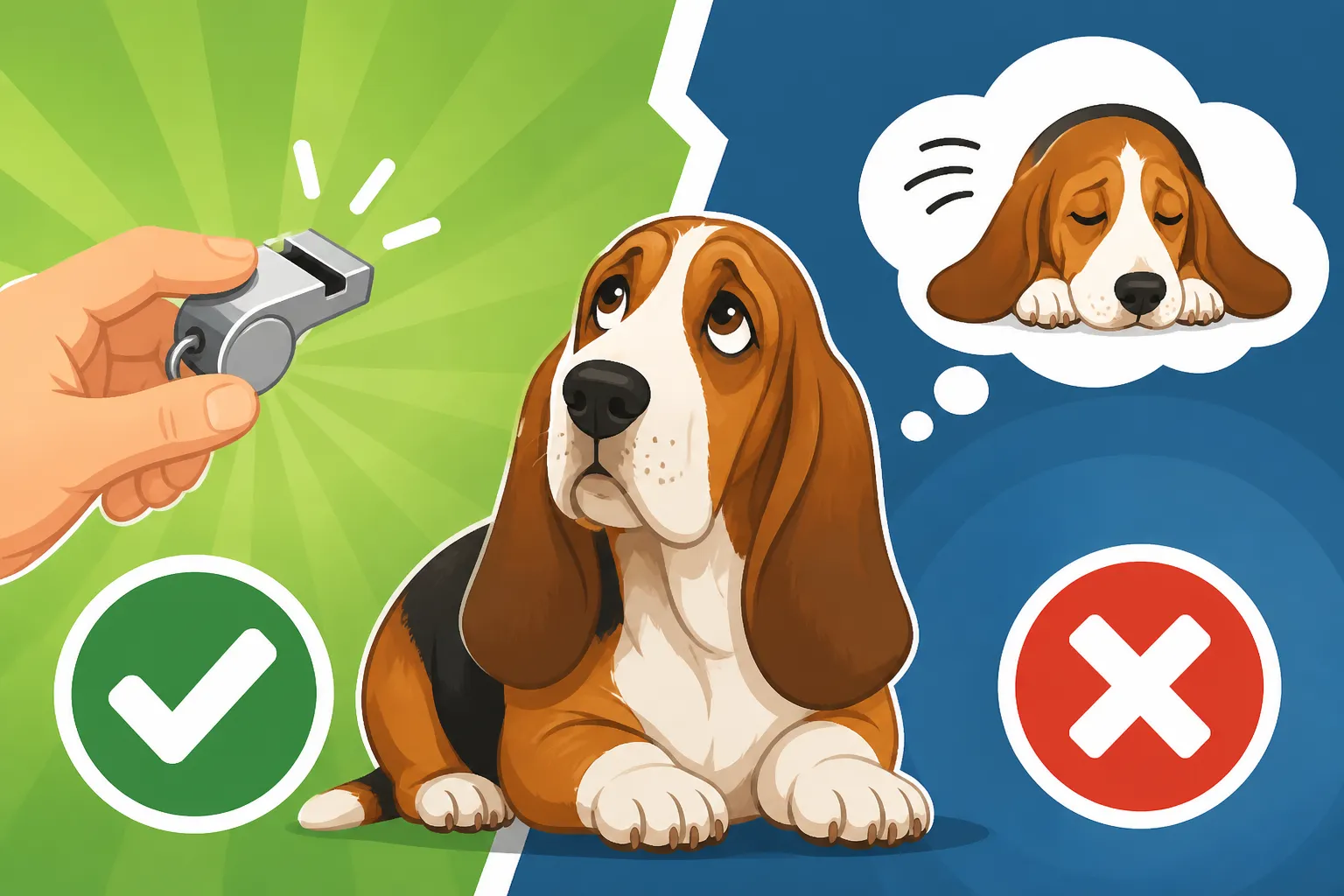
So, where does a whistle come into play? Unlike your voice, which is used for a myriad of commands, greetings, and everyday chatter, a whistle can be reserved exclusively for specific, high-priority commands, most notably the "come" or recall cue. The key advantage is its distinctiveness and consistency. Human voices can change tone, volume, and emotion, which can be confusing for a dog. A whistle, however, produces a uniform sound every single time.
This consistency means the sound itself becomes a clear, unambiguous signal. Furthermore, a whistle's frequency can often travel further and cut through ambient noise more effectively than a human voice, especially a high-frequency "silent" whistle. This is particularly useful when your Basset is far away, lost in a labyrinth of fascinating smells, or in a noisy outdoor environment. It offers a fresh, untainted signal that, with proper training, can become a lifeline for getting your Basset's attention back.
Types of Whistles and Their Potential for Basset Hounds
Not all whistles are created equal, and understanding the differences can help you choose the right tool for your Basset Hound. The goal is a consistent, clear sound that your dog can easily distinguish and associate with specific actions.
Traditional Pea Whistles
These are the classic whistles you might remember from sports coaches or school playgrounds. They produce sound by blowing air past a small "pea" inside a chamber, which vibrates and creates a trilling sound.
Pros:
- Familiarity: Many people already own one or can easily find one.
- Audibility: The sound is clearly audible to humans, making it easy to know if you're blowing it correctly.
Cons:
- Inconsistency: The sound can vary depending on how hard you blow, the weather conditions, and even the specific whistle. This inconsistency can be confusing for a dog trying to learn a precise cue.
- Limited Range: The sound often doesn't carry as far as other types, especially in open, windy, or noisy environments.
- Annoyance: The loud, often shrill sound can be irritating to human ears, making regular training less pleasant for you and your neighbors.
- Easily Damaged: The pea can get stuck or worn out over time.
While a pea whistle can work, its variability makes it less ideal for the precision needed in recall training for a scent-driven breed like a Basset Hound.
High-Frequency "Silent" Whistles
These whistles, often called "Acme Dog Whistles" or "silent whistles," produce sounds in the ultrasonic range, meaning they are barely audible or completely inaudible to human ears but are clearly heard by dogs. They don't have a pea, making their tone very consistent.
Pros:
- Consistency: This is their biggest advantage. The tone remains the same every single time, which is crucial for clear communication with your dog. You can often adjust the frequency and lock it in.
- Range: High-frequency sounds travel further and cut through distractions more effectively, making them excellent for long-distance recalls.
- Less Annoying: Since humans can barely hear them, you can train without bothering neighbors or irritating yourself.
- Specificity: Because the sound is so unique and usually reserved just for the dog, it creates a very specific cue.
Cons:
- Inaudibility to Humans: It can be hard to tell if you're blowing it correctly or if it's producing a sound at all.
- Requires Training: Both you and your dog need to learn how to use and interpret it.
- Cost: Generally a bit more expensive than a basic pea whistle, though still very affordable. You can find a good selection of these, like the Acme dog whistles, on platforms like Amazon.
For Basset Hounds, the consistency and range of a high-frequency whistle often make it the superior choice, particularly for establishing a reliable recall.
Electronic Whistles and Apps
In our digital age, there are also electronic whistle devices and smartphone apps that emulate whistle sounds.
Pros:
- Convenience: Apps are always with you on your phone.
- Variety of Tones: Many apps offer a range of frequencies and tones.
Cons:
- Battery Dependence: An electronic device or app relies on battery life.
- Sound Quality: The quality and projection of sound can vary greatly depending on your phone's speaker.
- Less Precise Control: It can be harder to achieve the nuanced, consistent timing that a physical whistle allows.
For serious training and reliability, a physical whistle, especially a high-frequency one, is generally preferred over electronic alternatives for its robustness and consistent sound projection.
Here's a quick comparison of the common whistle types:
| Whistle Type | Sound Consistency | Range & Penetration | Human Audibility | Primary Use Case |
|---|---|---|---|---|
| Traditional (Pea) | Variable | Moderate | High | General attention, short range |
| High-Frequency | Excellent | Good | Low / Inaudible | Recall, long-distance cues |
| Electronic/App | Variable | Low (speaker dep.) | Adjustable | Convenience, novelty |
Training Your Basset Hound to a Whistle: A Step-by-Step Guide
Training a Basset Hound to a whistle is entirely possible, but it requires patience, consistency, and a deep understanding of What Actually Motivates a Basset Hound. For Bassets, food is almost always the answer!
Step 1: Introduce the Whistle in a Low-Distraction Environment
Start indoors or in a very quiet, secure yard where there are minimal scents to pull your Basset's attention away. The goal here is to create a strong, positive association with the whistle sound.
- The "Ping-Pong" Method: Have some really high-value treats ready – think tiny pieces of cheese, cooked chicken, or hot dogs.
- Blow and Reward: Blow a single, consistent whistle blast (short and sweet, not long and drawn out). The instant you blow the whistle, pop a treat into your Basset's mouth. Don't wait for them to do anything; you're teaching them that "whistle sound = delicious food."
- Repeat: Do this 10-15 times in a session, a few times a day. Keep sessions short to maintain enthusiasm. Your Basset will quickly learn to orient towards you after hearing the sound, anticipating the treat. This initial conditioning is vital. They need to believe the whistle always predicts something fantastic.
Step 2: Introduce a "Come" Command with the Whistle
Once your Basset reliably looks at you or comes closer for a treat after the whistle indoors, you can start adding the "come" action.
- Distance and Excitement: Start with a short distance. Walk a few steps away from your Basset, turn your back, then blow the whistle. As soon as they turn towards you, crouch down, open your arms, and use an excited, happy voice to encourage them to come all the way to you.
- Big Rewards: When they reach you, lavish them with praise and several high-value treats. Make it a party! You want them to feel like coming to the whistle is the most rewarding thing they could possibly do.
- Gradual Increase in Distraction: Slowly, very slowly, introduce more distractions. Move to a slightly busier room, then a fenced yard with some interesting smells, and eventually, public parks on a long line. Each time you introduce a new level of distraction, go back to shorter distances and higher rewards initially, as if you're starting over a little. Remember that for a Basset, Whether a Basset Hound Works for Food Only is often true when serious training is involved.
Step 3: Consistency, Practice, and Proofing
Consistency is paramount. Every time you use the whistle for recall, you must be prepared to reward generously. If you blow the whistle and your Basset ignores it, do not repeat the whistle or chastise them. Instead, gently go to them, attach their leash, and bring them back to where you blew the whistle, then reward them. This reinforces that responding to the whistle gets them the reward, not ignoring it.
Consider integrating positive reinforcement strategies from programs like BAXTER & Bella, which emphasize clear communication and rewarding desired behaviors. Their methods can complement whistle training beautifully by building a strong bond and understanding between you and your dog. Practice in various locations, at different times of day, and with different levels of distraction. This "proofing" helps your Basset generalize the command to all situations.
- The "Emergency Stop": You can also train an emergency stop. This would typically be two short, sharp whistle blasts. Train it similarly: blow the whistle, immediately reward. Then, blow the whistle when they are taking a few steps, reward them for stopping. This can be invaluable if your Basset is heading towards danger.
Remember, Basset Hounds may learn a bit slower than some other breeds, or perhaps they simply choose not to obey until the motivation is compelling enough. Whether a Basset Hound Learns Slowly is less about intelligence and more about their selective hearing when a good scent is involved. Short, fun, and highly rewarding sessions will be far more effective than long, boring ones.
When a Whistle Might Not Be Enough for Your Basset Hound
While a whistle can be a powerful tool for improving communication and recall with your Basset Hound, it's crucial to have realistic expectations. The Basset's natural instincts are incredibly strong, and sometimes, even the best-trained whistle command might not completely override their profound drive to follow a scent.
The Inevitable Pull of the Trail
Let's face it: a Basset Hound's nose is their superpower, and sometimes that superpower can lead them into trouble. There will always be those irresistible scents – a rabbit that just ran through, the lingering odor of a deer, or simply an exceptionally potent patch of interesting ground – where your Basset's brain enters an almost trance-like state. In these moments, even a well-conditioned whistle can momentarily fade into the background. Whether a Basset Hound Can Be Called Off a Trail is a question many owners grapple with, and the honest answer is, sometimes, but not always.
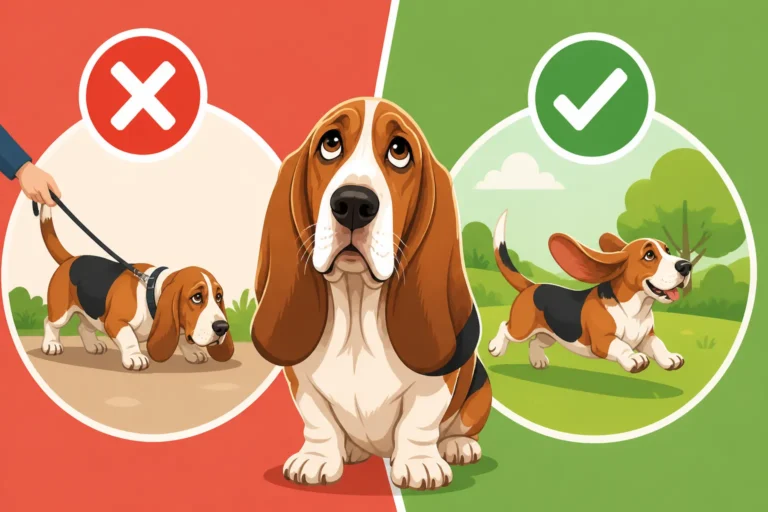
This isn't a failure of training; it's a testament to the breed's deep-seated instincts. Their genetic programming tells them to follow that scent, to track, to explore. A whistle can help to break that concentration, but it's not a magic wand that completely erases generations of selective breeding for scent work. This is why total off-leash freedom in unfenced, uncontrolled areas is generally not recommended for Basset Hounds. Whether a Basset Hound Should Ever Be Off Leash is a critical question for their safety.
The Importance of Physical Safety Measures
Given the Basset Hound's incredible nose and often selective hearing, relying solely on a whistle, or any single command, for their safety in open environments can be risky. This is where physical containment and management tools become indispensable.
- Secure Fencing: A robust, escape-proof fence is non-negotiable for a Basset Hound. They are persistent diggers and can squeeze through surprisingly small gaps. How High a Fence a Basset Hound Needs is often higher than you'd think, and the foundation needs to be secure.
- Long Lines: When you want to give your Basset more freedom to explore scents safely in an open area, a long line is your best friend. This allows them to range a good distance while still being physically attached to you. You can practice your whistle recall on the long line, giving you the ability to gently guide them back if they ignore the whistle. Whether a Long Line Is Enough for a Basset Hound really depends on the environment and your dog's training level, but it's a crucial stepping stone.
- Tracking Collars: For those moments when a Basset's nose leads them further than anticipated, a GPS tracking collar can provide invaluable peace of mind. Knowing you can locate your dog quickly if they do manage to get out is a significant comfort. Whether a Basset Hound Should Wear a Tracker is a decision many owners make for safety.
Ultimately, a whistle is a fantastic tool for improving communication and recall, especially when paired with consistent positive reinforcement. It can give you a much better chance of getting your Basset's attention than your voice alone. However, understanding their inherent nature means combining this powerful training tool with practical, physical safety measures is the most responsible approach to keeping your beloved Basset Hound safe and sound.
Disclaimer
This article is for general informational purposes only and does not constitute professional advice. Laws, prices and regulations vary by location and change over time. Consult a qualified professional for guidance on your specific situation.