Whether Food Beats a Scent for a Basset Hound
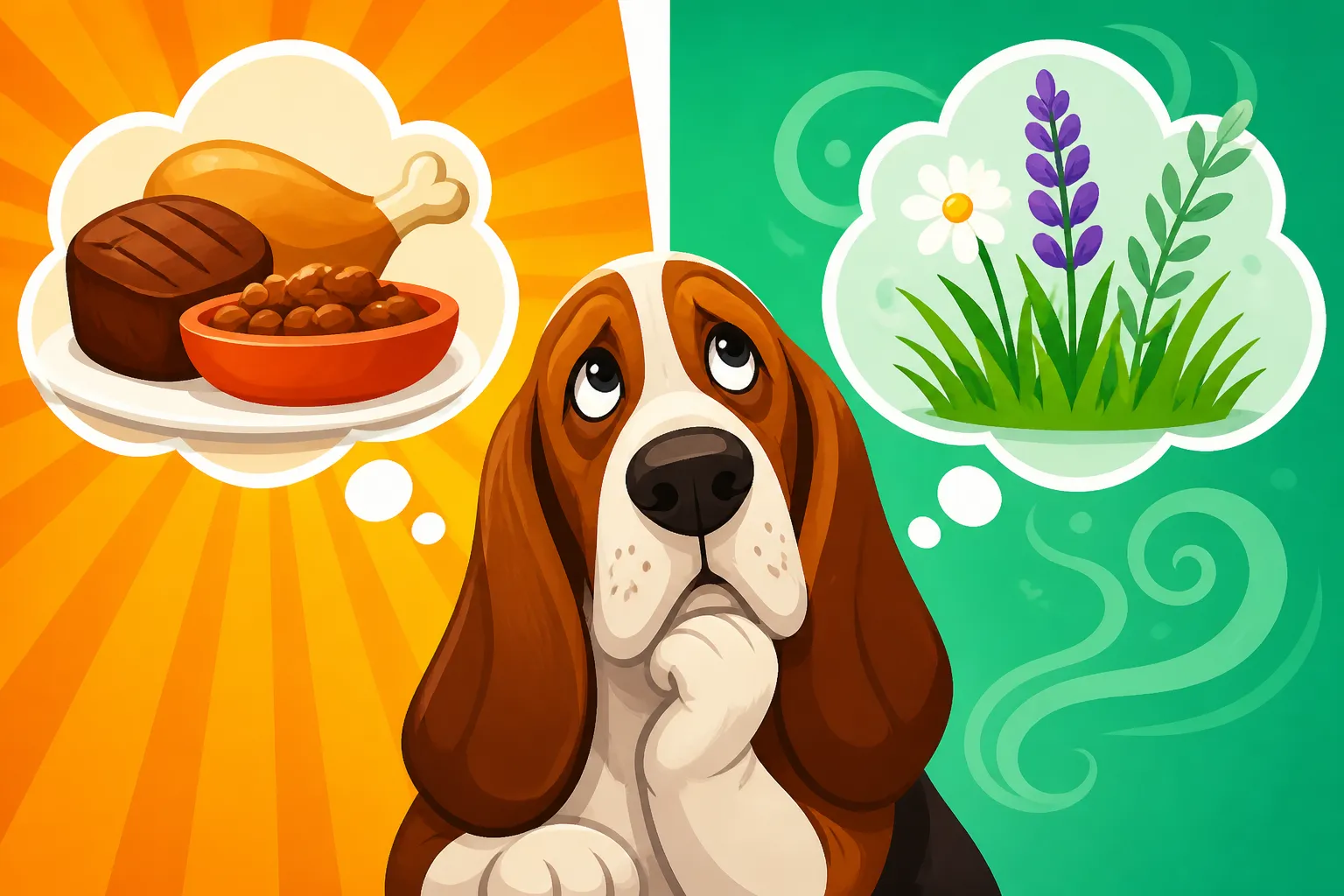
Oh, the age-old question that plagues many a Basset Hound owner: can a delicious morsel of food truly compete with the utterly captivating allure of an intriguing scent? It's a battle as old as time in the Basset world, often leaving us humans feeling like we're whispering into a hurricane when our beloved hound's nose is glued to the ground. This guide is here to unravel the complex relationship your Basset has with these two powerful motivators and help you understand when food might just win, and when that glorious nose will always reign supreme.
Understanding the Basset Hound's Obsession: Scent and Food
Let's be real, owning a Basset Hound means living with a creature whose entire world revolves around what its nose tells it. And right up there, almost on par with that deep-seated sniffing instinct, is their undeniable love for food. Trying to navigate these two powerful drives can feel like a constant negotiation, but understanding their roots is the first step.
The Unmatched Power of the Basset Hound Nose
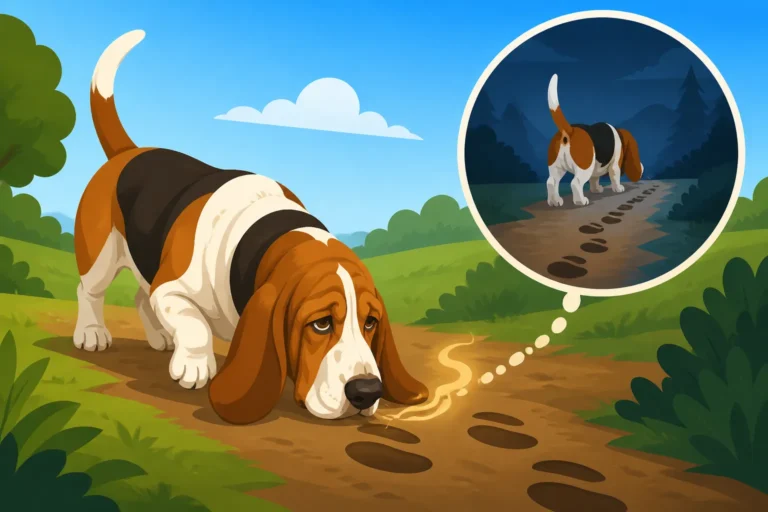
When we talk about a Basset Hound's nose, we're not just talking about a keen sense of smell; we're talking about a super-powered olfactory instrument. These hounds were bred for centuries to follow a scent trail, often for hours, through dense undergrowth, without wavering. Their lineage traces back to ancient European hounds, specifically developed to trail game at a pace that hunters on foot could keep up with. Every physical characteristic, from their long, trailing ears that sweep scent upwards, to their loose skin and dewlaps that help trap scent, is designed to enhance this incredible ability. It's why many will tell you The Nose That Puts a Basset Hound Second to a Bloodhound.
For a Basset, scent isn't just a fleeting whiff; it's a vivid, complex tapestry of information. It tells them who was here, what they were doing, how long ago, and in which direction they went. Imagine reading an incredibly compelling novel, one that you simply cannot put down. That's what a fresh scent trail is to your Basset Hound. Their brain is wired to process this information, and to follow it to its conclusion. This isn't just a hobby for them; it's a fundamental part of their being, an instinct that can, at times, completely override their awareness of anything else, including your desperate calls or even the promise of a treat.
Why Food Is Such a High-Value Reward
On the flip side, Basset Hounds are also famously, gloriously, and sometimes infuriatingly food-motivated. Most Bassets would happily sell their souls for a piece of cheese or a delicious chew. This isn't just about hunger; it's often a deep-seated instinct tied to survival and pleasure. Food represents comfort, security, and a direct reward for effort (or sometimes, just for being adorable).
However, it's important to differentiate between different types of food. Your Basset's everyday kibble, while essential, might not hold the same irresistible appeal as a chunk of boiled chicken, a piece of string cheese, or even a dollop of peanut butter. When we talk about using food to compete with scent, we almost always mean those high-value, "Oh my goodness, I will do anything for that!" treats. This strong drive for food makes it an incredibly useful tool in training, but it's not a magic bullet, especially when pitted against the overwhelming power of an engrossing scent. We understand What Actually Motivates a Basset Hound, and food is almost always at the top of that list, right next to exploring new smells.
The Primal Pull of Scent: Why It Often Wins
There's a reason Basset Hounds are known for their "selective hearing" when they're on a trail. It's not a personal affront; it's instinct. The world of scent is simply too compelling for them to ignore most of the time.
The Irresistible Call of the Wild
When your Basset's nose hits a truly captivating scent – perhaps a rabbit, a squirrel, or even just another dog's intriguing pee-mail – something shifts in their brain. It's like flipping a switch that bypasses all other commands, desires, or even their knowledge of where they are. They enter a state of deep concentration, a primal focus on following that scent. This isn't stubbornness, though it certainly feels like it sometimes. It's the culmination of centuries of selective breeding for a specific purpose.
Imagine yourself in a quiet room, completely absorbed in a challenging puzzle or a gripping book. Now, someone tries to get your attention with a mild distraction. You might acknowledge them, or you might barely register their presence. For a Basset on a hot scent, the distraction is far less compelling than the task at hand. This intense focus is precisely why whether a Basset Hound ignores you on a scent is often answered with a resounding "yes, absolutely!" The external world, including your voice and the treats in your hand, fades into the background as their ancient instincts take over.
The Scent Trail as a Story
To a Basset Hound, a scent trail isn't just a singular smell; it's a dynamic, unfolding narrative. Every step of the trail tells them a new chapter: how fresh the scent is, the direction the animal took, its gait, perhaps even its emotional state. They are driven to follow this "story" to its conclusion, to understand the full picture that the scent provides. Interrupting this process is akin to someone snatching your book away right at the climax. It's frustrating, deeply unsatisfying, and goes against every fiber of their being.
Because this drive is so fundamental, it becomes incredibly difficult to pull them away once they are truly committed. You might find yourself wondering Whether a Basset Hound Can Be Called Off a Trail, and while it's not impossible with consistent, high-level training, it's certainly a monumental challenge. The intrinsic reward of following that scent, of completing the "story," often outweighs the immediate gratification of a food reward. The satisfaction they get from using their nose is profound and deeply ingrained, a reward system built into their very DNA.
Harnessing Food as a Motivator: When It Can Work
While scent often takes precedence, food remains an incredibly powerful tool in your Basset Hound's world. The trick is understanding how and when to use it effectively, rather than expecting it to be a magic wand against a compelling trail.
Strategically Using High-Value Treats
Not all food is created equal in the eyes (or nose) of a Basset Hound. The dry kibble they eat for dinner is unlikely to pull them off a fresh deer trail. To even stand a chance against a strong scent, you need to use treats that are exceptionally high-value – things like tiny pieces of hot dog, cheese, cooked chicken, or store-bought soft training treats designed for high motivation. These are the "jackpot" rewards that can sometimes, sometimes, break their focus.
The key to success with food against scent is often about timing and pre-emption. You're not usually going to win a direct battle once they've locked on. Instead, think about using food to redirect their attention before they're fully engrossed, or to reward them for checking in with you even when tempting smells are present. This means building a strong foundation with commands like "watch me" or "leave it" in less distracting environments, heavily rewarded with those amazing treats. Many comprehensive online training programs, like those offered by BAXTER & Bella, emphasize building a strong foundation of positive reinforcement where high-value treats are central to teaching these critical skills. They teach you to become more interesting than the environment, even when the environment smells amazing.
The Art of Timing and Consistency
The effectiveness of food as a motivator is deeply tied to timing and consistency. If you want food to be a viable competitor to scent, you need to deliver the reward precisely when your Basset makes the desired choice – even a split second too late, and they may not connect the treat with the action you wanted. For instance, if you call their name and they just glance at you for a millisecond before their nose dips back down, that's your window for a super-high-value treat and enthusiastic praise. This teaches them that checking in with you, even when there are smells, yields incredible rewards.
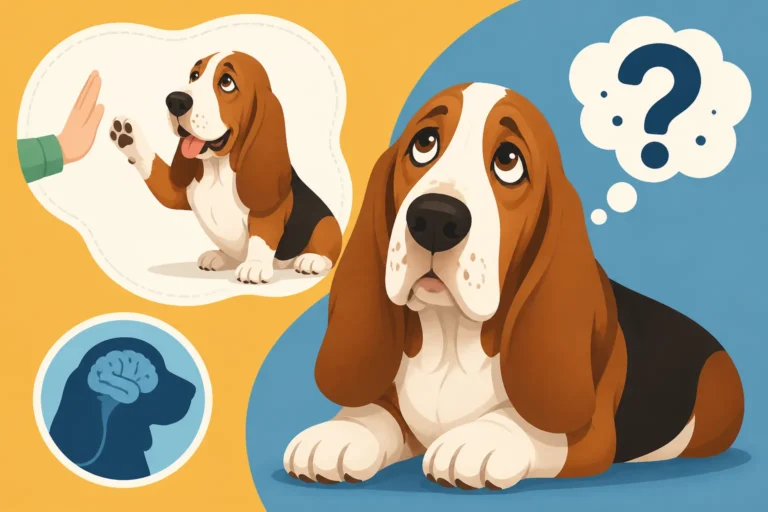
Consistency is equally crucial. If your Basset learns that sometimes ignoring your call for a scent results in no consequence, and sometimes it results in a treat (when you finally manage to physically get their attention), they'll gamble on the scent every time. Every successful recall or "leave it" command, especially around distractions, must be met with an appropriate, high-value reward. Start this training in areas with minimal scent distractions and gradually introduce more challenging environments as your Basset's reliability grows. Remember, Whether a Basset Hound Learns Slowly is sometimes a matter of whether the owner is consistently clear and rewarding!
Training Strategies When Scent Calls Louder Than Supper
So, what do you do when food just isn't cutting it, and your Basset Hound is utterly consumed by a fascinating aroma? It's about combining smart management with redirecting that powerful natural instinct into acceptable outlets.
Management Is Your Best Friend
Let's be realistic: there will be times when scent simply triumphs over everything else, no matter how delicious the treat. In these moments, your best strategy isn't to fight a losing battle, but to manage the situation safely. This means that a secure, well-fitted harness and a sturdy leash are absolutely non-negotiable for walks outside your fenced yard. Their intense focus on scent means that Whether a Basset Hound Should Ever Be Off Leash is almost always a hard no in unfenced or uncontrolled areas. One captivating smell could lead them into dangerous traffic or far from home.
If you have a yard, ensure your fencing is genuinely escape-proof. Bassets are surprisingly adept at squeezing through small gaps or finding weaknesses if a particularly enticing smell is on the other side. For situations where you want to give them more freedom to explore scents safely, consider a long line. A 30-foot or 50-foot training lead allows them to roam a bit further while still remaining tethered to you, giving you control if they hit a scent that makes them forget everything. This way, they get to indulge their sniffing instincts without the risk of them following their nose into trouble, like Whether a Basset Hound Follows Its Nose Into Traffic.
Giving the Nose a Job: Controlled Scent Work
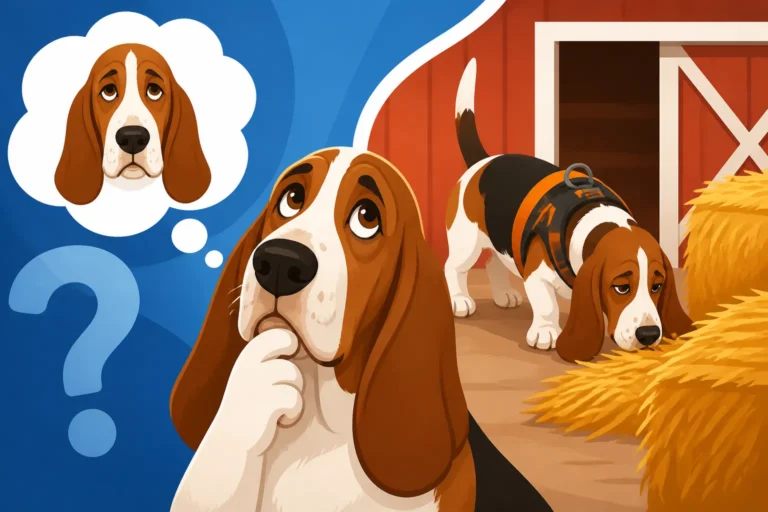
Instead of constantly battling their powerful nose, why not harness it for good? Basset Hounds thrive when their scenting abilities are engaged in a structured, owner-approved way. This can be as simple as scattering their kibble in the grass or hiding treats around the house, letting them use their incredible sense of smell to "hunt" for their meal. Puzzle feeders and snuffle mats (which you can find readily available on platforms like Amazon) are fantastic tools for this, providing mental stimulation that is often as tiring as physical exercise for a Basset. Giving a Basset Hound's Nose Something to Do is one of the kindest things you can do for them.
More advanced options include formal scent work classes or tracking trials. These activities not only provide an incredible outlet for their natural talents but also strengthen the bond between you and your Basset as you work together as a team. When their inherent drive is fulfilled through these positive channels, you might find them slightly less frantic about chasing every random scent they encounter during a regular walk. They've had their "nose fix" and might be a little more amenable to your requests.
The Hierarchy of Motivation: Understanding Your Individual Basset
Every Basset Hound, despite sharing strong breed traits, is an individual. While the general rule is that scent often trumps food, there can be nuances. Some Bassets might have a particular high-value treat that makes them truly break focus, whereas others might have a scent drive so intense that only physical intervention will work once they're on a hot trail. Observe your own Basset:
- What types of treats get their absolute, undivided attention?
- Under what circumstances (e.g., how fresh the scent, how quiet the environment) does scent completely override everything else?
- Are there specific sounds or cues that, when paired with food, can break their concentration for a moment?
Understanding your individual dog's motivational hierarchy is key. It's a continuous learning process.
| Motivation Type | When It Works Best | When Scent Often Wins | Training Application |
|---|---|---|---|
| High-Value Food (e.g., cheese, chicken) | Low-to-moderate distraction environments; for immediate redirection before deep scent lock; as a "jackpot" reward for successful recall near scents. | Intense, fresh, high-excitement scent trails (e.g., rabbit, deer); when Basset is deeply engrossed and brain is "off." | Teaching "look at me," "come," "leave it"; building positive associations with owner's presence during walks. |
| Regular Kibble/Low-Value Treats | Basic obedience in familiar, low-scent areas; as part of daily meals in puzzle toys or scatter feeding. | Almost always when any intriguing scent is present, even mild ones. | Maintaining good manners indoors; mental enrichment through feeding games. |
| Praise/Affection | As secondary reinforcement for a bond-driven hound; for general good behavior; when Basset is calm and attentive. | Rarely as a primary disruptor for strong scent; may be ignored when highly distracted by smell. | Reinforcing calm behavior; building a strong emotional connection; used with food rewards. |
| Toys/Play | For specific individuals who have a strong play drive for particular toys (less common for breaking deep scent focus). | When a scent trail offers more intrinsic reward and sustained engagement. | Short play breaks during training; using a favorite squeaky toy to get attention before a scent takes hold. |
In the end, it’s not always about food beating a scent, but about using food as a powerful tool to shape your Basset Hound’s choices and to manage their environment so they can be safe and happy, fulfilling their incredible, natural instincts. It's a dance between their ancient drives and your modern home, and with patience and understanding, you can find a rhythm that works for both of you.
Disclaimer
This article is for general informational purposes only and does not constitute professional advice. Laws, prices and regulations vary by location and change over time. Consult a qualified professional for guidance on your specific situation.