Whether an Invisible Fence Holds a Basset Hound
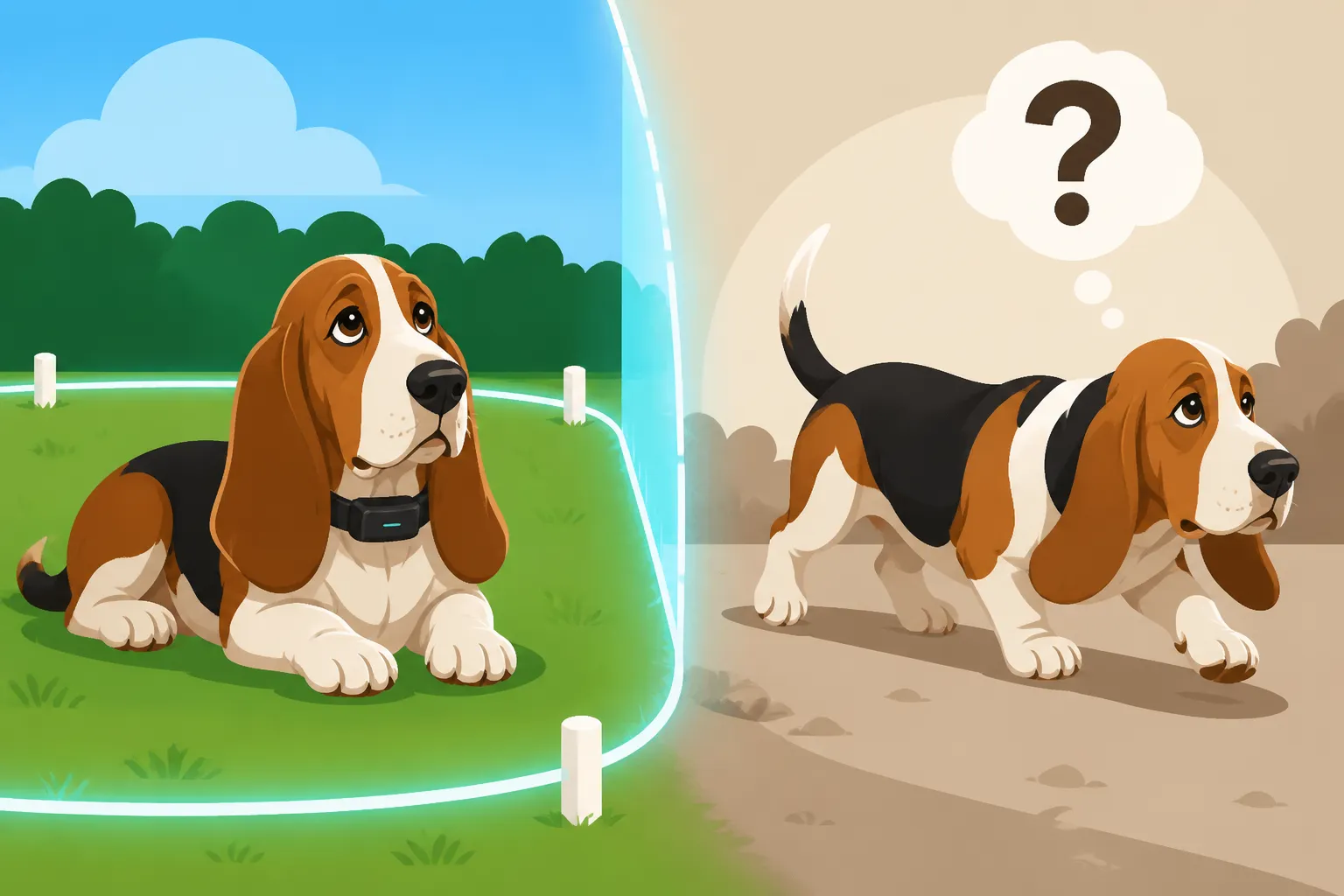
Many Basset Hound owners find themselves at a crossroads when it comes to containing their beloved, long-eared companions, especially with the siren song of an "invisible fence." The promise of an open yard without unsightly barriers is tempting, but the reality for a scent-driven Basset can be a heartbreaking cycle of escapes and frustrated training efforts. This guide aims to thoroughly explore whether an invisible fence can truly hold a Basset Hound, delving into their unique instincts, the mechanics of these systems, and, most importantly, the practical challenges and alternative solutions for keeping your furry friend safe and sound.
The Basset Hound's Instincts vs. Invisible Fences
When you bring a Basset Hound into your home, you're not just getting a dog; you're adopting a nose with a dog attached. Their entire being is hardwired for scent, and this fundamental trait often clashes head-on with the concept of an invisible boundary.
The Irresistible Call of Scent
Imagine a Basset Hound, nose to the ground, following a trail. For them, it's not just a casual sniff; it's a rich, immersive narrative unfolding with every step. Their olfactory senses are incredibly powerful, second only to some other specialized breeds like the Bloodhound. Whether a Basset Hound's Nose Is Second Only to a Bloodhound. A Basset on a hot trail essentially enters a trance-like state, where the world outside that scent path fades away. This means that the gentle warning beep of an invisible fence collar, or even the subsequent static correction, often becomes secondary to the overwhelming urge to pursue that fascinating odor.
It's a common frustration for Basset owners: you call them, you plead, you even offer treats, but if they're locked onto a scent, it's like you're not even there. Why a Basset Hound Stops Hearing You When It Smells Something. This isn't stubbornness in the malicious sense; it's the culmination of centuries of selective breeding for tracking. An invisible fence relies on the dog choosing to respect a boundary, but a Basset's primal drive can override that choice in an instant, leading them to "power through" the correction to follow the trail of a rabbit, a squirrel, or even just a particularly interesting patch of grass.
The Pain vs. Reward Calculation
For an invisible fence to work, the dog must associate the correction with crossing the boundary and decide that the discomfort isn outweighs the perceived reward on the other side. For many breeds, this equation works out. They experience the static pulse, learn quickly, and respect the boundary. A Basset Hound, however, often calculates this differently. Their reward system is heavily skewed towards olfactory satisfaction.
Consider a situation where a Basset catches the tantalizing scent of a deer that has just passed through your yard. The scent is fresh, exciting, and promises an adventure. As they approach the invisible boundary, the collar emits its warning tone. The Basset might pause for a moment, weighing the known discomfort of the static correction against the unknown, thrilling reward of the chase. More often than not, especially with high-value scents, the allure of the trail wins. They take the static correction, yelp perhaps, but continue their pursuit, having decided that the temporary discomfort was a worthwhile price to pay for the "treasure" they were chasing. This makes consistent containment incredibly difficult, as their motivation can literally walk by your house at any moment.
Breed Specific Considerations for Containment
Beyond their nose, Basset Hounds have other physical and behavioral traits that make invisible fences less than ideal. Their low-slung bodies, while not designed for jumping over physical fences, are perfectly suited for burrowing under or squeezing through small gaps. Whether a Basset Hound Digs Under a Fence is a valid concern, even if an invisible fence does nothing to prevent it. They are tenacious, and if they find a weak spot or decide to bypass the static correction, their build can aid their escape.
Their reputation for being "stubborn" often comes from this strong independent streak, particularly when their nose is engaged. They were bred to work independently, following a trail for hours, rather than constantly checking in with a handler. This independent nature means they aren't always eager to please in the same way some other breeds might be, which can complicate the training required for an invisible fence system. While delicious treats can often be a great motivator for a Basset, What Actually Motivates a Basset Hound is often a complex interplay of food, praise, and the overwhelming satisfaction of scent work. Relying solely on a negative aversion to a static correction might not be enough for such a driven breed.
How Invisible Fences Work and Their Limitations for Basset Hounds
Understanding the mechanics of invisible fences helps to clarify why they can be a poor match for the determined and instinctual Basset Hound. It's not magic; it's technology, and like all technology, it has its limits.
The Technology Behind Invisible Fences
An invisible fence system typically consists of three main components: a buried wire that defines the boundary, a transmitter that emits a radio signal through the wire, and a receiver collar worn by the dog. As the dog approaches the boundary, the collar first emits an audible warning beep. If the dog continues, the collar then delivers a static electrical correction, intended to be unpleasant enough to deter them from crossing.
The idea is that the dog learns to associate the warning beep and subsequent correction with the invisible boundary line. Through repetition and careful training, the dog is supposed to understand that staying within the defined area prevents the unpleasant sensation. This sounds straightforward, but for a breed like the Basset, the nuances of this system often fall short. The "invisible" nature is both its strength and its weakness. It offers an aesthetic solution for homeowners, but it lacks the physical presence that some dogs truly need to feel contained, especially when their instincts are screaming at them to move forward.
The "Psychological Barrier" vs. Physical Reality
The core limitation of an invisible fence, especially for a Basset Hound, is that it creates only a psychological barrier, not a physical one. There's nothing tangible to stop them. When a Basset is in hot pursuit of a scent, that intense focus can overshadow any learned aversion to the static correction. They may experience the zap, yelp, and keep going, because the lure of the outside world is simply too strong. Once they've "broken through" the boundary, they are then outside the correction zone, often oblivious to how to get back in without receiving another correction. This can lead to them being stranded outside the boundary, scared, confused, and potentially injured.
Think about it from a Basset's perspective. There's no wall, no gate, no tangible deterrent. It's an abstract line with an unpleasant surprise. While some dogs quickly grasp this, the Basset's deeply ingrained drive to follow its nose can make this abstract concept almost impossible to consistently honor when a powerful scent is involved. They don't interpret it as a definitive "no entry" sign in the same way they would a sturdy wooden fence. For a breed known to Whether a Basset Hound Squeezes Through Gaps in a physical fence, an entirely permeable boundary is an even easier challenge to overcome when motivated.
Training Protocols and Their Effectiveness
Invisible fence companies usually provide detailed training protocols, which are crucial for any chance of success. This involves slowly introducing the dog to the boundary flags, associating the warning beep with the boundary, and gradually increasing distractions. Consistent reinforcement and supervision are paramount. However, even with the best intentions and diligent training, a Basset Hound's unique temperament can pose significant hurdles.
The training itself can be a battle of wills. Bassets are smart, but they are also independent thinkers. While they can learn commands and house rules, applying those lessons when a deep-seated instinct takes over is another story. If the training isn't absolutely perfect, or if the Basset experiences one particularly compelling scent that pushes them past the boundary, the entire learned association can break down. Furthermore, the correction from an invisible fence is indiscriminate; it corrects the dog regardless of what they are doing. This can lead to anxiety or fear of the yard itself, rather than just the boundary, which defeats the purpose of providing a safe space for them to roam. For comprehensive training advice, especially for puppies, resources like BAXTER & Bella can offer structured programs that might help with general obedience, but even the best general training might not fully overcome a Basset's scent-driven escape artistry from an invisible barrier.
Common Challenges and Risks with Invisible Fences and Basset Hounds
While the idea of an invisible fence sounds convenient, the practical reality for a Basset Hound often involves a host of challenges and potential dangers that owners might not initially consider.
Escapes and the "Bolt Through" Phenomenon
The most common and frustrating issue for Basset Hound owners with invisible fences is the "bolt through." This is when a Basset, overwhelmed by a compelling scent or sight, decides that the momentary sting of the static correction is worth enduring to get to the other side. Once they've committed, their drive to pursue is incredibly strong. They'll push through the discomfort, and suddenly, they're free.
What happens next? Often, the Basset is disoriented. They've crossed the boundary and are no longer receiving corrections, but they don't necessarily know how to get back into the safe zone without getting zapped again. This can leave them lost, wandering, and in danger. Whether a Basset Hound Wanders if the Gate Opens is a serious concern, and an invisible fence doesn't mitigate this inherent tendency to follow their nose wherever it leads. This behavior is particularly prevalent with Bassets because their sense of smell is so powerful that it can easily override the aversion to the correction. It’s not a matter of if they will bolt, but often when, given the right stimulus.
Safety Concerns from External Threats
One critical, often overlooked, aspect of invisible fences is that while they are designed to keep your dog in, they do absolutely nothing to keep other things out. This is a huge vulnerability for a Basset Hound. Stray dogs, wildlife, or even people with ill intentions can easily enter your yard. Your Basset, while contained by the fence, is entirely exposed to these external threats.
Imagine a scenario where a large, aggressive stray dog enters your yard. Your Basset, unable to escape the perceived safety of its home territory due to the invisible fence, could be trapped and severely injured. Or consider children or strangers who might not realize the fence is there and inadvertently interact with your dog, potentially leading to unforeseen incidents. For a breed that already requires careful management regarding external dangers, an invisible fence provides a false sense of security, leaving your Basset vulnerable to the unpredictable outside world. This is why many experienced Basset owners insist on physical barriers for true protection.
Stress, Anxiety, and Correction Aversion
Not every dog reacts to an invisible fence with a simple behavioral modification. Some Basset Hounds can develop significant stress and anxiety as a result of the unpredictable corrections. They might become fearful of their own yard, associating parts of it with discomfort, or even generalize their anxiety to other aspects of their life. This can manifest as reluctance to go outside, pacing, whining, or even aggression due to fear.
Furthermore, the static correction can be confusing. If the dog is corrected when another dog or a person is nearby, they might associate the correction with that innocent bystander, leading to negative associations or fear-based reactions towards them. It's a delicate balance, and for a sensitive hound, the psychological toll can outweigh any perceived benefit of an "open" yard. Instead of a happy, free-roaming dog, you could end up with a fearful, anxious companion whose quality of life is diminished by the constant threat of an invisible zap. For breeds prone to certain anxieties, it's a risk not worth taking.
Alternative and Supplemental Containment Solutions
Given the unique challenges Basset Hounds present for invisible fences, it's wise to consider more reliable and humane containment methods. True peace of mind often comes with a tangible barrier.
Physical Fencing: The Gold Standard for Bassets
When it comes to keeping a Basset Hound safe and secure, a physical fence is, without a doubt, the gold standard. A sturdy, appropriately sized physical fence provides a clear, undeniable boundary that even the most scent-driven Basset understands. For a Basset, you're generally looking for a fence that is at least 4-5 feet high. While they aren't known for their jumping prowess, a determined Basset could potentially try to scale a lower fence, especially if there's something fascinating on the other side. How High a Fence a Basset Hound Needs.
However, simply having a fence isn't enough; you must also account for their digging tendencies. Bassets, with their strong legs and inherent desire to follow a trail, are quite capable of digging under a fence. This means ensuring the fence extends below ground with wire mesh, concrete, or landscape timbers, or that the bottom edge is firmly secured to the ground. A properly installed physical fence offers not only containment but also protection from external threats, providing a safe haven where your Basset can explore their own yard without the risk of escape or danger from unwelcome visitors. This investment, though potentially higher upfront, can save countless headaches, vet bills, and heartbreaks in the long run.
Combining Invisible Fences with Other Methods
If you already have an invisible fence or are considering it as a last resort, it's crucial to understand that it should never be the sole method of containment for a Basset Hound. At best, it can act as a supplemental layer of deterrence, but it absolutely must be paired with other robust strategies. One common approach is to use a long line when your Basset is in the yard, especially during unsupervised times. A 30 to 50-foot long line, secured to a sturdy anchor point, can give your Basset room to roam while still providing a physical tether that prevents them from bolting through the invisible boundary. These can be easily found on platforms like Amazon.
Another method is constant, diligent supervision. Treat any time your Basset is outside, even in an "invisible fenced" yard, as if they were off-leash in an unfenced area. Be prepared to intervene instantly if they show signs of engaging with a scent near the boundary. This level of vigilance is exhausting, but it's the only way to minimize the risks. Remember, even with these measures, the psychological impact of the static correction still exists, and the fence still doesn't keep external threats out. For ultimate peace of mind, a physical barrier remains superior. You might also consider investing in a GPS tracker or Whether a Basset Hound Needs a Tracking Collar if you have an invisible fence, to help locate your Basset if they do manage to escape.
Training and Management Strategies
Beyond physical barriers, strong training and consistent management are non-negotiable for a Basset Hound, regardless of your chosen containment method. A solid recall command is vital, though achieving a truly reliable recall with a Basset on a scent trail is notoriously challenging. The Recall a Basset Hound Will Never Reliably Give You. Practice recall in low-distraction environments first, using high-value treats, and gradually introduce more distractions. Work on "leave it" and "look at me" commands to help divert their attention from tempting scents.
It's also essential to acknowledge that for many Basset Hounds, being truly off-leash in an unfenced area is simply not a safe or realistic option. Whether a Basset Hound Should Ever Be Off Leash is a question many owners grapple with, and for most, the answer is a resounding "no" unless in a securely fenced area. Utilizing leashes, long lines, or secure harnesses (especially anti-pull harnesses if your Basset pulls on walks) are crucial management tools. Enrichment activities that engage their powerful nose, such as scent work games, puzzle toys, or snuffle mats, can help satisfy their instincts in a controlled environment, reducing the urge to escape for a "scent adventure." Programs like BAXTER & Bella can provide structured guidance on these foundational obedience and enrichment activities, which can complement any containment strategy. Ultimately, understanding and respecting your Basset's intrinsic nature is the first step toward effective and humane containment.
Disclaimer
This article is for general informational purposes only and does not constitute professional advice. Laws, prices and regulations vary by location and change over time. Consult a qualified professional for guidance on your specific situation.