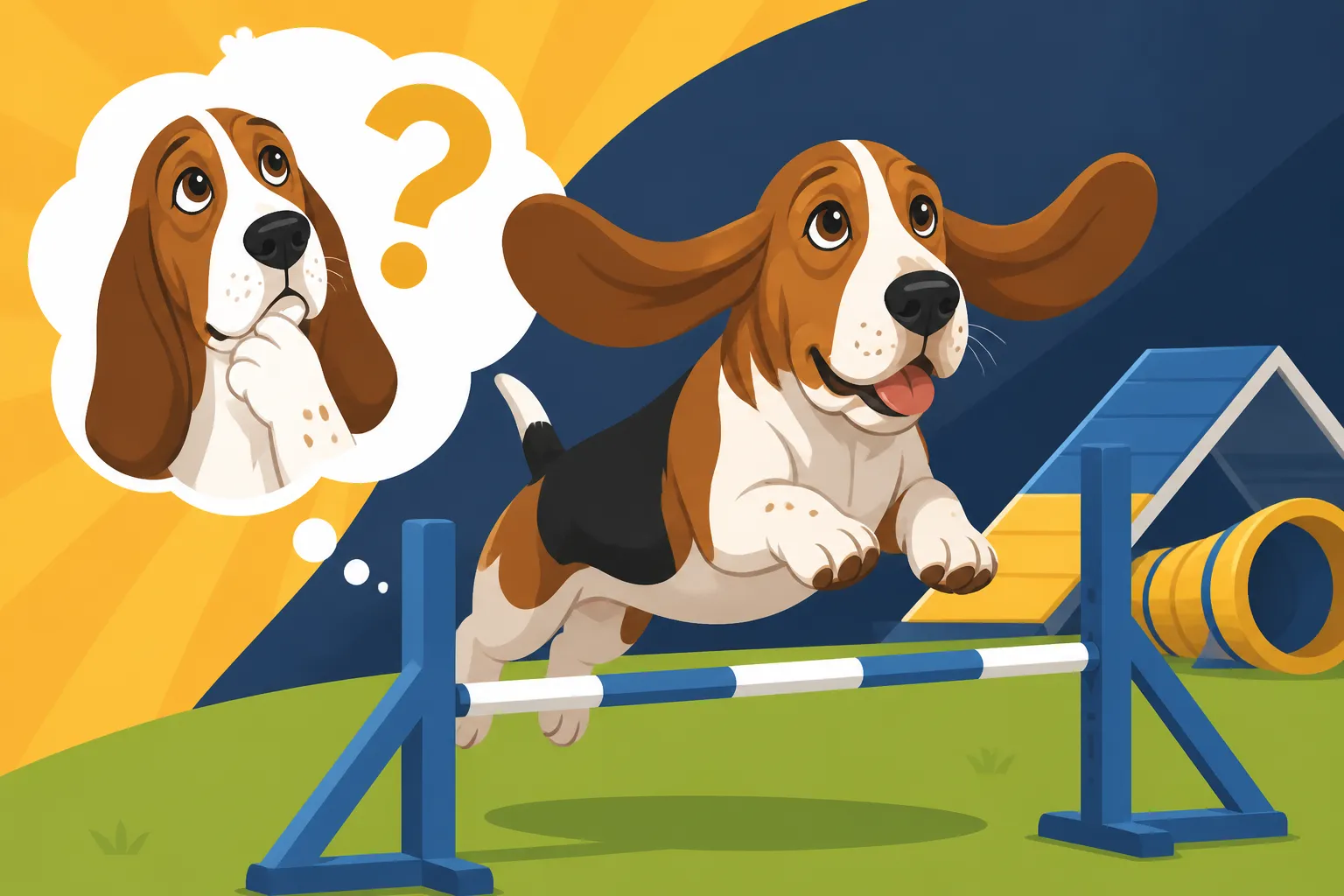
Whether a Basset Hound Can Do Agility
You’ve seen the incredible videos, right? Border Collies flying over hurdles, Poodles weaving through poles at dizzying speeds, and you might be sitting there, looking at your beloved Basset Hound, who's currently napping with a deep sigh, and think, "Agility? My Basset? You've got to be kidding me!" It's a natural reaction. Basset Hounds aren't exactly built for speed or high jumps, and their default mode often seems to be "leisurely sniff." But if you're wondering if your long-eared, low-slung companion can actually engage in agility, the answer is a resounding, albeit qualified, yes! This guide will explore how Basset Hounds can absolutely participate in agility, focusing on adapting the sport to their unique physiology and celebrating their specific talents.
The Basset Hound's Unique Physiology and Agility
Let's be honest: a Basset Hound's body is a masterpiece of scent-tracking design, not Olympic-level hurdling. Their distinctive structure, while charming and perfectly suited for following a trail, presents certain considerations when it comes to a physically demanding sport like agility. Understanding these unique traits is the first step to ensuring a safe, enjoyable, and successful agility journey for your Basset.
Understanding the Basset's Physical Build
Basset Hounds are built low to the ground, with incredibly short, sturdy legs, a long, heavy body, and substantial bone. This isn't a flaw; it's a feature! Those long, heavy ears, the deep chest, and the seemingly disproportionate body are all designed to keep their powerful nose close to the ground, trapping scent and allowing them to focus intently on a trail for hours. However, this means they're not going to be clearing a standard six-foot jump or darting through a course like a Whippet.
Think about the physics involved. A Basset's center of gravity is very low, which can actually be an advantage for stability in some situations, but it makes high-flying maneuvers challenging and potentially risky. Their short legs mean they'd need to put in significantly more effort to clear even a low jump, and the impact on their joints, especially their elbows and hips, could be a concern over time. Their long backs, while robust, are not designed for the quick twists and turns often required in traditional agility. We really need to consider The Back Trouble a Basset Hound Is Built Into as a core concern with any high-impact sport. The goal isn't to transform them into something they're not, but to celebrate their capabilities within their natural design.
Potential Health Considerations and Adaptations
When considering agility for your Basset, being mindful of their breed-specific health predispositions is paramount. Basset Hounds, like many chondrodystrophic (short-legged) breeds, can be prone to certain orthopedic issues. Elbow dysplasia is a common concern, as is intervertebral disc disease (IVDD) due to their long spines. Elbow Dysplasia in a Basset Hound is something to be aware of. High-impact activities, repetitive jumping, or sharp turns can exacerbate these conditions or lead to injury.
This doesn't mean agility is off-limits, but it absolutely means modifications are necessary. We're talking about lowering jumps to just a few inches off the ground, or even turning them into "weave-throughs" where the dog simply walks over a low bar. Tunnels can be made wider and shorter to prevent twisting. Weave poles can be introduced one at a time, or spaced out more, to allow for their longer bodies and less agile turns. The focus shifts from speed and height to accuracy, engagement, and most importantly, fun and mental stimulation. Regular vet check-ups are also non-negotiable, especially for older Bassets. Your vet can advise on suitable activity levels and help you monitor for any signs of discomfort or joint pain. Remember, the aim is to enhance their life, not put them at risk.
The Basset Hound Temperament and Training for Agility
Basset Hounds are often described as "stubborn" or "independent," and while there's a kernel of truth in that, it's more accurate to say they are supremely focused on their priorities, which often revolve around scent and comfort. This distinct temperament influences how you'll approach agility training. It's not about forcing them, but about inspiring them and making them believe it's their idea.
Motivation and Drive: Harnessing the Basset's Nose
If there's one thing a Basset Hound is motivated by, it's their nose, closely followed by a delicious treat. Trying to get a Basset to perform for praise alone or for the sheer joy of competition (as you perceive it) is often a losing battle. Their deep-seated drive to follow scent can be both a challenge and a superpower in agility. On one hand, a captivating smell just outside the ring can completely derail a run. On the other, you can use their nose to your advantage!
High-value treats are your absolute best friend when training a Basset for agility. Think of tiny pieces of cooked chicken, cheese, or hot dogs – something they truly go wild for. Use these rewards consistently and generously to mark desired behaviors. You might also incorporate scent work into your agility training, making the "find it" aspect part of the game. For example, you could hide a treat at the end of a tunnel or at the base of a contact obstacle. Websites like BAXTER & Bella offer fantastic online training resources that often emphasize positive reinforcement and engagement, which is exactly what a Basset Hound thrives on. They often discuss What Actually Motivates a Basset Hound, and for our long-eared friends, it’s usually something edible. Short, fun sessions are key; a Basset's attention span for repetitive tasks can be, shall we say, brief.
Patience, Positive Reinforcement, and Fun
Training a Basset Hound for agility requires a mountain of patience and a steadfast commitment to positive reinforcement. Forget harsh corrections or trying to rush them; it will only lead to a dug-in Basset who decides the couch is a far more appealing obstacle course. The secret is to make every session feel like a delightful game. Celebrate every tiny success, whether it's a tentative step over a low bar or a curious sniff at a tunnel entrance.
Break down each obstacle into the smallest possible steps. For instance, instead of expecting them to run through a tunnel, start by simply encouraging them to put their head in, then take a step, then two, rewarding heavily at each stage. Use upbeat vocal encouragement, happy claps, and those high-value treats. If your Basset decides mid-course that a patch of grass is more interesting, don't get frustrated. Gently redirect, re-engage with a treat, or take a short break. It's truly about enjoying the process together, building their confidence, and strengthening your bond. If you want to know Whether a Basset Hound Learns Slowly, it’s often less about slowness and more about selective hearing and prioritisation!
Modifying Agility for the Basset Hound
The beauty of modern dog sports is their adaptability. You don't have to follow traditional competition rules to enjoy the benefits of agility with your Basset Hound. In fact, for a Basset, the modifications are what make it not just possible, but highly beneficial and fun.
Lowering Obstacles and Adjusting Courses
This is probably the most crucial modification for a Basset Hound. Forget those towering A-frames and high hurdles. For your Basset, jumps should be no more than a few inches off the ground, or simply bars that they step over rather than leap. Some Basset owners even remove the bars entirely and just use the jump standards as guides, encouraging their dog to run between them. The dog walk and A-frame can be lowered significantly or replaced with ramps that have a gentle incline. The teeter-totter, a challenging obstacle for many dogs, can be introduced with a very low pivot point and ample support to ensure a slow, controlled movement.
The layout of the course also matters. Avoid tight turns, sharp angles, and sequences that require rapid changes in direction. Design courses that are more open, allowing your Basset to maintain a comfortable, flowing pace. Instead of speed, focus on accuracy and the sheer joy of navigating the course. You might even find that your Basset truly enjoys the challenge of figuring out the sequence of obstacles, using their brain as much as their body. Platforms or pause tables can be lowered to a height where they can easily step up and enjoy their "stay" before moving on. For buying adapted equipment, you might find some good options on Amazon that are adjustable or specifically designed for smaller or less agile breeds.
Focusing on Fun, Not Speed or Perfection
The core philosophy when doing agility with a Basset Hound should be "fun first." Forget the ribbons and the clock. Your primary goal is to provide mental stimulation, physical exercise (appropriate for their build), and a fantastic bonding experience for you and your dog. If your Basset takes a detour to sniff a butterfly, that's perfectly fine. If they decide to lie down in the middle of a tunnel, maybe they just need a moment!
Think of agility as a series of engaging puzzles for your Basset to solve. Each successful completion of an obstacle, no matter how slow or unconventional, is a win. This shift in mindset reduces pressure on both you and your dog. It allows you to celebrate their unique qualities – their determined plod, their enthusiastic sniffs, their contented bays – rather than wishing they were a different breed. By embracing the fun, you'll find your Basset is more eager to participate, and the joy you both share will far outweigh any competitive scores. This is also a great way to provide Whether a Basset Hound Needs Any Real Exercise in a way that is mentally engaging and physically low-impact.
Benefits Beyond Competition: Why Try Agility with Your Basset?
Even if your Basset Hound never sees a competition ring, incorporating agility-style play into their routine offers a myriad of benefits that enhance their overall well-being. It's not just about what they can't do; it's about all the wonderful things they can gain.
Physical Fitness and Weight Management
Let's face it, Basset Hounds love their food, and a sedentary lifestyle can quickly lead to What Extra Weight Does to a Basset Hound. Excess weight puts even more strain on their already unique joints and long spine. Agility, even a modified version, provides fantastic physical exercise that is tailored to their capabilities. Stepping over low bars, walking through tunnels, and navigating a course helps strengthen their muscles, improve their coordination, and maintain a healthy weight.
Regular, appropriate physical activity is crucial for a Basset's longevity and quality of life. Instead of long, strenuous runs that might be too hard on their joints, short bursts of varied activity in an agility course can be highly effective. It gets them moving in different ways, engages their core muscles, and keeps their metabolism ticking. This can be a vital component of a strategy for Getting Weight Off a Basset Hound or preventing it in the first place, ensuring they can enjoy their The Ten to Twelve Years a Basset Hound Lives to the fullest. Always ensure your Basset is warmed up properly before starting any activity and cooled down afterwards.
Mental Stimulation and Bonding
Beyond the physical, agility offers incredible mental stimulation for a Basset Hound. They are intelligent dogs, and while they might not always show it with enthusiastic obedience, their minds are constantly working, especially when it comes to scents. Figuring out a course, remembering sequences, and responding to your cues provides an excellent mental workout that prevents boredom and destructive behaviors. A tired Basset is often a well-behaved Basset, and mental exertion can be just as tiring as physical.
Furthermore, agility is an unparalleled bonding experience. Working together as a team, communicating through cues and body language, and celebrating successes (even small ones) strengthens the connection between you and your Basset. They learn to trust you, to pay attention to you even when tempting smells are around, and to see you as the source of fun and rewards. This shared activity fosters a deeper understanding and appreciation for each other, turning training into a joyful collaboration rather than a chore. It builds confidence in your dog as they master new skills and navigates novel challenges.
Agility as a Gateway to Other Activities
Once your Basset Hound discovers the joy of modified agility, it might open doors to other wonderful activities that cater to their unique talents. Their incredible nose, for instance, is perfectly suited for scent work or nose work games, where they follow specific odors. Agility can be a stepping stone, building their confidence, their focus on you, and their general body awareness.
Consider trying activities like Barn Hunt, where they use their natural prey drive and scenting abilities to locate rats (safely enclosed!) in a straw bale maze. Or perhaps Urban Trailing, which hones their natural tracking skills in a human environment. The principles of positive reinforcement and breaking down tasks, learned in agility, are applicable across many dog sports. It's about finding what your Basset truly enjoys and giving them an outlet for their innate instincts, all while creating lasting memories together.
| Feature | Traditional Agility | Basset-Friendly Agility Modifications |
|---|---|---|
| Jump Height | Often high (e.g., 12-24+ inches) | Very low (e.g., 2-6 inches) or ground bars |
| Contact Obstacles | Steep A-frames, Dog Walks, Teeters | Gentle ramps, lowered A-frames, stable teeters |
| Weave Poles | Closely spaced, 6-12 poles | Wider spacing, fewer poles (e.g., 4-6), or channels |
| Tunnel Design | Variable lengths, sometimes sharp bends | Shorter, wider, straighter tunnels |
| Course Layout | Fast, tight turns, complex sequences | More open, flowing lines, gentle curves |
| Pace Emphasis | Speed and precision | Engagement, accuracy, and enjoyment |
| Goal | Competition, titles, high scores | Fun, mental stimulation, physical fitness, bonding |
Disclaimer
This article is for general informational purposes only and does not constitute professional advice. Laws, prices and regulations vary by location and change over time. Consult a qualified professional for guidance on your specific situation.