How Much an Adult Basset Hound Eats Daily
It’s a common scenario for Basset Hound owners: you’ve got this wonderful, floppy-eared companion who seems to have a bottomless pit for a stomach. You want to make sure they’re well-fed and happy, but the worry about overfeeding – or inadvertently underfeeding if you’re guessing – is very real, especially with a breed prone to weight issues. This guide is here to help you navigate the often-confusing world of canine nutrition and figure out just how much food your adult Basset Hound truly needs each day to stay healthy and active, without falling into the common traps of portion sizes.
Understanding Your Basset Hound's Unique Metabolism and Needs
Basset Hounds are, without a doubt, one of the most charming and captivating breeds out there. Their soulful eyes, long ears, and generally laid-back demeanor make them fantastic companions. However, their unique build and a metabolism that isn't always as active as other breeds mean their dietary needs can be a little different from what you might expect. It’s not a one-size-fits-all approach, and what works for a Labrador might not work for your Basset.
Why a Basset Hound's Appetite Can Be Deceiving
Let's be honest, most Basset Hounds act like every meal is their last and every crumb is a treasure. This isn't just a quirky personality trait; it's rooted deeply in their history as scent hounds. For generations, their ancestors were bred to follow a scent for hours, often in unpredictable conditions where food might not have been readily available. This instilled a strong instinct to eat when food is presented, because who knows when the next opportunity will arise? They're survivors, and that survival instinct manifests as a robust appetite.
The challenge for us modern Basset owners is that our beloved couch potatoes aren't usually tracking rabbits for miles through fields. Their energy output is often significantly less than their historical counterparts, or even less than other breeds of a similar weight. This means their bodies are incredibly efficient at storing calories, making them particularly prone to What Extra Weight Does to a Basset Hound. It's easy to look at those pleading eyes and think they're genuinely starving, but often, it's just their clever way of trying to get an extra snack! We love them for it, but we also have to be smarter than their stomachs.
Factors Influencing Daily Food Intake
Determining the exact amount of food your Basset needs isn't as simple as checking a chart. Several individual factors play a significant role in their daily caloric requirements:
- Age: While this guide focuses on adult Basset Hounds, even within adulthood, needs can change. A young adult Basset (say, 1-3 years old) might have a slightly higher metabolism than a middle-aged Basset (4-7 years old). As they transition into their senior years, their metabolism often slows down, and their activity levels naturally decrease, meaning their caloric intake will likely need to be reduced to prevent unwanted weight gain. An old Basset Hound might also struggle with mobility, further reducing their energy expenditure.
- Activity Level: This is perhaps the most crucial factor. Is your Basset Hound a champion napper whose longest journey is from the sofa to the food bowl? Or do you actively engage them in scent work, long walks, or play sessions? A Basset who enjoys daily, moderate walks and active playtime will naturally burn more calories than one whose primary hobby is perfecting the art of the 'flump' on the living room rug. Even so, "active" for a Basset Hound might still be considered low-to-moderate for many other breeds due to their build.
- Neutered/Spayed Status: The vast majority of Basset Hounds are spayed or neutered, and this procedure has a well-documented impact on metabolism. When a dog is spayed or neutered, their hormonal balance shifts, often leading to a decrease in metabolic rate. This means they require fewer calories to maintain their weight. If you've just had your Basset spayed or neutered, it's a good idea to anticipate needing to slightly reduce their food intake to prevent them from becoming Whether a Neutered Basset Hound Gains Weight. It’s not instant, but it’s a change worth being aware of over the coming months.
- Individual Metabolism: Just like people, every dog is an individual. Some Basset Hounds simply have a faster or slower metabolism than others. You might have two Bassets of the same age, size, and activity level, and one naturally stays leaner on the same amount of food as the other. Paying close attention to your individual dog's body condition is key to understanding their unique metabolic rate.
- Health Conditions: Certain health issues can significantly impact a Basset Hound's caloric needs. For instance, a Basset Hound with Whether a Basset Hound Gets Hypothyroidism might experience a slower metabolism and weight gain even on a modest diet, requiring careful dietary management and medication. Conversely, a Basset Hound recovering from surgery or managing a different illness might temporarily need more or less. Always consult your veterinarian if you notice sudden, unexplained weight changes or changes in appetite.
General Guidelines for Feeding an Adult Basset Hound
When it comes to feeding your Basset, it's tempting to look for a magic number of cups or a precise weight in grams. However, canine nutrition is more art than science, especially given the individual variations. The goal is to provide enough nutrients to maintain optimal body condition and energy levels, without overdoing it.
The Importance of Calorie Counts and Bag Instructions
Most reputable dog food brands provide feeding guidelines on their packaging. These charts typically suggest a range of cups or grams per day based on your dog's weight. For example, a bag might recommend 2-3 cups for a dog weighing 50-70 pounds. While these are valuable starting points, they are just that – guidelines, not commandments carved in stone.
Here's why you can't rely solely on the bag:
- Calorie Density Varies: Not all dog foods are created equal. Some premium kibbles are very calorie-dense, meaning a smaller volume provides more energy. Others, especially those with more fillers, might require larger portions to meet nutritional needs but can still be lower in overall calories. Always check the caloric content (often listed as Kcal/cup or Kcal/kg) on the bag.
- Generic Recommendations: The feeding charts are designed for the "average" dog of a certain weight, which doesn't account for your specific Basset Hound's age, activity level, or unique metabolism. A highly active working Basset will need more than a laid-back companion Basset, even if they weigh the same.
- Treats Aren't Included: The bag's recommendation doesn't factor in any treats, dental chews, or table scraps you might offer throughout the day. These "extras" can quickly add up and push your Basset's total caloric intake far beyond what's healthy.
Instead of obsessing over cups, focus on your Basset's body condition. This means regularly checking their physique to ensure they're not too thin, and more commonly for Bassets, not too heavy. You should be able to easily feel their ribs under a slight layer of fat without seeing them protrude sharply. They should also have a noticeable waist when viewed from above, and their abdomen should tuck up slightly when viewed from the side. If you're struggling to feel those ribs, it might be time to read Feeling for a Basset Hound's Ribs Under Loose Skin and consider a slight reduction in their daily intake.
Typical Daily Ranges and How to Adjust
While I can't give you exact numbers that apply to every Basset, I can tell you that many adult Basset Hounds, weighing anywhere from 40 to 65 pounds, will typically require somewhere between 1,000 to 1,800 calories per day, depending on the factors we just discussed. For most standard kibbles, this often translates to roughly 2 to 4 cups of food daily. This is a very broad range, and your individual Basset might fall outside of it.
Here’s a practical approach to finding the right amount:
- Start with the Bag's Recommendation: Use the lower end of the recommended range for your Basset's ideal adult weight. This is especially important for Bassets given their lower activity levels compared to many other breeds.
- Divide into Two Meals: Feeding your Basset twice a day, rather than once, is generally recommended. This helps with digestion, prevents them from feeling overly hungry between meals, and can even help reduce the risk of bloat. Whether a Basset Hound Should Eat Twice a Day for Life is a common practice for good reason.
- Monitor Body Condition for 2-4 Weeks: This is where the real work happens. After starting with the initial portion, regularly assess your Basset's body condition. Are they gaining weight? Losing weight? Staying stable?
- Adjust Incrementally: If your Basset is gaining weight, reduce their daily intake by about 10% (e.g., if feeding 3 cups, reduce to 2.7 cups). If they are losing weight and shouldn't be, increase by 10%. Continue these small adjustments until you find the sweet spot where they maintain an ideal, healthy weight and body condition. Patience is key! Sudden drastic changes can upset their digestive system.
- Re-evaluate Periodically: Your Basset's needs can change over time. Re-evaluate their body condition and food intake every few months, and especially after significant life changes like a change in activity level, age progression, or if you notice any health concerns.
| Factor Affecting Intake | Impact on Caloric Needs | Notes for Basset Hounds |
|---|---|---|
| Activity Level | High activity = Higher needs Low activity = Lower needs |
Most Bassets are on the lower activity end. Even "active" Bassets might still have lower needs than a similarly sized dog of another breed. Scent work provides mental stimulation which burns calories, but physical exertion is often moderate. |
| Age | Puppy = Highest needs Adult = Moderate needs Senior = Lower needs |
Bassets mature slowly. Adult needs stabilize around 1-2 years. Senior Bassets (7+ years) often see a significant metabolic slowdown and reduced mobility. The Age a Basset Hound Counts as Senior is important to note for dietary adjustments. |
| Spay/Neuter Status | Neutered/spayed = Lower needs | This procedure often reduces metabolic rate. Adjust food intake downwards after the procedure to prevent weight gain. Whether a Neutered Basset Hound Gains Weight is a common concern. |
| Individual Metabolism | Varies by dog | Some Bassets are naturally leaner, others more prone to weight gain. Requires careful, individualized monitoring of body condition regardless of other factors. |
| Health Conditions | Varies by condition | Conditions like hypothyroidism (slower metabolism) or recovery from injury (higher energy demand) will impact caloric needs. Always consult a vet for guidance. Whether a Basset Hound Gets Hypothyroidism is one example of a condition that drastically affects metabolic rate. |
| Environmental Temperature | Cold = Higher needs Warm = Lower needs |
Dogs burn more calories to stay warm in cold weather. In very hot weather, activity might decrease, thus reducing needs. Consider Whether a Basset Hound Feels the Cold and if they spend time outdoors in winter. |
Choosing the Right Food and Feeding Strategy
Beyond just how much you feed, what you feed and how you manage mealtime can make a huge difference in your Basset Hound's health and happiness. With so many options out there, it can feel overwhelming, but focusing on quality and smart feeding practices will set your Basset up for success.
Quality Over Quantity: What to Look For in Dog Food
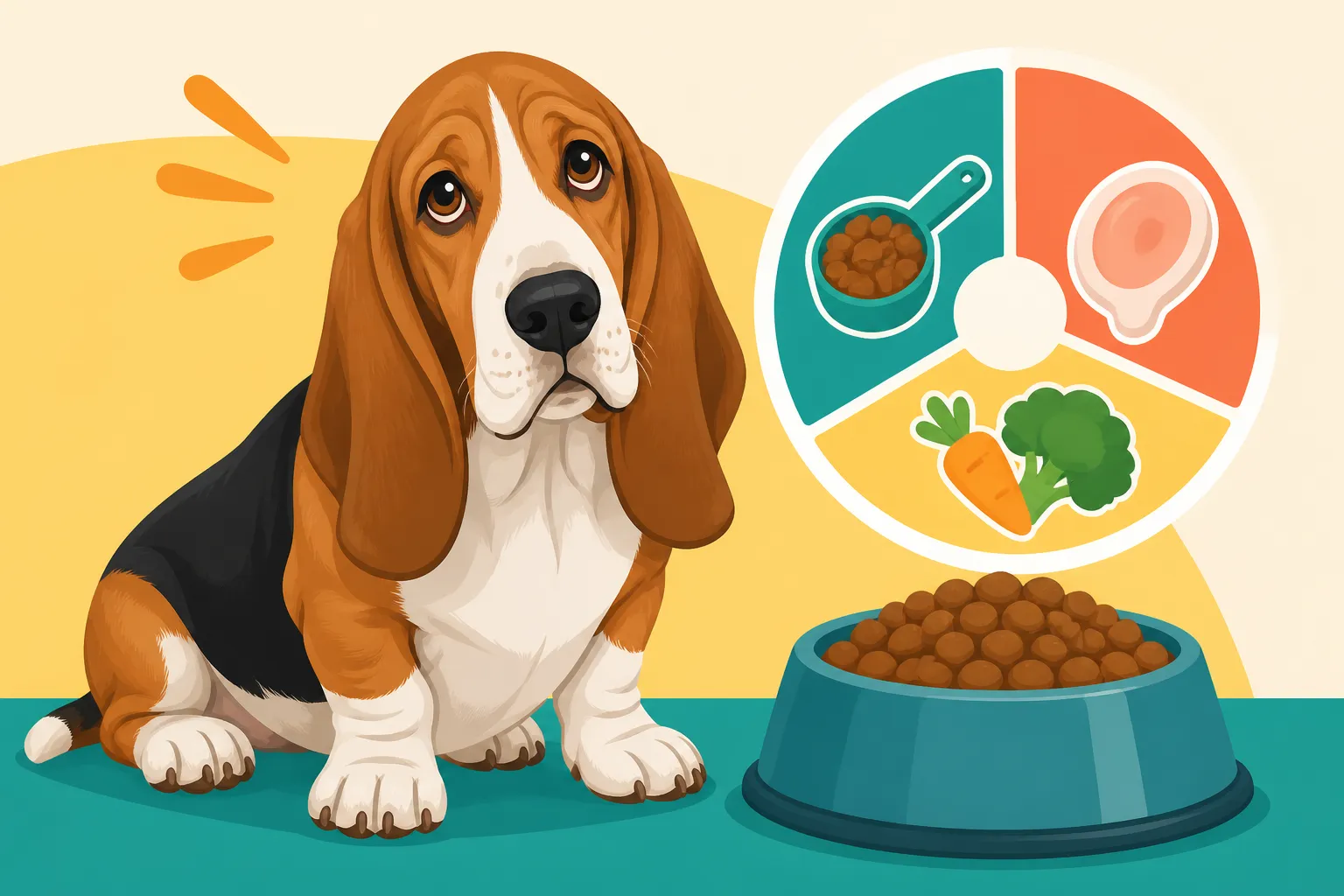
The market is flooded with dog food options, from traditional kibble to fresh-prepared meals. Regardless of the type you choose, prioritizing quality ingredients is paramount. A good quality food will provide sustained energy, proper nutrient absorption, and contribute to overall well-being.
When you're looking at dog food labels, here are a few things to consider:
- Whole Meats as Primary Ingredients: Look for a named meat source (e.g., "chicken," "beef," "lamb") as the first ingredient, ideally followed by another protein source. Avoid ambiguous terms like "meat meal" or "poultry by-products" without specific naming. These are generally less digestible and of lower nutritional value.
- Healthy Fats: Fats are crucial for energy, skin and coat health, and vitamin absorption. Look for named fat sources like chicken fat, salmon oil, or flaxseed.
- Appropriate Carbohydrates: Grains often get a bad rap, but whole grains (like brown rice, oats, barley) can be excellent sources of fiber and energy. For Bassets with sensitivities, or if you prefer grain-free, look for alternatives like sweet potatoes, peas, or lentils. However, ensure grain-free choices are nutritionally balanced, as some studies have raised questions about potential heart issues with certain grain-free formulations.
- Avoid Excessive Fillers and Artificial Additives: Ingredients like corn, wheat, and soy can sometimes act as fillers, providing little nutritional value and sometimes leading to sensitivities. Artificial colors, flavors, and preservatives are also best avoided.
- Consider Different Food Types:
- Kibble: The most common and convenient. Brands like Purina Pro Plan or Royal Canin offer specific large breed or breed-specific formulas which might cater to a Basset's needs. You can easily find a vast selection on platforms like Chewy.
- Wet Food: Higher moisture content can be great for hydration, and often more palatable, but it's typically less calorie-dense by volume, so you'd feed more.
- Fresh-Prepared/Human-Grade: Services like Ollie offer pre-portioned, fresh meals that can be highly digestible and appealing. These often come with customized feeding plans based on your dog's specific needs, taking much of the guesswork out of calorie counting.
Ultimately, the "best" food is one your Basset thrives on – maintaining a healthy weight, having good energy, a shiny coat, and solid, consistent stool.
Managing Treats and Scraps
This is where many Basset Hounds (and their owners!) run into trouble. Treats and table scraps are "silent calories" that can quickly derail even the most carefully measured diet. A few extra biscuits here, a bite of cheese there, and suddenly your Basset has consumed an extra meal's worth of calories without you realizing it.
Here’s how to manage them effectively:
- Account for Them: If you give treats, they must be factored into your Basset's daily caloric allowance. A good rule of thumb is that treats should make up no more than 10% of their total daily calories. On days you plan for more training with treats, reduce their main meal portions accordingly.
- Choose Wisely: Opt for healthy, low-calorie treats. Small pieces of cooked lean chicken, carrots, green beans, or specialized low-calorie dog treats are excellent choices. Many of these can be found on Chewy or at your local pet store.
- Avoid Table Scraps: While it’s hard to resist those soulful Basset eyes under the dinner table, human food often contains ingredients (fats, salts, spices, onions, garlic) that are unhealthy or even toxic to dogs. It also reinforces begging behavior. Whether a Basset Hound Steals Food is a common problem because they learn that hovering around humans results in delicious rewards.
- Dental Chews: While beneficial for dental health, many dental chews are surprisingly high in calories. Again, read the labels and adjust your Basset's main meals accordingly on days they get a chew.
Tools and Techniques for Portion Control
To ensure your Basset Hound is getting the correct amount of food, precision is key. Eyeballing it or using a generic kitchen cup won't cut it.
- Accurate Measuring Cups: Invest in a dedicated, high-quality measuring cup specifically for dog food. Regular kitchen cups aren't always accurate for kibble.
- Kitchen Scale: For ultimate precision, especially if your vet recommends a specific caloric intake, use a digital kitchen scale to weigh out your Basset's food portions. This eliminates any variability due to kibble size or density. You can find reliable and affordable scales on Amazon.
- Slow Feeders and Puzzle Toys: Bassets are often enthusiastic eaters, prone to wolfing down their meals. This isn't just a messy habit; eating too quickly can lead to digestive upset or even increase the risk of bloat (a serious condition). Slow feeder bowls, which have ridges or obstacles, force your Basset to eat more slowly. Puzzle toys, where they have to work to get the kibble out, can also make mealtime a mentally stimulating and slower process. These are widely available, including from online retailers like Chewy or Amazon. Utilizing these tools can also help to prevent Whether a Basset Hound Bolts Its Food.
Monitoring and Adjusting for Lifelong Health
Feeding your Basset Hound isn't a "set it and forget it" task. Their needs will evolve throughout their life, and regular monitoring is essential to ensure they remain at a healthy weight. This commitment to ongoing adjustment is a hallmark of responsible Basset ownership and key to their longevity and well-being.
Regular Weight Checks and Body Condition Scoring
One of the best habits you can adopt is regularly checking your Basset's body condition. This isn't just about stepping on a scale, although that can be part of it. It’s about physically assessing their body shape.
Here’s how to do a quick body condition score at home:
- Rib Check: Gently run your hands along your Basset’s sides. You should be able to easily feel their ribs, almost like feeling the knuckles on your hand. If you have to press hard to feel them, or can’t feel them at all, they're likely overweight. If you can see the ribs clearly, they might be too thin (less common for Bassets, but still possible).
- Waistline Check: Look down at your Basset from above while they are standing. They should have a visible waistline, an inward curve between their rib cage and hips. If they look like a solid cylinder, they’re carrying too much weight.
- Abdominal Tuck: Observe your Basset from the side. Their abdomen should tuck up slightly after the rib cage, not hang low or be straight across.
Aim to perform this quick check at least once a month. This proactive approach helps you catch small changes before they become significant weight problems. Keeping a Basset Hound at Its Correct Weight is one of the most impactful things you can do for their long-term health, as it directly reduces the strain on their joints and organs.
When to Consult Your Vet
While you are your Basset's primary caregiver, your veterinarian is your most valuable partner in their health journey. Don't hesitate to reach out to them for guidance on diet and weight management.
You should definitely consult your vet if:
- Sudden Weight Changes: If your Basset rapidly gains or loses weight without a change in diet or activity, it could be a sign of an underlying health issue.
- Persistent Hunger or Refusal to Eat: While Bassets are usually food hounds, a sudden disinterest in food or an insatiable hunger that seems unusual warrants a vet visit.
- Digestive Issues: Chronic diarrhea, vomiting, or changes in stool consistency could indicate a food intolerance or other health problem that requires a dietary adjustment.
- You're Struggling to Maintain Weight: If you've been diligently trying to adjust their food and can't get your Basset to a healthy weight, your vet can offer tailored advice, rule out medical conditions, and even recommend prescription weight management foods if necessary. They can help you create a specific diet plan that addresses your Basset Hound's individual needs, especially if they are already dealing with issues like What Extra Weight Does to a Basset Hound.
- Considering a Major Diet Change: If you’re thinking about switching from kibble to raw, or exploring a new food type, it's always a good idea to discuss it with your vet first to ensure it’s balanced and appropriate for your Basset.
Remember, a healthy weight is one of the cornerstones of a long and happy life for your Basset Hound. By understanding their unique needs, carefully monitoring their intake, and partnering with your vet, you can help them thrive for many wonderful years.
Disclaimer
This article is for general informational purposes only and does not constitute professional advice. Laws, prices and regulations vary by location and change over time. Consult a qualified professional for guidance on your specific situation.