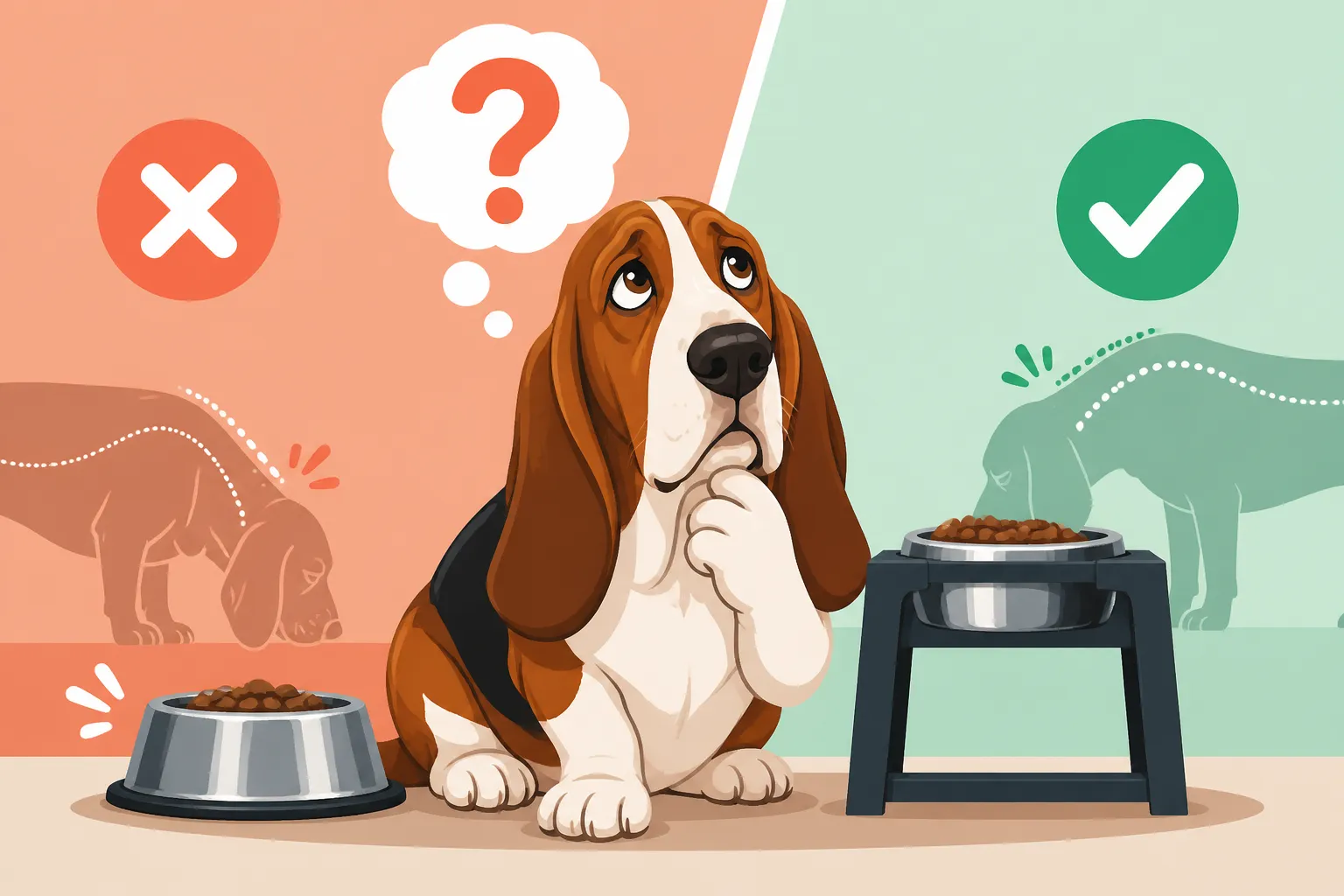
Whether a Basset Hound Should Eat From a Raised Bowl
Many Basset Hound owners grapple with the common question of whether a raised feeding bowl is truly beneficial, or even safe, for their beloved, long-eared companions. Given their distinctive anatomical structure—those deep chests, long backs, and famously pendulous ears—it’s natural to wonder if eating from the floor puts undue strain on them or if lifting their food might prevent issues like bloat. This comprehensive guide will delve into the science, owner experiences, and veterinary recommendations to help you make the best decision for your Basset Hound's health and comfort during mealtime.
Understanding the Basset Hound's Unique Physiology and Eating Habits
Basset Hounds are truly one-of-a-kind dogs, built for a specific purpose: tracking scent trails with their noses to the ground. This physical design, while endearing, means they have particular needs, especially when it comes to something as fundamental as eating.
The Basset Hound's Distinctive Build
Let's talk about that iconic Basset Hound shape. They possess a long, heavy body set on remarkably short, sturdy legs, often with slightly bowed front legs. Their deep chests are a hallmark of the breed, a feature that brings with it certain health considerations we'll discuss. Then there's their incredible sense of smell, aided by those long, trailing ears and ample dewlap that help funnel scents directly to their powerful noses. This low-slung, substantial build means that bending down to eat involves a particular posture. For a young, healthy Basset, this usually isn't an issue. They're built for it, after all, spending hours with their heads down following a scent. However, as they age, or if they have underlying conditions like The Back Trouble a Basset Hound Is Built Into, this natural posture could become less comfortable.
Imagine your Basset, Bentley, with his nose practically vacuuming the floor as he sniffs out stray kibble. This is their natural state. When they eat from a traditional bowl on the floor, they simply lower their head, extending their neck slightly. This typically doesn't put strain on their spine because their body is designed to support this position. The deep chest, while a concern for bloat, doesn't inherently make floor-level eating difficult for a healthy dog. It's more about how the body is supported and aligned during the process.
Natural Eating Posture vs. Raised Bowls
For millennia, dogs, including the ancestors of the Basset Hound, have eaten from the ground. Their physiology evolved to accommodate this. A Basset Hound's natural eating posture involves a downward tilt of the head, which is entirely normal and comfortable for their structure. Their spine is designed to curve gently, and their neck muscles are strong.
When we introduce a raised bowl, we are changing this natural posture. Instead of bending down, the dog now stands upright, lifting its head to eat. For some dogs, particularly those with neck injuries or advanced arthritis, this can be a relief. It might reduce the need to bend joints that are stiff or painful. However, for a healthy Basset Hound, it's essentially an unnatural position. Picture yourself eating dinner standing up, with your plate at chest height – it's doable, but it's not the relaxed, natural way you'd prefer to dine. While it might seem intuitive that lifting the bowl would be "better" for a dog with a long back, it's not always the case, and can sometimes introduce new concerns related to digestion and swallowing.
The Controversy: Raised Bowls and Bloat (GDV) in Basset Hounds
The primary reason many Basset Hound owners consider raised bowls is the widespread concern about bloat, or Gastric Dilatation-Volvulus (GDV). This terrifying condition, where the stomach twists, is a life-threatening emergency, and deep-chested breeds like Basset Hounds are unfortunately more predisposed.
The Link Between Elevated Bowls and GDV
For a long time, it was a common belief, even among veterinarians, that raised bowls could help prevent bloat by reducing the amount of air a dog swallows while eating. The theory was that by eating with their head up, dogs wouldn't gulp as much air, thereby reducing the risk of the stomach distending. Many well-meaning owners, concerned about their Basset's predisposition to bloat, including the severe condition that sometimes manifests as Whether a Basset Hound Bloats After Eating, invested in raised feeders with this goal in mind.
However, recent scientific research has largely debunked this theory, and in some cases, even suggested the opposite. A significant study conducted by Purdue University in the late 1990s and early 2000s, which examined hundreds of dogs, found a surprising correlation: using elevated food bowls was associated with an increased risk of bloat in large and giant breed dogs. The exact mechanism isn't fully understood, but it's hypothesized that eating from a raised bowl might actually encourage faster eating and gulping, or perhaps it changes the esophageal angle in a way that allows more air into the stomach.
This finding was a game-changer and shifted veterinary recommendations significantly. While the study primarily focused on large and giant breeds, Basset Hounds, with their deep chests, are considered a higher-risk breed for bloat, which makes this research highly relevant. For owners already worried about Whether a Basset Hound Gets Bloat, this information is crucial. It means that what was once considered a preventative measure might actually be increasing risk.
Other Factors Contributing to Bloat
It's important to remember that elevated bowls aren't the only factor, nor necessarily the most significant one, in the development of bloat. GDV is a complex condition with multiple contributing elements. Here are some others to consider:
- Genetics: Predisposition is often inherited. If your Basset's parents or close relatives experienced bloat, your dog might be at higher risk.
- Eating Speed: Dogs who eat very quickly, gulping down their food and air, are at increased risk. This is why many vets recommend slow feeder bowls.
- Food Type: Dry kibble that contains citric acid and is moistened before feeding may increase risk, though this link is debated. Large amounts of dry food, especially those with high fat content, are sometimes implicated.
- Single Large Meals: Feeding one large meal a day might increase risk compared to two or more smaller meals. Distributing How Much an Adult Basset Hound Eats Daily into multiple feedings can be beneficial.
- Exercise Around Meals: Vigorous exercise or excitement immediately before or after eating can be a risk factor. It's best to allow a quiet period before and after meals.
- Stress/Anxiety: Anxious or stressed dogs might be more prone to bloat. A calm eating environment is important.
- Age: Older dogs tend to be at higher risk.
Considering these factors holistically is important. For example, if your Basset is a fast eater, addressing that behavior with a slow feeder bowl, regardless of whether it's raised or on the floor, might be more impactful than focusing solely on bowl height. For any serious health concerns, having a reliable pet insurance plan like those offered by Healthy Paws can provide peace of mind, knowing that unexpected emergencies like bloat, which can incur significant costs, are covered.
Potential Benefits and Drawbacks of Using Raised Bowls for Basset Hounds
The discussion around raised bowls isn't entirely black and white. While the bloat risk is a major concern, there are situations where a raised feeder might seem beneficial, and other drawbacks to consider.
Arguments for Raised Feeders
Despite the bloat concerns, some owners and veterinarians previously supported raised feeders for specific reasons:
- Comfort for Older or Arthritic Dogs: This is perhaps the strongest argument. An older Basset Hound struggling with The Old Basset Hound That Cannot Get Off the Floor due to arthritis in their neck, back, or elbows might find it painful to bend down to floor level. For these dogs, a raised bowl can indeed provide relief, allowing them to eat more comfortably without straining. If you’ve got an older dog, observe their posture and listen to your vet. Often, mobility aids like a ramp can also help them navigate your home more easily, alongside potentially adjusting their feeding setup.
- Improved Swallowing for Esophageal Conditions: Dogs with certain esophageal conditions, like megaesophagus, where the esophagus loses its muscle tone and cannot effectively move food to the stomach, often require elevated feeding. This allows gravity to assist food transit. However, this is a specific medical condition and not applicable to the general Basset Hound population.
- Keeping Ears Clean: This is a very practical, if not health-critical, benefit for Basset Hounds. Those long, glorious ears are notorious for dragging through food and water bowls, leading to messes, dampness, and potential ear infections. A raised bowl can help keep their ears out of their dinner. Many Basset owners also swear by a specialized snood at dinner, a fabric tube that covers and holds back the ears. This is why many owners also consider Whether a Basset Hound Needs a Snood at Dinner or Whether a Basset Hound's Ears Drag Through Its Food.
Arguments Against Raised Feeders
The arguments against raised feeders, particularly for Basset Hounds, often center on health and natural behavior:
- Increased Bloat Risk: As discussed, the scientific evidence suggests an increased risk of GDV, a life-threatening condition. This is the most significant reason to reconsider raised bowls for most Basset Hounds. The potential costs of emergency surgery for bloat can be staggering, often thousands of dollars. Having a robust pet insurance policy, such as those from Healthy Paws, can be invaluable in these situations, helping to cover a significant portion of What a Basset Hound's Emergency Surgeries Cost.
- Potentially Encourages Gulping: Some theories suggest that the raised position allows dogs to eat faster and gulp more air, exacerbating bloat risk. When a dog bends its head down, the act of swallowing might be more controlled.
- Unnatural Posture: For a healthy, young Basset, eating from the floor is a natural and comfortable posture, aligning with their evolutionary design. Introducing an elevated bowl unnecessarily alters this.
- No Proven Widespread Benefit: Beyond specific medical conditions or for truly arthritic senior dogs, there's no widespread, scientifically proven health benefit to using a raised bowl for the general dog population, especially regarding digestion.
Making an Informed Decision for Your Basset Hound's Mealtime
Navigating all this information can be overwhelming, but ultimately, the best decision for your Basset Hound comes down to a few key considerations and, most importantly, personalized advice.
Consulting Your Veterinarian
This cannot be stressed enough: always talk to your veterinarian. They know your individual Basset Hound, their specific health history, their age, and any predispositions. They can assess your dog's overall health, including joint health and any signs of esophageal issues, to give you tailored advice. If your Basset is very old or has diagnosed orthopedic problems, a vet might recommend a raised bowl for comfort. For a young, healthy Basset, they will most likely advise against it due to the bloat risk. Don't make assumptions; get professional guidance. This is particularly true if your dog is prone to conditions like Whether a Basset Hound Gets Pancreatitis, which might also influence dietary recommendations.
Practical Considerations and Alternatives
If you decide against a raised bowl (or your vet recommends against it), there are still plenty of ways to optimize your Basset's mealtime experience and mitigate risks:
- Slow Feeder Bowls: If your Basset is a vacuum cleaner when it comes to food, investing in a slow feeder bowl is a fantastic idea. These bowls have obstacles or labyrinths that force your dog to eat around them, significantly slowing down their intake and reducing air gulping. This can be a much more effective strategy against bloat than a raised bowl. You can find slow feeders that sit directly on the floor.
- Multiple Small Meals: Instead of one large meal, break your Basset's daily food ration into two or three smaller meals. This reduces the amount of food in the stomach at any one time, which can lessen bloat risk. This is a common strategy for Keeping a Basset Hound at Its Correct Weight.
- Managing Exercise Around Meals: Ensure a quiet period of at least an hour before and after meals. No vigorous play, running, or exciting activities.
- Water Access: Always provide fresh water, but don't allow your Basset to gulp huge amounts immediately after eating. Small sips are fine.
- Snoods for Ears: If keeping those long ears clean is a concern, a snood is a wonderful, simple solution that doesn't involve altering feeding height. Alternatively, some owners use heavier, ceramic bowls that are harder to push around, combined with a mat to catch any spills.
- Monitoring and Observation: Always observe your Basset during and after meals. Look for signs of discomfort, excessive drooling, unproductive retching, or a distended abdomen. These are all warning signs of bloat and require immediate veterinary attention. This is why many rely on pet insurance like Healthy Paws to help cover the costs of such emergencies.
- Joint Supplements: While not directly related to bowls, ensuring your Basset's joints are healthy can help with comfortable eating postures, regardless of bowl height. Consider discussing Whether a Basset Hound Needs Joint Supplements with your vet, especially as they get older.
- Ramps for Accessibility: For older Bassets, instead of changing their eating posture, consider providing ramps to help them access furniture or get in and out of the car comfortably. This helps manage general mobility issues that might be misinterpreted as a need for a raised bowl. Whether a Basset Hound needs a ramp is a frequent consideration for owners.
Here's a quick comparison to help visualize the decision points:
| Feature/Concern | Raised Bowl (Pros) | Raised Bowl (Cons) | Floor-Level Bowl (Pros) | Floor-Level Bowl (Cons) |
|---|---|---|---|---|
| Bloat (GDV) Risk | Historically thought to reduce risk; research suggests increased risk. | Potentially increases GDV risk in deep-chested breeds. | No proven increase in GDV risk; standard eating position. | No direct impact on GDV risk, other factors still apply. |
| Comfort (Healthy Dog) | No significant comfort benefit; unnatural posture. | Unnatural posture for a healthy dog's spine and neck. | Natural, comfortable posture for a healthy Basset Hound. | None for a healthy dog. |
| Comfort (Senior/Arthritic Dog) | Can provide comfort by reducing bending effort. | Still carries bloat risk; comfort might be negated by other factors. | May be uncomfortable or painful if severe arthritis is present. | Requires bending, which can strain sore joints or backs. |
| Ear Cleanliness | Keeps long ears out of food and water. | Not its primary purpose; bloat risk remains. | Ears can drag in food/water, leading to messes and potential issues. | Requires additional measures like snoods or ear tying to keep clean. |
| Eating Speed | May encourage faster eating and air gulping. | Can make fast eaters even faster. | Neutral; eating speed depends on the dog, not bowl height. | Doesn't inherently slow down fast eaters. |
Ultimately, for most Basset Hounds, particularly young and healthy ones, feeding from a bowl on the floor is generally recommended based on current veterinary understanding regarding bloat risk. If you have an older Basset with significant orthopedic issues, consult your vet to weigh the benefits of comfort against the potential risks. Always prioritize strategies that promote slow eating and a calm environment during meal times.
Disclaimer
This article is for general informational purposes only and does not constitute professional advice. Laws, prices and regulations vary by location and change over time. Consult a qualified professional for guidance on your specific situation.