Whether British and American Basset Hounds Differ
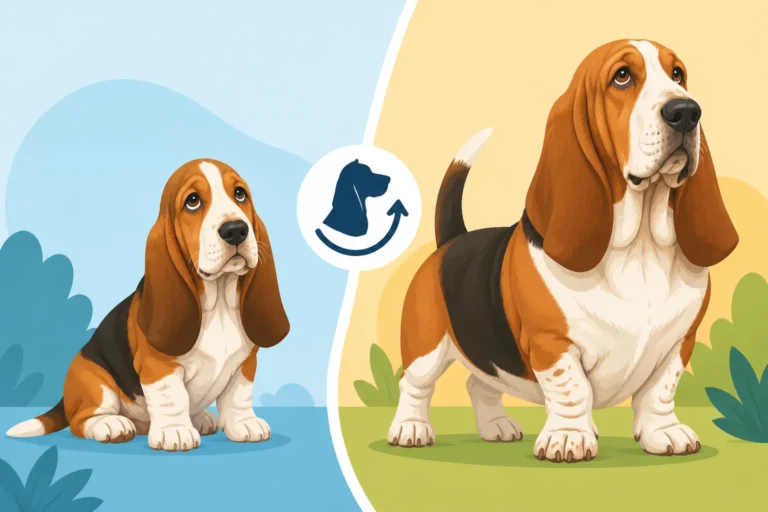
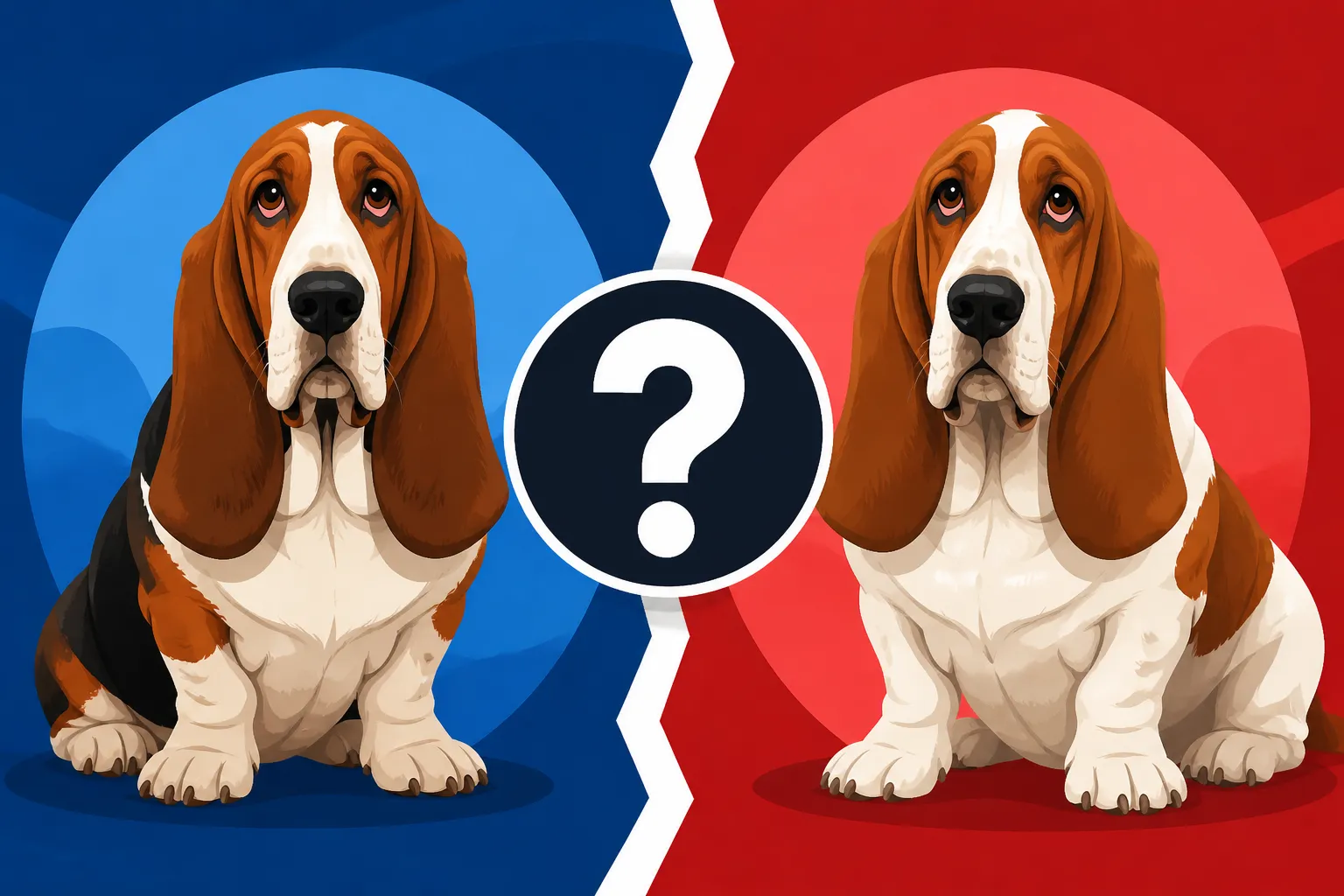
A British Basset Hound and an American Basset Hound are the same breed, but they may look different because of breeding lines, show-ring preferences, and local standards. If you are comparing puppy photos or trying to understand what a breeder means by “British type,” this guide explains what those labels can—and cannot—tell you about a dog.
British and American Basset Hounds Are the Same Breed
National labels describe background, not separate breeds
There is no officially separate British Basset Hound breed and American Basset Hound breed. Both are Basset Hounds, descended from related breeding populations and recognized by kennel organizations in their respective countries. A dog bred in Britain does not automatically have a different temperament or set of needs from one bred in the United States.
The labels can still be useful shorthand. Someone might use “British type” to describe a dog whose ancestry or appearance is associated with UK breeding lines. “American type” may refer to dogs bred in the United States, or to a look familiar from American show lines. But neither label guarantees a particular body shape, size, or working ability.
It is also easy to confuse national origin with the difference between show and field breeding. A Basset Hound from either country may come from show-focused, hunting-oriented, or mixed lines. Those differences can affect appearance and working drive more than the dog’s passport does. For more on that distinction, see The Split Between Show and Hunting Basset Hounds and Whether Show and Field Basset Hounds Differ.
Breed standards are similar in purpose, but not identical
Kennel clubs set standards to describe the qualities they consider desirable for the breed. British and American organizations use their own wording and measurements, so the written standards are not exact copies. That does not mean the two countries have created different breeds. It means breeders and judges work within slightly different national frameworks.
For example, the UK breed standard gives a height range of roughly 33 to 38 centimeters at the shoulder. The American Kennel Club standard sets a maximum height of 15 inches. These limits overlap considerably, and measuring a dog at home is not a reliable way to determine its origin or quality. A dog can also fall near a standard’s boundary without being meaningfully “more British” or “more American.”
Standards describe an ideal, not a promise that every dog will look the same. Within either country, individual dogs vary, and pedigrees may include ancestors from abroad. That is why labels based on appearance alone can be misleading: a stocky dog is not necessarily British-bred, and a lighter-framed dog is not necessarily American-bred.
What Differences Might You Notice in Appearance?
Build, skin, and expression vary between individuals
People sometimes describe British Basset Hounds as heavier, looser-skinned, or more exaggerated in appearance. Some American-bred dogs may look a little lighter or less extreme to them. Those impressions can reflect real differences between particular kennels or lines, but they are not dependable rules for distinguishing every dog from the UK from every dog from the US.
A Basset Hound’s overall silhouette is shaped by several features together: bone, body length, chest depth, leg structure, skin, and the amount of weight the dog carries. A dog with heavy bone and abundant loose skin can look substantial even when its height is similar to that of a lighter-built dog. Body condition matters too. An overweight Basset may seem “more British” to someone expecting a heavier type, when the dog’s weight—not its breeding origin—is the main reason for its appearance.
The breed’s low stature and substantial body are part of its characteristic design, but extreme features can raise welfare concerns. A short-legged, long-backed dog needs sensible management, regardless of where it was bred. Why a Basset Hound Weighs as Much as a Labrador explains why this low-slung dog can be surprisingly heavy, while Whether the Basset Hound Has Been Bred Too Low looks at the wider discussion around conformation and health.
Color and markings are poor clues to nationality
Basset Hounds come in familiar hound colors such as tricolor and lemon and white. Those patterns do not identify whether a dog is British or American. Nor do ear length, eye color, tail markings, or the shape of a particular facial fold provide a dependable country-of-origin test. Similar-looking dogs can come from unrelated lines, and littermates can differ in small details.
Photos can exaggerate apparent differences. Camera angle, posture, coat condition, age, and weight can all change how a dog looks. A puppy may also grow into its frame over time, so a young dog’s proportions are not a final verdict on its adult type.
| Feature | What can differ | What it does not prove |
|---|---|---|
| Height | Individual dogs and national standards may differ slightly in their stated limits | A dog’s exact country of origin |
| Build | Lines may vary in bone, depth, length, and overall substance | That one national type is always heavier |
| Skin and expression | Some dogs have looser skin or a more pronounced look | That a dog is healthier or more authentic |
| Color and markings | Individual dogs vary within accepted breed colors | British or American ancestry |
| Temperament | Dogs vary with genetics, socialization, and experience | A reliable national personality difference |
If you are curious about variation beyond the UK and US, Whether European Basset Hounds Are Built Differently is a useful companion topic. “European” is a broad label, though, and it should not be treated as one uniform look or breeding program.
Do British and American Basset Hounds Behave Differently?
Individual breeding and experience matter more than nationality
There is no reliable rule that British Basset Hounds are calmer, more stubborn, more vocal, or more affectionate than American Basset Hounds. Basset Hounds are scent hounds, and many share traits such as persistence, a strong interest in smells, and a tendency to follow a trail rather than respond instantly to a person’s call. How strongly those traits show up can vary from one dog to another.
A puppy’s parents, early environment, socialization, training, and daily routine all help shape the dog you live with. A Basset from a line selected for field work may show more enthusiasm for tracking than a dog from lines chosen mainly for the show ring. Even then, it is not a guarantee: a show-line dog can have a powerful nose, and a field-line dog can be a relaxed companion at home.
If you are choosing a dog, ask the breeder about the specific parents and close relatives. Find out how they behave around visitors, other dogs, food, and household activity. Ask whether the dogs have experience with tracking or other scent work, and how much exercise they typically need. Those concrete examples tell you more than a broad label such as “British temperament.”
The home you provide is part of the comparison
A Basset Hound from either country needs a secure way to exercise and explore. A strong scent can pull a dog’s attention away from you, so a reliable fence or a leash and long line are often more practical than expecting off-leash recall. The same applies whether the dog comes from a British breeder, an American breeder, or a mixed international pedigree.
Think about the details of daily life, not just a dog’s outline in a photograph. Can you manage a heavy dog safely? Is your home arranged to reduce repeated jumping from furniture or scrambling on slippery floors? Will the dog be left alone for long stretches? How will you handle routine care such as ear checks, nail trims, and keeping skin folds clean and dry? The Household a Basset Hound Actually Fits and What Basset Hound Owners Wish They Had Known cover the practical realities behind the breed’s appealing appearance.
A different national label does not remove the breed’s ordinary care needs. Basset Hounds may be prone to concerns involving ears, eyes, skin, joints, weight, and backs, so ask about health screening and veterinary history rather than assuming one country’s dogs are automatically healthier. Good care starts with the individual dog and the quality of its breeding and veterinary support.
Choosing Between a British-Bred and American-Bred Basset Hound
Ask about the actual dog, its family, and its purpose
If you are considering a puppy, ask the breeder where the parents and grandparents were bred and whether the pedigree includes imported dogs. This helps clarify what “British,” “American,” or “European” means in that particular conversation. Some breeders may be describing the place a dog was born; others may be talking about a preferred look or a family of dogs with a shared background.
Ask what the breeder is selecting for. A responsible breeder should be able to explain the intended temperament and structure of the pairing, describe the parents honestly, and discuss relevant health screening. Ask to meet the dam if possible, and request information about the sire and close relatives. Look for clear, practical answers rather than a promise that a particular type is universally superior.
It is also worth asking whether the breeder’s dogs are primarily show dogs, working dogs, or companions, and what the dogs are like in an ordinary home. If a breeder claims that a national type has no health problems, or that appearance alone proves exceptional quality, treat that as a reason to ask more questions. Whether Breeders Are Correcting the Basset Hound explores ongoing discussion about breeding priorities and structure.
Consider practical differences before bringing a dog home
If you are importing a puppy or adopting a dog from another country, plan for more than the initial journey. Ask how the dog will travel, what records will accompany it, and what arrangements are needed for veterinary care after arrival. The dog’s country of birth does not tell you whether it will settle easily into your home, so make the transition gradual and give it a predictable routine.
You may also need to choose equipment that suits the dog in front of you rather than a label. Measure carefully for a well-fitting harness, and check that a bed supports the dog’s full body. If you are comparing supplies online, retailers such as Chewy offer products including harnesses, beds, and grooming items; still, check the measurements and suitability for your particular dog rather than shopping by breed label alone.
For everyday care, a small kit of ear-cleaning supplies, gentle face-fold wipes, nail-care tools, and washable towels can make routines easier. Chewy is one place owners may browse for these basics, but the right products depend on your veterinarian’s advice and your dog’s needs. If you are ordering a ramp or another mobility aid through Chewy or a different retailer, check the dog’s weight capacity, surface grip, and the space available in your home before choosing.
In the end, “British” and “American” are useful clues about a dog’s breeding background, not dependable predictions of its appearance, health, or personality. Compare the individual dog, learn about its family, and ask how its needs fit your life. That approach is more reliable than choosing by nationality alone.
Disclaimer
This article is for general informational purposes only and does not constitute professional advice. Laws, prices and regulations vary by location and change over time. Consult a qualified professional for guidance on your specific situation.