Whether a Basset Hound Can Be Red and White
A red and white Basset Hound can be easy to mistake for a lemon-and-white dog, especially when the coat is pale or the puppy is still changing color. This guide explains what red and white looks like, how it differs from similar patterns, whether the color affects health, and what to ask a breeder before choosing a puppy.
What red and white looks like on a Basset Hound
The red-and-white coat pattern
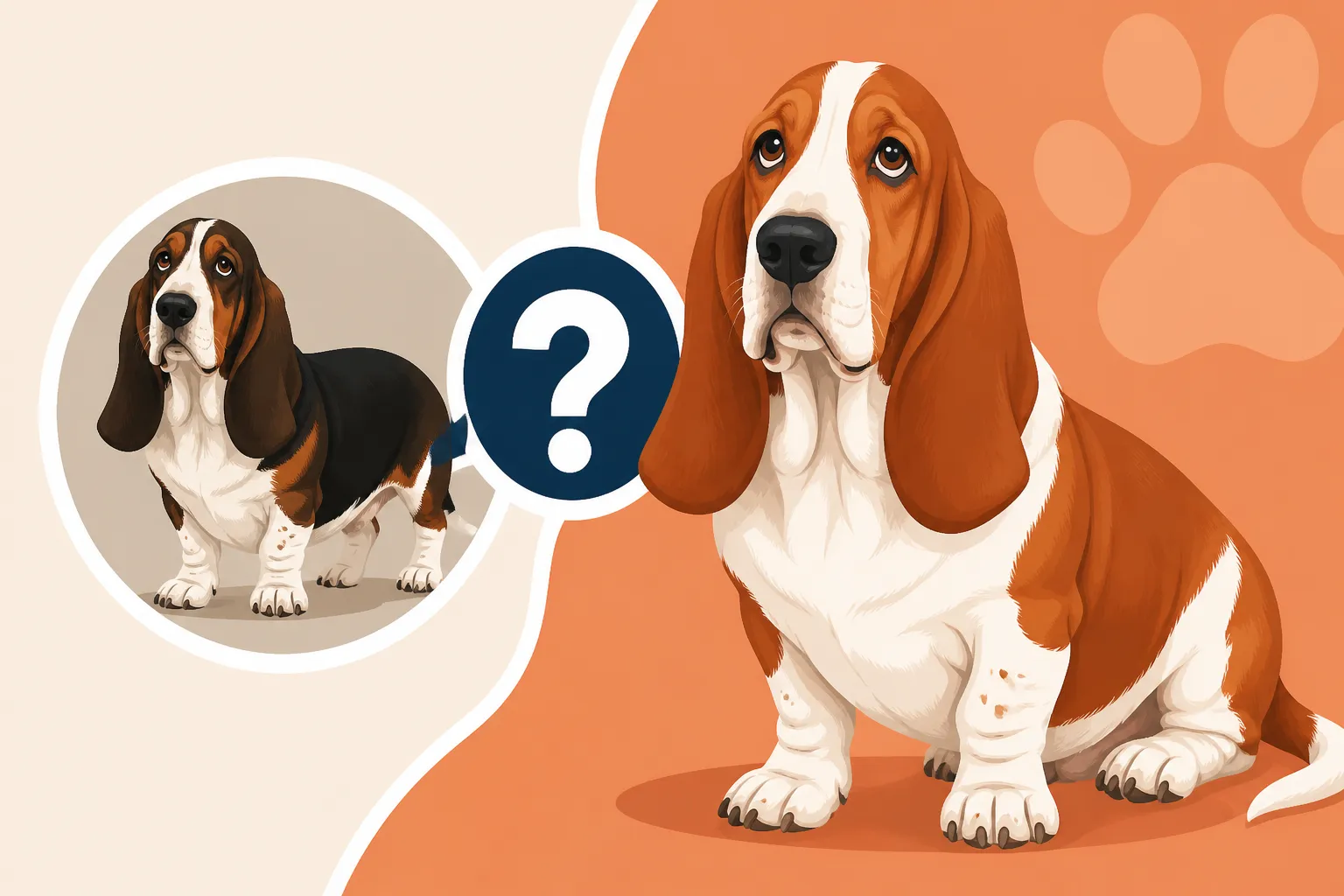
A red-and-white Basset Hound has areas of red pigment against a white background. “Red” can describe a range of shades, from a light, warm tan to a deeper reddish-brown. The color may appear as patches across the back and sides, while white commonly shows on the chest, legs, feet, muzzle, or tail tip. The precise markings vary from dog to dog; there is no single pattern every red-and-white Basset Hound must have.
Some dogs have broad red patches, while others have smaller areas or a mostly white coat with red markings. The color name describes the general appearance, not a promise about the exact shade or placement of every patch. If you are looking at puppies, remember that photos can be misleading: indoor lighting, camera settings, and a very young puppy’s coat can all make red look lighter or more golden than it appears in person.
Red and white is one of several colors and patterns found in the breed. For a broader look at the range, see The Colors a Basset Hound Comes In. Coat color is only one small part of a dog’s appearance and tells you little about its temperament, health, or suitability for your household.
Red and white versus lemon and white
Red and white can be confused with lemon and white because both may have light-colored patches on a white background. In general, lemon patches appear pale yellow or cream, while red patches have a warmer, deeper tone. In practice, the distinction can be less obvious than it sounds. A pale red puppy may look lemon-colored in a bright photograph, and a lemon dog may appear darker in warm indoor light.
| Coat pattern | General appearance | What can make it hard to identify |
|---|---|---|
| Red and white | White areas with warm red, tan, or reddish-brown patches | The red may be very pale or appear darker in different lighting |
| Lemon and white | White areas with pale yellow or cream patches | The color can deepen slightly or become clearer as the puppy grows |
| Tricolor | Usually a combination of black, white, and tan or red markings | Markings may shift in prominence as the coat matures |
These descriptions are useful for talking about appearance, but color labels are not always used identically by every breeder. If you are considering a puppy, ask the breeder how they describe the coat and whether the color is likely to change. Looking at the puppy in natural daylight, and seeing photos of its parents and older relatives, can give you a more realistic idea than relying on a single online image. You can compare the lemon-and-white appearance in What the Lemon and White Basset Hound Looks Like.
Why a Basset Hound may change color as it grows
Puppy coats can look different from adult coats
A puppy’s coat is not always a reliable preview of its adult color. As the dog grows, the shade and contrast of its markings can become more noticeable, or areas that looked dark in early photos may seem lighter beside a developing adult coat. The amount and placement of white usually help identify the pattern, but the red areas may be harder to judge while the puppy is young.
This can be confusing when you are choosing a puppy from a litter. One pup may look distinctly red in a shaded room, while another looks pale in a bright yard, even if their coats develop in a similar direction. Ask the breeder what changes they have seen in previous litters and whether they can share photos of related adult dogs. Those details are more helpful than a confident prediction based on a very young puppy’s first coat.
If you are comparing the appearance of different patterns, Whether a Basset Hound's Markings Change With Age offers related context. It is sensible to treat color predictions as estimates rather than guarantees. A breeder can share experience with their own lines, but no one can promise that every patch will retain exactly the same shade throughout the dog’s life.
Coat color is not a measure of breed quality
A red-and-white coat does not make a Basset Hound more or less of a Basset Hound. A dog’s structure, movement, health, and temperament matter far more than whether its markings match a particular person’s favorite look. For example, a family choosing a puppy may be drawn to a striking red patch over one eye, but that detail should not distract them from asking about the parents’ health, the puppy’s early care, and the breeder’s approach to raising the litter.
Color descriptions also do not establish that a puppy is purebred. A responsible breeder should be able to explain the puppy’s background and provide appropriate records. If you are comparing breeders, look beyond attractive coat photos and ask what health testing is relevant for their dogs. The Health Tests a Basset Hound Breeder Should Run can help you prepare questions for that conversation.
It is also worth considering the breed’s shape and needs rather than choosing by color alone. Basset Hounds are low to the ground, long-bodied, and substantial for their height. Their daily care includes practical concerns that have nothing to do with coat shade, from ear checks to managing their weight. A red-and-white puppy will need the same thoughtful care as a tricolor, lemon-and-white, or other-colored Basset Hound.
Does red-and-white coloring affect health or care
Color alone is not a reason to expect a health problem
There is no sound reason to assume that a Basset Hound will be healthier or less healthy simply because it is red and white. A coat pattern is not a substitute for health information about the puppy and its relatives. If a breeder makes sweeping promises about a color being especially healthy, unusually rare, or inherently superior, ask for clear evidence and focus on documented health history instead.
The more useful questions are practical: have the parent dogs been evaluated for health concerns relevant to the breed, does the breeder share veterinary records, and are they willing to discuss health issues found in their lines? A buyer should also ask how the breeder socializes puppies and what support is available after the puppy goes home. The familiar, photogenic coat may catch your eye, but those details are what help you make a careful choice.
Basset Hounds can face breed-related health concerns regardless of coat color. For example, their long backs and body proportions make it sensible to think about safe movement and avoiding repeated high-impact jumps. Read The Back Trouble a Basset Hound Is Built Into for more on why back care deserves attention. Red-and-white coloring neither removes nor creates those breed-wide considerations.
The coat itself needs ordinary, consistent care
A red-and-white coat does not usually call for a special grooming routine just because of its color. Regular brushing can help remove loose hair and keep the coat tidy, while occasional bathing may be appropriate when the dog is dirty or has developed an odor. Use products intended for dogs, and avoid trying to lighten or intensify the coat with dyes, whitening products, or other cosmetic treatments unless a veterinarian has advised you to use a particular product for a specific reason.
White fur can make dirt more visible, especially on the feet, chest, and muzzle. That can tempt owners to bathe too often or scrub stained areas aggressively. Gentle cleaning is usually a better approach, and skin irritation, persistent odor, itching, or redness should not be treated as a cosmetic issue. Those signs may need a veterinarian’s attention rather than a different shampoo.
When you need basic grooming supplies, you might find options through retailers such as Chewy, but check product labels carefully and choose items suitable for dogs. A simple brush and a dog-safe shampoo are more useful than a shelf of color-enhancing products. If the dog has sensitive skin or a recurring skin problem, ask your veterinarian what to use before experimenting.
Choosing a red-and-white Basset Hound
Questions to ask a breeder
Start by asking the breeder how they describe the puppy’s color and whether they expect the shade to change. Ask to see the puppy and, where possible, its parents or other adult relatives in ordinary lighting. If the breeder has raised previous litters from the same lines, photos of those dogs as adults can offer helpful context. You are not looking for a guarantee of a precise final shade; you are looking for an honest, informed conversation.
Then move beyond color. Ask about health evaluations, veterinary care, socialization, the puppy’s daily environment, and what support the breeder provides after placement. A thoughtful breeder should be comfortable discussing the strengths and challenges of the breed, including care needs that are common across coat colors. They should also be interested in whether your home and expectations are a good fit for a Basset Hound.
Be cautious if the conversation focuses almost entirely on a puppy’s unusual color or treats red and white as a reason for an inflated claim of rarity or quality. A particular coat may be appealing, but it should not replace sound breeding practices or a good match between dog and household. For more on comparing the two broad types, The Split Between Show and Hunting Basset Hounds gives useful background on differences in breeding purpose.
Make the decision around the dog, not just the markings
A red-and-white Basset Hound may be exactly the look you love, and it is perfectly reasonable to have a color preference. The key is to keep that preference in proportion. When you meet a puppy, notice its general behavior, comfort with handling, and interaction with people, while remembering that a brief visit cannot predict its entire adult personality. Ask the breeder what they have observed over time rather than expecting one moment to tell you everything.
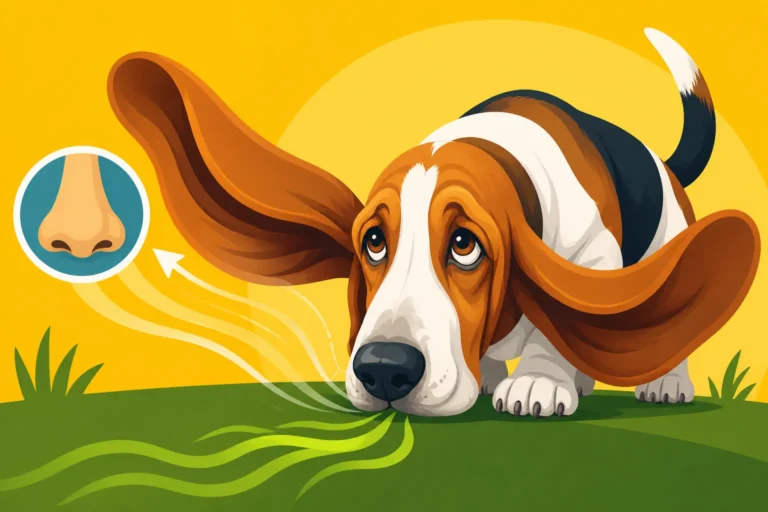
Plan for the realities of Basset Hound ownership, too. These dogs may follow an interesting scent with great focus, and their long ears need routine attention. Their body shape also makes sensible exercise and home setup important. If you are new to the breed, What Basset Hound Owners Wish They Had Known can help you think through everyday life beyond the puppy’s appearance.
For routine supplies, Chewy may be one place to compare dog brushes, shampoos, and other basic care items. A retailer can help you find products, but it cannot determine what is right for an individual dog’s skin or health; ask your veterinarian when a product choice is tied to an ongoing concern. You can also use Chewy’s listings to compare basic grooming tools, then choose a straightforward option that suits your dog rather than buying products marketed around a particular coat color.
Ultimately, the best red-and-white Basset Hound is not the one with the most dramatic markings or the lightest, darkest, or most perfectly balanced patches. It is the individual dog whose health background, temperament, and needs are a good fit for your home. Choose with your eyes, certainly, but make the final decision with the whole dog in mind.
Disclaimer
This article is for general informational purposes only and does not constitute professional advice. Laws, prices and regulations vary by location and change over time. Consult a qualified professional for guidance on your specific situation.