Whether a Basset Hound’s Eyes Should Show Haw
A Basset Hound’s loose lower eyelids can leave a little pink tissue visible, so seeing the haw does not automatically mean something is wrong. The tricky part is telling ordinary breed-related eye shape from irritation, infection, or a painful eyelid problem. This guide explains what the haw is, what can be normal, and which changes deserve a veterinarian’s attention.
What the haw is and why you may see it
The haw is part of the eye’s natural protection
The word “haw” is used somewhat loosely. It may refer to the pink lining visible along the eyelid or to the third eyelid, a thin membrane at the inner corner of the eye. That membrane helps protect and lubricate the eye. A small amount of pale pink tissue showing near the inner corner can be normal, especially when a dog is relaxed or sleepy.
The haw is not the same thing as the colored iris, the clear cornea over the front of the eye, or a sudden red swelling. If you are unsure which tissue you are seeing, a veterinarian can identify it during an examination. A clear, close-up photo taken in good light may also help your clinic understand what you have noticed, though it cannot replace an exam when the eye is painful or changing quickly.
Basset Hound eyelids can make more tissue visible
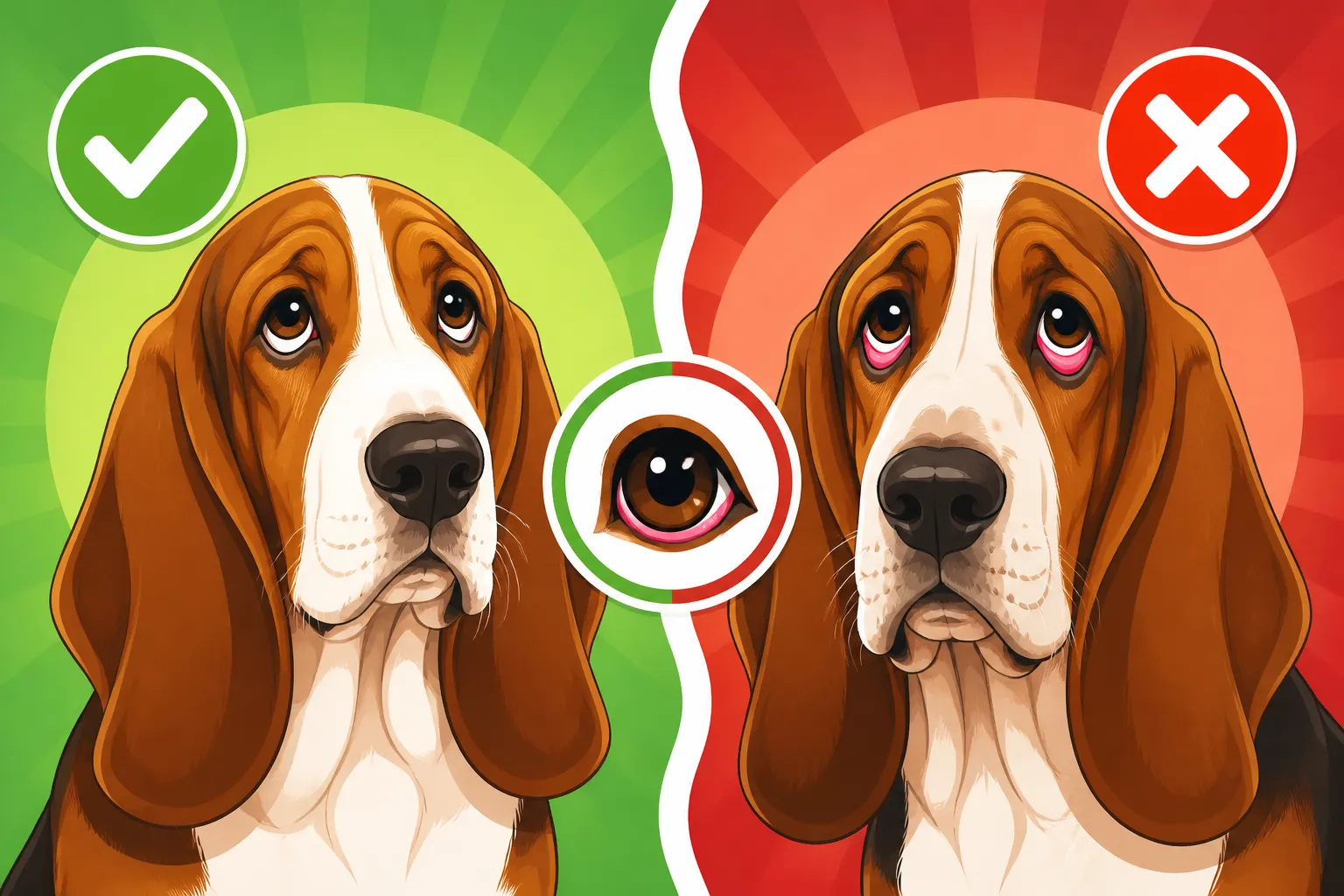
Basset Hounds commonly have loose facial skin and drooping lower eyelids. That shape can expose some of the pink conjunctiva, the moist membrane lining the eyelid and covering part of the eye. Breed descriptions may refer to visible haw, but that does not mean every degree of droop or redness is harmless. The amount of visible tissue, the condition of the eye surface, and the dog’s comfort all matter.
For example, a small, stable strip of pale pink tissue in a dog who is comfortable may be very different from a swollen, bright-red area in a dog who is squinting and rubbing its face. The second situation calls for veterinary advice, not reassurance based on breed appearance. For more on how loose eyelids may affect comfort, see Whether a Basset Hound's Droopy Eyelids Cause Trouble.
When visible haw may be normal and when it may signal trouble
Look at the whole eye, not just the pink tissue
A useful first check is to compare both eyes in good light. Is the visible tissue similar on each side? Is it pale pink rather than angry red? Is your dog opening both eyes normally, behaving as usual, and leaving the area alone? A long-standing, mild appearance that stays the same is less concerning than a new change, although only a veterinary professional can assess the eye itself.
Also notice discharge, cloudiness, swelling, and how often your dog blinks or rubs. A little clear moisture may be less worrying than thick yellow or green discharge, but discharge should be considered alongside the rest of the signs. If your Basset’s eyes water regularly, Whether a Basset Hound's Eyes Water explains why watering can occur and why persistent or worsening symptoms should not be brushed off as “just the breed.”
Ectropion and entropion can affect the eye differently
Ectropion is an outward-drooping eyelid that can expose more of the inner eyelid lining. In a Basset Hound, some looseness may be part of the familiar face, but excessive exposure can leave the eye more vulnerable to dryness, debris, and irritation. A veterinarian can tell whether the eyelid shape is simply present or is contributing to a health problem. You can read more in Whether a Basset Hound Gets Ectropion.
Entropion is the opposite problem: an eyelid rolls inward, allowing hair or lashes to rub against the eye. That friction can be painful and may damage the eye’s surface. Squinting, tearing, frequent blinking, or holding the eye closed are reasons to arrange an examination rather than trying to decide at home whether the eyelid is merely droopy. See Whether a Basset Hound Gets Entropion for more about this inward-rolling condition.
| What you notice | What it may mean | What to do |
|---|---|---|
| A small, stable area of pale pink tissue and no discomfort | May be normal visible haw or exposed conjunctiva | Mention it at a routine check if it is new to you |
| New redness, swelling, or increased tearing | Irritation or another eye problem is possible | Contact your veterinary clinic for guidance |
| Squinting, pawing, or keeping the eye shut | Pain or injury may be present | Seek prompt veterinary attention |
| Cloudiness, a bulging appearance, or sudden vision changes | Potentially serious eye disease or injury | Treat as urgent and contact a veterinarian immediately |
| Thick discharge or a noticeable change in one eye | Infection, inflammation, or another issue may need assessment | Arrange a veterinary examination |
This table is a guide to what to notice, not a way to diagnose the cause. Eye problems can look similar from the outside, and some serious conditions may not be obvious in an early stage.
How to check your Basset Hound’s eyes safely
Make a brief, gentle observation part of your routine
Choose a calm moment, such as after a walk or while your dog is resting. Look at each eye without pulling the eyelids open or pressing around the eyeball. Compare the two sides and note whether the haw looks the same as it did previously. If your dog turns away, resists, or seems uncomfortable, stop rather than forcing the inspection.
Keeping simple notes can be surprisingly helpful. Write down when you first noticed a change, whether it affects one or both eyes, and whether there is discharge, squinting, or rubbing. If the appearance comes and goes, a photo taken without flash can help you show the clinic what you saw. Avoid delaying care to collect a perfect picture if the eye is painful, cloudy, injured, or suddenly swollen.
Keep cleaning gentle and avoid putting products in the eye
If there is discharge on the fur below the eye, wipe the surrounding skin gently with a clean, soft cloth dampened with lukewarm water. Use a fresh part of the cloth for each eye. Do not scrub the eyelid margin, press on the eye, or use household wipes, antiseptics, or human eye drops unless your veterinarian specifically directs you to do so. Products meant for skin can irritate the eye, and a drop that helped one dog may be inappropriate for another.
If your veterinarian recommends a particular non-medicated wipe or cleaning supply, follow the clinic’s instructions about where and how to use it. Chewy is one place some owners check for pet-care supplies, but the product label and your veterinarian’s guidance matter more than the retailer. If the clinic recommends sterile gauze or another basic item, Chewy may be convenient for restocking; do not substitute a product with fragrance or medication just because it is easy to order. For discharge that collects in the skin around the eye, Whether a Basset Hound's Eye Folds Collect Discharge offers related care context.
When to call the veterinarian
Arrange an examination for persistent or worsening changes
Contact your veterinary clinic if the haw becomes more visible than usual, the tissue looks swollen or persistently red, or your dog develops ongoing tearing, discharge, or irritation. A change limited to one eye deserves attention, particularly if it appeared suddenly. Even when a Basset Hound’s eyelids naturally show some pink tissue, a new change should not be assumed to be ordinary anatomy.
A clinic can examine the eyelids, conjunctiva, and surface of the eye and decide whether further testing is needed. Depending on the signs, the veterinarian may check tear production, look for damage to the cornea, or measure eye pressure. That last check matters because conditions such as glaucoma can be painful and time-sensitive. Learn more about warning signs in Whether a Basset Hound's Red Eye Is an Emergency and about screening in Whether a Basset Hound Needs a Yearly Eye Pressure Check.
Treat signs of pain or sudden vision change as urgent
Seek prompt veterinary care if your dog is squinting hard, holding the eye shut, pawing repeatedly at the face, or showing sudden swelling, cloudiness, bleeding, or an eye that appears enlarged or bulging. Sudden trouble navigating, bumping into objects, or seeming unable to see can also point to an urgent problem. If the change is severe or progressing quickly, call an emergency veterinary clinic rather than waiting for a routine appointment.
Try to prevent rubbing on the way to care, but do not apply pressure or attempt to manipulate the eyelids. If your dog is distressed, keep the environment calm and follow the clinic’s instructions. Redness alone cannot tell you what is happening; pain, appearance, speed of change, and the dog’s general behavior all help determine how urgently the eye needs to be seen.
The practical takeaway: a little pale pink haw can be part of a Basset Hound’s familiar eye shape, but visible tissue is not automatically normal just because of the breed. Pay attention to what is typical for your dog, watch for new changes, and ask a veterinarian about persistent redness, discharge, discomfort, or any sudden difference in vision or eye appearance.
Disclaimer
This article is for general informational purposes only and does not constitute professional advice. Laws, prices and regulations vary by location and change over time. Consult a qualified professional for guidance on your specific situation.