Whether Basset Hound Packs Still Hunt in America
A Basset Hound pack still hunts in America, but you may not see one working every weekend—or even find a group nearby. Traditional pack hunting survives in pockets of the country, alongside field trials and scent-based activities that do not involve taking game. This guide explains what “hunting” can mean, where packs fit in, and how to find a safe, lawful opportunity for your hound.
Do Basset Hound packs still hunt in America
Pack hunting continues, though it is less common than casual dog ownership
Yes, Basset Hounds still hunt in packs in the United States. The practice is simply less visible than it once was, and it is not part of everyday life for most pet Bassets. A “pack” might be a group of hounds kept and worked by an experienced handler, or several owners who bring their dogs together for an organized outing. The details depend on the local tradition and the purpose of the event.
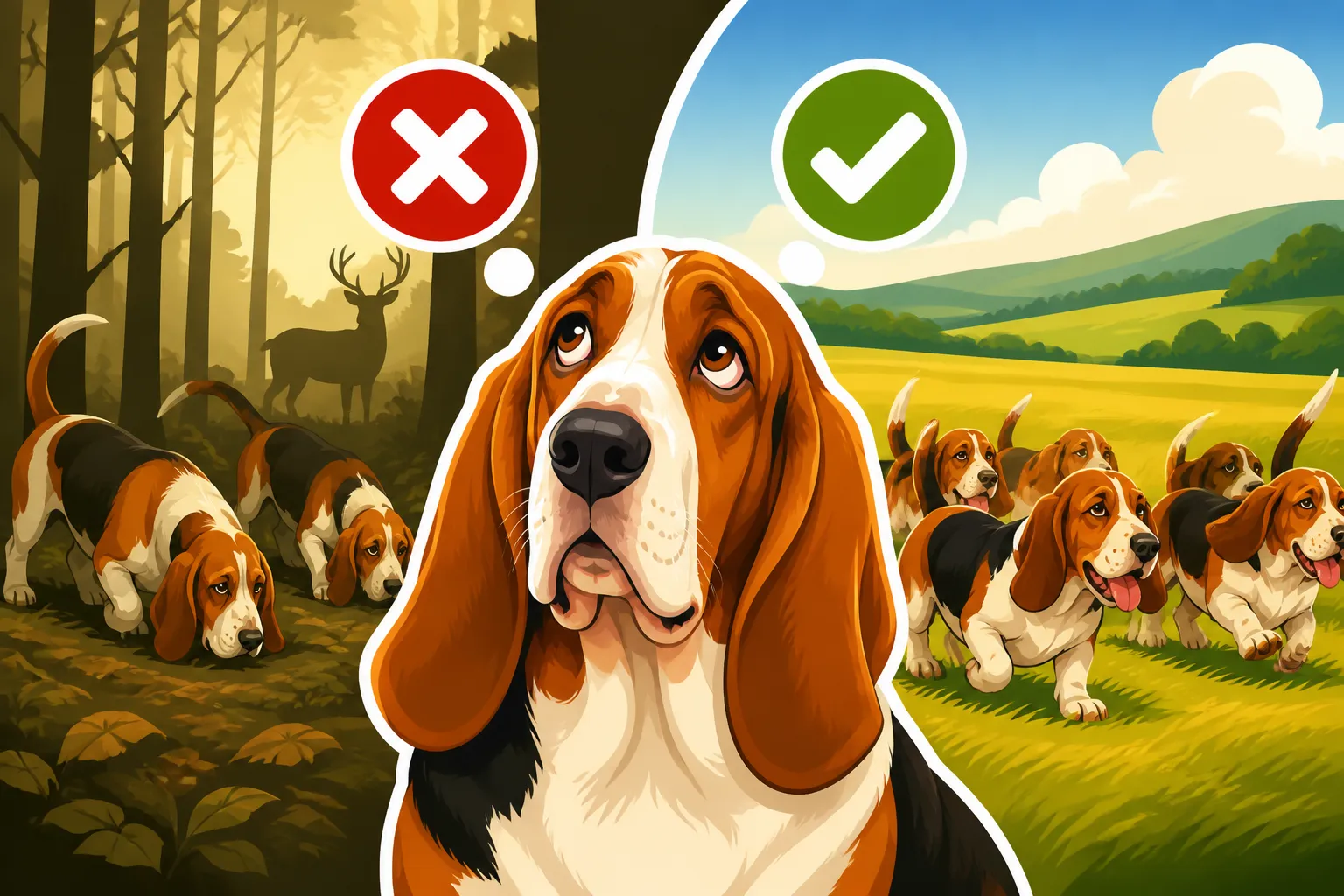
Bassets were developed as scent hounds: they follow a trail with their noses and are built to work at a pace people on foot can follow. In the field, that may mean several dogs working a rabbit or hare scent while handlers keep track of the hounds and the surroundings. It does not necessarily mean the dogs chase or catch the animal. In some settings, the goal is to observe the hounds work; in others, the outing is part of a lawful hunt where people may pursue game.
This is different from a family walking two Bassets together in a park. A working pack usually needs coordination, suitable land, experienced handling, and an understanding of the local rules. If you are curious about the breed’s working side, Whether a Basset Hound Still Hunts gives more background on how hunting fits into Basset Hound life today.
“Hunting with a pack” can describe different activities
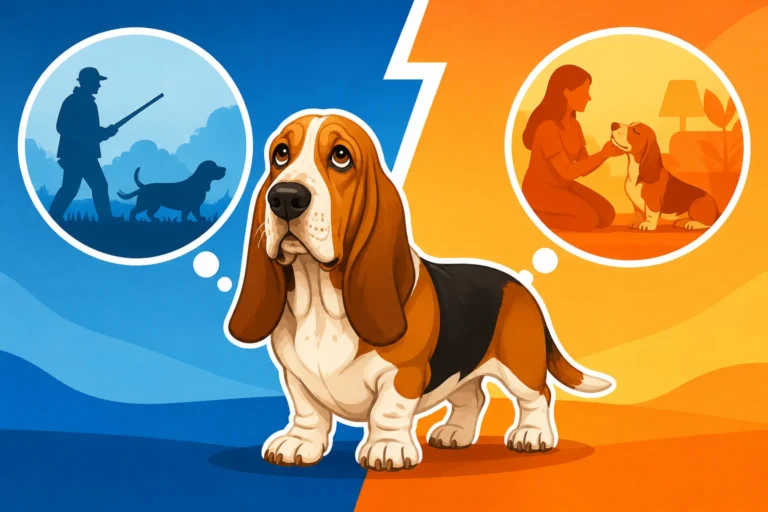
People use the phrase “pack hunting” in more than one way. Some mean dogs following live game during a legal hunt. Others are talking about field trials, where hounds are assessed on their ability to work a scent trail under event rules. A third possibility is a group outing designed to let the dogs trail without anyone intending to harvest an animal.
That difference matters before you sign up. A field trial is not automatically a hunt, and an informal group walk is not automatically a field trial. Ask the organizer what the dogs will be tracking, whether live game is involved, what happens if a hound leaves the group, and whether any game may be taken. Plain answers are a good sign that the group takes both the dogs’ welfare and the event’s purpose seriously.
The pack format is part of the tradition, but it is not the only way for a Basset to use its nose. A dog can enjoy tracking exercises or scent work without joining a hunting pack. If you want to compare those options, see Whether a Basset Hound Can Do Tracking Trials and Whether a Basset Hound Takes to Scent Work.
What Basset Hound pack work looks like
The hounds follow scent while people manage the outing
Basset Hounds are not usually expected to sprint after game like a fast-running sight hound. Their work is slower and more nose-led. A dog may put its nose down, follow a trail, pause to investigate a stronger scent, then pick up the line again. That patient, stop-and-start rhythm can be fascinating to watch—and sometimes challenging if you are used to a dog that responds instantly to every call.
In a properly managed outing, people are not simply releasing a group of dogs and hoping for the best. Handlers need to know where the hounds are, understand the conditions, and be ready to respond if a dog gets separated or the situation changes. Terrain, weather, nearby roads, livestock, and other people all affect what is safe. A Basset’s enthusiasm for a scent does not mean it can make safe decisions around hazards.
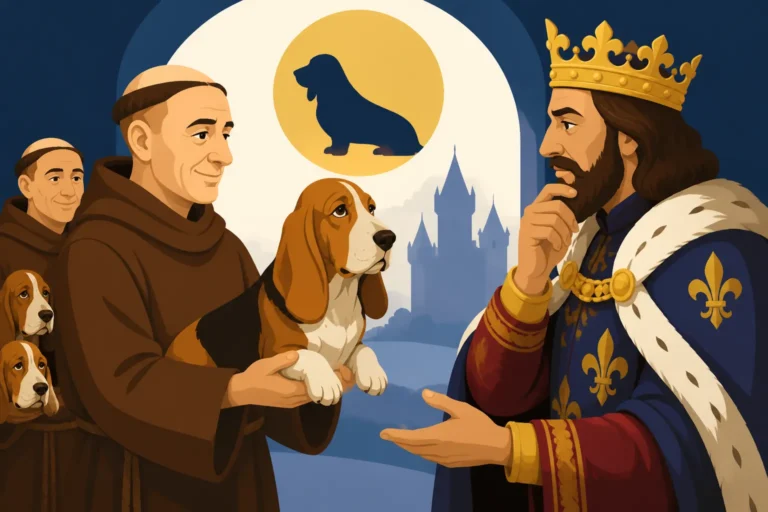
A pack may also work quite differently from one region to another. Some groups focus on traditional rabbit or hare work; others may hold organized events where the hounds’ trailing ability is the point. If someone tells you that a pack is “hunting,” ask what that means in practice rather than assuming every outing follows the same format. Whether Basset Hounds Hunted in Packs explores the historical background behind this group style of working.
A field trial is not the same thing as a casual hunt
A field trial is an organized event with rules and a specific way of evaluating the dogs. The details can vary by organization, so it is worth reading the event information before attending. In broad terms, the hounds are given an opportunity to work a scent, while judges or experienced observers assess aspects of their performance. The emphasis is on the hounds’ abilities, not on treating the event like an ordinary neighborhood walk.
For a first-time owner, watching before participating is often the easiest way to understand what is expected. Notice how the handlers communicate, how they keep track of the dogs, and whether the hounds appear fit for the conditions. Ask whether newcomers can attend as spectators and what equipment or preparation would be needed if you later bring your own dog.
Some people are drawn to pack work because it offers a structured outlet for a Basset’s natural interest in scent. Others decide it is not the right fit for their dog or lifestyle. A dog that enjoys sniffing on a long walk might still find a busy group setting overwhelming, while a dog that is calm and focused around other hounds may take to it. There is no need to force a particular activity just because it has a connection to the breed’s history.
| Activity | What the dogs do | Is game taken | A useful question to ask |
|---|---|---|---|
| Pack hunt | Work a scent trail with a group of hounds | It depends on the local activity and rules | What game is involved, and what is the outcome of the outing? |
| Field trial | Work under organized event rules and evaluation | Not necessarily; confirm the event format | What are the rules, and can newcomers watch first? |
| Scent work or tracking | Follow a planned scent or track, often as an individual dog | No, in ordinary training activities | What does the dog need to know before joining? |
| Informal group walk | Walk and sniff with other dogs | No, unless it is specifically organized otherwise | How are dogs managed around roads, wildlife, and other people? |
Finding a pack and checking the rules
Start with breed and local dog organizations
If you want to find Basset Hound pack activities, begin with breed clubs, local kennel clubs, and people already involved in hound events. The Basset Hound Club of America and regional breed communities may be useful starting points for learning about field activities, but confirm that any event you find is active and appropriate for your goals. A club’s name alone does not tell you whether it runs hunts, trials, or social events.
When you contact an organizer, be specific about what you want to see. You might say that you have a pet Basset and would like to watch a pack work before deciding whether to participate. Ask whether visitors are welcome, whether the event uses live game, what the dogs need to have practiced, and whether there is a designated place for spectators. If the answer is vague, keep asking—or choose another opportunity.
It can also help to speak with more than one person. A seasoned handler may describe the training and safety routines; a newer participant may be able to tell you what the first event felt like. If you are comparing a working-line dog with a companion from a show-oriented background, The Split Between Show and Hunting Basset Hounds can help frame the differences without assuming that every dog from one background will behave alike.
Check state and local hunting regulations before attending
Rules for hunting, seasons, permitted species, licenses, access to land, and the use of dogs differ by location. They can also depend on the exact activity and the land where it takes place. Do not rely on a general online discussion or an organizer’s memory as your only check. Look up the relevant state wildlife agency’s rules and ask the event organizer which regulations apply to that outing.
For example, a Basset owner in Pennsylvania should check the Pennsylvania Game Commission’s current rules for the species and activity in question; an owner in Virginia should consult the Virginia Department of Wildlife Resources. Those examples are starting points, not a substitute for checking the specific location, season, and event. Private land may have additional permission requirements, while public land can have its own access rules.
Even if an outing is described as a trial or training session, make sure you understand whether it takes place on land where dogs may be off leash and what the event expects participants to do. A safe group will be comfortable explaining its permissions and procedures. If you are interested in following an older scent trail rather than joining a live hunt, Whether a Basset Hound Can Follow a Day Old Trail offers a related look at scent work and trail conditions.
Preparing your Basset for pack activity
Build fitness and reliable handling habits first
A Basset does not need to be an accomplished hunter to enjoy scent-based activities, but basic preparation matters. Start with regular, age-appropriate walks and practice simple handling skills in low-distraction settings. Work on coming when called, waiting briefly, and being comfortable with a leash or long line. In a group of hounds, a dog may be pulled toward an interesting scent or distracted by the movement and voices around it.
Be realistic about recall. Scent hounds can become intensely focused, and a dog that comes readily in the kitchen may not respond the same way with a fresh trail nearby. Keep your dog on a leash or long line unless the event’s rules, location, and handler support make another arrangement safe. Whether a Basset Hound Should Ever Be Off Leash and Whether a Basset Hound Needs a Tracking Collar cover two important parts of managing a dog that may follow its nose.
Fitness is not just about stamina. Bassets have low, heavy bodies, and the ground may be uneven, muddy, hot, or full of brush. Watch your dog’s breathing, pace, gait, and willingness to continue. Take breaks, bring water, and do not push through signs of distress to keep up with a group. A short, positive first visit is much better than asking an unprepared dog to manage a long outing.
Bring practical equipment and keep the first outing low-pressure
Ask the organizer what to bring rather than buying a full set of equipment before you know what the activity involves. A well-fitted harness or collar, a leash, water, a way to identify your dog, and cleanup supplies are sensible basics for many outings. Depending on the setting, you may also want a first-aid kit and protection from weather or insects. Check that any gear fits securely and does not interfere with your dog’s movement.
If you are assembling everyday walking or tracking supplies, Chewy is one place owners may compare options such as leashes, harnesses, and identification gear. Choose equipment for fit and function rather than assuming a product marketed for hounds will suit every Basset. You can also ask the event organizer whether participants use particular types of leads or identification, and check Chewy or another retailer for current product details before buying.
For a first visit, consider going without your dog. You can observe how the pack is managed, learn where spectators should stand, and ask practical questions without juggling a new environment and an excited hound. If you do bring your dog, let the handler know it is a first outing and be prepared to leave early if your dog is stressed, tired, or too distracted to settle.
Pack hunting still exists in America, but it is only one of several ways a Basset can use its nose. Whether you choose a hunt, a field trial, or a quieter tracking activity, the right fit is the one that respects the dog’s abilities, keeps the outing controlled, and follows local rules.
Disclaimer
This article is for general informational purposes only and does not constitute professional advice. Laws, prices and regulations vary by location and change over time. Consult a qualified professional for guidance on your specific situation.