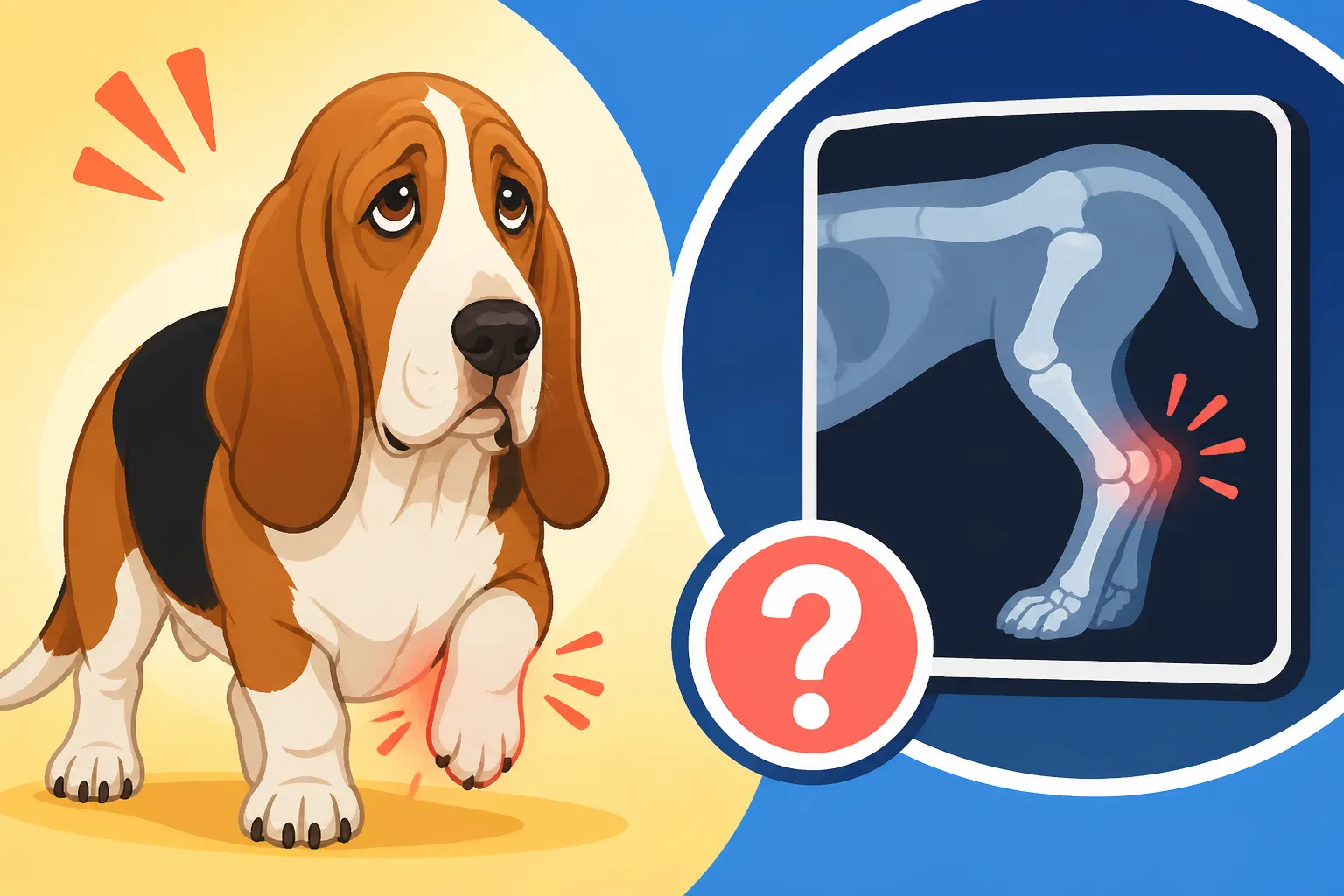
Whether a Limping Basset Hound Needs X Rays
It’s a heart-sinking moment when you see your beloved Basset Hound hobbling, favoring a leg, or struggling to get up. That distinctive gait, usually so full of purpose and sniff-driven determination, suddenly looks off, filled with pain or reluctance. When your furry friend starts limping, it's natural to immediately wonder what's wrong and, more importantly, what steps you need to take to help them feel better. This guide will walk you through the various reasons a Basset Hound might limp and help you understand when those worrying signs mean it's time to head to the vet for X-rays.
Understanding the Causes of Limping in Basset Hounds
A limp isn't just a limp; it's a symptom that can point to a whole host of underlying issues, ranging from minor sprains to serious orthopedic conditions. With Basset Hounds, their unique body structure, characterized by those short, stout legs and long, heavy body, actually predisposes them to certain types of lameness. It’s not always obvious what’s going on just by looking, which is why a careful approach is so important.
Acute Injuries Versus Chronic Conditions
Sometimes, the cause of a limp is sudden and obvious – maybe your Basset Hound took a tumble during an enthusiastic sniffari, or perhaps they jumped off the couch a bit too awkwardly. These are what we call acute injuries, and they often present with sudden pain, swelling, or an inability to put weight on the limb. Think of it like us twisting an ankle. The pain is immediate, and you know something just happened.
On the other hand, many causes of limping in Basset Hounds are chronic conditions that develop slowly over time. These might start as a subtle stiffness after rest, a slight hesitancy to go for a walk, or a gradual change in how they move. You might notice them getting up slower, or perhaps they seem less enthusiastic about playtime. Conditions like arthritis often creep up, with mild signs gradually worsening. It's easy to dismiss these early signs, especially if your Basset has a tendency to be a bit lazy, but it's crucial not to confuse Whether a Basset Hound Is Lazy or Sore with true pain. Chronic issues can be more insidious, slowly eroding your dog's comfort and mobility without a clear "event" to point to.
Common Basset Hound-Specific Orthopedic Issues
Given their distinctive build, Basset Hounds are, unfortunately, prone to several orthopedic problems that can lead to limping. Their short, bowed front legs, for instance, are a hallmark of the breed, but this unique structure can also be a source of trouble. One of the most significant concerns is Elbow Dysplasia in a Basset Hound. This is a developmental abnormality of the elbow joint that can cause significant pain and lameness, often appearing in younger dogs but worsening with age. It's a condition where the bones of the elbow joint don't fit together perfectly, leading to grinding, inflammation, and eventual arthritis.
Beyond the elbows, the Basset's long spine makes them susceptible to back issues, specifically Intervertebral Disc Disease in a Basset Hound (IVDD). While IVDD often manifests as weakness or paralysis in the hind legs, severe pain radiating from the back can certainly cause a dog to limp or refuse to move their limbs normally. Additionally, all that extra weight they carry, as detailed in What Extra Weight Does to a Basset Hound, puts immense strain on all their joints, accelerating wear and tear and making them more prone to conditions like arthritis. Owners often struggle with trying to decipher if a limp is due to a minor strain or something more serious like these breed-specific concerns, adding to the anxiety.
When to Seek Veterinary Attention and Consider X-Rays
It's common for a dog to have a slight limp that resolves on its own after a day or two of rest. Maybe they overdid it on a walk or bumped themselves. However, for a Basset Hound, given their predispositions, it's often wise to err on the side of caution. Knowing when to call the vet and when to consider imaging like X-rays can make all the difference in their comfort and long-term health.
Red Flag Signs That Warrant Immediate Care
While a minor, fleeting limp might not be an emergency, there are definite "red flags" that indicate you need to get your Basset Hound to the vet immediately. These include:
- Sudden, severe lameness: If your Basset can't put any weight on a leg at all, or cries out when you try to gently touch it, that's a sign of significant pain or injury.
- Swelling or obvious deformity: Any visible swelling, a joint that looks "out of place," or unusual bumps require immediate veterinary assessment.
- Non-weight bearing: If they simply refuse to use a limb, even after a short rest, it's a serious sign.
- Pain that worsens or doesn't improve: If the limp doesn't get better after 24-48 hours of rest, or if it gets progressively worse, don't wait.
- Accompanying symptoms: Fever, lethargy, loss of appetite, or difficulty breathing alongside the limp are signs of a more systemic issue or severe injury.
- Known trauma: If you saw them get hit by a car, fall from a height, or get into a fight, don't delay.
In these situations, X-rays are almost certainly going to be part of the diagnostic process to quickly rule out fractures, dislocations, or severe joint damage. Ignoring these signs can lead to more serious, permanent damage or prolonged pain for your Basset.
The Role of a Veterinary Examination
When you bring your limping Basset Hound to the veterinarian, the first thing they'll do is a thorough physical examination. This isn't just a quick look; it's a detailed process that involves observing your dog's gait, feeling their limbs and joints, and carefully manipulating each leg to check for pain, swelling, or instability. Your vet will want to know how long the limp has been present, if it's getting worse, and if there was any known trauma.
This initial exam is critical because it helps the vet narrow down the possibilities. They might be able to pinpoint the general area of pain – is it the paw, the wrist, the elbow, the hip, or even the back? Sometimes, a simple issue like a thorn in a paw pad or a broken nail can be identified and treated without the need for X-rays. However, if the cause isn't obvious, or if the vet suspects a bone injury, joint disease, or something like Arthritis in a Basset Hound at Seven, X-rays become an indispensable diagnostic tool. They provide an invaluable look inside the joint and bone structures that cannot be seen or felt from the outside.
Here’s a quick overview of when X-rays are typically recommended:
| Symptom / Situation | Likelihood of X-Ray Recommendation | Primary Concern |
|---|---|---|
| Sudden, severe lameness | High | Fracture, dislocation, acute soft tissue injury |
| Obvious swelling or deformity | High | Fracture, severe joint effusion, tumor |
| Persistent limping (> 48 hrs) | Moderate to High | Sprain, strain, early arthritis, developmental issues |
| Pain on palpation/manipulation | Moderate to High | Joint disease, muscle strain, bone injury |
| Chronic stiffness, worsening pain | High | Arthritis, elbow dysplasia, IVDD, long-term injury |
| Known trauma (e.g., fall) | High | Fracture, internal injury |
| Post-op follow-up | Moderate | Healing assessment, hardware check |
Many pet owners worry about the cost of diagnostics, but understanding the underlying problem is the first step to effective treatment. Companies like Healthy Paws offer pet insurance plans that can help cover these unexpected veterinary expenses, making it easier to say "yes" to necessary diagnostics like X-rays without the added financial stress.
What to Expect During an X-Ray Procedure
If your vet recommends X-rays, it's natural to have questions about what the process involves. For us humans, getting an X-ray is pretty straightforward – you stand still, hold your breath, and it's over in seconds. For our Basset Hounds, it’s a bit different because getting them to hold still in precisely the right positions for clear images can be quite a challenge, especially if they’re in pain.
Preparation and Sedation
For a Basset Hound, particularly one who is already limping or in pain, full cooperation during an X-ray is often too much to ask. This is where sedation or light anesthesia comes in. Your veterinarian will typically recommend a mild sedative to ensure your Basset can be positioned correctly and comfortably for the best possible diagnostic images. This also prevents them from moving and potentially causing more injury or requiring repeated X-rays due to blurry images, which isn't ideal for anyone.
Before sedation, your vet will perform a pre-anesthetic check, which usually includes blood work to ensure your Basset Hound is healthy enough for the sedative. They'll explain the procedure, potential risks (which are very low for mild sedation), and what to expect during and after. During the X-ray, your dog will lie on a special table, and a veterinary technician will carefully position the affected limb or body part. Multiple views are usually taken from different angles to get a comprehensive picture of the bones and joints. This careful positioning is critical, especially for conditions like elbow dysplasia, where specific angles are needed to reveal the subtle changes indicative of the disease.
Interpreting the Radiographs
Once the X-rays are taken, your veterinarian will carefully examine them. They'll be looking for signs of fractures (broken bones), dislocations (bones out of joint), signs of arthritis (such as joint space narrowing, bone spurs, or changes in bone density), and developmental abnormalities like The Crooked Front a Basset Hound Is Built On or elbow dysplasia. They can also reveal foreign objects, certain types of tumors, or changes indicative of bone infections.
Sometimes, the initial X-rays might be inconclusive, or they might show changes that warrant further investigation. For instance, early stages of soft tissue injuries like torn ligaments might not be directly visible on an X-ray, though secondary signs like joint swelling could be present. If something serious is found, your vet will discuss the findings with you, explain the diagnosis, and outline the next steps for treatment. This could range from rest and pain medication to more advanced therapies or even surgery. Understanding the cost of these potential treatments, including What a Basset Hound's Emergency Surgeries Cost, can be overwhelming, but again, having insurance from providers like Healthy Paws can be a real lifesaver when facing such decisions.
Beyond X-Rays: Other Diagnostic Tools and Treatment Options
While X-rays are a cornerstone of diagnosing limping in Basset Hounds, they aren't always the final answer. Sometimes, the initial radiographs point to a deeper problem, or the cause of the limp might not be something X-rays can fully visualize.
Advanced Imaging and Further Tests
If X-rays don't provide a clear diagnosis, or if a more detailed look at soft tissues (like ligaments, tendons, or spinal discs) is needed, your vet might recommend advanced imaging. This could include:
- Ultrasound: Useful for examining soft tissues, identifying fluid accumulation, or assessing the integrity of tendons and ligaments.
- MRI (Magnetic Resonance Imaging) or CT (Computed Tomography) scans: These offer highly detailed cross-sectional images of bones, soft tissues, and the spinal cord. They are particularly valuable for diagnosing conditions like IVDD that affect the spinal discs, which aren't clearly visible on standard X-rays.
- Joint taps: In some cases, fluid might be collected from a joint (arthrocentesis) and analyzed to check for infection or inflammatory conditions.
- Electromyography (EMG) or nerve conduction studies: If nerve damage is suspected, these tests can assess nerve and muscle function.
These advanced diagnostics can be more expensive, and often require referral to a veterinary specialist or a larger animal hospital. However, for complex cases, they are invaluable for getting a precise diagnosis, which is essential for effective treatment. Pet insurance, such as a policy from Healthy Paws, can certainly help alleviate the financial burden of these more specialized diagnostic procedures.
Managing Pain and Recovery
Once a diagnosis is made, your vet will work with you to develop a comprehensive treatment plan. This might involve:
- Rest and activity modification: Sometimes, simple rest is all that's needed for minor sprains. For more serious conditions, strict rest might be prescribed, potentially in combination with restricted movement, like preventing your Basset from using stairs (see Whether a Basset Hound Should Climb Stairs) or jumping off furniture.
- Medication: Pain relievers (NSAIDs) and anti-inflammatory drugs are commonly used to manage discomfort. In some cases, muscle relaxants or other medications might be prescribed.
- Physical therapy: For many orthopedic conditions, physical therapy can be incredibly beneficial. This might include hydrotherapy, therapeutic exercises, massage, and laser therapy to improve strength, flexibility, and reduce pain.
- Joint supplements: Supplements containing glucosamine, chondroitin, and Omega-3 fatty acids can support joint health, especially in Basset Hounds prone to Arthritis in a Basset Hound at Seven.
- Weight management: If your Basset Hound is overweight, a controlled diet and exercise plan will be crucial to reduce stress on their joints and improve mobility.
- Surgery: For conditions like severe fractures, certain types of elbow dysplasia, or advanced IVDD, surgery may be the most effective, or only, option to restore function and relieve pain. This is a significant consideration, and your vet will discuss all pros and cons.
The road to recovery can sometimes be long, especially for chronic conditions or after surgery. It requires patience, dedication, and consistent care. For an older Basset Hound struggling with mobility, especially one that The Old Basset Hound That Cannot Get Off the Floor, comprehensive management involving multiple therapies may be necessary to maintain their quality of life. Always remember to follow your veterinarian's advice closely and never hesitate to ask questions.
Disclaimer
The information provided in this article is for general informational purposes only and is not a substitute for professional veterinary advice. Always consult with a qualified veterinarian for any health concerns or before making any decisions related to your pet's health and treatment.